dailynewsnblog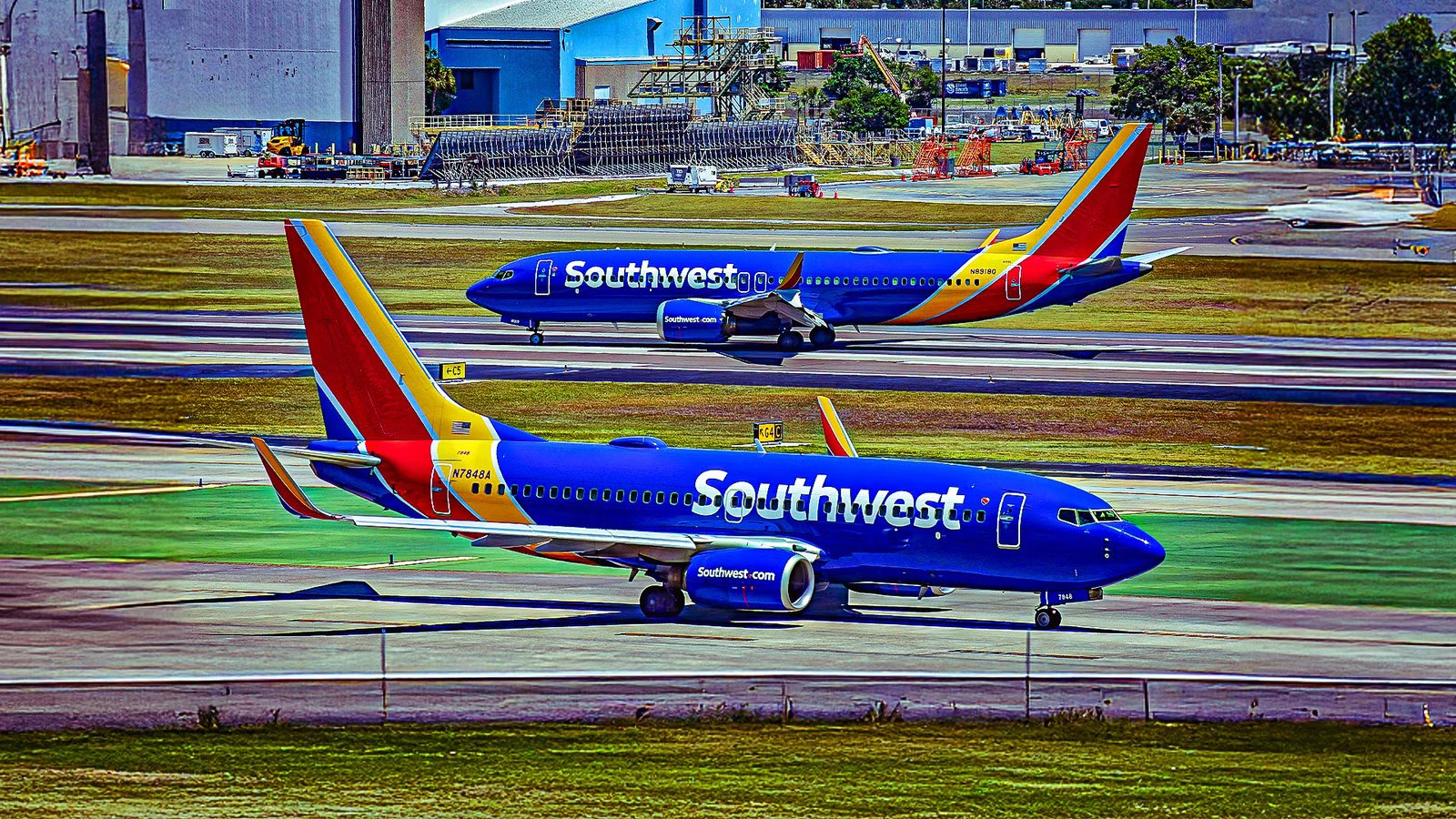
 Southwest Airlines was hit by a nationwide computer systems outage on Friday, October 9, forcing airport employees to check baggage and process passengers manually. The New York Post reported that the disruption affected check-in and boarding systems across the airline’s network, leading to long lines, delayed departures, and frustrated travelers during the busy morning travel period. Although the airline quickly restored its systems, hundreds of flights have been heavily disrupted across its network.
The latest incident adds to Southwest’s troubled history of technology failures, including the disastrous December 2022 operational meltdown that resulted in nearly 17,000 flight cancellations. The carrier has subsequently invested heavily in modernizing its infrastructure, but Friday’s outage raises fresh questions about its resilience and dependence on external technology providers.
Southwest Airlines Forced To Process Passengers Manually After IT Outage

The problems began shortly after 8:00 AM ET on Friday, when Southwest’s systems experienced a widespread interruption affecting passenger processing. KRLD reports that travelers first noticed difficulty accessing boarding passes through the airline’s mobile app, while airport employees were unable to use their normal computerized procedures. Southwest employees continued checking bags and boarding passengers manually while technicians worked to restore functionality.
At key Southwest airports across the US, the disruption quickly brought normal procedures to a crawl. At Dallas Love Field (DAL), multiple passengers reported no boarding pass printing and mobile boarding pass scanning, leading to long lines out of the airport doors. Meanwhile, the Denver Gazette reported a passenger’s account of gate staff at  Denver International Airport (DEN) announcing that Southwest aircraft on the ground nationwide were being held.
Southwest was able to rapidly identify that its technology provider, Amadeus, was the source of the interruption. Amadeus has played a central role in Southwest’s operations since the airline first introduced its Altéa Passenger Service System in 2014 for international flights, and subsequently rolled it out to domestic operations in 2017. The system supports reservations, flight inventory, passenger check-in, boarding, baggage check-in, and automated rebooking during disruptions.
Amadeus attributed Friday’s incident to an unidentified third-party technology provider, although the precise component responsible has not been disclosed, and issued an apology to Southwest passengers:
“Our teams took immediate action and worked closely with the provider to restore normal operations. We apologize for any inconvenience caused to Southwest Airlines passengers this morning.”
Southwest confirmed that systems were back online at 10:15 AM ET, approximately two hours after the first issues were noticed. By that stage, more than 900 Southwest flights had been delayed and 43 canceled. However, the ripple effect of the outage has been felt throughout the day, with the latest FlightAware data from 5:00 PM ET showing more than 1,500 delayed flights, or approximately a third of all Southwest flights till that point in the day.
Southwest Airlines Has A Long History Of Technology Failures

Friday’s disruption is far from Southwest’s first major computer failure. In July 2016, a network router malfunction and the failure of backup systems caused a widespread outage, with Wired reporting at the time that it ultimately resulted in more than 2,300 canceled flights over four days. Employees were forced to process passengers manually, remarkably similar to Friday’s events. Further problems followed in June 2021, when separate weather-data and network connectivity failures disrupted operations on consecutive days. The second incident resulted in approximately 500 cancellations and more than 1,300 delays.
Date | Underlying Problem | Operational Impact |
|---|---|---|
July 2016 | Network router malfunction; backup systems failed | Approximately 2,300 cancellations over four days; manual passenger processing |
June 2021 | Separate third-party weather-data and network connectivity failures | Approximately 500 cancellations and over 1,300 delays on June 15 |
December 2022 | Severe winter weather overwhelmed crew-scheduling and operational recovery systems | 16,900 cancellations; over two million passengers stranded |
April 2023 | Vendor-supplied firewall failure interrupted operational data connectivity | Nationwide departure ground stop; over 2,100 delays |
October 2026 | Amadeus outage attributed to an unidentified third-party provider | Manual passenger processing; approximately 900 delays and 43 cancellations reported during the morning |
The most damaging incident came during Christmas 2022, when Winter Storm Elliott overwhelmed Southwest’s ability to recover its crew and aircraft schedules. The resulting operational collapse caused 16,900 cancellations and stranded more than two million passengers. According to the US Department Of Transportation (DOT), Southwest subsequently provided more than $600 million in passenger refunds and reimbursements. The regulator nevertheless assessed a record $140 million civil penalty in December 2023, although its payment provisions were amended in December 2025 to recognize subsequent operational improvements.
Technology problems continued in April 2023, when a vendor-supplied firewall failure interrupted access to operational data, prompting Southwest to request a nationwide departure ground stop. Although departures resumed relatively quickly, more than 2,100 flights were delayed. These incidents involved different underlying failures, ranging from network infrastructure to crew-scheduling software and external suppliers. Nevertheless, they demonstrate how a relatively localized technical problem can spread rapidly across Southwest’s extensive network.
Can Southwest’s Technology Modernization Prevent Future Outages?

Southwest has made substantial investments in its technology infrastructure since the 2022 meltdown. Its March 2023 operational resilience plan prioritized improved crew-scheduling software, recovery optimization tools, and employee communication systems. By December 2025, the DOT acknowledged that Southwest had invested more than $1 billion in operational improvements, including over $112 million in its Network Operations Control function. These investments contributed to improved punctuality and flight completion rates, demonstrating measurable progress following the earlier failures.
A particularly significant development came in June this year, when Southwest announced an expanded partnership with Amazon Web Services (AWS) to modernize its technology foundation. The airline intends to transition from a largely on-premises environment to a cloud-based, artificial intelligence-enabled architecture by 2028. More than 2,700 developers are already using AWS tools to accelerate software development and modernize Southwest.com. The initiative builds on a cloud partnership first announced in March 2023, with improved reliability, scalability, and operational efficiency among its objectives.
However, Friday’s outage highlights vulnerabilities that Southwest cannot eliminate simply by modernizing its internal systems. Amadeus has supported its passenger reservation network since 2017, but the AWS transformation cannot prevent failures involving external providers. So nearly a decade after adopting its unified platform, Southwest employees were again forced to process passengers manually, underscoring the importance of redundancy and contingency planning alongside technological modernization.