dailynewsnblog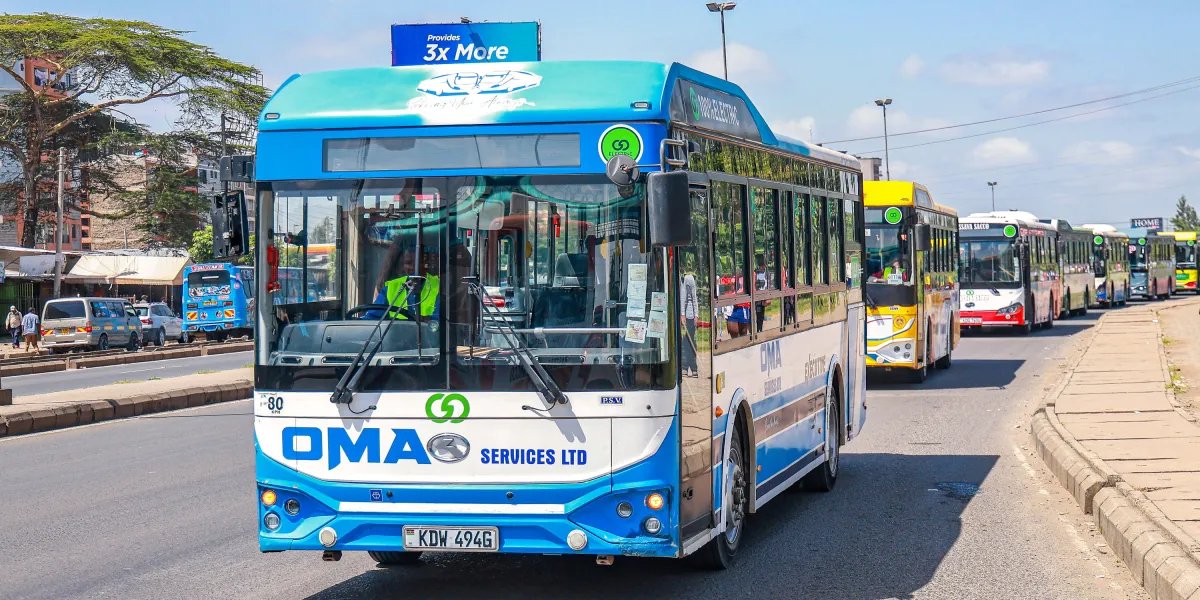
The company doesn’t manufacture its own buses—the vehicles come from China and are assembled in Kenya. BasiGo’s innovation lies in offering a full range of services that make its electric buses more competitive with internal combustion engine (ICE) buses, says Jit Bhattacharya, co-founder and CEO. Instead of simply selling its buses to operators, as other bus companies do, BasiGo leases them out, offers maintenance services and insurance, and provides a charging network for its customers. Those customers are primarily individual operators or bus cooperatives, of which there are more than 300 in Kenya.
Key indicators
- Industry: Electric vehicles
- Founded: 2021
- Headquarters: Nairobi, Kenya
- Notable fact: BasiGo is the first authorized service provider in sub-Saharan Africa for CATL, the world’s largest EV battery company. Its own buses use CATL batteries and BasiGo’s employees are trained to repair the batteries on other vehicles.
Potential for impact
The initial price of electric buses is very high compared to combustion-engine models. Electric vehicle expenses are lower over the long term, though, because of the savings from fuel. BasiGo’s model aims to remove the barrier of high up-front cost for private bus operators in Africa looking to add an electric bus to their fleet.
Under this approach, the operator pays a small deposit, which Bhattacharya says is 40% less than the down payment they would make on a diesel bus. The operator then pays a daily pay-as-you-drive lease fee. Bhattacharya estimates the operator earns a 5–10 times higher return on investment over the life of a BasiGo bus compared to a diesel bus.
When it comes to emissions, Bhattacharya and his team calculate that replacing one diesel bus with an electric one in Kenya results in 50 tons of avoided carbon dioxide emissions every year. With about 20,000 buses currently operating in Nairobi alone, transportation emissions could be dramatically reduced if every bus was electric.
Since its buses run on domestically generated renewable energy (90% of Kenya’s energy mix is renewable), operating them will keep more money in the local economy compared with fuel, which has to be imported. And switching to EVs also has potential health benefits, such as a decrease in childhood asthma cases, due to less particulate matter in the atmosphere.
Caveats
BasiGo buys many of the parts for its buses from Chinese firms including King Long and BYD. But the buses have to be locally assembled in Kenya. So the company must spend a lot of time and resources training personnel to build, repair, and maintain the buses in every location in which it operates—which could be a challenge for any future expansion.
The company also faces high up-front costs for infrastructure upgrades required to support new high-power loads such as EV chargers. And Bhattacharya says securing land for charging depots is “expensive and complicated” since charging requires land located directly on bus routes and next to power lines.
Next steps
At the moment, more than 150 BasiGo buses are on the road, and the company has a reservation list of 1,200 customers who wish to lease vehicles as more become available.
Having already expanded from commuter buses to providing inter-city coach services, BasiGo is now targeting the next big polluters on the roads: trucks. The company has not yet announced any details about its plans, but says to stay tuned.