dailynewsnblog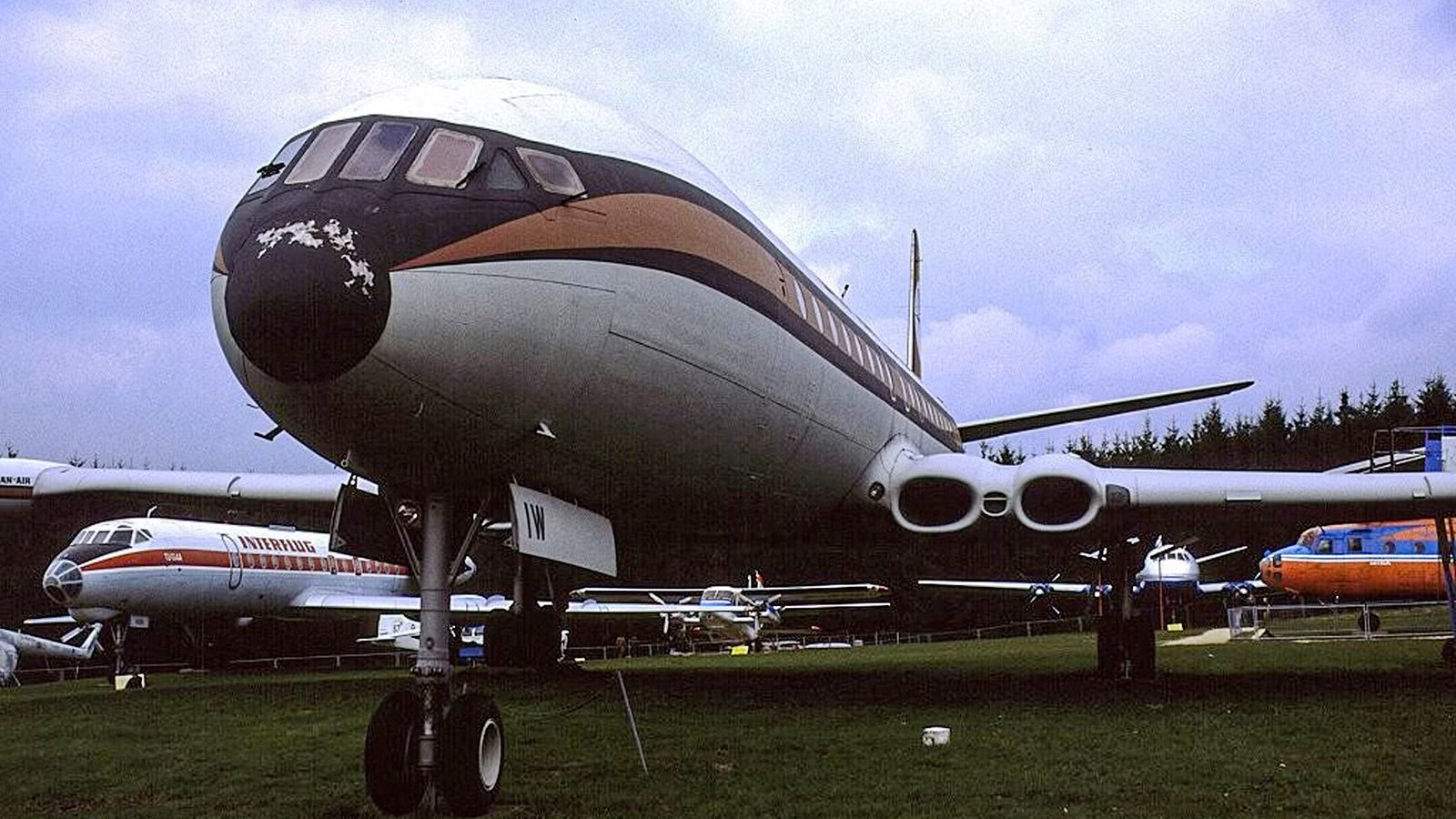
Contrary to what many may believe, the Boeing 747 was not the aircraft that kickstarted the quadjet era. The success of arguably the most iconic jet ever is, in part, thanks to the de Havilland Comet. The Comet was actually the aircraft that began the commercial jet age, though its massive engineering milestone concealed a profound paradox. The very overload testing designed to validate the airframe unwittingly hid a microscopic structural failure mechanism within the thin aluminum skin, setting off an invisible timer across the fleet.
How did a groundbreaking airliner, crafted by de Havilland’s design team and certified under the watchful eye of the British Air Registration Board, pass extreme static overload tests while hiding fatal stress points around its fuselage cut-outs? To understand why, this article moves past the popular oversimplification that square windows alone brought down the jet, examining instead the physics of static strain hardening, countersunk rivet manufacturing, and the aggressive 8.25 psi (56.9 kPa) pressure differential required to carry passengers comfortably through the stratosphere.
The Beginning Of A New Age

The de Havilland DH.106 Comet entered service with BOAC in May 1952 as the world’s first commercial jet airliner; it redefined passenger travel by cruising above 450 mph (724 km/h) at 35,000 ft (10,668 m). As explored in Simple Flying’s coverage of how the de Havilland Comet kickstarted the jet age, flying at double the altitude of piston-engine airliners meant an internal cabin pressure differential of 8.25 psi (56.9 kPa) was needed, nearly twice the 4 psi (27.6 kPa) to 4.5 psi (31 kPa) limits of contemporary transports like the Lockheed Constellation.
To keep the airframe light enough for four de Havilland Ghost turbojets, Chief Designer Ronald Bishop used thin 22-gauge DTD 546 aluminum alloy skin, measuring between 0.028 in (0.71 mm) and 0.036 in (0.91 mm) thick, bonded to stringers with Redux synthetic resin. As detailed in Simple Flying analysis, these weight savings enabled unprecedented speed and altitude, but turned the thin metal skin into a high-pressure vessel that expanded and contracted under heavy outward hoop stress on every flight.
To validate the airframe, de Havilland subjected test fuselages to static proof tests up to 16.5 psi (113.8 kPa), double the maximum operational differential, followed by thousands of simulated flight cycles, as per FAA details. It inadvertently created a profound paradox: how could a test airframe withstand double the maximum operating pressure without failing, while active production aircraft in service developed fatal structural cracks in a fraction of that time?
BOAC Flight 781: Were The Windows Really To Blame?

Popular aviation memory attributes the Comet disaster solely to the passenger cabin windows, though the RAE Farnborough investigation revealed that the catastrophic fatigue fracture on G-ALYP originated at a corner cut-out for the Automatic Direction Finder (ADF) antenna hatch on the cabin roof. The failure was not caused by a single design oversight, but by the compounding effect of sharp aperture corners and high-speed manufacturing techniques that introduced microscopic defects into the pressurized hull.
To accelerate production schedules at Hatfield, de Havilland used a punch-countersinking process to secure the skin around fuselage openings rather than drilling and dimpling each fastener location, as detailed by Eng-Tips. Punching rivets through the thin 0.036 in (0.91 mm) aluminum alloy skin created tiny, invisible micro-fissures along the perimeter of the rivet holes. Under repeated cycles of 8.25 psi (56.9 kPa) cabin pressurization, stress concentrated around these sharp rivet edges and aperture corners, driving stress levels up to 45,700 psi (315 MPa).
When micro-cracks at the ADF hatch reached a critical length, the surrounding skin could no longer contain the internal pressure, causing the airframe to tear open violently within milliseconds. Discovering that microscopic manufacturing flaws could trigger instantaneous structural failure showed engineers that relying on static strength calculations alone was inherently flawed.
Where The Comet 4 Made Up For The Errors

The revelation that microscopic manufacturing flaws could cause catastrophic in-flight failures shattered the safe-life design philosophy that governed early postwar aviation. Previously, airworthiness authorities assumed an airframe component could operate safely for a predetermined number of flight hours before retirement, known as a safe-life, asdocumented in FAA analysis. The RAE inquiry showed that fatigue could drastically shorten airframe life without warning, so global aviation authorities, including the British Air Registration Board and the United States Civil Aeronautics Administration, had to mandate fail-safe structures. Under fail-safe principles, engineers design airframes with multiple redundant load paths, lower operational stress thresholds, and tear-stopping straps so that if a crack develops in a skin panel, adjacent structural members contain the damage until routine inspections locate the defect.
When  Boeing engineered the Boeing 707, Chief Engineer George Schairer applied lessons from the Comet disasters directly to the fuselage, selecting a skin gauge four times thicker, teardrop-shaped titanium crack-stoppers, and rounded oval windows to eliminate sharp stress concentrations, as noted in Airliners.net discussions. These same hard-won principles were added into the redesigned Comet 4, increasing skin thickness, adopting thick oval window surrounds, and replacing punch-countersinking with dimpled fasteners to remove sharp manufacturing edges inside rivet holes.
Rebuilding the airframe around fail-safe principles ensured that the Comet 4 emerged as one of the most structurally robust airliners of its era, completing its operational career without a single cabin pressurization failure. However, while the engineering overhaul succeeded completely, four years of fleet groundings, public inquiries, and structural redesigns paused British manufacturing momentum at the exact moment international carriers were placing orders for their first jet fleets.
Leading History Across The Atlantic

On October 4, 1958, BOAC made aviation history when two Comet 4 airframes launched inaugural transatlantic flights between  London Heathrow Airport(LHR) and New York Idlewild Airport (now
  New York JFK Airport (JFK). Detailed by Airways Magazine, this milestone allowed the British flag carrier to beat Pan American World Airways and its 707 into revenue jet service across the North Atlantic by three weeks. Powered by four Rolls-Royce Avon 524 turbojets generating 10,500 lbf (46.7 kN) of thrust each, the re-engineered Comet 4 offered a whisper-quiet cabin and exceptional reliability, showing to the world that de Havilland had overcome the structural challenges of the early jet age.
Despite this triumphant return, the economics of transatlantic commercial flying had shifted during the original fleet’s four-year hiatus. The redesigned Comet 4 accommodated up to 81 passengers, depending on cabin seating density, and often required a refueling stop at Gander or Goose Bay when facing strong westbound winter winds. In contrast, the larger 707 carried up to 181 passengers, delivering lower seat-mile costs for international carriers. While BOAC operated a fleet of 19 Comet 4 airliners across its global network, as per Cometra, major international airlines increasingly selected the higher passenger capacities offered by Boeing and Douglas.
The Comet 4 ultimately achieved complete operational vindication, logging millions of revenue miles without a single cabin pressurization or structural fatigue failure. Despite this, its total sales confirmed that the aircraft had evolved from a dominant market pioneer into a specialized long-range transport. Its service career showed that British engineers had solved the mechanics of high-altitude cabin pressure, even as market share on long-haul routes shifted toward larger American transports.
No Match For The 707

The Comet 4 proved technically sound, but its commercial eclipse by larger American transports began what was to become a massive shift in airframe economics. For airlines and passenger routes moving into the 1960s, the lesson was clear: structural safety was no longer a competitive selling point, but an entry-level requirement. The Comet program’s real consequence was not a dominant market share for de Havilland, but the universal adoption of fail-safe engineering standards across every long-haul jetliner that followed.
BOAC flew its Comet 4s with high dispatch reliability, though Pan American World Airways operated Boeing 707s that carried far more passengers over the same distance at lower unit costs per seat-mile. The British airframe had conquered the technical physics of cabin pressurization, but American manufacturers won the volume equation by sizing their airframes for mass international tourism from the start. As a result, the 707 gained exceptional popularity in the airliner market, with over 1,000 of the aircraft built compared to just 113 Comets over its entire production life.
Would modern commercial jet travel exist in its current high-capacity, ultra-safe form today if de Havilland had not suffered and solved the horrific pressure-fatigue disasters of the early 1950s? Incidents will always happen, so the safety-centric culture of aviation likely would have emerged anyway. Despite this, the Comet may well have been far more popular and could have changed the trajectory of the jet age entirely.
The Legacy Lives On

Aviation progress is often pushed in the aftermath of incidents. After all, many of the rules, regulations, and design choices that exist today have been shaped by lessons learned from disasters. As a result, the spirit of the Comet lives on in mandatory airworthiness directives, damage-tolerance testing, and multi-load path structures that safeguard millions of passengers every day. Every time an airliner climbs into the thin, freezing air, its structural integrity relies directly on the hard-won insights gained from the 1954 RAE Farnborough investigation.
Modern airworthiness authorities like the Federal Aviation Administration and the European Union Aviation Safety Agency continue to enforce fatigue-life thresholds and automated ultrasonic inspection protocols around fuselage cut-outs that trace their origin directly back to Sir Arnold Hall’s inquiry. In recent years, aerospace manufacturers have moved to carbon-fiber composites and new ultra-high-bypass engine architectures for the next generation of transports, far from the origins of jet travel. Still lying in the background, those foundational fail-safe principles remain the non-negotiable threshold for every airframe seeking certification.