dailynewsnblog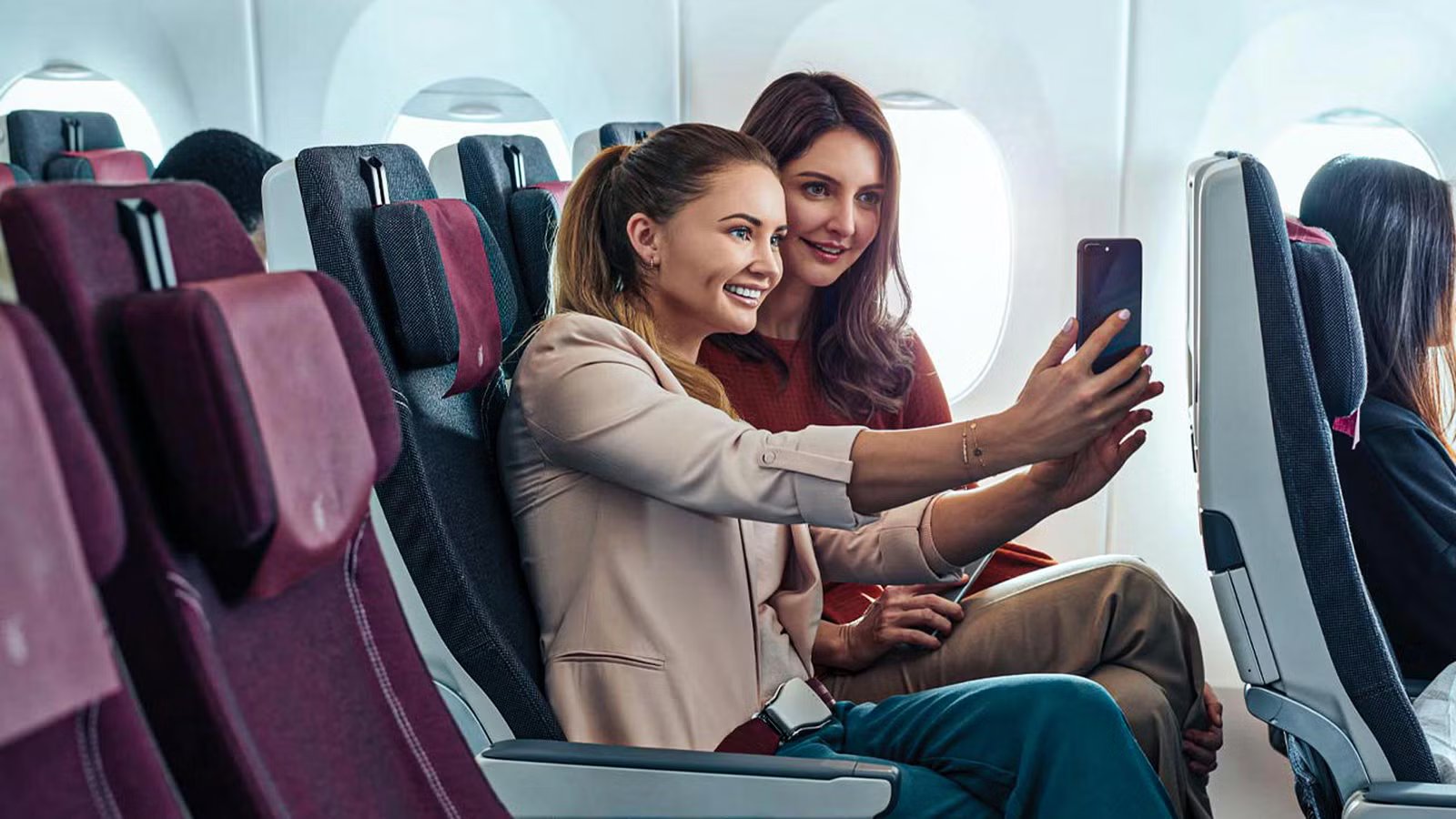
Premium Economy is intended to occupy the space between economy and business class, but airline terminology does not always make that boundary clear. A genuine premium economy product generally combines a separate cabin with a meaningfully different seat and an elevated service package. More legroom is usually part of the equation, but additional pitch alone does not necessarily create a distinct premium cabin.
The ambiguity matters because passengers can pay substantially more for a product that delivers only some of the features normally associated with premium economy.  Air China and some Condor configurations have been cited as examples of products marketed as premium economy despite relying heavily on additional space.
  Qatar Airways takes a different approach with Comfort+, while
  Etihad Airways and JetBlue sell similarly positioned products without calling them premium economy. The result is a market where the name on the booking screen does not always describe the experience in the same way.
What Actually Defines Premium Economy?

There is no universal regulatory definition of premium economy, giving airlines considerable flexibility in how they classify intermediate products. A useful way to evaluate them is to consider the entire offering rather than one specification such as seat pitch. A conventional premium economy cabin generally uses a different seat from standard economy. It may provide greater width, deeper recline, leg or foot rests, additional storage, or a lower-density arrangement. The cabin is also normally physically separated from economy, giving passengers a distinct environment.
Service is another defining element. Premium economy can include upgraded meals, additional beverages, dedicated cabin service, priority airport handling, enhanced bedding, or amenity kits. Not every airline provides every benefit, but the combination of a different seat and additional service usually creates a clear step above economy. An extra-legroom seat can still be an attractive purchase without meeting that broader definition. Someone who gets the same seat and catering as an economy passenger but gains several inches of space has effectively purchased enhanced economy. Distinctions become apparent when comparing the physical seat and included services rather than relying on the fare name. Travelers should examine the exact aircraft and fare inclusions before paying for an upgrade. Product names can stay consistent even as configurations change, particularly on airlines with large or varied fleets.
Air China Demonstrates The Naming Problem

Air China has been identified as one carrier where the premium economy label has not always corresponded to a substantially different cabin product. Air Travel Analysis also reported that some Air China premium economy configurations use essentially the same seats as economy, with additional legroom providing the primary physical improvement. Its assessment placed those versions closer to extra-legroom economy than conventional premium economy. The airline’s fleet, however, does not offer one uniform experience. Air China’s newer Airbus A350 premium economy product differs materially, with wider seats, additional recline, and leg rests. Earlier configurations on aircraft such as the Airbus A330, Boeing 747-8, and Boeing 787-9 have been described as closer to enhanced economy. That variation makes the aircraft assignment especially important. A passenger searching for premium economy cannot necessarily evaluate Air China’s product by the airline name alone. The seat map and aircraft configuration can determine whether the fare provides a genuinely different seat or primarily additional room.
There is also a service consideration. Air Travel Analysis’s criticism centers on the absence of several features commonly associated with premium economy, including improved catering, greater recline, wider seating, or leg rests on the configurations it examined. For travelers, the practical test is straightforward. If the seat itself is essentially unchanged and the principal benefit is extra pitch, the product occupies the same functional territory as economy plus, even if the airline’s commercial terminology places it in premium economy.
Condor Shows Why Aircraft Configuration Matters

Condor presents a more nuanced example because its current Premium Economy product includes several features that go beyond additional legroom. The airline advertises greater recline, adjustable headrests, premium meals, snacks, beverages, priority services, additional baggage, and other benefits. The physical seat can still feel less separated from economy on certain aircraft. Passengers on Condor’s Airbus A330neo Premium Economy find 35 inches (88.9 centimeters) of pitch, compared with 30 inches (76.2 centimeters) in economy, but the seats are 17.5 inches (44.5 centimeters) wide in both cabins. But while a larger seat does help differentiate, Condor still operates a 64-seat cabin on the aircraft, and limited physical separation can make it feel more like enhanced economy rather than a conventional premium economy section.
Condor’s own current description provides a broader picture. The carrier says Premium Economy includes increased recline, adjustable headrests, premium menus, beverages, priority treatment, and additional baggage, alongside more legroom. Those features mean the product cannot simply be characterized as an ordinary economy seat with extra pitch.
The lesson is that premium economy exists on a spectrum. A product can deliver a meaningful improvement in food and service while using a seat that remains relatively close to economy. For passengers, the value depends on which aspects of the upgrade matter most. Someone primarily seeking personal space may find the arrangement adequate, while a traveler expecting a substantially wider seat and a smaller cabin may have different expectations.
Qatar Airways Uses Premium-Economy Seats Without A Premium-Economy Cabin

Qatar illustrates a separate category because Comfort+ is not a standardized, fleet-wide premium economy cabin. The product is found on selected Boeing 777s that retained premium-economy-style seats from previous operators, including Cathay Pacific and Virgin Australia. Qatar sells those seats as Comfort+, making the product an enhanced economy option rather than a conventional fourth cabin throughout its network.
The seats themselves can be considerably better than standard economy. On former Cathay Pacific 777s, Comfort+ has been reported with approximately 38 inches (96.5 centimeters) of pitch, 19.5-inch-wide (49.5 centimeters) seats, a 2-4-2 configuration, and deeper recline. Former Virgin Australia aircraft can provide roughly 41 inches (104.1 centimeters) of pitch with similarly wide seating. The service, however, remains the critical difference. Executive Traveller reported that meals, drinks, and service are the same as economy, despite the more spacious seats. Passengers therefore receive much of the physical hardware associated with premium economy without the corresponding soft-product upgrade.
Availability is another limitation. Because Comfort+ is tied to particular aircraft, travelers cannot assume that a Qatar 777 will offer the same configuration. A schedule change or aircraft swap can therefore alter the seat experience. Qatar’s approach shows why the phrase “premium economy” should not automatically apply to every better-than-economy seat. Comfort+ can provide impressive personal space, but its positioning is fundamentally different from a carrier that operates a dedicated premium economy cabin across its long-haul fleet.
Etihad, JetBlue, And The US Majors Draw A Clearer Line

Etihad and JetBlue demonstrate how airlines can monetize additional comfort without using the premium economy label. Etihad calls its product Economy Space. On its A350, the section provides about 35 inches of pitch, compared with 31 inches in standard economy. The airline deliberately positioned it as an economy upgrade rather than introducing a separate premium cabin with a different seat and service model. JetBlue’s EvenMore (pictured above) follows a similar principle. The product provides up to 38 inches of legroom, along with benefits such as early boarding, dedicated overhead-bin space, priority security at selected airports, premium snacks, and complimentary alcoholic drinks on qualifying flights. JetBlue still places the product within its broader economy offering, distinguishing it from Mint.
The major US network airlines provide an even clearer naming structure.  Delta Air Lines separates Delta Comfort from Delta Premium Select, with Premium Select providing a distinct long-haul cabin and enhanced dining.
  United Airlines uses Economy Plus for extra-legroom economy and Premium Plus for its long-haul premium cabin.
  American Airlines likewise distinguishes Main Cabin Extra from Premium Economy. American’s product documentation illustrates the difference particularly clearly. Premium Economy is a separate fare and physical product, while Main Cabin Extra is described as a Main Cabin seat with additional space.
These examples also explain why the terminology can remain confusing. The industry previously attached the word “premium” to many extra-legroom products, helping establish an expectation that more space alone constituted a premium economy experience. As dedicated cabins became more common, airlines increasingly developed separate names for the two categories.
Premium Economy Needs A More Useful Definition

The evolution of intermediate cabins is likely to make transparency increasingly important. Airlines have strong commercial reasons to create products between economy and business class, especially as passengers become more willing to pay for added comfort without buying a lie-flat seat. That does not require every carrier to build a separate cabin, but it does make clear product descriptions more valuable.
Future booking systems could make comparisons easier by displaying seat width, pitch, recline, cabin separation, meal service, baggage, and airport benefits alongside the product name. Such information would let travelers distinguish a true premium economy experience from an economy seat with extra space before committing to a higher fare.
For passengers, the most useful test is therefore not whether an airline uses the word premium. It is whether the product changes the seat, the service, and the overall cabin experience in meaningful ways. When only the amount of space changes, enhanced economy is the more precise description. When the seat, environment, and service all move upward together, the premium economy label becomes much easier to justify.