dailynewsnblog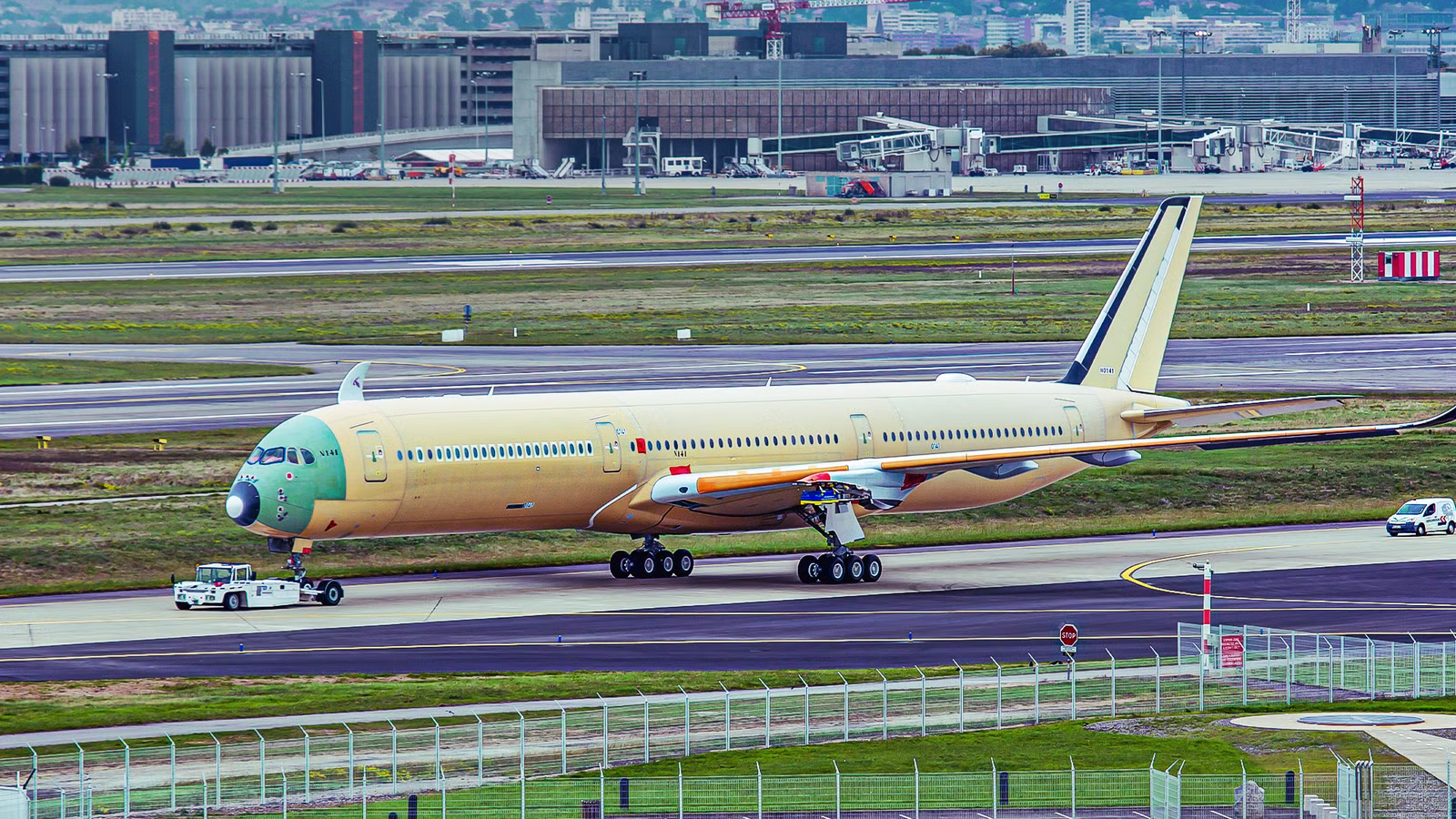
Every day, brand-new airliners worth hundreds of millions of dollars take off, fly complex multi-hour flight paths, and land right back where they started. To anyone watching a radar screen, an aircraft flying in wide loops with no destination might look like an emergency. In reality, these non-revenue factory flights are the rigorous final proving ground before an airframe can carry paying passengers. It gives the manufacturer a chance to see its completed work in action before it makes its way to the intended customer, checking that the aircraft is working as it should.
With the Simple Flying flight tracker, aviation enthusiasts can follow factory jets long before airlines officially announce their delivery dates, seeing exactly what happens in the lead-up to aircraft deliveries. This article looks closely at where you can find these flights, as well as the telling signs of a test flight when observing on the flight tracker.
Look Out For The Callsigns

The clearest giveaway on a live map is the aircraft’s registration prefix and callsign format. Major builders operate under dedicated manufacturer callsigns, such as Airbus using the AIB prefix, and temporary national test registrations assigned by civil aviation authorities. When a flight shows matching departure and arrival ICAO codes alongside a factory registration, it suggests an internal airworthiness test rather than a commercial service.
Take KLM‘s first Airbus A350-900 (MSN 809) as a prime example. Before receiving its official Dutch registration PH-ZNA and name The Night Watch, the twin-engine jet flew under the French test code F-WZNM, as reported by AeroTime. On September 19, the aircraft completed a 90-minute test flight from Toulouse-Blagnac Airport (TLS), climbing to 35,000 feet (10,668 meters) over southern France and the Bay of Biscay to verify engine thrust parameters and cabin pressure stability.
Generally speaking, an out-and-back circuit confirms a new jet is being tested. However, these flights do not take place in random airspace. Manufacturers have to work within strictly reserved flight corridors and purpose-built factory airfields to run their testing programs without disrupting civil traffic.
Where Aircraft Can Test Safely

Aircraft manufacturers generally concentrate flight test operations around more than one location equipped with specialized runway infrastructure and dedicated airside delivery centers. Airbus conducts its widebody flight testing out of Toulouse-Blagnac Airport (TLS) in southwestern France, utilizing the 11,483 feet (3,500 meters) runway 14R/32L positioned adjacent to the main Airbus Delivery Center, as detailed in Simple Flying coverage. For narrowbody aircraft like the Airbus A320neo family, Airbus relies heavily on its dedicated facility at Hamburg-Finkenwerder Airport (XFW) in Germany, which features a 10,443 feet (3,183 meters) single-runway layout built specifically for factory testing and customer deliveries.
Across the Atlantic, Boeing centers its widebody assembly and flight testing at Paine Field (PAE) in Everett, Washington. Operating on runway 16R/34L, which extends 9,010 feet (2,746 meters), Boeing test pilots share the airfield with the world’s largest industrial building by volume. According to analysis by Simple Flying, these airfields are strategically positioned near open geographical airspace, such as the Bay of Biscay off the French coast or the Olympic Peninsula in the Pacific Northwest. Civil aviation authorities reserve specific altitudinal sectors over these zones, allowing factory crews to perform aggressive maneuvers without disrupting commercial air corridors.
Knowing where manufacturers operate lets radar observers narrow their search, but location alone doesn’t explain what pilots are actually doing during a flight. Once airborne over a reserved test corridor, test crews follow structured flight test profiles that generate distinct telemetry patterns on radar screens compared with standard commercial flights.
What Makes A Test Flight Route Different?

When an aircraft undergoes factory airworthiness testing, its flight profile looks dramatically different from a standard commercial airliner following a high-altitude jetway. Rather than climbing directly to cruise altitude and setting a straight course toward a destination airport, factory test flights use structured maneuvers designed to stress onboard systems to their limits, as detailed in BBC coverage. Tracking data often shows distinctive telemetry signatures such as sharp altitude steps, sudden speed variations, medium-to-steep bank angles, and tight racetrack holding patterns within reserved airspace sectors. Pilots routinely perform high-speed rejected takeoffs on the runway prior to maiden flights, followed airborne by engine shutoff and restart checks, emergency descent drills, and cabin pressurization evaluations at maximum operating altitudes.
Rather than a single event, these telemetry signatures span a structured multi-flight series. For an airframe like KLM’s first A350-900 (MSN 809), the initial production flight under test code F-WZNM is just one milestone in a broader evaluation campaign. On tracking platforms, a single airframe typically logs three to five separate flights over two to three weeks: the initial factory test (P1), system integration checks (C1), and final customer acceptance flights alongside airline representatives before the airframe receives its permanent registration and final delivery clearance, as detailed in coverage from Simple Flying.
Catch what other trackers miss
Emergency squawks, holds, NOTAMs — live signals, no signup.
Open tracker
Catch what other trackers miss
Emergency squawks, holds, NOTAMs — live signals, no signup.
Open tracker
Reading these erratic telemetry signatures reveals what test pilots are doing in the cockpit, and more can be seen within the flight tracker feature, including detailed information on an aircraft’s every movement. Modern tracking algorithms actually process this incoming transponder data automatically to identify factory flights without requiring manual searching.
How Can The Tracker Find These Flights?

Modern flight tracking platforms identify factory test flights by interpreting raw Automatic Dependent Surveillance-Broadcast (ADS-B) telemetry transmitted from an aircraft’s Mode-S transponder at a frequency of 1,090 MHz. Every airframe is assigned a unique ICAO 24-bit address, commonly known as a Mode-S hex code. During final assembly, factory aircraft transmit under temporary hex code blocks assigned to manufacturer test registries. Simple Flying’s flight tracker calculates an aircraft’s spatial displacement ratio by comparing total distance flown against the straight-line distance between departure and arrival coordinates. When an aircraft logs hundreds of miles while maintaining a displacement ratio near zero, then that flight is most likely a non-revenue test flight.
Applying this algorithmic filtering on the Simple Flying tracker allows observers to isolate manufacturer flights by pairing factory callsign prefixes like AIB or BOE with designated assembly airfields. For instance, filtering by Toulouse-Blagnac (TLS) highlights active Airbus test airframes navigating local test blocks over southwestern France. In the case of KLM’s first A350-900 (MSN 809), tracking the aircraft under its temporary French test registration F-WZNM provided real-time visibility as test pilots completed its 90-minute maiden flight before the jet transitioned to its permanent Dutch mark, PH-ZNA.
Automated tracking algorithms take raw transponder feeds and turn them into direct operational intelligence for the wider aviation industry. You no longer need to wait for formal corporate press releases, because watching an airframe progress through its factory flight test sequence gives airlines, analysts, and enthusiasts an unvarnished view of aircraft production velocity. When an airframe successfully completes its customer acceptance flights without logging unexpected return-to-base maneuvers, it is the final call that commercial delivery is imminent.
New Aircraft Are No Longer A Secret

Deciphering flight test milestones offers airlines, industry analysts, and spotters an insight into the timeline for fleet integration well before commercial schedules reflect new aircraft assignments. When an airframe successfully completes consecutive engine ground runs, low-speed taxi checks, and its maiden flight, assembly is complete, and systems validation begins. For an airline preparing to introduce a new fleet type, these tracking milestones dictate ground crew training schedules, flight crew type-rating conversions, and route-proving itineraries across international networks.
This is again clear when looking at KLM’s A350 test, and it is important to emphasize how critical these test flights are to the airline’s future. Replacing older Airbus A330 and Boeing 777-200ER aircraft on long-haul routes such as  Amsterdam Schiphol Airport(AMS) to
  Toronto Pearson International Airport(YYZ), the A350 delivers a 25% reduction in fuel burn alongside a 40% noise reduction, demonstrating how factory telemetry directly forecasts tangible operational efficiency, as detailed by
  British Airways information.
Whether tracking temporary transponder codes over southwestern France or watching delivery flights cross the Atlantic Ocean, raw telemetry continues to strip away the opacity of commercial aircraft delivery. Over the coming years, it will be interesting to see how tracking platforms and regulatory bodies adapt their data streams as automated flight-test filtering evolves from a niche analyst tool into an essential component of global aviation intelligence. It is hard for airlines and manufacturers to keep a secret now, so what needs to change?
A Lot Of Power In A Small Tracker

Real-time flight tracking has completely changed the impact of aviation telemetry. Global supply chain bottlenecks and multi-year backlogs are rife, and even if manufacturers want to keep the extent of these from public view, tracking temporary factory registrations reveals the true operational tempo of assembly lines before corporate press offices issue formal announcements.
Ultimately, as long as tracking systems remain untouched, there is very little anyone can do to keep test flights from being visible. For aviation enthusiasts and casual observers alike, test flights are a unique sight compared with a standard commercial flight, and the flight tracker is the best way to see them in action. As receiver networks expand and automated displacement models grow more precise, transponder tracking will continue to strip away the opacity of factory airfields, making these raw signals direct operational insight for anyone to observe.