dailynewsnblog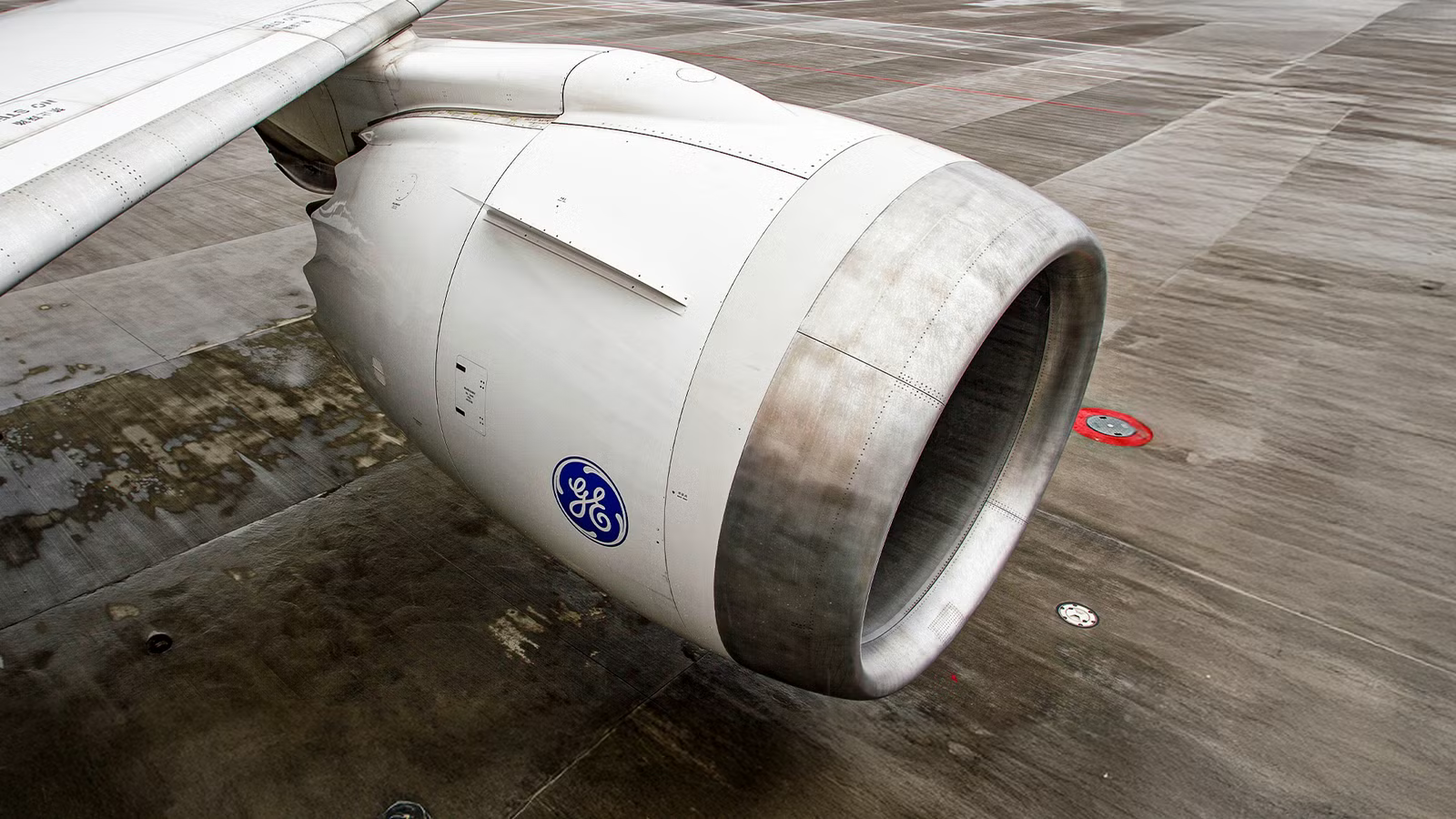
The General Electric GEnx is a major source of revenue for the famed engine manufacturer. It’s by far the most popular choice for the Boeing 787, and it was also offered on the (now out of production) Boeing 747-8 in a slightly tweaked form. General Electric has earned a lot of goodwill from airlines for the performance and reliability of the GEnx, and has been rewarded with massive sales as a result. With this in mind, it’s continuing to innovate on the maintenance costs and times of the GEnx for even more improvements.
The manufacturer has recently begun rolling out new technology that cuts engine inspection times in half. Developed in collaboration with Waygate Technologies, the new inspection templates use AI-assisted image overlays to achieve these time savings, and this will translate into cost savings for airlines. It’s striking that these cuts in time are being achieved through new inspection tools rather than by modifying the engine, and it also demonstrates General Electric’s commitment to improving MRO support for its customers.
The New AI-Assisted Inspection Software

General Electric has partnered with Waygate Technologies to introduce new automated Menu Directed Inspection (MDI) templates that will cut down engine inspection times for the GEnx-1B on the 787 and the GEnx-2B on the 747-8. First announced in April 2026, these new templates are being used for borescope inspections on the engine and feature AI-assisted image overlays to help technicians inspect high-pressure turbine blades, providing automated and manual 3D measurements that include line, area, and profile.
There are multiple benefits of the new templates. The image and video data are higher quality than prior software, while the results can be stored in real time through Waygate’s InspectionWorks Insight Cloud platform. In addition, the new MDI template should be relatively easy for technicians to learn. Meanwhile, using the automated MDI template will allow technicians to complete GEnx blade inspections in just an hour and a half, as opposed to three hours before.
General Electric and Waygate’s new tool promises to be more effective than prior inspection tools while also delivering time savings for airlines. This, in turn, should prove to be a win-win as long as it continues to deliver on its promises. General Electric has generally been a leader in MRO support and engine durability, particularly with its largest widebody turbofans. It’s building upon the success of prior AI-powered tools that have been successfully used for the GEnx and have also been adapted for the CFM LEAP as well as the upcoming GE9X.

General Electric first rolled out the Advanced Blade Inspection Tool (BIT), developed by subsidiary OC Robotics, in April 2023 for use on the GEnx. This is, of course, the company’s volume commercial engine if you don’t count the CFM LEAP (which is developed and produced as part of the CFM joint venture with Safran), and the success of the BIT led General Electric to expand the BIT to the CFM LEAP and the GE9X. As is the case today, the BIT delivered superior accuracy as well as time savings.
General Electric has been expanding the use of its AI tools to more MRO facilities, while the new MDI templates developed in partnership with Waygate represent the next evolution of its AI-assisted inspection technology. AI is becoming increasingly useful for major applications to enhance the effectiveness of various tools, and General Electric will only continue to develop its AI technology in search of greater time savings and greater effectiveness, improving safety while also lowering costs.
Similar tools are also being rolled out by Pratt & Whitney and Rolls-Royce, using AI-assisted software to cut down inspection times and improve accuracy. All three manufacturers (along with the CFM joint venture) are heavily focused on cutting maintenance costs, which is nearly as crucial to airlines as the engine’s fuel burn. Notably, however, although recent advances in AI have focused on reducing maintenance costs through software, General Electric’s engines have themselves been leaders in reliability.
General Electric And Reliability

General Electric currently produces the GEnx-1B for the Boeing 787, the GE90 for the Boeing 777F, and the GE9X for the Boeing 777X, while the CFM joint venture is building the CFM LEAP for the Airbus A320neo and Boeing 737 MAX. The GE90 is an older, proven platform that has been in service for decades, and it will soon be phased out once Boeing fully shifts to producing the 777X. However, the GEnx and CFM LEAP have been notably more dependable than their direct competitors, which has earned them tremendous sales success.
The GEnx-1B competes against the Rolls-Royce Trent 1000 on the 787, and the two were fairly evenly matched during the Dreamliner’s early days. However, after some initial problems with the engine, the GEnx has been quite dependable. Meanwhile, the Trent 1000 has been plagued by repeated durability troubles that have resulted in expensive groundings. As such, the GEnx is powering about two-thirds of all 787s in service while it’s also been selected for over 80% of the aircraft’s remaining backlog.
The CFM LEAP competes against the Pratt & Whitney PW1000G on the Airbus A320neo, and the LEAP also holds an advantage here (although much smaller than the GEnx’s lead on the 787 program). While the LEAP hasn’t been flawless, the PW1000G has had significant durability issues that have cost airlines money and caused operational headaches, while the LEAP has been much more dependable.
The LEAP is also the exclusive engine on the Boeing 737 MAX, while the PW1000G has also been selected by the Airbus A220 and Embraer E2. On both programs, but particularly on the A220, the PW1000G has suffered premature wear and tear, leading to aircraft groundings, partly due to limited MRO capacity. Meanwhile, the LEAP has been quite reliable, and MRO support has generally been much easier for CFM operators, while the engine has received more orders throughout the narrowbody market than the PW1000G.
The Upcoming General Electric GE9X

The GE9X is General Electric’s next commercial engine, succeeding the GE90 and serving as the exclusive option for the Boeing 777X. The aircraft is still being developed, so its true performance is unknown to anyone who doesn’t work for General Electric or a 777X customer. One of the major selling points of the GE9X, however, is that it should be very durable, owing to General Electric’s track record with engines of this size and the fact that its in-service thrust rating is well below what the engine is truly capable of.
The GE9X may experience teething issues once the 777-9 enters service, as this almost always occurs with new aircraft and engines, and so it’s important that General Electric’s support network for the GE9X is robust enough to meet potential demand. So far, the manufacturer is planning to service the GE9X at facilities in Nantgarw, Xiamen, Dubai, Singapore, and Środa Śląska. It’s a small network, but it should be sufficient for the low volume of engines that will be in service during the program’s first few years.
Recent Aircraft Engine Programs | Introduction | ||
|---|---|---|---|
General Electric GE9X (777X) | 2027 (projected) | Pratt & Whitney PW1100G (A320neo) | 2016 |
Pratt & Whitney PW1900G (E2) | 2018 | Rolls-Royce Trent XWB (A350) | 2015 |
Rolls-Royce Trent 7000 (A330neo) | 2017 | General Electric GEnx-1B (787) | 2012 |
CFM LEAP-1B (737 MAX) | 2017 | General Electric GEnx-2B (747-8) | 2011 |
CFM LEAP-1A (A320neo) | 2016 | Rolls-Royce Trent 1000 (787) | 2011 |
Pratt & Whitney PW1500G (A220) | 2016 |
The GE9X is an incredibly innovative engine that incorporates an unprecedented level of advanced materials to deliver unrivaled thermal efficiency. The use of carbon fiber reinforced polymer (CFRP), ceramic matrix composites (CMC), 3D-printed components, and more all allow the engine to run hotter with higher internal pressure ratios than the GEnx or Trent 1000, and this will significantly cut down on fuel consumption. In addition, it has a staggering bypass ratio of 10:1 and the largest fan diameter of any turbofan engine in history.
How The Competition Is Responding

General Electric has made massive gains in market share on the 787 program, but Rolls-Royce hasn’t been sitting idle. It’s now delivering the Trent 1000 XE, an improved variant of the 1000 with greater fuel efficiency and much improved durability compared to older variants. So far, it’s performed much better than its predecessors, and Rolls-Royce is betting that the XE will help steal market share back from General Electric. Meanwhile, the Trent XWB on the Airbus A350 continues to be a shining star within Rolls-Royce’s lineup in terms of efficiency and durability.
In the narrowbody market, Pratt & Whitney is still working on clearing its backlogs, but it has been working on improvements to resolve earlier wear-and-tear issues. It recently began delivering the GTF Advantage, an improved variant of the PW1100G, which promises better reliability and upgraded performance, and it’s also continuing to replace worn engines for in-service aircraft. As a result, the manufacturer is starting to slowly close the gap with CFM in terms of dependability.
General Electric has had several years when the main rivals to its products have suffered major in-service challenges, while its own engines have been far less troublesome. However, Rolls-Royce and Pratt & Whitney have invested heavily in improving the reliability of their products, and this will result in more intense competition since reliability can no longer be a selling point for General Electric. While new software can deliver major improvements, this can also be replicated by competitors with relative ease, whereas hardware is where the differences truly lie.