dailynewsnblog
 Etihad Airways is taking a more targeted approach to deploying its widebody fleet, placing larger aircraft on routes with the strongest demand rather than spreading capacity evenly across its network. The strategy is particularly visible in several key markets, where the Abu Dhabi-based carrier is using its Airbus A380s and Boeing 777s to respond to changing passenger demand.
That strategy is particularly visible in the summer 2026 flight schedule. Paris is receiving two daily Airbus A380 flights alongside a Boeing 787-9, Tokyo has gained daily A380 service, and Dhaka has been given year-round Boeing 777 operations after a sold-out launch. Meanwhile, some thinner routes received the narrowbody A321LR service and even the A320. The question is not only about why Etihad is adding capacity, but why these particular markets are receiving some of the airline’s largest aircraft.
Why Paris Is Getting Two Daily A380s

The clearest example of Etihad’s demand-led approach is  Paris Charles De Gaulle Airport (CDG), where the airline dramatically increased capacity for summer 2026. From July 1, Etihad scheduled three daily flights between Abu Dhabi International Airport (AUH) and Paris, with two operated by the Airbus A380 and the third by a Boeing 787-9.
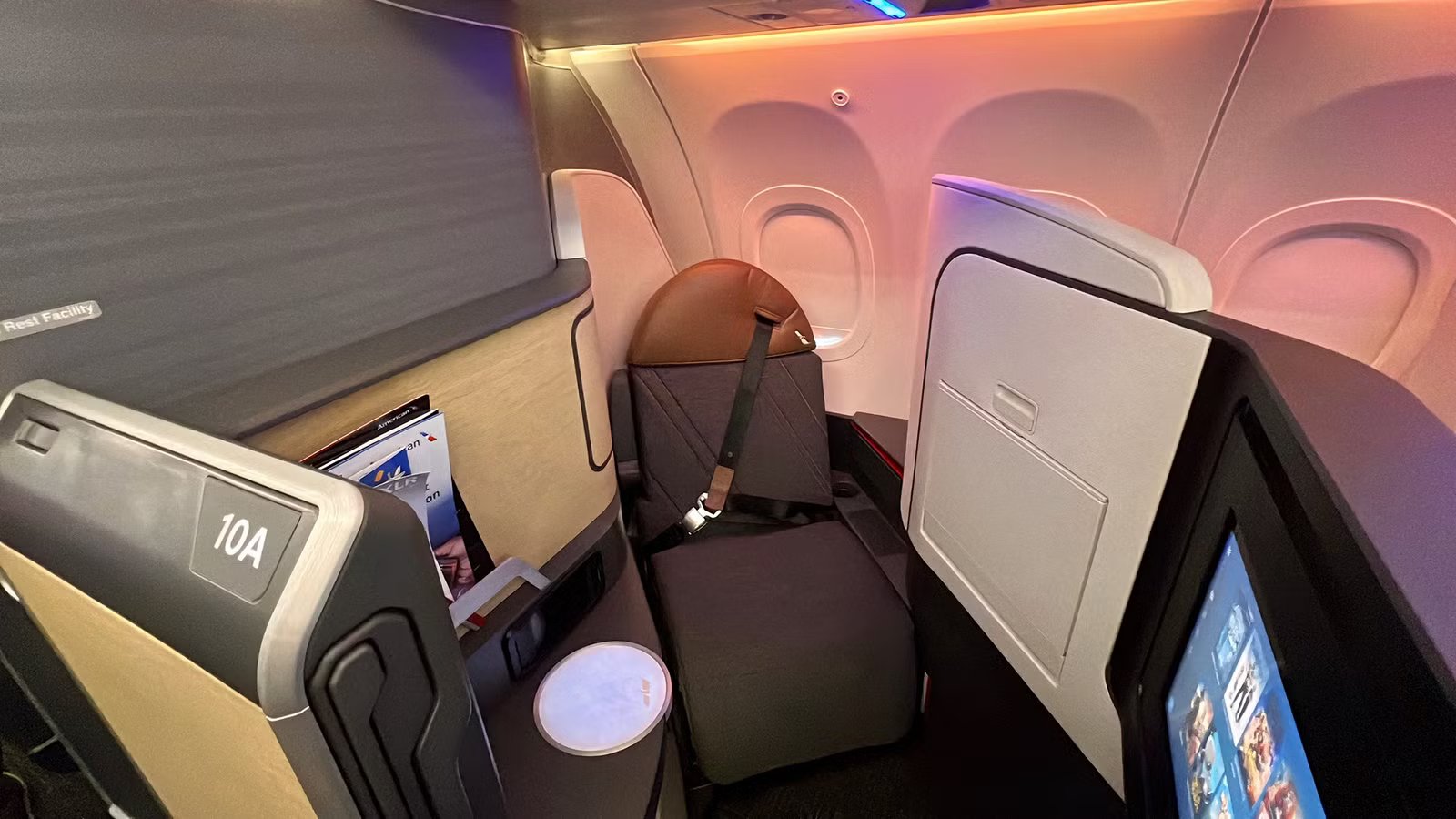
This is a significant commitment because the A380 is the most beloved widebody aircraft in Etihad’s fleet. It is the airline’s flagship, offering four cabins, including The Residence, First Apartments, Business Class and Economy. Etihad described the Paris expansion as a way to significantly increase premium travel capacity between Abu Dhabi and the French capital, while Chief Revenue and Commercial Officer Arik De called the double-daily A380 operation a “statement of confidence” in the market.
The schedule also shows that the additional capacity is not concentrated into one part of the day. One A380 leaves Abu Dhabi at 02:35, another at 14:20, while the 787-9 departs at 08:50. That creates three separate departure opportunities and allows Etihad to target different passenger segments, but it also raises a larger question: what makes the airline confident that Paris can absorb this much premium and long-haul capacity?
Why Etihad Is Willing To Bring Back More A380s

The answer becomes clearer when you consider Tokyo alongside Paris. On June 18, 2026, Etihad operated its first A380 flight to  Tokyo Narita Airport (NRT), making the superjumbo a daily fixture on the Abu Dhabi-Tokyo route. The airline said the deployment was designed to respond to “robust demand for premium travel” between the two cities.
Tokyo is particularly revealing because Etihad used the route to return its eighth A380 to service. The aircraft provides 70 Business Class seats and 415 Economy seats, alongside nine First suites and The Residence, giving the airline a substantial increase in both overall and premium capacity. Etihad’s published schedule shows EY800 and EY801 operating daily with the A380 in both directions.
Route | Summer 2026 widebody deployment | Key capacity rationale |
Abu Dhabi–Paris | 2× daily A380 + 1× daily 787-9 | Strong premium demand and additional network connectivity |
Abu Dhabi–Tokyo | Daily A380 | Robust premium demand; eighth A380 returned to service |
Abu Dhabi–Dhaka | 4× weekly Boeing 777 | Strong community demand and substantial cargo traffic |
Returning another A380 to active service gives Etihad an additional high-capacity asset it can position against markets where both premium demand and total passenger volumes justify it. That makes the aircraft itself part of the airline’s demand-management toolkit, rather than merely a fixed piece of its fleet plan.
But Paris and Tokyo are premium-heavy markets, so another question emerges: can the same philosophy work in a market with a very different traffic mix?
Dhaka Shows How The Strategy Works Differently

Dhaka provides a contrasting example. Instead of deploying an A380, Etihad launched Abu Dhabi–Dhaka (DAC) with a Boeing 777 and quickly decided that the route deserved to become a year-round operation. The inaugural flight on June 26, 2026, was sold out immediately, and Etihad subsequently confirmed that the service would continue year-round because of strong demand.
The four-times-weekly 777 operation is configured with 28 business class seats and 374 economy seats. That is a very different proposition from Paris or Tokyo: the aircraft is still a high-capacity widebody, but the emphasis is much more heavily weighted toward economy due to the nature of foreign workers and their families living between the two countries. Etihad also highlighted the large Bangladeshi community working in the UAE and the significant belly-hold cargo carried between the two countries, meaning the route’s economics extend beyond passenger tickets.
This is where Etihad’s strategy becomes more interesting. “Adding capacity where demand is strongest” does not necessarily mean assigning the A380 to every successful route. It means using the aircraft available to the airline in a way that matches each market’s characteristics. Paris needs additional premium capacity, Tokyo can support the return of an A380, while Dhaka benefits from the 777’s large passenger and cargo capacity. The question now is what this tells us about the wider role of Etihad’s growing widebody fleet.
Catch what other flight trackers miss
Emergency squawks, holds, NOTAMs — live signals, no signup.
Open tracker
Catch what other flight trackers miss
Emergency squawks, holds, NOTAMs — live signals, no signup.
Open tracker
A Fleet That Can Be Matched To Different Types Of Demand

In practice, Etihad’s approach gives its network planners several ways to respond when demand changes. A route can receive an additional frequency, a larger aircraft, an extended seasonal schedule, or some combination of the three. The decisions announced in 2026 demonstrate that Etihad is using all of those levers successfully.
The Dhaka example is particularly useful because it shows how capacity decisions can be connected to multiple revenue streams. A 777 with 402 seats in the published configuration provides substantial passenger capacity and belly-hold cargo supporting trade between the UAE and Bangladesh. In other words, the aircraft can be valuable even when the premium cabin is not the primary driver of demand.
At the other end of the spectrum, the A380 lets Etihad offer something a smaller aircraft cannot replicate at the same scale. Its Tokyo configuration includes The Residence, nine First spaces, 70 business seats and 415 economy seats, while the Paris schedule places two of those aircraft on the route every day.
This creates an important operational consequence. Once an airline has several widebody types and configurations available, it can ensure the right aircraft flies the right route at the right time.
What The Capacity Shifts Mean For Etihad’s Network

The immediate consequence is that Etihad can grow selectively. Its July 2026 network changes included more than the major widebody examples: Brussels was scheduled to increase from seven to 11 weekly flights, Kraków from three to four, while seasonal services to Zanzibar and Palma de Mallorca were extended. Etihad said these changes reflected strong demand across community, leisure and business markets.
On these particular routes, Etihad can add frequency with smaller aircraft, such as an Airbus A321LR, extend a seasonal service, or occasionally introduce a larger widebody. Abu Dhabi–Palma, for example, is operated by the A321LR and was extended to October 18, while Zanzibar was extended to March 31, 2027, with the Airbus A320.
Loading map…
Drag to explore
The result is a network with more capacity concentrated on routes where Etihad sees the strongest response. For the airline, however, the bigger prize is potentially better utilization of expensive long-haul aircraft. An A380 deployed in a market that can support it can move substantially more passengers while also giving Etihad an opportunity to sell its premium product at scale.
But this approach also introduces a risk: the more aggressively Etihad moves aircraft toward strong markets, the more important it becomes to identify whether that demand is structural or simply seasonal.
A Widebody Fleet Built Around Where Passengers Want To Fly

The bigger takeaway from Etihad’s 2026 schedule changes is the flexibility they give the airline. Rather than committing every aircraft type to a fixed role, the carrier can adjust frequencies, aircraft size, and seasonal schedules as booking patterns develop. That gives Etihad more room to respond to markets that outperform expectations without making permanent changes to its network.
This also helps explain why the return of additional A380s matters beyond the aircraft itself. Bringing the eighth superjumbo back into service gives Etihad another high-capacity option as it expands selectively across its network, similarly to its neighbor from Dubai, Emirates, with its A380. While Etihad’s 787s and 777s provide different combinations of capacity, range, and cabin mix. The result is a fleet that can be adjusted around the network rather than forcing the network to fit a single fleet plan.
The real test will come when demand changes again. Etihad’s stated approach of “adding capacity where demand is strongest” gives it plenty of scope to move aircraft and increase frequencies, but the commercial case ultimately depends on whether today’s strongest markets continue to perform at those levels, especially taking into consideration the fragile situation surrounding the state of affairs in the Middle East. For an airline rebuilding and expanding its long-haul network, knowing when to add capacity may prove just as important as having the aircraft available to add it. So far, Etihad seems to be doing its job well.