dailynewsnblog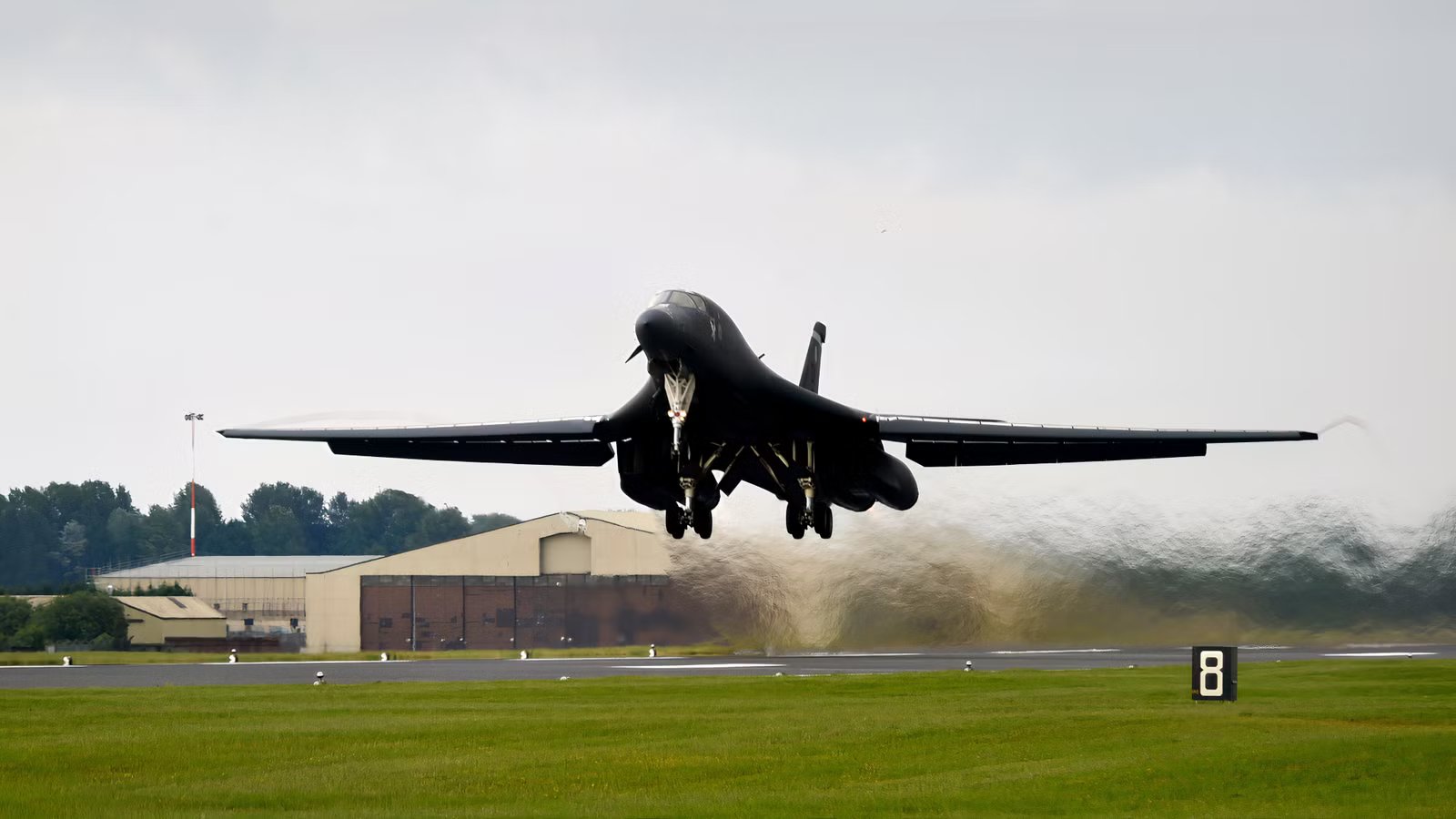
A private business jet inadvertently landed at RAF Fairford in Gloucestershire on Saturday after apparently approaching the wrong airport, triggering a security response at the US Air Force’s principal bomber base in the United Kingdom. The aircraft, a German-registered Cessna Citation XLS+, had departed London City Airport (LCY) earlier that morning. Aviation reporting indicates it was intended to reach another destination nearby but instead arrived at Fairford, a few miles east of the airport it was supposed to use.
The incident involved D-CJMK, a Cessna 560XL Citation XLS+ built in 2019 and operated by VistaJet Germany. Aviation tracking records identify the aircraft, and local airport movement records list D-CJMK among the business jets operating from the airport LCY. The aircraft’s unexpected arrival at Fairford was particularly sensitive because the base hosts strategic US aircraft, including B-1B bombers, and is regularly used for military exercises and deployments.
An Unexpected Arrival At A Strategic Air Base

RAF Fairford is not an ordinary diversion airport. The Gloucestershire installation is operated by the RAF but serves as a forward operating location for the US Air Force, particularly its bomber force. Recent activity at the base has included B-1B Lancers, B-52 Stratofortresses, and other American military aircraft. Movement records show multiple B-1Bs operating from Fairford immediately before the business jet incident. Four B-1Bs were recorded arriving or departing the day before on September 11, illustrating the level of military activity around the base at the time.
The unexpected arrival therefore generated a security alert rather than being treated as an ordinary general-aviation landing. According to The Aviationist, the aircraft landed without authorization, and security personnel responded after the jet appeared at the military installation. Available reporting indicates no deliberate threat from the aircraft. The circumstances instead point toward an apparent navigation or destination error.
The Jet Had Been Operating From London City

Flight-tracking and aircraft records identify D-CJMK as a business jet with a history of operation by Air Hamburg and VistaJet. The aircraft carries construction number 560-6265. Local London City movement records list D-CJMK among general-aviation aircraft at the airport on September 12. The aircraft’s presence at London City is also consistent with its operating history. Photographic records show it at the airport in January, while aircraft databases identify VistaJet Germany as its current operator.
The available tracking information establishes the aircraft’s identity and London City connection, but it does not explain how the crew selected or approached RAF Fairford. No public investigation has established whether the error involved flight planning, navigation, communications, or a misunderstanding during the approach. That uncertainty matters because a military airfield can have procedures that differ substantially from those at a civilian airport. An aircraft approaching the wrong aerodrome may therefore prompt immediate scrutiny even when the underlying mistake is straightforward.
Reviewing Procedures Around RAF Fairford

RAF Fairford is a specialized military installation built to support specialized strategic aircraft, with the runway, parking areas, and support infrastructure required for heavy bombers. Its role in NATO operations means an unexpected civilian landing presents a different set of concerns from a routine wrong-airport arrival. The immediate incident has now raised questions about how the business jet reached the military airfield and whether any changes are warranted to reduce the likelihood of a similar occurrence. The available reporting has not established a specific navigation or communications failure, so it would be premature to assign responsibility for the mistake.
Authorities and aviation operators may therefore focus on what can be learned from the event, particularly whether existing identification, communication, and airspace-monitoring procedures provided sufficient protection around Fairford. Any follow-up could also determine whether additional safeguards are appropriate for civilian aircraft operating in the surrounding area. For RAF Fairford, the episode is likely to remain an unusual security incident rather than a disruption to its broader military mission. However, the circumstances provide British and US authorities with an opportunity to examine how an unintended civilian arrival occurred and whether relatively simple procedural changes could prevent another business jet from reaching a runway it was never supposed to use.