dailynewsnblog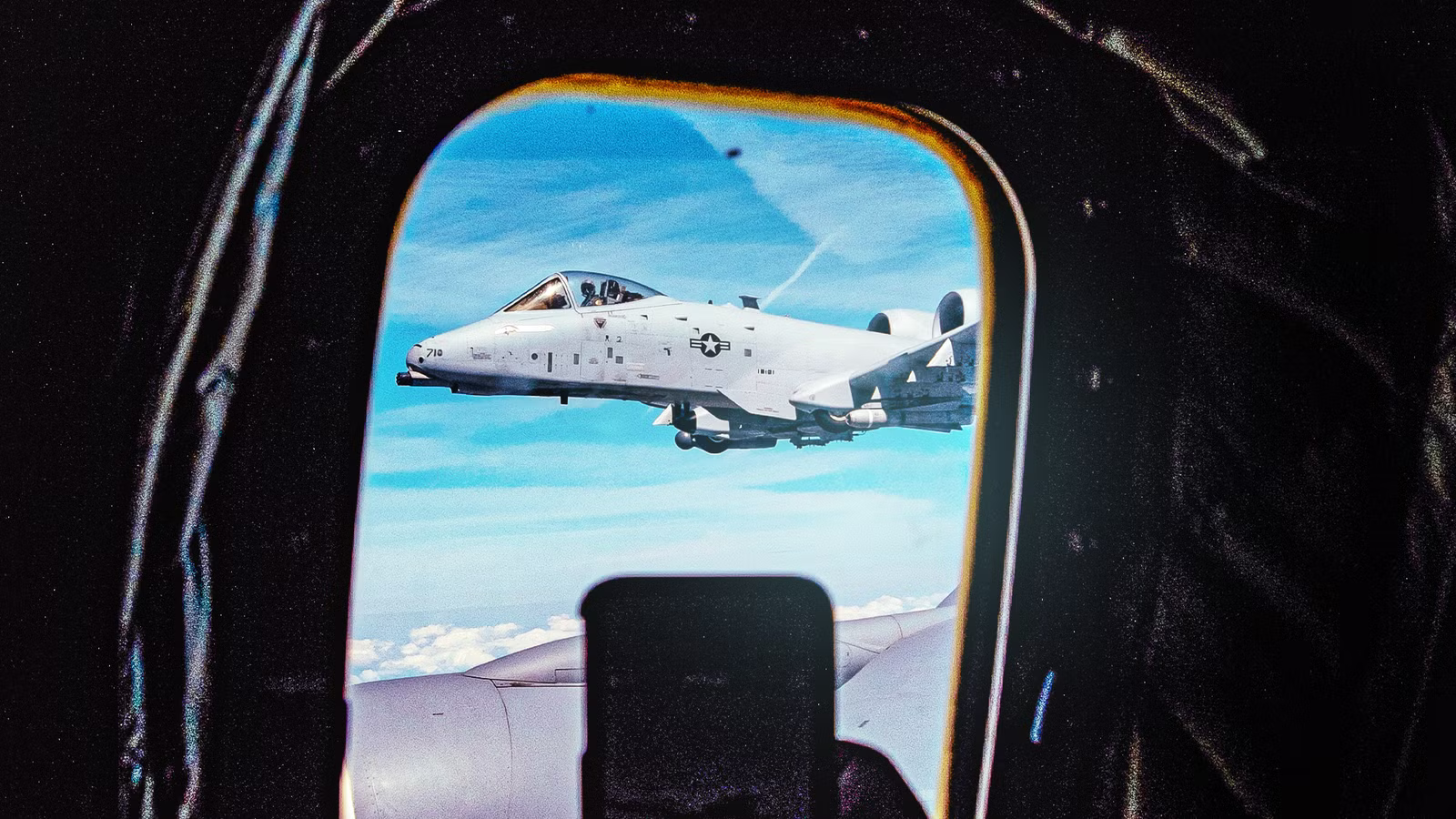
The jet the United States Air Force says will inherit the FairchildA-10 Warthog ’s job carries enough ammunition for roughly three seconds of continuous gunfire. The aircraft it is supposed to replace carries enough for 18. That gap is not, by itself, proof that the F-35A is the wrong aircraft for the job. It points to a more fundamental question: whether the Air Force still expects close air support to be fought the way the A-10 was built to fight it.
In its FY2027 budget, the Air Force is buying 38 Lockheed MartinF-35A Lightning IIs explicitly earmarked to take over the close air support mission the A-10 Thunderbolt II has flown since the late 1970s. At the same time, the service is also putting the  BoeingF-15EX Eagle II into former Warthog units, while Special Operations Command is fielding the Air Tractor L3Harris OA-1K Skyraider II for another part of the ground attack mission. The result is less a one-for-one replacement than a redistribution of the A-10’s work. Why does the Air Force need several very different aircraft to take over a mission once centered on one, and what does that say about the kind of battlefield it expects to fight?
Why The F-35A Got A Job It Wasn’t Built For

The Air Force’s answer is more complicated than simply choosing the fighter it happens to be buying in volume. The F-35A is becoming the service’s principal tactical aircraft as older fighter fleets retire, but the Air Force also argues that its stealth, sensors, data links, precision weapons, and ability to operate in heavily defended airspace make it better suited to future conflicts than an aircraft optimized for low-altitude attack in relatively permissive conditions. That makes the F-35A an unconventional successor to the A-10: it was never designed around the Warthog’s gun-first, low-and-slow mission, but around a broader concept of air support in which finding, targeting, and striking threats can matter as much as remaining over a firefight.
Catch what other flight trackers miss
Emergency squawks, holds, NOTAMs — live signals, no signup.
Open tracker
Catch what other flight trackers miss
Emergency squawks, holds, NOTAMs — live signals, no signup.
Open tracker
The 38 F-35As ordered for FY2027 arrive at a moment when, as detailed by Simple Flying in How A 24-Jet F-35 Order & A Halted A-10 Retirement Created The US Air Force’s 2030 Fighter Gap, reduced F-35 procurement and a stalled A-10 retirement schedule collided to create a projected fighter shortfall heading into the next decade. A Lightning II now costs an average of $82.5 million to build across recent production lots, and according to the Congressional Budget Office, keeping one flying costs between $34,000 and $42,000 per flight hour, roughly double to triple what the Air Force spends flying a Warthog for the same hour, which currently runs at around $20,000. Those numbers make the F-35 considerably more expensive to operate, although the comparison is not simply a price-for-price trade: the higher cost buys capabilities such as stealth, advanced sensors, electronic warfare, and networking that the A-10 does not possess.
None of that tells anyone how effectively the F-35A can perform the most traditional version of the A-10’s mission: staying close to a ground fight and delivering repeated attacks at short range. The cannon is an obvious point to start that comparison, because it exposes just how differently the two aircraft were designed.
The Gun Math Critics Can’t Get Past

The A-10’s GAU-8 Avenger cannon holds up to 1,174 rounds of 30mm ammunition, with a typical combat load of 1,150 rounds. Its seven barrels rotate at a cyclic rate of 3,900 rounds per minute, although pilots fire it in short bursts rather than continuously. According to the math, a pilot could, in theory, empty the entire magazine in an 18-second burst. The F-35A’s internal GAU-22/A, a 25mm four-barrel cannon, holds only 182 rounds at a slower 3,300 rounds per minute, just over three seconds of fire before the gun runs dry, according to The War Zone. That gap exists because the two aircraft were designed in opposite directions.
The A-10 airframe was entirely built around the GAU-8 after the Air Force first specified the gun in 1971, wrapping a 620-lb (281 kg) cannon and a magazine that pushes the loaded weapon system to 4,029 lb (1,828 kg) around the fuselage centerline. The F-35A’s gun, by contrast, was fitted internally as one weapon among many on a multirole airframe that was not designed around a dedicated anti-armor cannon. The result is a dramatically smaller ammunition load, but that trade also reflects the F-35’s broader design priorities, including stealth and internal carriage of weapons.
A gun with three seconds of ammunition can still be useful if the aircraft carrying it is expected to make only brief firing passes rather than sustain repeated strafing attacks. That is precisely why the raw ammunition figures do not tell the whole story. The A-10 was designed to put numerous 30mm rounds onto targets at close range, while the F-35A’s cannon is a secondary weapon on an aircraft whose primary advantages come from sensors, stealth, and precision-guided weapons. Comparing 1,150 rounds with 182 therefore reveals less about which gun is “better” than it does about how differently the two aircraft were expected to fight.
Why The F-35A Can’t Loiter Over A Battle The Way The A-10 Does

Critics of retiring the A-10 have long pointed to a stark contrast: the Warthog can loiter over a target for around 90 minutes on a single tank, while the F-35A, without a nearby tanker, is generally limited to somewhere between 20 and 30 minutes on station. As reported by Defense News, Air Force test pilots have countered that with tanker support in an uncontested environment, the F-35A can also hold position for roughly an hour and a half, but that answer assumes tankers are close, available, and safe to use, which is rarely guaranteed in the kind of prolonged ground fight the A-10 was purpose-built to support.
The Pentagon’s own 2018 comparison test between the two aircraft did little to settle the argument. As Simple Flying documented in Why The World’s Most Expensive Fighter Jet Still Can’t Outrun A 50-Year-Old Aircraft, the operational gap between a legacy attack platform and its stealthy, far pricier successor rarely closes as cleanly on paper as procurement briefings suggest. The War Zone, commenting at the Project On Government Oversight, found that the 2018 flyoff capped the A-10’s cannon at roughly a third of its usual ammunition load, held both aircraft to the same one-hour test window regardless of each one’s actual endurance, and set an operating ceiling of 10,000 feet (3,038 meters) well above the altitude where the A-10 has historically flown its close air support missions. At the same time, a comparison conducted under those conditions was never going to capture the F-35’s primary advantage either: stealth, sensors, and networking, which allow the F-35 to expose itself much less than the A-10 in combat.
If neither the gun nor the loiter time clearly favors the F-35A, the practical question becomes why the Air Force is trusting the mission to it at all, rather than handing the job to aircraft that were actually built for this kind of flight.
The Mission Is Being Split Three Ways

In practice, the Air Force isn’t handing the close air support mission to one aircraft, it’s dividing it. According to Air & Space Forces magazine, Selfridge Air National Guard Base is taking 21 F-15EX Eagle II to replace the A-10s flown by its 107th Fighter Squadron, part of a broader Eagle II buildout that Congress has pushed toward two dozen additional jets in FY2026 alone, with the Air Force’s own FY2027 budget request more than doubling the program’s long-term order book. According to Breaking Defense, the F-15EX’s flyaway cost has climbed from roughly $90 million per jet in its second production lot to about $97 million in its third, pricing it close to the F-35A despite carrying none of its stealth.
Special Operations Command has taken an entirely different route with the OA-1 Skyraider II, a rugged turboprop built by L3Harris and Air Tractor for close air support, armed reconnaissance, and precision strike in permissive airspace. SOCOM’s $3 billion contract covers 75 of the aircraft by 2029, at a unit cost of roughly $15 million, a fraction of the F-35A’s price tag, and an estimated $2,000 per flight hour to operate, compared with roughly $28,000 for an F-16. Its low cost, however, comes with a fundamental tradeoff: the OA-1K is intended for permissive environments where its lack of fighter-level speed and survivability is less consequential.
In a heavily contested environment, getting a slow attack aircraft close enough to a frontline unit is itself the problem. The F-35A does not need to reproduce the A-10’s endurance or carry the same cannon ammunition load if its stealth, sensors, and ability to operate inside defended airspace allow it to find and attack threats that would make an A-10’s traditional approach far more dangerous.
Splitting the mission this way may solve some of the procurement and force-structure problems created by the A-10’s retirement, but it also makes the replacement harder to evaluate. None of the three aircraft reproduces the Warthog’s combination of endurance, gun capacity, low operating cost, and dedicated close-support design; at the same time, the F-35A and F-15EX bring capabilities the A-10 never possessed, while the OA-1K offers an economical option for missions where sending a fighter would be unnecessary. The real question is therefore whether the combination is more useful than the individual aircraft being replaced, rather than whether any one of them looks like an A-10.
The Warthog That Wouldn’t Retire

In April 2026, Air Force Secretary Troy Meink announced that the A-10 fleet, once projected for full retirement by 2026, would keep flying through 2030. As researched by Simple Flying in Why Does The US Air Force Still Rely On The A-10 Warthog?, the decision reversed years of Air Force planning largely because of what was happening in the field: sustained close air support and combat search and rescue operations across the Middle East, including missions flown during recent tensions near the Strait of Hormuz, kept demonstrating exactly the kind of low-and-slow endurance mission that neither the F-35A nor the F-15EX is optimized to fly.
According to Military Times and Stars and Stripes, the extension keeps three A-10 squadrons flying at roughly 18 aircraft each: one active-duty squadron at Moody Air Force Base running through 2029, plus a second Moody squadron and a Whiteman Air Force Base reserve squadron both flying through 2030. Congress has since gone further still: Rep. Abe Hamadeh’s bipartisan BRRRRT Act, formally the Bolstering Recognition, Resurgence, Retention, and Remembrance of the Thunderbolt Act of 2026, was introduced to push that timeline out to FY2033, an indication that at least some lawmakers remain concerned about whether the replacement force will be available quickly enough.
The Air Force isn’t slow to retire the A-10 purely out of sentiment: according to Air & Space Forces Magazine, the defense industrial base building its replacement simply can’t yet produce the F-15EX, the OA-1K, and additional F-35As fast enough to close the gap the Warthog’s departure would leave behind.
What The Numbers Actually Decide

For now, the A-10’s retirement is less a verdict on which aircraft is better than a test of whether the Air Force can replace one specialized capability with a combination of very different ones. The F-35A gives commanders stealth, advanced sensors, networking, and the ability to operate where the Warthog would be far more vulnerable.
The F-15EX brings speed, range, and weapons capacity, and the OA-1K offers inexpensive, persistent support in environments where a high-end fighter may be unnecessary. What none of them provides is the A-10’s particular combination of loiter time, cannon capacity, survivability against ground fire, and low operating cost.
Whether that trade ultimately works will depend not on whether the F-35A can become a better A-10, but on whether the force replacing the Warthog can deliver the right kind of air support, in sufficient numbers, under the conditions in which troops actually need it.