dailynewsnblog
In a perfect world, technological advancements and the use of AI are supposed to make our lives easier while also offering companies, including airlines, cost-saving measures through improvements in efficiency. But consumers remain apprehensive. Reviews of airline AI platforms on sites such as Reddit are largely negative, with new software and apps receiving a fair share of criticism online. Are technological advancements in the airline industry delivering on their promises to passengers, or is it too early to tell? Although AI didn’t develop out of nowhere, the advent of ChatGPT marked a new era, and just like OpenAI’s widely used platform, airline systems will continue to advance as more gold (passenger data) is collected.
US airlines can sometimes overpromise on the customer service side of the onboard experience to acquire and retain passengers and underdeliver when the reality of the complex, moving-parts infrastructure of commercial airline travel can’t match the promises. For example, it’s not uncommon for commercial aircraft to depart without advertised snacks due to delays or supply chain shortages, or to fly for days with non-functioning WiFi or entertainment systems that are down, because getting from point A to point B (safely) and, ideally, on time is still the top priority. And while physical delays, irregular operations, and seat changes diminish the overall travel experience, what about the promise of AI-assisted platforms? How are these advancements impacting the passenger experience?
Examining How US Airlines Currently Stack Up On The AI Front

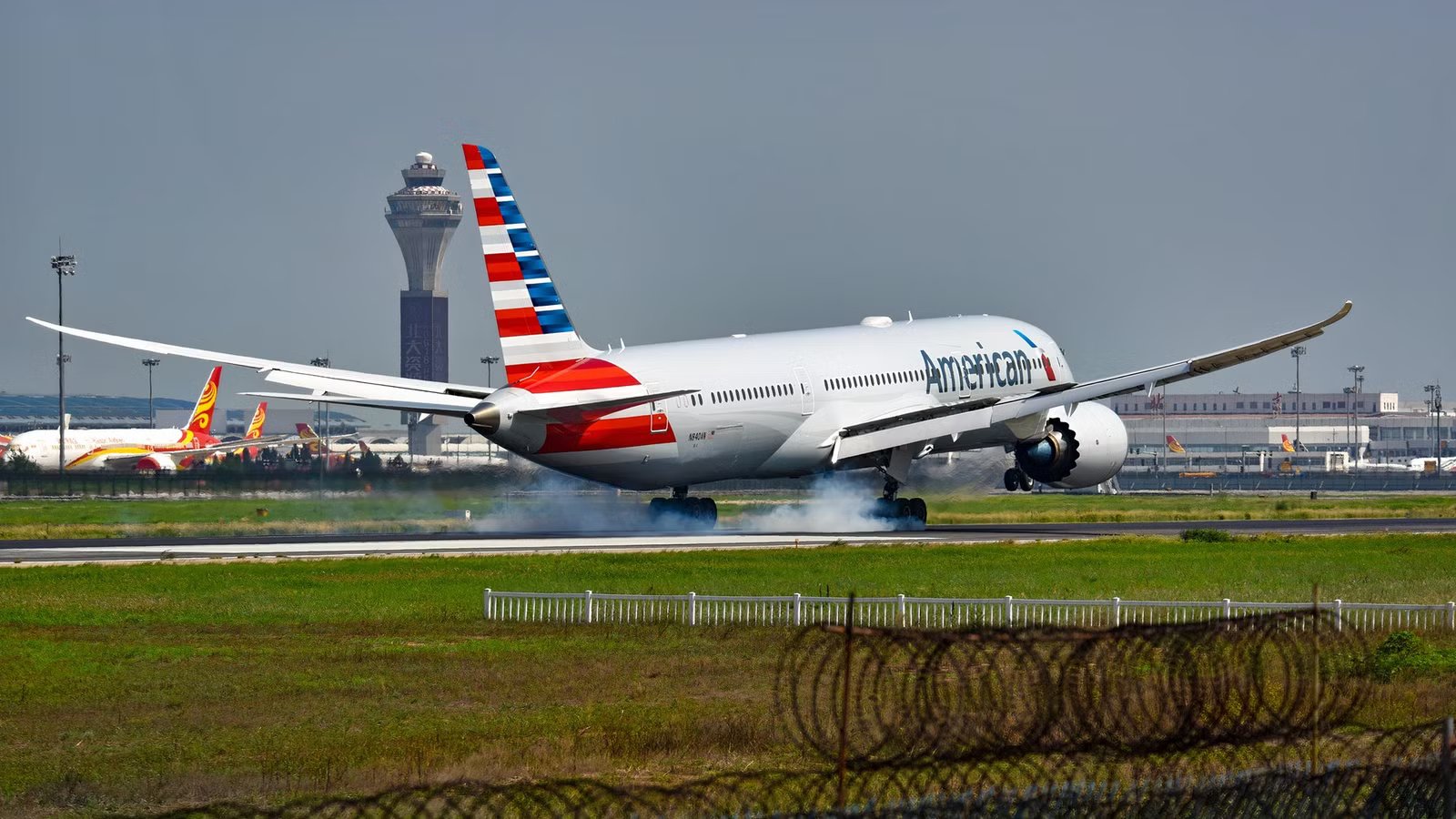
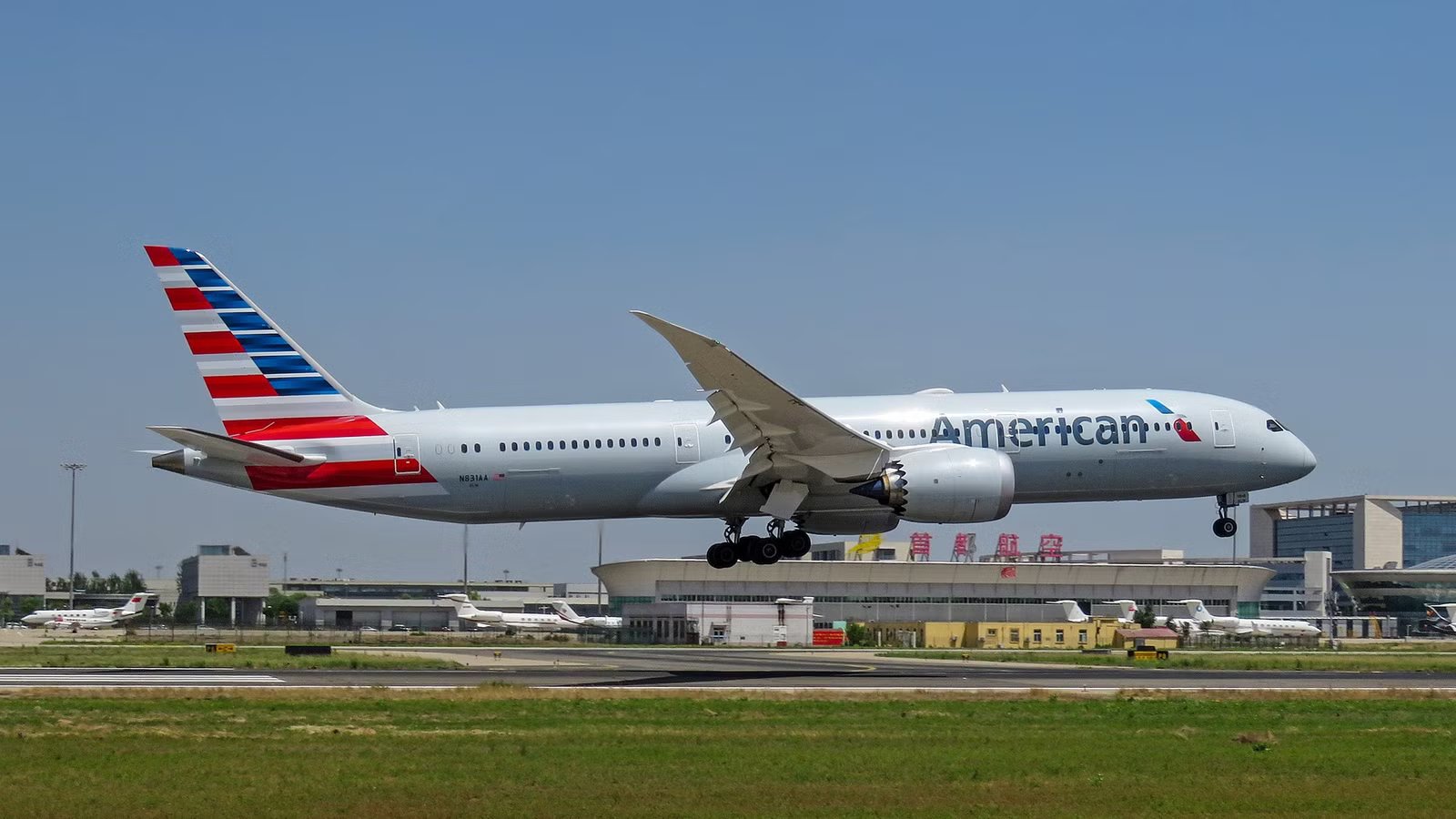
Over the past few years, all three major US carriers,  American Airlines,
  Delta Air Lines, and
  United Airlines, have announced new platforms leveraging AI advancements geared towards improving the passenger experience. Most recently, American Airlines’ AI-assisted rebooking platform, AURA (“AUtomated ReAccommodation”), made headlines after receiving heavy criticism for erroneously changing passengers’ itineraries without asking. In theory, AURA, which American quietly released in 2023, is meant to stay one step ahead of scheduling issues and rebook delayed passengers onto other flights for convenience. However, AURA’s predictive functions don’t always match what’s happening in real time at the gate, highlighting the gap and potential vulnerabilities when digital and physical experiences don’t align in airline travel.
According to Travelers United, passengers have reported losing their seats to standby passengers after sprinting to make tight connections. Unfortunate experiences, such as the recent negative accounts of AURA, make passengers feel powerless in an environment where people already give up control over external circumstances the moment they walk through security. Shared negative experiences also make travelers question whether new tools are really for consumers or for airlines to cut staff, fill as many seats as possible, or charge the highest fare. It’s worth noting, though, that when travel goes smoothly or digital platforms work as intended, praise doesn’t surface online in the same way criticism does.

Digital upgrades are, of course, intended to create a more streamlined experience for flyers. However, in light of the recent AURA mishaps, tech expert Julian Gage, founder of Engage Compliance, affirms that “moving or canceling a booking someone has paid for should produce a proposed action sitting in a queue, not a completed action.” Giving a booking system full authority to make changes without passenger consent or human involvement highlights the importance of including airline SMEs at all stages of technology testing and implementation and clearly shows that platforms do not sufficiently replace human oversight provided, for example, by gate agents in customer service.
Technological advancements such as data analysis may be used behind the scenes to enhance the passenger experience without the consumer knowing. In May 2025, a few years after AURA’s introduction in 2023, American began testing Connect Assist, an algorithm that analyzes the itineraries of passengers at risk of missing a connection. The purpose is to track situations in which holding planes for slightly delayed passengers doesn’t adversely affect operations. When those close-call situations are flagged, airline staff can recommend that crew hold departing planes for a short time when possible. Connect Assist is currently in use at  Dallas/Fort Worth International Airport(DFW),
  Charlotte Douglas International Airport(CLT),
  Chicago O’Hare International Airport (ORD),
  Miami International Airport (MIA),
  Philadelphia International Airport (PHL) and
  Phoenix Sky Harbor International Airport (PHX), and the airline plans to continue expanding it to additional airports throughout the rest of 2026.
American doesn’t appear to be slowing its efforts to improve the passenger experience through digital tools. According to Travel Pulse, the airline has added new check-in kiosks at select airports, an interactive 3D seat map for its Boeing 787-9 Dreamliner planes to help passengers book, and a redesigned mobile app.
Delta Explores Agentic AI Functions With Its In-App Virtual Assistant

Delta has also introduced an AI-assisted platform to improve the passenger experience. Many companies have replaced customer service agents with chatbots to handle common questions, and Delta is following suit by giving flyers access to Concierge to inquire about baggage limits, security rules, and more. Delta Concierge is an AI-powered assistant built into the Fly Delta app that can answer voice or text commands and provide customers with personalized information.
When Delta announced Concierge back in January 2025, the blend of digital and physical was top of mind, according to CEO Ed Bastian.
“Delta is thinking differently about how we blend the digital and physical experiences, starting with the Fly Delta app,” he explained. “Our vision for Delta Concierge is that it will serve as an AI-powered personal assistant that combines the context of who our customers are and how they like to travel, with the deep knowledge and insights we’ve built as the world’s most reliable airline.”
Most recently, in August 2026, Concierge became available to all SkyMiles members. The latest update highlighted some of Concierge’s newest transactional capabilities on top of what it was already capable of:
- Check status, rebook, cancel a flight, and request a refund or eCredit through a conversation with Delta Concierge
- The assistant can then submit a refund request or issue an eCredit in real time
- Concierge offers rebooking support during travel disruptions, explaining what has changed and helping you find alternative flights
- It recognizes your nearest upcoming trip, so you don’t have to search through reservations before asking for support
- The tool can automatically pull and summarize the status of your checked bags across your trip
- Concierge can currently look up eCredits and check your SkyMiles Membership status
Catch what other flight trackers miss
Emergency squawks, holds, NOTAMs — live signals, no signup.
Open tracker
Catch what other flight trackers miss
Emergency squawks, holds, NOTAMs — live signals, no signup.
Open tracker
Delta has also mentioned some of the features Concierge users can expect in the years ahead, including:
- Destination-specific notifications like updates on weather conditions to help with packing and preparedness
- Providing directions at unfamiliar airports with proactive notifications for directions to bag drop, Delta Sky Clubs, and departure gates
- Notifying passengers when there’s a dedicated TSA PreCheck Touchless ID line for an expedited security experience
- Enable customers to automatically connect to Delta Sync WiFi and Delta Sync seatback
What’s interesting about Concierge is that it goes beyond a simple chatbot that merely answers questions and enters the agentic AI arena by automating travel tasks such as rebooking disrupted flights, tracking baggage, canceling eligible reservations, and processing refund requests. As some of Delta’s partners include major players such as Uber, Joby, and YouTube, consumers can expect significant technological advancements in the near future. Hopefully, the next phases of Concierge will continue to improve the passenger experience through more intuitive use while also allowing immediate connection to human staff when requests are too complicated for the tool.
United Airlines Focuses On In-App Features & TSA Tracking

Interestingly, United has an AI-powered tool called ConnectionSaver, which sounds very similar to American’s Connect Assist mentioned above. In May of this year, Simple Flying’s Luke Diaz received a statement from the airline in which ConnectionSaver is described in relation to its mobile app.
ConnectionSaver automatically identifies departing flights that can be held for connecting customers – without delaying the on-time arrival of the customers who have already boarded. Now, customers have full visibility into their connecting flights right on their phone screens. For travelers pressed on time during a connection, the suite of features provides key information to help them navigate to their connecting flight, including boarding time, walking time, gate number and more. Plus, they will get app notifications if their next flight is being held for them with ConnectionSaver, offering more transparency and peace of mind during their travel journey.”
About one year after Delta announced Concierge, United released an update to its app. Similar to Concierge, United’s December 2025 update featured promise travelers a more customized experience through additions like:
- ‘Virtual Gate,’ which gives customers real-time updates about which groups are boarding and a progress bar that shows how many people have boarded
- United Club ‘closest and best’ feature that recommends nearby United Club locations based on proximity to travelers’ gates
- An upgraded mobile bag tracking feature that includes a package-delivery-style tracker that shows real-time locations
- Personalized updates include guidance on traveling with strollers or wheelchairs, reminders for required travel documents, and biometric boarding options
- Arrival information features that provide travelers with live local weather conditions, estimated local arrival time, and instructions on connecting to rideshare services directly from the airport.
For passengers’ convenience, United also added a TSA tracker to its mobile app, allowing customers to view security wait times at the airline’s hub airports in Chicago, Denver, Houston, Los Angeles, Newark, San Francisco, and Washington, DC. In many respects, United appears to be at the forefront of AI advancements to improve the passenger experience, as this Simple Flying article from 2024 documents that using artificial intelligence, such as ChatGPT, to inform customers about flight status resulted in a 6% boost in customer satisfaction. In fact, the CEO of United Airlines, Scott Kirby, was documented in mid-2025 saying, United is “probably doing more AI than anyone,” according to CIO Dive.
Comparing The Big 3 US Airlines AI Use And How It Impacts The Consumer

Comparing the current AI use cases of the big three US airlines from recent headlines and social posts, it becomes clear that Delta Concierge may not be as impressive in its current state as some users might hope. One positive aspect of Concierge, compared with American Airlines’ AURA rebooking system, is that it gives consumers control by offering options, rather than acting on their behalf behind the scenes. While American Airlines also has a built-in chat assistant in its app, it functions more like a standard chatbot, providing information in response to inquiries. However, what currently stands in the media is that American is automatically rebooking on behalf of the flyer, rather than empowering the consumer through intuitive in-app features. And passengers remember those things when making booking decisions.
As opposed to the bells-and-whistles style of Delta’s Concierge announcement, American released and used AURA unbeknownst to passengers, which is, unfortunately, a recipe for losing trust and potentially losing business. Delta isn’t a model of perfection, though. Earlier this year, the airline faced widespread backlash for using a dynamic AI model and was accused of price gouging.
United is just as invested in unleashing AI as Delta and American. Kirby confirmed last summer that, like many airlines, it is in the experimental stage, testing what works and what doesn’t. Alongside Delta and American, United was also in the hot seat for price surveillance as recently as August of this year. To improve the passenger experience, major US airlines are currently focused on giving passengers access to tailored information in real time through apps and on improving airport navigation.
Trust Is Key To Retaining Passenger Loyalty

As shown by the passenger’s reaction to American automatically changing airline reservations without consulting them, customers do not appreciate companies making decisions on their behalf without consent about products or, in this instance, trips they’ve already purchased. Imagine buying something from Amazon, only to have them send you something else without asking first? Furthermore, on social media, bad press about airline issues spreads fast and can negatively impact an airline’s reputation. Generally, consumers, including airline passengers, want to embrace AI when it benefits them and have high expectations when new tech is introduced. Additionally, companies are viewed unfavorably when consumers perceive that generative or predictive AI is used against them for profit or data mining.
One thing is certain: digital tools and AI in the airline industry are here to stay, and they will improve over the next few years in apps, on planes, and in airports. Ideally, airlines will continue to operate with integrity while offering new solutions and improved experiences to their customers. Modern consumers are smart and want to put their money behind businesses they trust. That same logic applies to airlines.