dailynewsnblog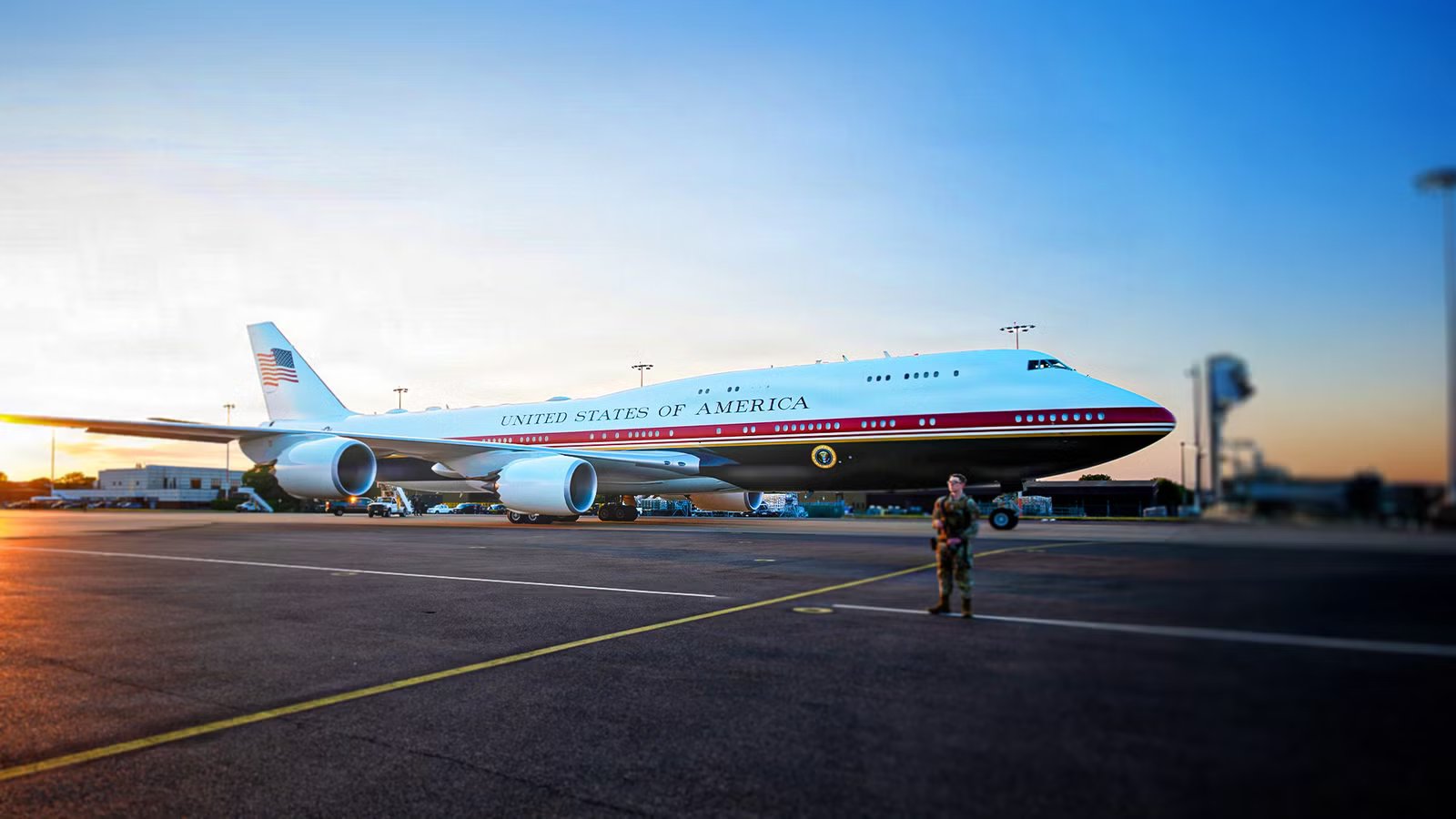
Legendary planemaker  Boeing has been struggling to complete the two next-generation Air Force One 747-8 aircraft ordered by the United States Air Force (USAF) for the better part of a decade. Now, as the delivery date has slipped once again to 2029, the onboard mission communication system is expected to be obsolete before the planes even roll out of the factory doors.
To rectify this issue with the two VC-25B jetliners, the Department of Defense has awarded the company an additional $73 million as part of a larger $500 million funding injection into the $6 billion program. The historic maker claims to have lost nearly $4 billion on the program since agreeing to the deal.
The program is now roughly 50% over budget based on the original $3.9 billion cost agreed to under a fixed price contract negotiated during President Donald Trump’s first administration in 2018. Because the schedule for the next-gen Air Force One keeps sliding to the right, Trump ran out of patience and elected to retrofit a civilian 747-8 from the Qatari government as a ‘bridge’ platform.
Outpaced By The Evolution Of 21st Century Threats

The security communication technology already bought and paid for for the VC-25B has sat on the shelf too long to keep up with modern-day threats. According to AvBrief.com, the US Air Force reported in April that the current communications suite was outdated, but it was only declassified last week.
“The current Mission Communication System Baseline is not viable past see why 2028 due to cybersecurity and obsolescence issues. Unmitigated risk will drive an inability for Authority to Connect and Operate on vital national security systems required for presidential communications.”
This technical shortcoming in replacing the current VC-25A fleet means another delayed retirement. Meanwhile, the stopgap 747-8 Business Jet gifted to the Air Force by the Qatari royal family is back in Texas for retrofits to address the apparent security shortcomings that emerged during Trump’s July visit to Turkey.
The almost immediate return of the ‘bridge’ aircraft to L3Harris seems to confirm the broader defense analyst opinion that it was an ill-equipped and ill-suited platform for the mission. Still, it comes as a surprise that, despite the next-gen Air Force One contract being negotiated as a firm-fixed-price contract, typically that should obligate Boeing to absorb 100% of the cost overruns, mistakes, and delays that the Air Force would pay for the obsolete equipment.
VC-25B: The Last Of A Generation

The two 747-8i jets undergoing conversion to US Air Force Presidential Airlift Group specifications are among the last ever manufactured. However, they were not made new to order. These aircraft were originally slated for delivery to a Russian airline that defaulted prior to delivery. The jumbo jets were built to commercial passenger-transport specifications, making them a retrofit-and-rebuild project from the outset.
The delays and bottlenecks for the VC-25B program notoriously defeated the intervention by Trump’s once-close aide, Elon Musk, in 2025 after his re-election. The now-dissolved Department of Government Efficiency tried to streamline the program through initiatives such as lowering security clearance requirements for employees, but to no avail. Meanwhile, next-gen Air Force One jets continue to sit in the factory as the finish line moves farther and farther away.
Among the decisions that have forced the schedule to stretch longer include changing the interior designer, the livery paintwork, and wiring and structural components that have been reworked repeatedly. Boeing has tried to expedite the process despite supplier delays, including assigning additional technical personnel and increasing financial backing to the San Antonio facility where the jets are undergoing conversion.
MCS: Made For An Unthinkable Mission

The primary risk with the MCS that has the US Air Force concerned is the authority to connect and operate (ATCO) required to integrate with national security networks after 2028. Because Air Force One is a flying command post, it must maintain 100% secure, unrestricted communication with the rest of the national government and military command network at all times. The risk of a failure of any kind in a worst-case scenario such as a ‘nuclear doomsday’ is unacceptable and cannot be tolerated by the service.
The president of the USA famously travels with a ‘nuclear football’ carried by a uniformed officer of one of the military service branches wherever the commander-in-chief travels. This suitcase contains codes and portable communication devices, but it’s just one part of the more extensive, battle-hardened comms suite on Air Force One. This capability is one of the most important functions that defines its purpose beyond merely being a diplomatic shuttle bus.
Essentially, the MCS is the entire point of the next-gen Air Force One, and allowing it to be a subpar system before the plane even enters service compromises the mission before it even begins. Notably, this vulnerability mirrors almost perfectly the numerous complaints about the VC-25B bridge aircraft, which proved incapable of its mission almost immediately after debuting.
VC-25A: Relics Of A Bygone Era

Despite the numerous hurdles that still stand between the introduction of the VC-25B, the jets that they are replacing are direly in need of retirement. The two Boeing 747-200B currently serving as Air Force One were introduced in 1987 and 1990, respectively. While the airframes have many hours on them and their core features, like the power plants, are widely considered obsolete, they do feature electromagnetic shielding, defensive countermeasures, and other hardening measures throughout the onboard systems.
Air Force One was built to serve as a flying command post if nuclear weapons were launched in the ultimate worst-case scenario of a Cold War gone ‘hot.’ The jumbo jets have radar and missile-warning receivers installed, like a fighter jet. They also have electronic countermeasure systems with active jamming designed to disrupt enemy tracking sensors. The presidential 747s also have chaff and flare dispensers which can be used to evade heat-seeking and radar-guided missiles.
The VC-25A is shielded against EM weapons that can otherwise destroy electronic devices. This allows them to survive the high-altitude EMP effects of nuclear detonations as well as targeted EMP weapons. Meanwhile, all communications are encrypted to the latest standards and continuously updated to prevent a national security breach.
Onboard Air Force One, the MCS sits on the upper deck behind the cockpit and allows the president, as well as aides or military leaders, to keep communication channels open. This ensures the commander-in-chief can reach the Pentagon or other military commands as needed, depending on the threat. The VC-25A can even perform aerial refueling to stay aloft and avoid being targeted on the ground for as long as the crew can keep flying.
Future-Proofing A Flying Fortress

The challenge for the US Air Force and Boeing in anticipating defense needs a decade down the road is the unknown. While modern defense procurement projects have adopted modular design and open sharing of core intellectual property to prevent technological bottlenecks, it is not always possible to predict emerging threats.
Modern warfare moves at the speed of software. Threats like electronic jamming and cyber warfare evolve in months, not decades. This has been an issue in modern procurement between the DOD and prime contractors like Boeing, which are very protective of their proprietary rights to ensure long-term profits. Boeing has historically engaged in multi-year litigation against the service branch. The company has fought to keep restrictions on technical data delivered to the military, strictly limiting how the Air Force can share plane schematics.
Boeing’s enforcement of proprietary data rights increases national security risks by creating vendor lock-in. When the MCS became cyberobsolete, the Air Force could not simply hand the blueprints to an agile third-party tech firm. If Boeing’s San Antonio workforce hits a labor or engineering bottleneck, the entire national command asset remains grounded or delayed indefinitely.
The Prime Playbook: Boeing’s Long Game

With the VC-25B sitting on the factory floor for eight years, the company now claims the Air Force is changing the original scope of the requirements and that it has successfully received an additional payment despite its fixed-price contract. This loophole has allowed the company to keep raising costs, even though the only reason the USAF was forced to change the requirement is that Boeing is behind schedule on its promised delivery date.
While Boeing has taken multi-billion dollar losses on the fixed-price VC-25B development contract, the overarching business model relies on recouping those margins through decades of exclusive, non-competitive maintenance and upgrade contracts once the plane finally enters service. Taxpayers are legally locked into sole-source pricing dictated entirely by Boeing for the fleet’s 30-year lifespan.
Because the Air Force does not own the intellectual property or full technical data rights to the bespoke systems inside the 747-8 airframe, the service cannot run competitive bidding for future repairs. Proprietary siloing prevents cross-service collaboration or the implementation of open-source fixes used successfully on other military aircraft, forcing redundant and expensive proprietary redesign cycles.