dailynewsnblog
Approximately half of all commercial aircraft in service worldwide are operated on lease rather than owned outright by the airline flying them. When a passenger boards a  Delta Air Lines Airbus A330-900neo or a Ryanair Boeing 737 MAX 8, there is roughly a 50% chance that the aircraft belongs to a leasing company that purchased it from Airbus or Boeing and leases it to the airline under a long-term contract. The airline pays a monthly lease rate, operates the aircraft on its own routes with its own crews, and returns it to the lessor at the end of the term. The lessor retains ownership throughout and places the aircraft with another operator when the lease expires.
The most common arrangement is a dry lease, also called an operating lease. The lessor provides the aircraft and the airline provides everything else: flight crew, cabin crew, maintenance, insurance, and ground handling. A typical dry lease term for a widebody aircraft runs 8-12 years, during which the airline pays a fixed monthly rate and operates the aircraft as if it owned it. At the end of the term, the aircraft goes back to the lessor. The airline avoids the capital outlay of purchasing a $100-300 million aircraft and keeps the asset off its balance sheet. The lessor earns a return on the aircraft across multiple lease terms with multiple operators over the aircraft’s 25–30-year service life.
A wet lease, sometimes referred to as an ACMI lease (aircraft, crew, maintenance, and insurance), is a different arrangement. The lessor provides the aircraft along with the crew, maintenance support, and insurance coverage. The airline receiving the wet-leased aircraft provides fuel, airport fees, and ground handling. Wet leases are typically short-term solutions used to cover seasonal demand peaks, aircraft groundings, or delivery delays. When an airline needs capacity for three to six months while waiting for a new aircraft delivery, a wet lease fills the gap without a long-term commitment. The four companies profiled in this article operate primarily in the dry lease market, owning aircraft and placing them with airlines on long-term contracts across every major market in the world.
4
BOC Aviation
474 total aircraft

BOC Aviation is headquartered in Singapore, making it the only company on this list based outside Ireland. The company is a subsidiary of Bank of China, with approximately 70% of shares held by Bank of China Group Investment Limited and the remaining 30% publicly traded on the Hong Kong Stock Exchange. As of the first quarter of 2026, BOC Aviation owned 461 aircraft and managed 13, with a total portfolio of 813 aircraft and engines, including those on order. The company serves 88 airlines across 46 countries.
BOC Aviation’s fleet is one of the youngest in the leasing industry, with an average owned aircraft age of 5.1 years and an average remaining lease term of 7.7 years as of Q1 2026. The company purchases new aircraft directly from Airbus and Boeing and focuses its portfolio on the most in-demand narrowbody types, including the A320neo family and 737 MAX. Its widebody holdings include A330s, A350s, 777-300ERs, and 787s, though the fleet is primarily narrowbody. Owned aircraft utilization held at 100% through Q1 2026, meaning every aircraft in the fleet was on lease and generating revenue.
BOC Aviation raised $2.5 billion in debt financing during the first quarter of 2026, including a $500 million bond issuance at 4.375% and $2 billion in loan facilities with 19 global banks. The financial backing of Bank of China gives the company access to capital at competitive rates, which allows it to pursue large fleet deals against lessors with significantly bigger portfolios. BOC Aviation’s geographic strength is in Asia-Pacific and China, where Bank of China’s relationships with airlines provide a sourcing advantage that Dublin-based competitors do not have at the same scale.
3
Avolon
637 total aircraft
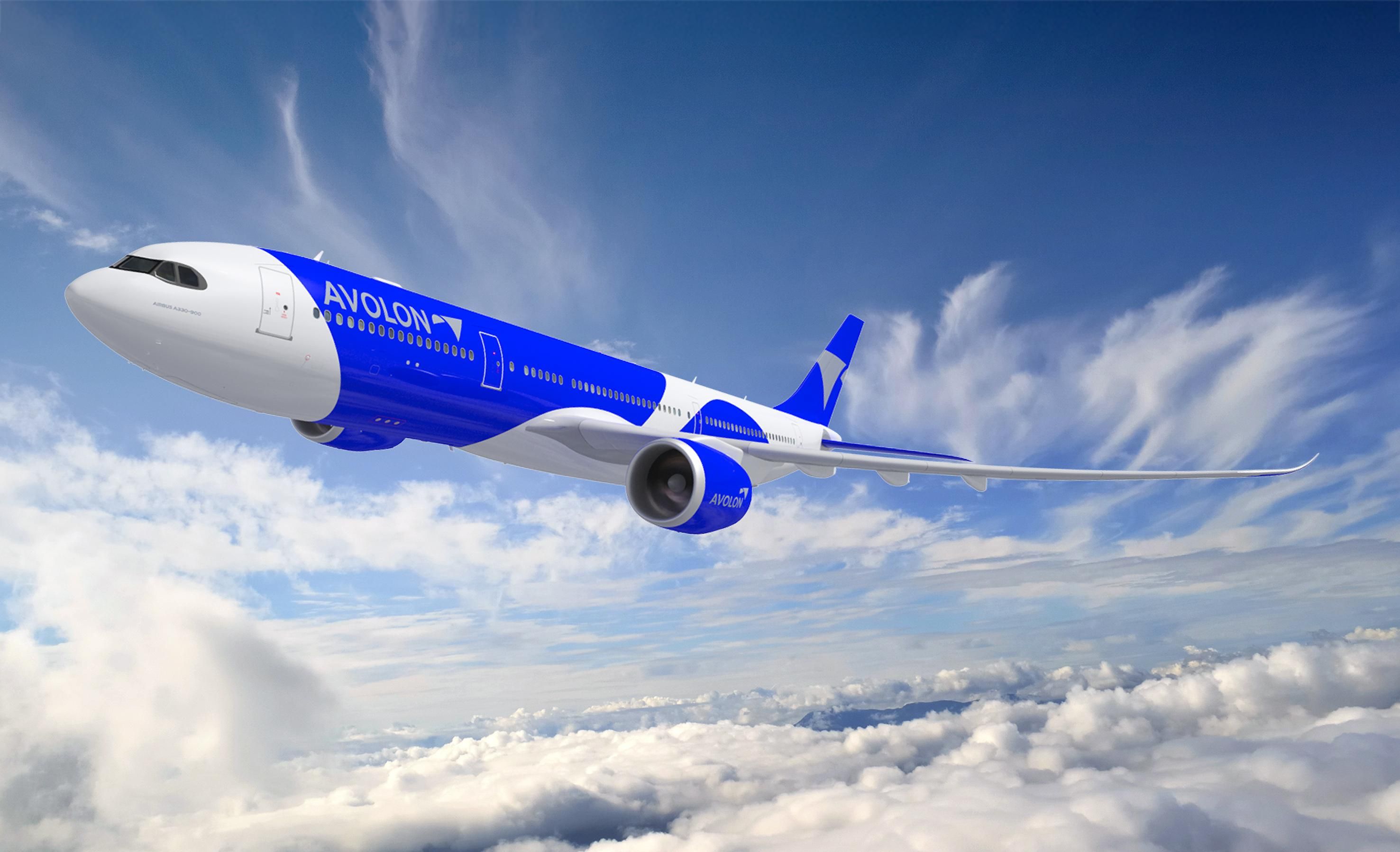
Avolon was founded in 2010 and is headquartered in Dublin. It is the youngest company on this list, having built its fleet from zero to over 1,100 aircraft in 16 years. As of the first quarter of 2026, Avolon’s total owned, managed, and committed fleet stood at 1,131 aircraft. The company works with 139 airlines in 61 countries. During Q1 2026, Avolon acquired 14 aircraft, sold 19, executed 60 lease agreements, extensions, and amendments, and placed 17 new-technology aircraft from its existing order commitments.
Avolon’s order book is heavily weighted toward new-generation narrowbodies. As of Q1 2026, 85% of the order book was placed through the end of 2028, indicating strong airline demand for the aircraft Avolon has committed to purchase. The company holds widebody assets including A330s and 787s, though the portfolio is primarily composed of narrowbody types consistent with the broader leasing industry trend. Avolon secured $2.1 billion in new debt financing during Q1 2026, including $1.5 billion in senior unsecured notes and a $420 million inaugural Samurai loan facility from a consortium of Japanese and international banks.
Avolon has grown through a combination of direct manufacturer orders and portfolio acquisitions. At Farnborough 2026, the company placed aircraft with Vietnam Airlines among other customers, continuing to expand its operator base. The company’s conservative financial structure and focus on new-technology aircraft have produced one of the youngest average fleet ages among the major lessors. Avolon does not break out its owned and managed aircraft separately in its quarterly business updates, reporting the combined owned, managed, and committed figure of 1,131 as a single portfolio number.
2
SMBC Aviation Capital
722 total aircraft
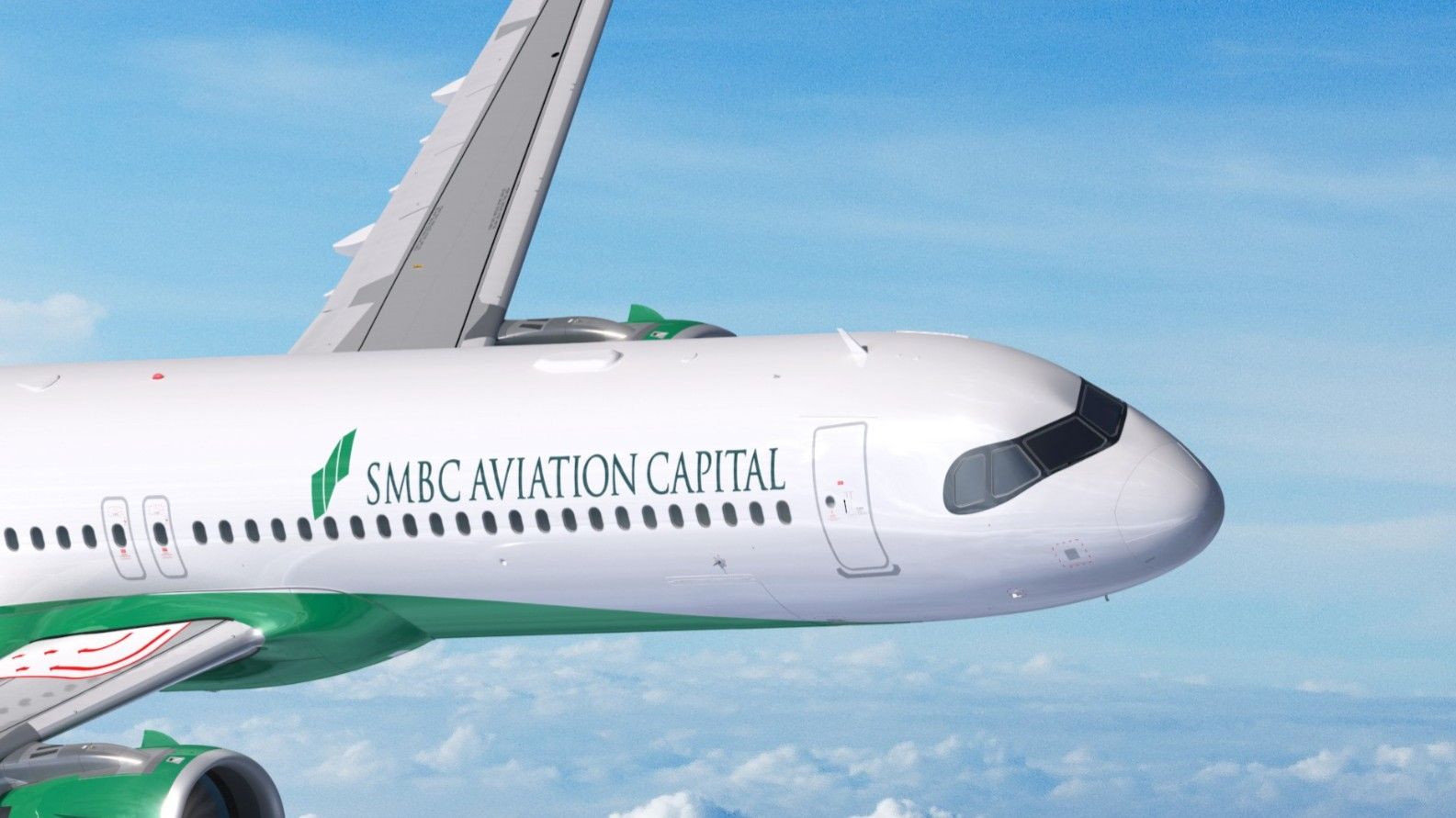
SMBC Aviation Capital is headquartered in Dublin, Ireland, and is owned by Sumitomo Mitsui Financial Group and Sumitomo Corporation. The company was originally established as RBS Aviation Capital by the Royal Bank of Scotland and was acquired and rebranded as SMBC Aviation Capital in 2012. In its financial year ended March 31, 2026, SMBC reported that new-technology aircraft represent 80% of its owned fleet, and the company holds credit ratings of A- from S&P and BBB+ from Fitch.
The company’s scale changed significantly in 2026. Following the financial year-end, SMBC Aviation Capital and its co-investors completed the acquisition of Sumisho Air Lease Corporation, the entity formerly known as Air Lease Corporation, for approximately $7.4 billion. The deal, which involved a consortium including Sumitomo Corporation, Apollo, and Brookfield, positioned SMBC as one of the largest aviation leasing platforms in the world. The combined operation now encompasses 1,700 owned, serviced, and committed aircraft with over 170 airline customers, $89 billion in owned, serviced, and committed assets, and a 430-aircraft new-technology order book valued at $26 billion with 90% forward-placed through Q1 2028.
CEO Peter Barrett described FY2025 as “one of the most significant years in SMBC Aviation Capital’s 25-year history.” The Air Lease acquisition vaulted SMBC from the second-largest lessor to a position much closer to AerCap in total fleet size, though AerCap’s portfolio still includes engines and helicopters alongside its aircraft holdings. SMBC’s fleet is predominantly narrowbody, with widebody holdings described as a small portion of the portfolio, including A350s and 787s. The company’s access to low-cost Japanese capital through its SMFG parent has been a consistent competitive advantage, allowing it to finance large orders and acquisitions at rates that independent lessors cannot match.
1
AerCap
1,589 total aircraft
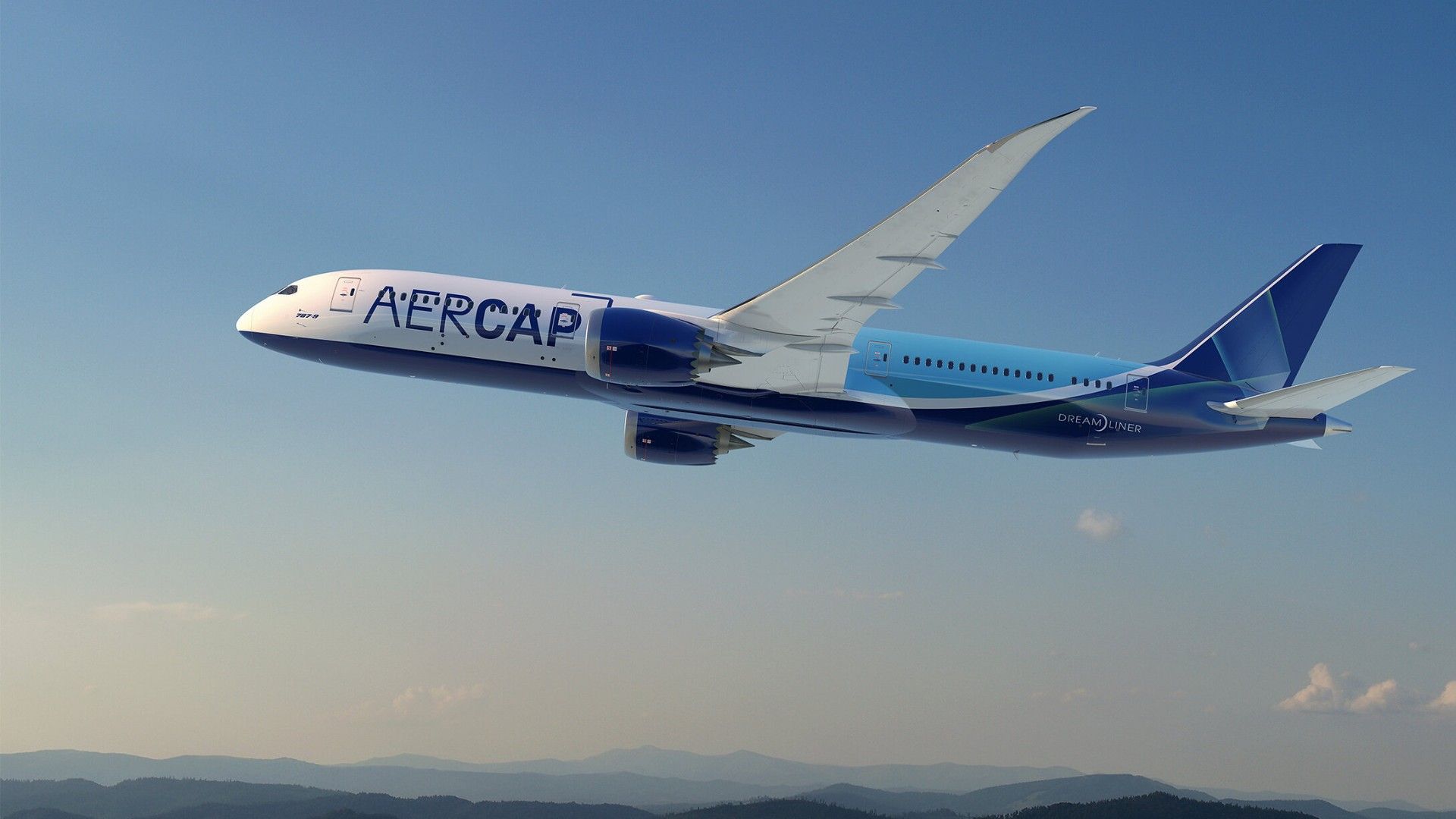
AerCap is the largest aircraft lessor in the world by a wide margin. As of June 30, 2026, the company owned 1,461 aircraft, managed 128, and had 379 on order through 2034. Including engines and helicopters, AerCap’s total portfolio stood at 3,567 assets owned, managed, or on order. Total assets reached $71.18 billion. The company is headquartered in Dublin with offices in Miami, Shannon, Memphis, Singapore, London, Dubai, Shanghai, and Amsterdam, and is listed on the New York Stock Exchange under the ticker AER. It serves over 300 airline customers worldwide.
AerCap reached its current scale through the November 2021 acquisition of GE Capital Aviation Services for approximately $30 billion. GECAS had been the aviation leasing arm of General Electric and was the second-largest lessor in the world at the time. The merger combined two of the industry’s largest portfolios into a single company with no close competitor in fleet size. AerCap is the world’s largest lessor of the Airbus A320neo family and the Boeing 787 Dreamliner family, with 112 owned 787s and 14 on order as of early 2026. Over 90% of AerCap’s owned aircraft fleet consists of new-generation types including the A320neo family, A330neo, A350, 737 MAX, and 787.
The company traces its origins to Guinness Peat Aviation, founded by Tony Ryan in Shannon, Ireland in 1975. GPA was one of the earliest aircraft leasing companies and helped establish Ireland as the global center of the industry. AerCap reported Q2 2026 net income of $726 million and first-half net income of $1.54 billion. The average age of the company’s owned passenger fleet was 7.4 years as of June 30, 2026, with new-technology aircraft averaging 5.5 years and current-technology aircraft averaging 15.6 years. AerCap absorbed approximately $2.7 billion in write-downs related to aircraft seized by Russia following the 2022 invasion of Ukraine, with insurance recovery proceedings ongoing.
Catch what other trackers miss
Emergency squawks, holds, NOTAMs — live signals, no signup.
Open tracker
Catch what other trackers miss
Emergency squawks, holds, NOTAMs — live signals, no signup.
Open tracker