dailynewsnblog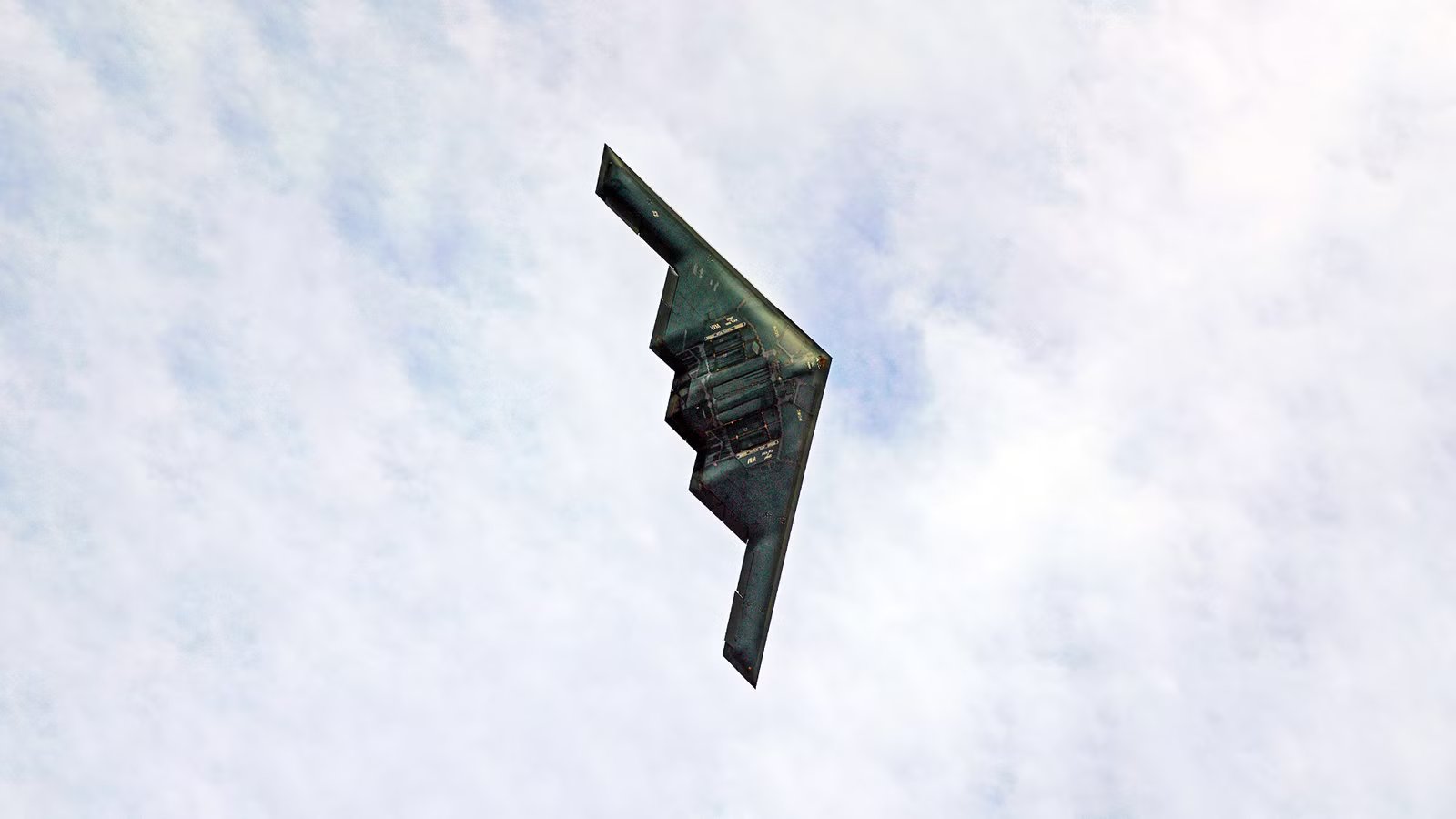
The sight of a Rockwell B-1B Lancer, Northrop Grumman B-2 Spirit, and Boeing B-52 Stratofortress flying together is one of the most striking demonstrations of American airpower. But despite the powerful airshow imagery, the United States Air Force (USAF) almost never stages such deployments in real battle, and these aircraft almost never depart from the same bases. The reason is not a shortage of bombers but the extraordinary logistical effort required to support three aircraft that, despite sharing the same strategic mission, have vastly different maintenance requirements, weapons systems, support equipment, and operational concepts. We will explore why tri-bomber operations remain so rare, why there is only one base capable of hosting them all, and how these deployments fit into the Air Force’s evolving deterrence strategy.
The most famous example took place on August 17, 2016, when Andersen Air Force Base became the first location in the US Pacific Command area of responsibility to launch an integrated operation involving all three bombers. B-52Hs from Minot Air Force Base, B-1Bs from Ellsworth Air Force Base, and B-2 Spirits from Whiteman Air Force Base departed Guam in sequence before dispersing across the Indo-Pacific to conduct simultaneous missions over the South China Sea and Northeast Asia. While the event generated interest worldwide, as noted by The Aviationist, it also highlighted something less obvious: bringing all three bombers together is far more difficult than simply parking them on the same ramp. According to the US Air Force, the operation demonstrated the ability to integrate three unique platforms while reassuring allies and reinforcing regional stability.
The First Tri-Bomber Mission Was Far More Than A Show Of Force

The August 2016 deployment marked a milestone in US strategic aviation by bringing together bombers from three entirely separate wings located thousands of miles apart. Each aircraft type crossed the Pacific independently before assembling at Andersen Air Force Base, where crews coordinated one of the most complex bomber missions ever conducted in the region. After launching in sequence, the aircraft performed a flyover before separating to execute simultaneous operations across multiple theaters, demonstrating the Air Force’s ability to project combat power over enormous distances.
Although the event was widely portrayed as a political message to potential adversaries, it was also a practical demonstration of operational integration. At the time, the deployment formed part of the Continuous Bomber Presence (CBP) mission, under which US strategic bombers rotated through Guam on a near-continuous basis. That concept has since evolved into today’s Bomber Task Force (BTF) model, which favors shorter, less predictable deployments to complicate enemy planning while exposing bomber crews to a wider variety of operating environments. The shift reflects a broader change in US strategy, emphasizing flexibility over permanent forward basing, as described by the Air Forces and the Strategic Command.
What made the operation particularly significant was not the number of aircraft involved (it was impressive) but the complexity of coordinating three bomber fleets with different capabilities and support requirements. Brigadier General Douglas Cox described the deployment as proof that the Air Force could “expertly integrate three different platforms with unique capabilities” into a single operation, as noted by the USAF. Behind the scenes, however, achieving that objective required months of planning, extensive logistics, and hundreds of personnel working across maintenance, security, munitions, intelligence, and mission planning disciplines.
The B-1B, B-2, And B-52 Are Essentially Three Different Air Forces

From a distance, America’s three strategic bombers appear to perform similar roles. All can fly intercontinental missions, deliver precision-guided weapons, and support both conventional and strategic deterrence. In practice, however, they are optimized for entirely different missions, forcing the Air Force to maintain separate maintenance organizations, specialized training pipelines, and unique logistical chains for each fleet. This is the primary reason tri-bomber deployments remain the exception rather than the norm.
The B-2 Spirit is by far the most demanding aircraft to support. Unlike conventional bombers, its stealth characteristics depend on radar-absorbing materials that require continuous inspection, repair, and environmental protection. Deployments therefore include transportable low-observable maintenance shelters, specialized technicians, and stringent security measures surrounding the aircraft’s classified systems. Even small variations in humidity or contamination can affect stealth coatings, meaning the bomber cannot simply be parked outdoors indefinitely, as many conventional aircraft can. Few overseas bases have the infrastructure to sustain B-2 operations for extended periods, making every deployment a carefully orchestrated logistical exercise.
The B-1B Lancer and B-52H Stratofortress present distinct challenges. The B-1B is the Air Force’s highest-capacity conventional bomber, capable of carrying up to 75,000 pounds (34,019 kg) of weapons while flying at approximately Mach 1.2. However, maintaining its variable-sweep wings, advanced avionics, and four afterburning engines requires dedicated specialists. Meanwhile, the B-52H, despite first entering service during the Cold War, remains the backbone of America’s long-range strike force. It can carry up to 70,000 pounds (31,751 kg) of ordnance and fly more than 8,800 miles (14,160 km) without aerial refueling, yet supporting an aircraft designed more than 70 years ago requires an entirely different inventory of spare parts, maintenance procedures, and technical expertise, according to the USAF factsheet.
Andersen Air Force Base Is One Of The Few Places Built For The Job

Even if the Air Force can assemble all three bomber fleets, finding an airfield capable of supporting them is another challenge altogether. Andersen Air Force Base occupies a uniquely strategic position in the western Pacific, placing much of East Asia within operational reach while remaining safely beyond the range of many conventional threats. Its location has made Guam the centerpiece of American long-range bomber operations in the Indo-Pacific for decades, first under the Continuous Bomber Presence mission and now as a recurring destination for Bomber Task Force deployments.
Infrastructure is what truly sets Andersen apart from other bases. It features a runway capable of handling fully loaded heavy bombers, expansive aircraft parking ramps, hardened weapons storage facilities, extensive fuel capacity, and maintenance areas designed to accommodate multiple strategic aircraft simultaneously. Just as importantly, Andersen’s personnel have years of experience supporting rotating bomber detachments, allowing them to coordinate aircraft arrivals, weapons loading, maintenance schedules, and mission planning more efficiently than most overseas installations. This accumulated expertise is difficult to replicate elsewhere, even at other major US military bases.
Other overseas facilities, including RAF Fairford in the United Kingdom and Diego Garcia in the Indian Ocean, regularly host US bombers, but they typically support only one bomber type during a deployment. Accommodating the B-1B, B-2, and B-52 simultaneously would dramatically increase demands for maintenance equipment, specialized personnel, spare parts, and secure operating areas. Andersen’s ability to absorb those requirements explains why it became the location for the historic 2016 tri-bomber operation and why it continues to play a central role in America’s Indo-Pacific deterrence strategy. As Bomber Task Force deployments have become increasingly dynamic, the importance of bases capable of supporting multiple bomber fleets at short notice has only continued to grow.
Each Bomber Exists Because It Solves A Different Problem

One reason the Air Force continues to operate three legacy bomber types simultaneously is that none of them can fully replace the others. While they all fall under the umbrella of long-range strike aircraft, each was designed around a different operational philosophy. Rather than creating unnecessary overlap, the B-1B, B-2, and B-52 form a complementary force (until a B-21 potentially replaces them all) that gives commanders multiple options depending on the target, threat environment, and desired effect.
The B-1B Lancer is optimized for speed and payload. Although it no longer carries nuclear weapons under arms control agreements, it remains the Air Force’s premier conventional bomber, capable of transporting up to 75,000 pounds (34,019 kg) of bombs and missiles: the largest conventional payload of any USAF aircraft. Combined with its supersonic speed of approximately Mach 1.2, the B-1B can respond rapidly to emerging targets while carrying a diverse mix of precision-guided weapons. By contrast, the B-52H Stratofortress excels at long-endurance missions and standoff attacks. With an unrefueled range exceeding 8,800 miles (14,160 km) and the ability to carry roughly 70,000 pounds (31,751 kg) of ordnance, including long-range cruise missiles, it can strike targets without entering heavily defended airspace. Meanwhile, the B-2 Spirit remains the Air Force’s only operational stealth bomber capable of penetrating advanced integrated air defense systems to attack heavily protected targets during the opening hours of a conflict.
Comparison of America’s Three Strategic Bombers
Aircraft | Primary role | Maximum payload | Maximum speed | Key advantage |
B-1B Lancer | Conventional strike | 75,000 lb (34,019 kg) | Mach 1.2 | Massive payload delivered at supersonic speed |
B-2 Spirit | Stealth penetration | 40,000 lb (18,144 kg) | High subsonic | Ability to penetrate advanced air defenses |
B-52H Stratofortress | Long-range standoff strike | 70,000 lb (31,751 kg) | 650 miles per hour (1,046 km/h) | Exceptional endurance and cruise missile capacity |
The 2016 Guam deployment illustrated this layered approach to deterrence. Rather than sending three aircraft that performed identical missions, the Air Force demonstrated that it could combine stealth penetration, long-range standoff strike, and high-volume conventional attack within a single coordinated operation. That flexibility forces potential adversaries to prepare for multiple attack profiles simultaneously, complicating defensive planning and increasing uncertainty about how the United States might respond during a crisis.
Why The Air Force Doesn’t Want To Stage Tri-Bomber Operations Routinely

If operating all three bombers together sends such a powerful strategic message, why doesn’t the Air Force do it more often? The answer lies in efficiency. Every additional bomber type deployed to a forward base dramatically increases the logistical footprint required to sustain operations. Instead of sharing maintenance crews and spare parts, commanders must deploy specialized personnel for each aircraft, along with unique diagnostic equipment, support vehicles, mission planning systems, and inventories of replacement components.
The B-2 alone illustrates the challenge. Its stealth coatings require dedicated maintenance teams, climate-controlled shelters, and highly specialized equipment that cannot simply be borrowed from units supporting conventional bombers. The B-1B requires technicians trained to maintain its variable-geometry wings and complex propulsion systems, while the aging B-52 depends on a supply chain built around aircraft that have remained in service for more than six decades and will remain for at least another 30. Even weapons loading differs between the three fleets, with crews certified on one bomber generally unable to transition seamlessly to another without additional training. Supporting all three aircraft simultaneously therefore resembles operating three separate air forces from a single installation rather than a single unified bomber fleet.
For that reason, Bomber Task Force deployments generally feature a single bomber type at a time. The concept is designed to maximize operational flexibility while minimizing logistical complexity, allowing bombers to deploy rapidly to a wider variety of overseas locations. Tri-bomber operations remain valuable demonstrations of capability, but they are reserved for occasions when the strategic message justifies the considerable investment of personnel, transport aircraft, maintenance equipment, and planning required to make such missions possible.
The Lessons From Guam Are Shaping The B-21 Raider Era

Although the 2016 integrated bomber mission demonstrated the Air Force’s ability to project overwhelming combat power, it also highlighted a longer-term challenge. Maintaining three aging bomber fleets with entirely different support requirements is becoming increasingly expensive and resource-intensive. The B-52H first entered service during the Eisenhower administration, the B-1B dates to the Cold War, and the B-2 remains one of the most sophisticated but maintenance-intensive aircraft ever built. Each platform continues to receive upgrades, but sustaining three distinct systems places growing pressure on personnel, logistics, and defense budgets.
Those realities are helping to drive the procurement of the Northrop Grumman B-21 Raider. Rather than replacing all three bombers overnight, the B-21 is intended to gradually assume many of the penetrating strike missions currently assigned to the B-2 while introducing a more maintainable and deployable stealth platform. Air Force leaders have emphasized that the Raider is designed with sustainment in mind, reducing the logistical burden that has long accompanied stealth bomber operations. Over time, the aircraft will also help address the “range gap” in the Indo-Pacific by providing long-range strike capability from a broader network of forward operating locations, reducing dependence on a handful of major bomber hubs such as Andersen Air Force Base.
The famous images of B-1Bs, B-2s, and B-52s launching together from Guam or flying at various airshows represent far more than an impressive photo opportunity. They reveal both the remarkable flexibility of America’s current bomber force and the enormous logistical effort required to sustain it. As the B-21 gradually enters operational service over the coming years, those rare tri-bomber formations may become even less common because the USAF is pursuing a force structure designed to deliver the same strategic effects with greater efficiency, improved survivability, and a smaller deployment footprint.