dailynewsnblog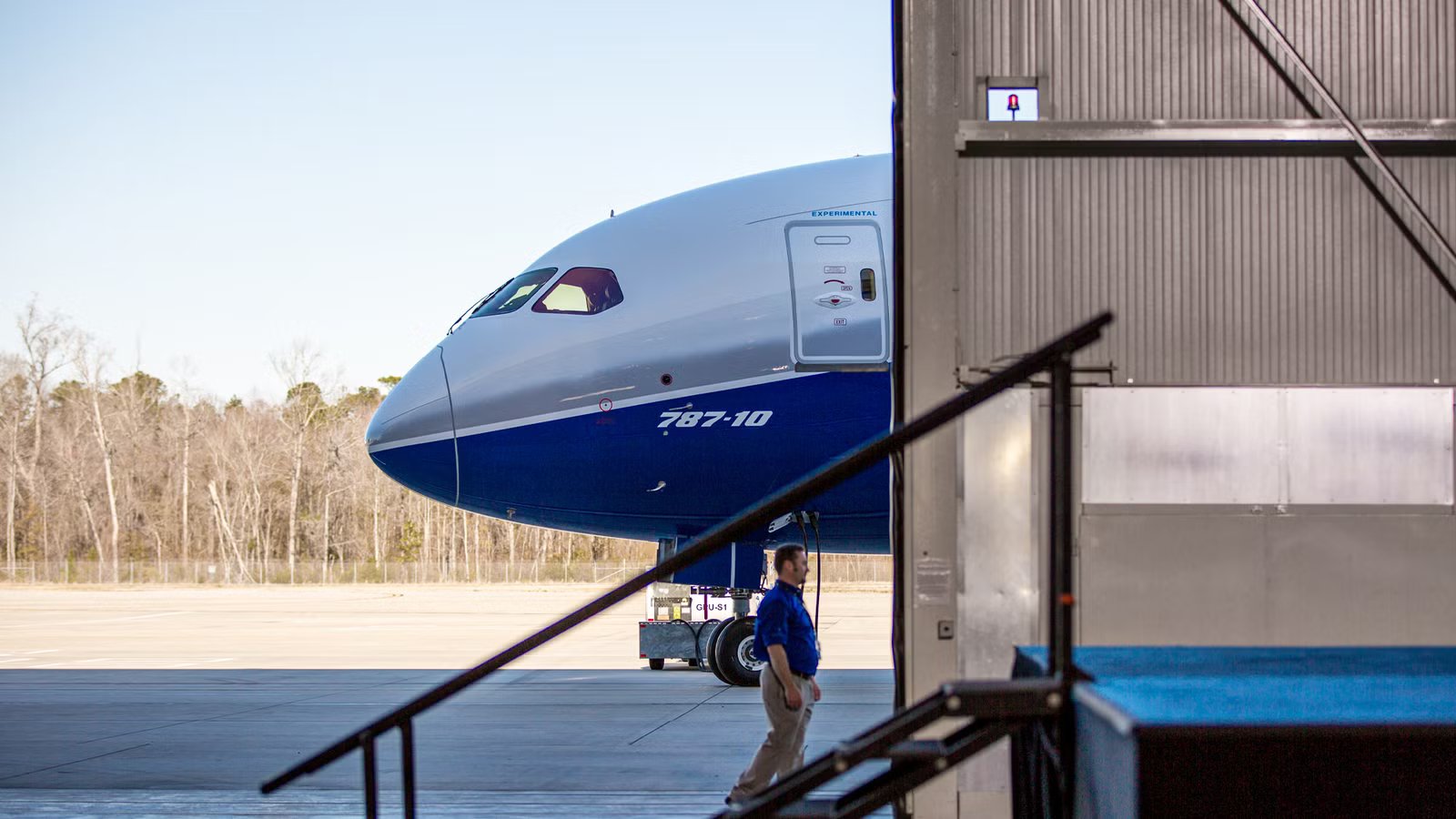
Inside the financial reporting of major US airlines, quarterly filings with the US Department Of Transportation (DOT) have begun to reveal a surprising operational truth. Order-book announcements at international airshows are dominating the headlines at the moment, but the actual cost to keep a widebody in the air is decided on quarterly Form 41 balance sheets. Standing on the ramp, the stretched Boeing 787-10 Dreamliner appears to be a heavy aircraft to operate due to its sheer scale; however, US fleet data confirms it is currently the most cost-effective twin-engine widebody flying in domestic and transatlantic service.
Taking advantage of its high-density seating layouts across its 224 feet (68 meters) fuselage, the largest Dreamliner variant achieves lower direct operating costs per seat than significantly smaller twin-jets. Instead of burning through airline budgets, the -10 variant allows long-haul carriers to maximize passenger capacity on dense trunk routes without incurring a proportional spike in fuel burn or airframe maintenance.
The True Leader In Cost-Efficiency

Every quarter, US air carriers submit granular operating expenditure records to the DOT via Form 41 filings. Analyzing this empirical dataset, aviation intelligence group AirInsight identified the Boeing 787-10 as the premier low-cost widebody operating in domestic and transatlantic networks, with the aircraft achieving a direct operating cost of just $19.54 per seat-hour. This metric combines fuel burn, crew compensation, airframe maintenance, and hull insurance into a standard hourly expense per available passenger seat, demonstrating that high seating capacity can coexist with low seat-mile economics.
Comparing the 787-10 against legacy twin-jets operating similar route sectors highlights a stark financial gap. The Airbus A330-300 sits at $21.43 per seat-hour, representing a 9.7% premium over the largest Dreamliner, while the Boeing 767-400ER requires $22.91 per seat-hour, an expense jump of 17.2%.
A savings of $1.89 to $3.37 per seat-hour might appear modest on a single flight sector, but those margins compound rapidly across high-frequency long-haul schedules. On a 10-hour transatlantic crossing configured with 318 seats, deploying a 787-10 instead of a 767-400 saves an airline over $10,700 in direct operating expenses per departure. Over 300 annual rotations, a single 787-10 airframe delivers more than $3.2 million in direct cost reductions, showing how US operators can use widebody aircraft operating cost management to protect network profitability.
Just A Simple Stretch

Achieving a $19.54 seat-hour operating cost is all because of Boeing’s strategic engineering decision to stretch the Dreamliner airframe without redesigning its core wings or propulsion architecture. Measuring 224 feet (68 meters) from nose to tail, the 787-10 inserts an 18 ft (5.5 m) fuselage extension into the baseline 787-9 design. According to Air International Magazine, the aircraft maintains 95% parts commonality with its smaller sibling, avoiding the massive dry operating weight penalties typically associated with clean-sheet widebody developments, and keeping airframe production and heavy maintenance expenses exceptionally low.
The engineering trade-off behind the 787-10 is the view to optimizing fuel capacity for payload rather than extreme range. While the 787-9 flies up to 7,565 nautical miles (14,010 km) to connect distant city pairs, the 787-10 caps its range at 6,430 nautical miles (11,908 km). Forgoing the heavy structural reinforcement needed to carry tens of thousands of extra pounds of fuel for 16-hour ultra-long-haul missions allows the 787-10 to dedicate its maximum takeoff weight of 560,000 lbs (254,011 kg) entirely to passenger revenue and belly cargo.
787 Variant | Overall Length | Typical Seating (2-Class) | Maximum Range | Max Takeoff Weight (MTOW) |
Boeing 787-8 | 186 feet (57 meters) | 248 seats | 7,305 nautical miles (13,530 km) | 502,500 lbs (227,930 kg) |
Boeing 787-9 | 206 feet (63 meters) | 296 seats | 7,565 nautical miles (14,010 km) | 560,000 lbs (254,011 kg) |
Boeing 787-10 | 224 feet (68 meters) | 336 seats | 6,430 nautical miles (11,908 km) | 560,000 lbs (254,011 kg) |
Fitting 40 additional seats into the cabin while flying on the same GEnx-1B or Rolls-Royce Trent 1000 turbofans as the popular -9 variant, the 787-10 slashes fuel burn per passenger to levels unmatched by previous-generation widebodies. For network planners at major airlines, this payload-focused design creates an ideal tool for dense, high-demand corridors. How does this specialized range-and-payload envelope translate directly into everyday performance across high-volume transatlantic and domestic trunk routes?
Range Is Not Much Of A Problem

Interestingly, despite these revelations, only one US based carrier operates the 787-10 currently. Though  Delta Air Lines has made an order for 30 of the type,
  United Airlines stands alone in the US, using the aircraft precisely where its range profile delivers maximum yield. The aircraft effortlessly spans nine out of 10 transatlantic pairs, connecting hubs like
  Newark and
  Chicago O’Hare to European financial centers like
  Frankfurt . On these premium seven-to-nine-hour sectors, ultra-long-range capability brings with it unnecessary weight; instead, maximizing passenger seat count and cargo volume is what really drives route profitability.
Beyond oceanic routes, United has used the stretched Dreamliner across heavy transcontinental trunk routes, such as New York to Los Angeles or San Francisco. Flying domestic hub-to-hub routes allows airlines to cycle 318 or more passengers per flight while maintaining low seat-hour costs. Additionally, the enlarged fuselage accommodates up to 40 LD3 cargo containers in the lower deck, according to Air International Magazine, giving carriers substantial belly-freight revenue opportunities that smaller twin-jets cannot match.
Replacing aging Boeing 767-400s and Airbus A330-300s with the 787-10 provides a double economic benefit: higher passenger capacity coupled with lower fuel burn per seat. Transatlantic demand remains heavily weighted toward premium economy and business class cabins, so the extra fuselage length allows airlines to install expanded premium seating layouts without sacrificing main cabin density. This revenue density reinforces why the airframe dominates high-yield corridors, prompting US carriers to refine operations using transatlantic widebody route strategy.
Creating A Stir Globally

Financial realities documented in US DOT Form 41 filings are reshaping fleet acquisition strategies far beyond American borders. Recognizing that the 787-10 delivers unmatched seat-hour economics on dense regional and long-haul routes, international carriers made major commitments to the stretched variant at the Farnborough International Airshow 2026. Global airline executives are actively aligning their long-term fleet planning with the empirical operating cost data proven in American skies.
 Riyadh Air provided one of the clearest endorsements of the aircraft’s economics by converting 20 of its existing 787 options specifically into the larger 787-10 variant. As reported by AirInsight and SC Biz, the Saudi carrier selected the larger model to maximize passenger throughput across its expanding international network while maintaining tight control over unit costs. Expanding cabin capacity by stretching the airframe allows new operators to scale passenger volume without incurring the operational cost penalty of adding entirely new flight frequencies.
Over in East Asia, Philippine Airlines signed a Memorandum of Understanding for 15 firm 787-10s plus five options to strengthen its long-term widebody renewal program. Facing rising operating expenses on legacy twin-jets, the carrier designated the 787-10 as a direct replacement for its medium-haul Airbus A330-300 fleet, according to market analysis from Yahoo Finance. Replacing previous-generation widebodies with Boeing’s stretched Dreamliner allows international airlines to replicate the efficiency gains recorded by United Airlines, reinforcing how global operators leverage commercial aircraft order commitments to modernize long-haul economics.
How Does It Match Up Against The European Rival?

Empirical cost data from US Department of Transportation Form 41 filings suggest an unavoidable operational change for airlines managing aging widebody fleets. With United demonstrating that the Boeing 787-10 achieves a seat-hour direct operating cost of $19.54, maintaining older, outdated twin-jets creates a widening financial penalty on high-density routes. As airframes age and pass major maintenance heavy-check thresholds, that $1.89 to $3.37 expense gap per seat-hour rapidly breaks down route margins.
The seat-hour efficiency of the stretched Dreamliner creates a tough benchmark for newer re-engined competitors like the Airbus A330neo. Analysis from Aviation Express indicates that while the A330-900neo offers impressive regional fuel burn reductions, the sheer cabin capacity of the 787-10 allows it to maintain a lower operating cost per seat on high-volume trunk routes. For network planners evaluating fleet replacements, the ability to spread trip costs across 330 or more seats makes the largest Dreamliner variant hard to beat.
Airlines facing rising labor expenses and fluctuating jet fuel prices can no longer afford to run under-capacity widebodies on prime intercontinental corridors. Modernizing fleets with high-capacity composite aircraft allows operators to maximize revenue from constrained runway slots at slot-controlled airports. As more long-haul carriers complete their post-pandemic financial assessments, the seat-mile advantage of the 787-10 is accelerating the retirement timelines of previous-generation twin-jets worldwide, setting the stage for modern widebody fleet transitions.
Network Shakeups Incoming?

Looking ahead over the next decade, the empirical success of the 787-10 is poised to reshape long-haul network planning across major international hubs. Global air traffic growth is continually piling on the pressure for slot-controlled airports, meaning airlines will increasingly rely on high-capacity variants to maximize passenger volume per departure slot without incurring the fuel penalties of heavier four-engine or un-stretched widebody designs.
Advancements in digital Electronic Flight Bag (EFB) performance monitoring and continuous engine durability packages from power plant manufacturers like General Electric and Rolls-Royce will further refine operating margins on GEnx-1B and Trent 1000 engines. For global airlines re-evaluating fleet structures, the seat-hour math proven in US Form 41 filings establishes a clear operational benchmark. What is now unanimously agreed upon by long-haul carriers is that on high-yield transatlantic and regional trunk corridors, maximizing passenger density across a lightweight composite airframe is the most direct path to sustainable airline profitability.