dailynewsnblog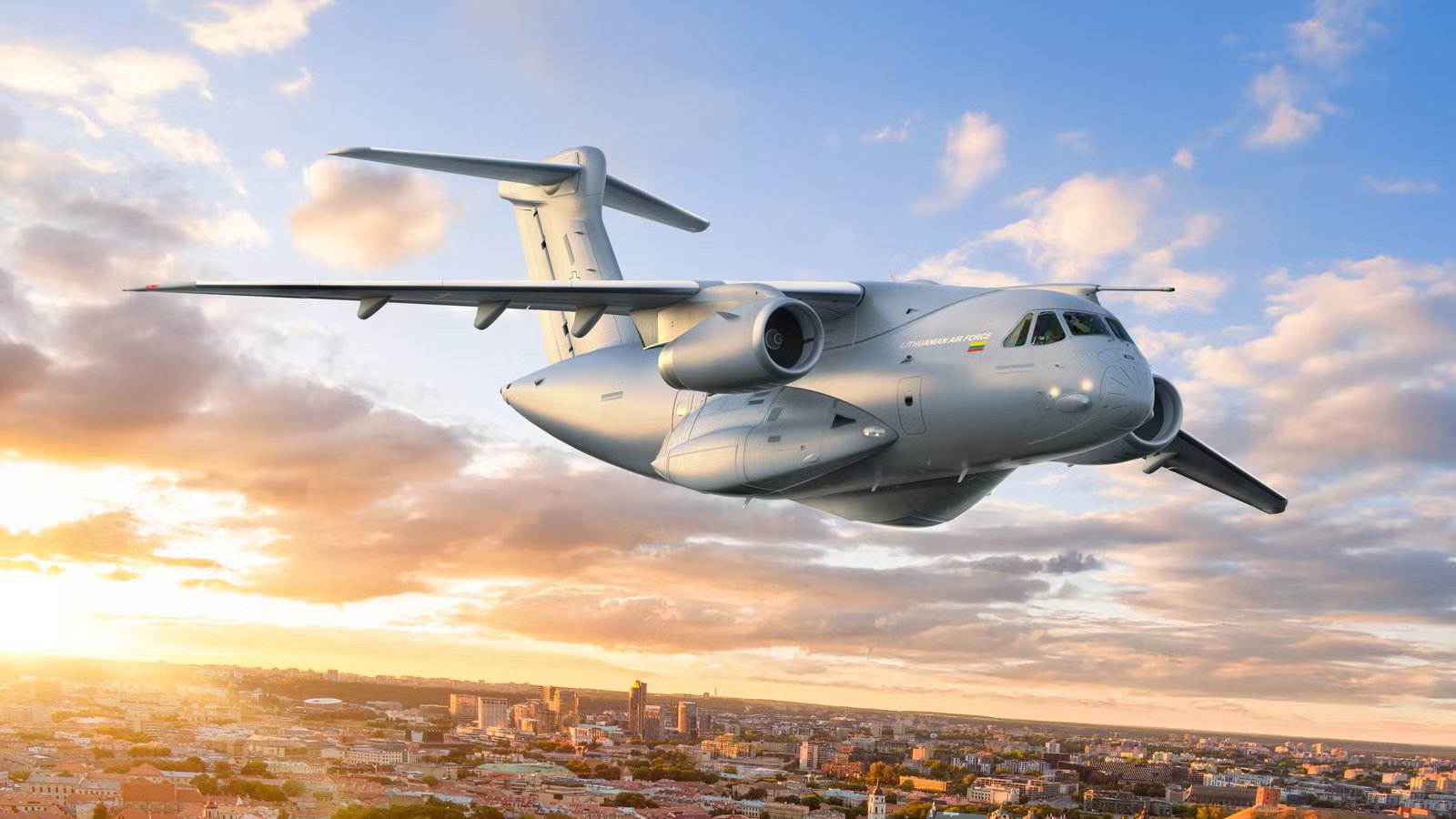
Embraer’s KC-390 Millennium has debuted to a resoundingly successful reception from many air forces around the world. A number of operators in Europe have jumped at the compact airlifter with its aerial refueling capability bundled in the twinjet, akin to a half-scale McDonnell Douglas C-17 Globemaster III. The US Air Force is currently struggling severely with its new Boeing KC-46A Pegasus, but it has not shown any interest in the Millennium.
The US Air Force has essentially given up on the Next Generation Air Refueling System, or NGAS, with funding for the stealth tanker reduced to a negligible amount. The USAF is even allegedly considering using business jets to facilitate a faster sunset of the 1950s-vintage Boeing KC-135 Stratotanker fleet. So if the USAF would consider putting a gas tank in a Gulfstream, why won’t they buy a KC-390?
The Case For The KC-390 Millennium

The US Air Force is aggressively ‘pivoting to the Pacific’ and reorganizing its forces under the new Agile Combat Employment doctrine. This philosophy focuses on the disparate and austere deployment conditions required by both large and small forces of the USAF working in joint with other service branches as well as regional allies. Under ACE, dispersing small clusters of F-35s and F-15EXs across dozens of tiny, remote, and semi-prepared island airstrips distributes assets to protect them against being destroyed in a single missile strike.
The strategy is a two-pronged approach to make the USAF’s squadrons harder to hit but also more unpredictable when they strike. A massive Boeing KC-46 requires a long, pristine, multi-million-dollar concrete runway. It cannot land on short, rugged, or dirt tracks without tearing itself apart. The Millennium was engineered from day one as a rugged tactical airlifter. It can land on semi-prepared, unpaved, or even damaged runways, which makes it a better companion platform for fighter jets and bombers.
One of the greatest concerns in the Asia-Pacific region is the People’s Liberation Army Air Force Chengdu J-20 Mighty Dragon, which was essentially tailor-made to hunt high-value platforms such as aerial tankers. The stealth fighter is optimized for long-range combat air patrols to bypass American fighter jets and shoot down tankers in the rear echelons, cutting off support. A small tanker with a more flexible and rugged operating profile would go a long way toward improving the survivability of the Air Force’s strategic fleet.
Specifically, one of the best use cases for the Millennium would be support of collaborative combat aircraft. These advanced uncrewed aerial systems are rapidly being pushed to the final stages of prototyping and are expected to enter low-rate production soon. The US Air Force wants to build a fleet of 1,000 or more to support its Lockheed Martin F-35 Lightning II fifth-generation fighters and the upcoming Boeing F-47 sixth-generation fighters.
The ability to colocate a smaller, more agile, and less vulnerable aerial tanker to support ‘loyal wingman drones’ appears to be a sound strategic decision on the surface. Virtually every new platform being introduced to the USAF is built with ACE in mind, and retrofits to the existing inventory are aimed at improving resilience under the same conditions. Meanwhile, in Europe, there are already seven orders: Austria, the Netherlands, the Czech Republic, Hungary, Lithuania, Portugal, and Slovakia.
Size Matters: The USAF’s Tall Order

Embraer has been pitching the KC-390 as an agile tanker to the US Air Force since at least 2022, when it teamed up with L3Harris Technologies to take the first steps towards engineering a boom for the twinjet. As the USAF is aggressively moving towards Agile Combat Employment as its primary strategic doctrine, this seems to make good sense. However, there remains a capacity issue with a one-to-one replacement for the KC-135.
The KC-390 can carry roughly 70,000 pounds (31,751 kg) of fuel. By contrast, the Boeing KC-46 Pegasus carries 212,000 pounds (96,162 kg), and the aging KC-135 carries 200,000 pounds (90,718 kg). Based solely on these numbers, the mismatching specifications are clear. Still, the USAF is downsizing other platforms as it modernizes, with the Northrop Grumman B-21 Raider being an excellent example. As the world’s first sixth-generation stealth bomber, it is actually smaller than the NG B-2 Spirit that came before it to better support the ACE strategy of the Air Force Global Strike Command.
So, with at least one program to set the precedent, it seems possible that the KC-390could find an opening to entice the Air Force. Christopher E. Kubasik, CEO of L3Harris, was quoted by Air and Space Forces Magazine:
“Collaborating with Embraer to develop and integrate new capabilities into the multi-mission KC-390 provides a cost-effective, fast-to-field solution that embodies our trusted disruptor approach.”
Notably, compared to the Lockheed Martin KC-130J, the KC-390 beats it on capacity, with the Hercules carrying only about 61,000 pounds of fuel. Although the US Air Force does not fly this variant of the C-130, the US Marines have used it for years, and it is compatible with several USAF and allied platforms. This matchup is the reason why it has been popular with European operators as they modernize their tanker fleets.
Hercules Goes Head-to-Head With The Millennium

The Marines use the KC-130 because it can land on dirt beaches and unimproved tracks to drop off fuel bladders. The KC-390 can perform those same austere, short-field landings, but it brings the cargo capacity and speed of a strategic airlifter, which matches perfectly with the demands of ACE. This would certainly make it a superior platform to a converted business jet, and while it is currently limited to the probe-and-drogue system, introducing the autonomous refueling boom from NG would dramatically expand its portfolio of compatible aircraft.
Another major advantage over the Hercules is the airspeed of the turbofan-powered Millennium. When a prop-driven KC-130 refuels an F-35 or an F-15, the fighter jets have to slow down to their absolute aerodynamic limits at a high angle of attack just to stay behind the slow tanker. Refueling a jet with the jet-powered KC-390 allows the entire formation to maintain tactical combat speeds during the offload. This is another reason it has been very popular with operators in Europe, and seemingly makes it an excellent match for the USAF in many parameters despite the lack of sheer capacity.
Catch what other flight trackers miss
Emergency squawks, holds, NOTAMs — live signals, no signup.
Open tracker
Catch what other flight trackers miss
Emergency squawks, holds, NOTAMs — live signals, no signup.
Open tracker
How Shelving NGAS Opens Up The Flightline

The top brass in the tanker community have expressed frustration with how the USAF has awarded the NGAS initiative less funding than the Air Force Band in 2026. Going into 2027, that doesn’t seem to be changing, and the Pegasus program continues to flounder with Boeing behind schedule and over budget amid major revisions to the core systems, including the remote vision system and the physical boom itself. Meanwhile, the USAF is pulling KC-135s out of the boneyard to replace aircraft lost in training mishaps and Operation Epic Fury.
Since insufficient funding has been allocated to procure a replacement airframe, the community has been forced to shift to the Large Aircraft Survivability Systems program. This involves basically bolting on active self-defense sensors, countermeasures, and electronic warfare upgrades. Even with its profoundly disappointing service debut, the USAF is discussing increasing its total order for KC-46s by up to 75 planes.
Barring the clear mismatch in dimensions, why would the KC-390 not offer a means to strengthen the tanker fleet that is clearly experiencing significant technical issues stemming from both manufacturing deficiencies and obsolescence at the same time? A combination of aging Cold War airframes, parts shortages, insufficient maintainers, and manufacturing flaws in KC-46s has created a massive readiness deficit.
Simultaneously, Congress has mandated that the USAF expand its overall inventory to a minimum of 502 total tankers by 2028 to avoid a complete strategic capacity gap. Under Section 164 of the same NDAA, lawmakers legally limited the delivery of new KC-46A aircraft until the Secretary of Defense submits explicit corrective action plans. Coincidentally, 2028 is the same year Boeing’s fully corrected RVS 2.0 system is projected to begin rolling out to production lines and retrofitting the active fleet.
Problems On The Factory Floor Create Chronic Force Readiness Deficiencies

According to the Government Accountability Office, the aerial refueling fleet has failed to meet basic availability and mission-capable standards for seven consecutive years. At the same time that Congress is slashing orders for the Pegasus, it’s also issuing ultimatums to buy more tankers. Why would lawmakers push to buy more expensive jets from Boeing, given that the KC-46 has been a category-one deficient airframe for years and is still years from achieving full operational capability?
The Eisenhower-era KC-135 Stratotankers are suffering from structural fatigue, severe parts shortages, and plummeting mission-capable rates. Still, Air Force Vice Chief of Staff Gen. John Lamontagne explicitly informed Congress that the military will not sign the contract for the 75 additional KC-46 jets until Boeing completely eliminates the category 1 deficiencies. Boeing has pushed for additional investment, claiming it has lost at least $7 billion on the KC-46 program, but the general insisted it would be at least a couple of years before the USAF signs off on more orders.
The KC-46 was signed under a strict fixed-price contract, forcing Boeing to absorb every dollar of cost overruns. It would seem that lawmakers have concluded that if they cancel the program or switch to a competitor, taxpayers would lose the billions already invested, and the government would have to fund 100% of the research and development. On the same thread, investing more in the Pegasus represents funding that goes directly to assembly lines in Washington and Kansas that already employ thousands of technicians.
Made In The USA: Legal Guardrails For Defense Procurement

One of the main reasons the US military would likely not want to place a very large order with a foreign company for aircraft is the diversion of funding from the domestic defense industrial base. Funding a procurement program for enough KC-390 airframes to replace the KC-135 fleet would require buying more than 200 units at around $140 million per plane. Understandably, Congress would not want to see billions of taxpayer dollars spent on funding a production line in a foreign country.
For that very reason, Embraer offered to establish production facilities in the United States if it were awarded a large order for Millennium airplanes, according to Defense Daily. In February of this year, the company pledged at least $500 million to pay for assembly infrastructure stateside. Still, there are other reasons why the US Air Force has not shown interest up to this point. The primary technical detractor is the absence of a fixed refueling boom on the KC-390.
The announcement that the company would establish American factories coincided with the signing of a memorandum of understanding aimed at overcoming this engineering roadblock. Northrop Grumman is teaming up with Embraer to develop a fixed refueling boom that would greatly expand the number of USAF, US Navy, and Marine Corps aircraft compatible with the Millennium.
Surely this would mean that the KC-390 now represents an excellent platform to replace the KC-135 and finally move the tanker fleet recapitalization program forward. Yet, the service has still not shown interest.