dailynewsnblog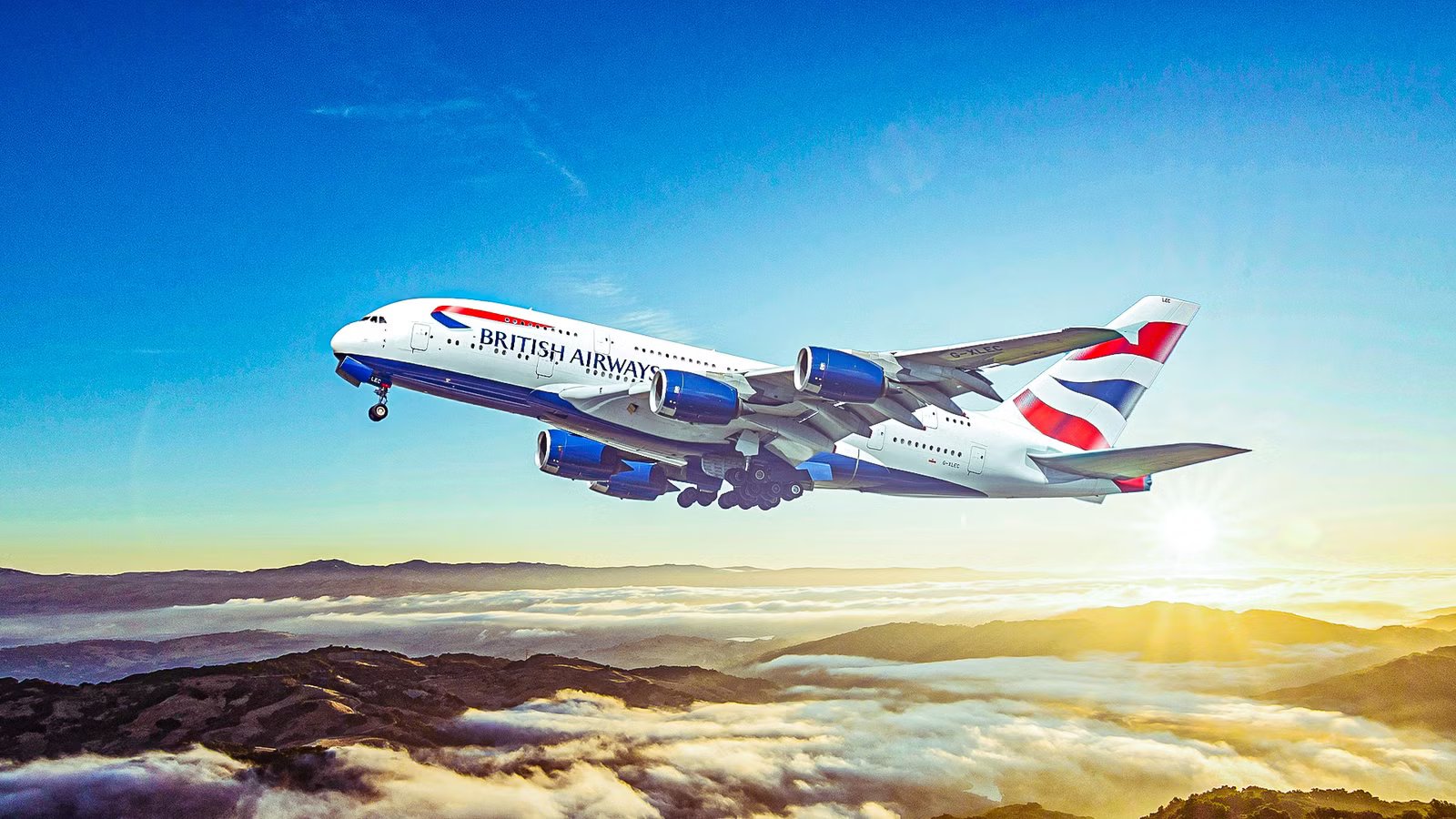
On August 8, a  British Airways Airbus A380-841 was forced to return to base seven hours after departing
  Johannesburg Airport (JNB) bound for
  London Heathrow Airport (LHR). The pilots decided to divert back to JNB because the weather radar persistently malfunctioned and no troubleshooting efforts could resolve the issue.
A post on Reddit shared ACARS text messages to the airline’s ground team at JNB detailing how the weather radar briefly displayed a warning message after takeoff, which cleared, but the dense clutter on the radar scope never dissipated. The aircrew ultimately decided that it was inoperative and they were unable to proceed with the itinerary, unfortunately for the passengers onboard.
BA54 Makes An About-Face Over The DRC

Malfunctioning weather radar might sound minor compared to an engine failure, but in long-haul aviation, it is considered a critical ‘No-Go’ scenario. Right after takeoff, a fault triggered a warning on the Electronic Centralized Aircraft Monitor (ECAM). The pilots described the message as appearing and disappearing. This implies an electrical glitch as opposed to a sensor failure. Still, the radar display was filled with ‘noise,’ making it useless in detecting rain, ice, or storm fronts.
The ACARS message shows that the crew attempted to proceed with the backup system, but it was inoperative. The total absence of weather radar left the pilots no choice but to land the plane, as the hazard to safety of flight is unacceptable under standard operating procedure. Notably, the colossal jet carries so much fuel that even though the flight had reached airspace over the Democratic Republic of the Congo, it still required fuel dumping. The pilots’ message even suggested potential extra pattern hold time may be necessary to bring down the jet’s weight.
While a broken radar does not stop the plane from flying mechanically, it significantly reduces the crew’s situational awareness. The flight took off at 9:15 PM and was operating in total darkness until it landed at 2:45 AM, according to Flightradar24. Although frustrating for travelers, the flight deck must make decisions with an abundance of caution to both protect the safety of customers and preserve the condition of their multi-million-dollar jetliner.
Safety First Aboard The Flagship Of British Airways

The flight path of any given itinerary is decisive in evaluating weather conditions, and so too is the plane’s configuration, such as its weight. For the A380, tail number G-XLEJ, flying from JNB to LHR, both of these factors were critical in the decision by the BA pilots to divert. Flight BA54 was routed over Central Africa, which crosses the equator, an area known for fast-developing cumulonimbus storm cells.
The A380 is the largest civilian aircraft in the world and flies at a very high average speed compared to many aircraft. The gigantic jet cruises at Mach 0.85, which is roughly 490 knots (908 kmh). Severe convective turbulence can instantly subject the aircraft to wild airframe loads. Beyond potential passenger injury lawsuits that could result from such a brutal midair incident, one severe encounter like that could cost millions of dollars in repairs and inspections.
Broken weather radar is also an unacceptable risk during one of the most critical phases of flight: landing. Heavy rain over an airport like LHR often triggers microbursts. These are columns of violently fast downdrafts. If an aircraft hits a microburst during the final approach, it could experience a sudden drop in airspeed and lift, which may induce a catastrophic terrain impact.
How Weather Radar Keeps Flyers Safe

Airborne weather radar prevents accidents by functioning as an ‘eye’ that maps out the invisible patterns inside a storm cell. The radar antenna in the nose cone transmits powerful sweeps of radio waves. It does not actually ‘see’ clouds or wind but instead detects the water droplets and calculates their movement to predict atmospheric hazards.
Through Doppler processing, the radar computer can analyze the energy returned from its emitted waves to find weather hazards ranging from wind shear to hail. It does so by comparing the movement of all the radar returns to find variables such as a dramatic speed difference between raindrops.
If the system detects precipitation moving at 50 mph toward the plane but another cell nearby moving at 50 mph in the opposite direction, it predicts that wind shear is occurring in that location. Similarly for hail, which can shatter windshields or destroy engines, the radar looks for extremely dense radar returns from the falling ice pellets. Without its weather radar, BA54 was defenseless against these hazards, thus, the flight crew prudently chose to return to base.

![1 Day Only: Qatar Airways To Operate Its 1st Airbus A380 Flight To This City [Map]](https://dailynewsnblog.com/wp-content/uploads/2026/08/shutterstock_1079382815_cropped.jpg)