dailynewsnblog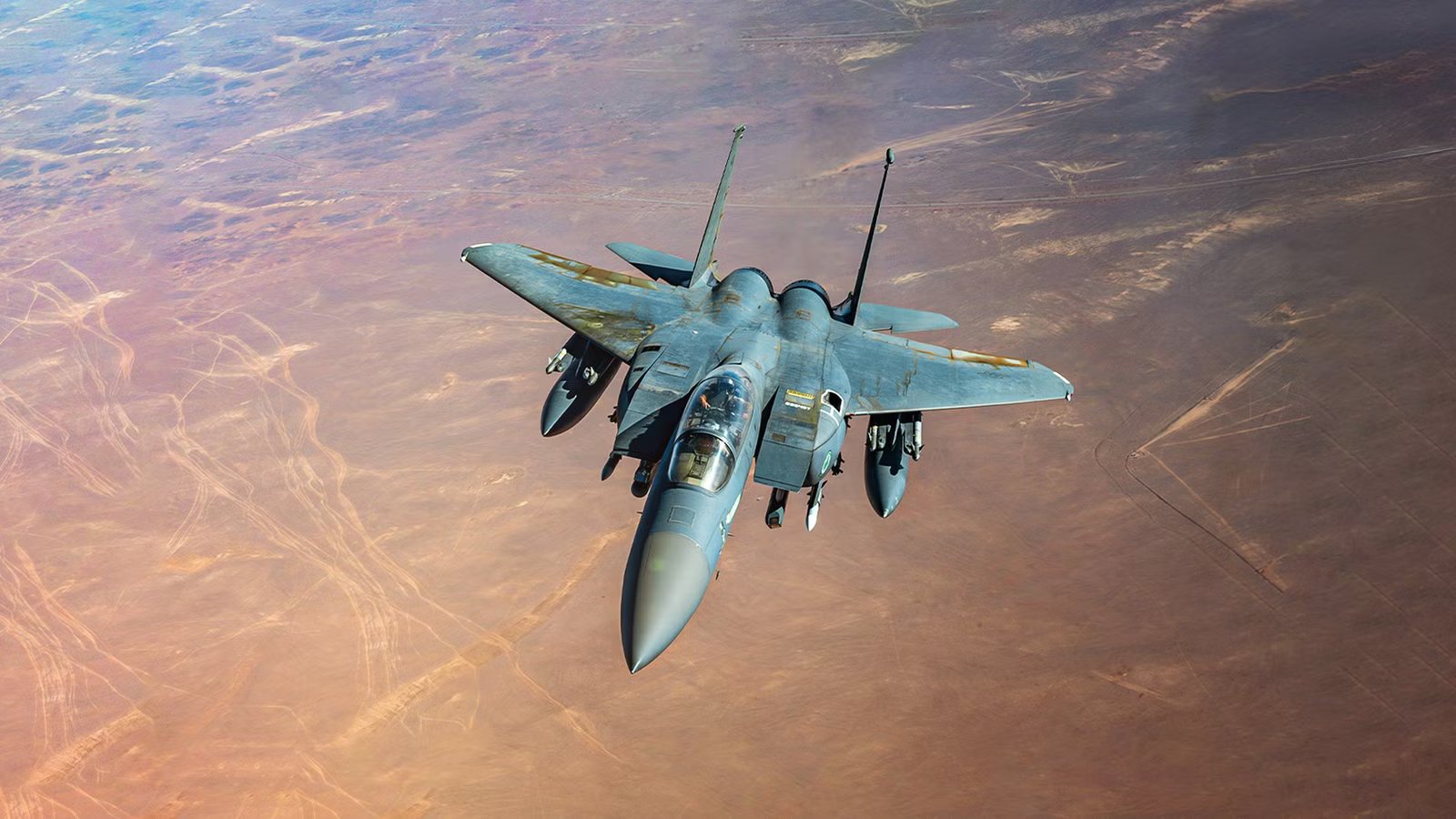
The electronic warfare environment of a 21st-century near-peer conflict has evolved into a hyper-dense, invisible battlefield that effectively renders useless the logic of legacy radar warning receivers like the AN/ALR-56 on the Lockheed MartinF-16 Viper,  Boeing F-15 Eagle, and the AN/ALR-67 on Boeing’s F/A-18 Super Hornet. When these systems were designed, they operated on a predictable paradigm where an airborne or ground threat had to brightly illuminate a target with high-powered radio frequency energy to find it, track it, and shoot it, as Air Power Australia details.
Legacy receivers function like digital ‘ears,’ tuned to listen for those specific, distinct radar frequencies across the sky. The older AN/ALR-56, for instance, relies on a digitally controlled superheterodyne architecture designed to scan a fixed spectrum. Once a recognizable signal was detected, the processor cross-referenced it with a pre-programmed library, identified the threat, and theoretically gave the pilot adequate time to react.
Modern near-peer adversaries have completely dismantled this paradigm by shifting to Low Probability of Intercept technology, which is standard on modern Active Electronically Scanned Array radars. To an older AN/ALR-56 or ALR-67, this highly lethal tracking energy does not register as a threat at all. It blends seamlessly into the background static of the atmosphere.
The Predictable Spectrum: Fixed Frequencies And Legacy Threats

Rather than acting as frontline penetrators, aircraft like the F-15 and F/A-18 are increasingly utilized as heavily armed ‘missile trucks’ operating safely behind the frontline edge of the conflict. In this framework, fifth-generation stealth fighters like the F-35, along with autonomous collaborative combat aircraft, slip deep into the contested A2/AD airspace entirely undetected to scout targets. These stealth assets then transmit precise targeting coordinates backward across the horizon via a highly secure, directional, and low-probability data-link.
The older processing of legacy RWRs lacks the sheer computational speed to isolate, capture, and reconstruct these micro-pulses. Instead of a single, powerful beam of energy, these modern radars spread their signals across a massive block of frequencies using pseudo-random noise patterns. Thus, 4.5-generation fighters can be actively tracked by an enemy surface-to-air missile battery or an adversary aircraft while its cockpit instrumentation remains entirely silent.
Low Probability Of Intercept Waveforms And Receiver Processing Bottlenecks

This vulnerability worsens against fifth- and sixth-generation fighters that utilize passive targeting and advanced sensor fusion. These modern hunters do not need to emit any radar energy to achieve a weapon-quality track. Instead, they use long-range Infrared Search and Track systems to passively lock onto the thermal signature of a 4.5-generation jet’s engines and the friction heat generated by its fuselage.
Advanced systems can use passive radio frequency sensors to triangulate the aircraft’s position based on its own communication and data-link emissions. By fusing these passive inputs across a secure, directional combat network, the adversary can guide a long-range missile toward the F-15 or F/A-18 without ever triggering the receiver. The legacy system will only detect a threat in the final seconds of the missile’s flight, when the weapon’s own terminal active seeker switches on at close range, leaving the pilot with virtually no time to execute defensive maneuvers.
Compounding this problem is the sheer saturation of the modern electromagnetic spectrum. A contested airspace is no longer a clean environment with a few distinct hostile radars. It is a chaotic blizzard of signals from hundreds of small drones, loitering munitions, cloud-linked air defense nodes, and advanced Digital Radio Frequency Memory jammers that actively manipulate and echo radio waves to create synthetic noise.
Silent Killers: Passive Tracking And Spectrum Overload

The modern battlespace requires mass, but stealth fighters are incredibly expensive to build, maintain, and fly. This is where the upgraded 4.5-generation fleets become indispensable as a complementary force. A stealth fighter like the F-35 or F-22’s delicate radar-absorbing stealth coatings requires thousands of maintenance hours and specialized climate-controlled hangars.
In a high-intensity conflict against a near-peer adversary, the sheer volume of enemy drones, cruise missiles, and fighters would also quickly deplete a stealth fleet’s ammunition carried in internal bays. 4.5-generation jets carry their weapons externally, meaning an F-15EX can carry up to 12 to 22 missiles, acting as a cost-effective, high-capacity magazine.
Under the new fleet composition, stealth assets then transmit precise targeting coordinates backward across the horizon via highly secure, directional data links. The 4.5-generation fighters, remaining well outside the detection range of enemy air defenses, receive this remote data and launch long-range standoff weapons like cruise missiles or hypersonic interceptors.
Once their ordnance is expended, they immediately turn back into completely secure territory. By shifting their duty from frontline multirole fighters to rear-guard asset protectors and airborne artillery magazines, militaries can still leverage the massive payload capacities of these older jets without exposing their outdated electronic warfare suites to an advanced spectrum that would otherwise easily defeat them.
From Spear Tip To Missile Truck: 4.5-Gen Reality

Instead of a single, powerful beam of energy, modern systems like the Russian S-400 Triumf or Chinese multi-band air defense networks spread their signals across a massive block of frequencies using complex, pseudo-random noise patterns. The S-400’s targeting radar and early warning radar utilize high-duty cycles and irregular scanning frequencies to track up to 300 targets simultaneously.
To an older AN/ALR-56 or ALR-67, this highly lethal tracking energy does not register as a threat at all. It blends seamlessly into the background static of the atmosphere. This makes older fighters much more vulnerable than fifth-generation jets like the Lockheed Martin F-35 Lightning II and F-22 Raptor.
Adversary stealth jets like China’s Chengdu J-20 Mighty Dragon and Russia’s Sukhoi Su-57 Felon also utilize passive targeting and advanced sensor fusion. Non-stealthy 4.5-generation aircraft flying directly into an engagement with such foes is considered highly non-viable. This reality has forced a dramatic shift in operational doctrine, restricting these platforms to secondary, stand-off support roles.
Advanced Peer IADS And Next-Generation Stealth

The F-22’s AN/APG-77 and the F-35’s AN/APG-81 AESA radars can focus tightly directed, low-power LPI energy that easily slips under the detection threshold of legacy RWRs. Systems like the J-20 and Su-57 use long-range Infrared Search and Track optics alongside distributed electro-optical apertures to passively lock onto the thermal signature of a 4.5-generation jet’s engines and the friction heat generated by its fuselage at ranges exceeding 50 miles (80 km).
More dangerously, the Chinese J-20 features a massive next-generation Gallium Nitride AESA radar packing an estimated 2,000 sensors, vastly out-sizing the modules found on smaller airframes. This massive array grants the J-20 a raw radar detection range of up to 120 miles (193 km) against conventional targets, long before the F-15 or F/A-18 even registers an emission.
By fusing these passive inputs with a digital combat network, a fifth-generation adversary can guide a long-range, active-radar-guided missile, such as the Chinese PL-15 or Russia’s Mach 14 hypersonic missile launched from an S-400 battery, without ever triggering the receiver. The legacy system will only detect a threat in the final seconds of the missile’s flight, when the weapon’s own terminal active radar seeker switches on at close range, leaving the pilot with less than five seconds of reaction time to execute defensive maneuvers.
The New Operational Doctrine: The High-Low Mix

Upgrades like the AN/ALQ-250 Eagle Passive Active Warning Survivability System on the F-15, the AN/ALQ-257 Integrated Viper Electronic Warfare Suite on the F-16, and the advanced block upgrades on the F/A-18 Super Hornet completely overhaul their old electronic limitations. The EPAWSS system replaces the F-15’s legacy RWR and internal countermeasures with an all-digital, wideband electronic warfare suite. EPAWSS can instantaneously detect, identify, and geolocate modern LPI threats.
Lieutenant Colonel Matthew Heil, F-15 Program Office, EPAWSS Materiel Leader, gave these remarks in a press release from the Air Force Life Cycle Management Center in May:
“The integration of advanced electronic warfare suites, such as the Eagle Passive Active Warning Survivability System, ensures the F-15E will not just survive, but actively disrupt and dismantle adversary kill chains in the most highly contested, electromagnetically dense environments. We are not merely extending the life of this platform; we are aggressively expanding its lethality and survivability to ensure it dominates the modern battlespace.”
The core vulnerability of legacy systems like the AN/ALR-56 and AN/ALR-67 was their analog, slow-processing architecture. The F-16’s new internal electronic warfare suite provides next-generation digital radar warning and jamming that is fully integrated with the jet’s new AN/APG-83 Scalable Agile Beam Radar AESA. IVEWS solves the saturation problem by utilizing a digital receiver that can process millions of signals per second. It allows the F-16 to actively jam adversary air defense systems while its own radar continues to track targets.
The latest Super Hornets feature the Distributed Targeting Processor-Networked and the Tactical Targeting Network Technology data link, paired with upgraded electronic suites like the AN/ALR-67 digital variants and advanced towed decoys. This allows the Super Hornet to crunch massive amounts of data from external sources instantly, transforming the cockpit display into a fused, holistic picture of the battlefield. While they will never regain tip-of-the-spear status to penetrate advanced A2/AD zones alongside the F-35 or F-22, these systems allow them to operate as highly survivable, cost-effective, and lethal complementary forces.