dailynewsnblog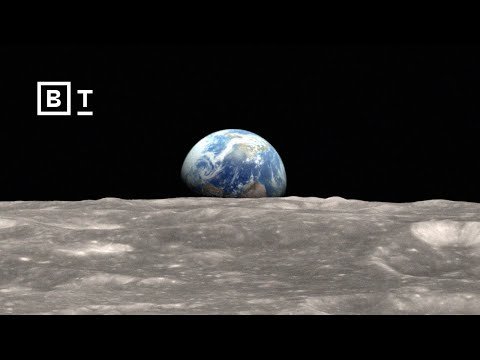
After college, Ronald Garan joined the United States Air Force and became an F-16 pilot and later an astronaut. In 2008, he flew aboard Space Shuttle Discovery on its 35th mission. Three years later, he spent nearly six months aboard the International Space Station. His training also included 18 days living and working underwater at a NASA facility in Florida
Garan speaks of the “orbital perspective”—the understanding that humanity shares a single, interconnected world. From orbit, national borders disappear, while the fragility of Earth becomes unmistakable. Climate change, environmental destruction, war, and threats to democracy are not contained within political boundaries. Decisions made in one country affect people far away and generations not yet born.
Garan also reflects on the irony of having spent years training as a fighter pilot for possible combat against the Soviet Union, only to later live and work alongside two Russian cosmonauts aboard the International Space Station. In orbit, international cooperation was not merely desirable; it was essential. Safety depended on people from rival nations trusting one another and working toward a common purpose.
Today, Ronald Garan works as a keynote speaker and a business consultant. His messages include:
We are obsessed with short-term profit and growth at all costs, instead of considering courses of action that would be more beneficial and sustainable over a longer period.
Business and political leaders need to move away from a focus that only considers the next shareholder report or election cycle to one that also integrates a multi-generational perspective.
One of Garan’s most important messages is that, in a rapidly changing world, the riskiest course is to continue doing what worked yesterday. He argues that protecting the planet must now take priority over expanding the economy.
Canadian political leaders embrace the opposite view. Economic growth remains their overriding objective, while protecting the planet is treated as a constraint to be managed—or postponed.
Brendan Haley is Senior Director of Policy Strategy for Efficiency Canada. In Perspectives, a journal of the Broadbent Institute, Haley asked, “Why Does Canada Develop Megaprojects Instead of Innovation Systems?”
Prime Minister Mark Carney’s “nation-building” agenda has thus far largely focused on resource megaprojects. This is not a new thing. The policy agenda risks repeating a very old Canadian development pitfall that created the dependence on the larger empires of the world that leaves us vulnerable today. Rather than repeating the pattern of seeking salvation in megaprojects, the current moment calls for a public sector-led agenda to develop diverse, multi-sector economies that can adapt to changing economic circumstances…
A short review of Canadian economic history demonstrates that there is nothing new about the Carney government’s boosting of megaprojects.
In the 16th and 17th centuries, Canada’s early economy depended mainly on cod fishing and the fur trade. During the 19th century, timber, wheat, and other farm products became important exports. Later, lumber, newsprint, minerals, and metals also grew in importance.
After the Second World War, Canada exported increasing amounts of oil, natural gas, uranium, potash, and iron ore. Manufacturing also expanded. Canada was no longer exporting mostly raw materials.
Mark Carney, Danielle Smith, and David Eby intend to keep the focus on raw material exports. They believe Canadians should be satisfied to serve as hewers of bitumen and drawers of natural gas.