dailynewsnblog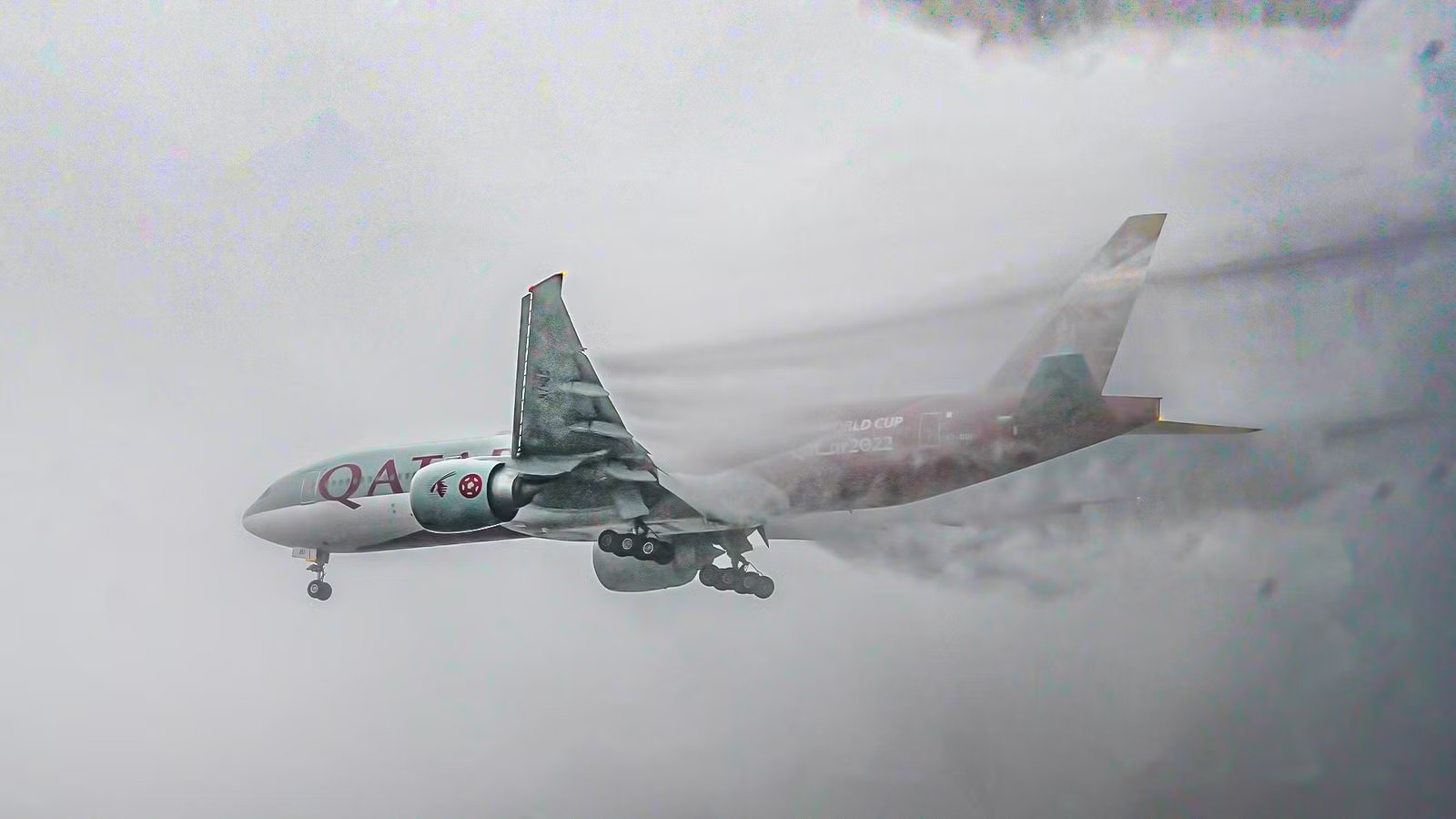
Dense fog is one of aviation’s most challenging weather conditions. While passengers may see little more than a blanket of gray outside the window during approach, pilots are preparing for one of commercial aviation’s most sophisticated procedures. Even in visibility so poor that the runway may not appear until after touchdown, the aircraft can still land safely using a highly automated system known as autoland. Rather than relying on visual references, the aircraft follows radio signals and onboard sensors with extraordinary precision, allowing operations to continue even when human eyesight alone would make a landing impossible.
Autoland is often misunderstood as a system that simply lands the airplane without pilot involvement. In reality, it is a carefully monitored partnership between certified aircraft, specially equipped airports, advanced automation, and highly trained flight crews. During a Category III instrument approach, multiple autopilot computers, radio navigation signals, radio altimeters, and redundant flight control systems work together to guide a widebody airliner from several thousand feet above the ground to the runway centerline. Throughout the process, pilots remain fully engaged, continuously monitoring the aircraft’s performance, confirming flight modes, and preparing to intervene immediately if anything deviates from expectations. The result is one of modern aviation’s most impressive demonstrations of precision engineering, enabling large commercial aircraft to operate safely in weather that would otherwise bring airports to a standstill.
The Instrument Landing System: An Invisible Highway To The Runway

Every autoland event begins with the same foundation: the Instrument Landing System, better known as ILS. Long before the aircraft reaches the runway, the crew tunes and verifies the correct ILS frequency for the assigned runway. Although satellite navigation has transformed many aspects of modern aviation, ILS remains the international standard for precision approaches in very low visibility because it provides highly accurate lateral and vertical guidance all the way to the runway.
The ILS system consists of two primary radio signals transmitted from equipment installed alongside the runway. The first is the localizer, which projects a beam extending outward from the runway centerline. The aircraft’s navigation systems detect this signal and continuously determine whether it is left or right of the desired path. The autopilot then makes small, smooth corrections to keep the aircraft precisely aligned with the runway. The second component is the glideslope, which transmits a vertical guidance signal that establishes a descent path of approximately three degrees. Rather than descending at a constant rate regardless of speed, the aircraft adjusts its descent to remain centered on this electronic glide path until reaching the runway threshold.
During an autoland approach, pilots typically engage multiple autopilot channels well before intercepting the ILS. As the aircraft captures both the localizer and glideslope, the flight mode annunciator displays modes such as LOC and G/S, confirming that the automation is tracking the signals correctly. These indications are closely monitored throughout the approach because they provide immediate confirmation that every part of the system is functioning as expected.
Although the autopilot performs the physical maneuvers, the pilots continue making operational decisions. For example, they monitor weather updates, verify aircraft configuration, complete checklists, and ensure the approach remains stable. If the aircraft drifts outside established safety limits or any required system becomes unavailable, company procedures generally require an immediate go-around rather than continuing the unstable approach. By the time the aircraft is fully established on the ILS, it is following an invisible path that leads directly to the runway. From that point forward, the combination of precise ground-based signals and sophisticated onboard automation allows the aircraft to maintain remarkable accuracy, even when the runway remains completely hidden by fog.
Aircraft Authority In The Final Seconds

Although the Instrument Landing System guides the aircraft toward the runway, the most critical phase of an autoland occurs during the final seconds before touchdown. At this point, the system transitions from tracking radio signals to using onboard sensors that provide far greater accuracy close to the ground. As the aircraft descends below roughly 200 feet (61 meters), pilots continue monitoring every aspect of the approach while listening to the automated altitude callouts. The radio signals remain the primary source of guidance, but they become less reliable very close to the runway because of signal reflections from the ground and surrounding structures. To compensate, the aircraft relies on a radio altimeter, which measures the airplane’s exact height above the terrain by transmitting radio waves directly toward the surface below. Unlike the barometric altimeter, which measures altitude based on air pressure, the radio altimeter can determine the aircraft’s height above the runway within just a few feet.
This information allows the autoland system to perform the landing flare with exceptional precision. At approximately 50 feet (15 meters) above the runway, the autopilot begins a gentle nose-up maneuver that reduces the rate of descent. Around 30 feet (9 meters), the autothrottle automatically slows the engines to idle, allowing the aircraft to settle smoothly onto the runway. After the main landing gear contacts the runway, the aircraft automatically enters rollout mode. Using inputs from the localizer along with the aircraft’s rudder and nosewheel steering systems, the autopilot keeps the airplane aligned with the runway centerline while it decelerates. This capability is especially important during dense fog, when pilots may have little or no visual reference immediately after landing.
Throughout the approach, pilots continuously monitor the flight mode annunciator, which confirms each stage of the landing sequence. Indication messages for steps such as landing, flare, and rollout verify that the aircraft is progressing normally. If any required mode fails to engage or an unexpected alert appears, the crew is prepared to discontinue the approach and execute a missed approach immediately. While the landing appears almost effortless from the passenger cabin, it is actually the result of multiple systems working together in carefully timed succession. Every phase, from capturing the ILS to steering along the runway after touchdown, is designed to maintain precision when outside visual references are virtually nonexistent.
Redundancy Makes Autoland Safe In Near-Zero Visibility

Autoland is trusted in some of aviation’s lowest visibility conditions because it is built around redundancy rather than a single automated system. Every critical component has backups, allowing the aircraft to continue operating safely even if one element fails during the approach. Most modern widebody airliners certified for Category III operations use multiple autopilot channels simultaneously during an autoland. Instead of one computer flying the aircraft, two or three independent autopilot systems continuously compare calculations and monitor one another. If one channel detects a disagreement or malfunction, the remaining systems can identify the fault and respond accordingly.
The level of redundancy depends on the aircraft’s certification. A fail-operational autoland system can tolerate a single failure and still complete the landing automatically, making it suitable for the lowest visibility operations. By contrast, a fail-passive system disconnects the automation or reverts to a safe state following a failure, requiring the pilots to immediately take control and typically execute a go-around. These capabilities are particularly important during Category IIIb approaches, where runway visual range may be as low as approximately 246 feet (75 meters), and the decision height can be zero. In these conditions, pilots may not see the runway until after the aircraft has already touched down, making reliable automation essential.
Airports supporting Category III operations must maintain certified ILS equipment, protected critical areas around the antennas, reliable runway lighting, and backup electrical power. Air traffic controllers also implement special low-visibility procedures to prevent vehicles or other aircraft from interfering with the sensitive ILS signals. Autoland therefore depends on an entire system working together. Certified aircraft, qualified flight crews, properly equipped airports, and protected ground infrastructure all play essential roles in ensuring a safe landing when outside visual references are almost nonexistent.
Pilots Remain Fully Engaged Throughout The Landing

Despite its name, autoland does not turn pilots into passive observers. Even when the aircraft is certified to land automatically, the flight crew remains actively involved from the moment the approach begins until the aircraft exits the runway. Instead, their role shifts from manually controlling the airplane to monitoring the automation and preparing to intervene if necessary. Autoland can only be used when both the aircraft and airport are certified for the procedure, and pilots receive specialized training before conducting Category III approaches. They practice these landings regularly in full-flight simulators, including scenarios involving system failures that require taking manual control at very low altitude. This recurrent training ensures crews remain proficient even though real-world autolands are relatively infrequent for many pilots.
Modern autoland systems have accumulated decades of operational experience. One of the earliest airliners designed with advanced automatic landing capability was the Lockheed L-1011 TriStar, which helped demonstrate that large commercial aircraft could safely land in extremely poor visibility using onboard automation. Since then, advances in flight computers, sensors, and navigation systems have made autoland a standard capability on many modern widebody aircraft. Although the technology performs the landing, pilots remain the final authority.
Autoland Is Powerful, But Pilots Remain Essential

Autoland has transformed the way commercial aviation operates in low visibility, allowing airlines to maintain schedules during weather that once caused widespread diversions and cancellations. By combining precision Instrument Landing System guidance, radio altimeters, multiple autopilot computers, and sophisticated flight control software, today’s widebody aircraft can safely complete approaches in conditions where the runway may remain invisible until after touchdown.
Yet technology is only one part of the equation. Every successful autoland depends on certified aircraft, properly equipped airports, protected ground infrastructure, and highly trained flight crews who continuously monitor the system from approach to rollout. Automation can fly the airplane with remarkable accuracy, but pilots remain responsible for confirming that every phase of the landing is unfolding as expected and for taking control immediately if it is not.
Future developments in satellite navigation, digital communications, and flight management systems will likely make low-visibility operations even more capable and efficient. However, the fundamental philosophy behind autoland is unlikely to change. Rather than replacing pilots, it serves as a sophisticated tool that enhances safety when visual cues disappear. In near-zero visibility, the aircraft may execute the landing, but it is the crew’s preparation, oversight, and decision-making that ultimately ensure the flight reaches the runway safely.

![Qatar Airways’ US Capacity Drops More Than 10% Year-On-Year: See All Flights Now [Map]](https://dailynewsnblog.com/wp-content/uploads/2026/08/216-qatar-airways-airbus-a350-900-max-walter-cangavi-_-shutterstock.jpg)