dailynewsnblog
The Airbus A320 and Boeing 737 are the two most ubiquitous airliners in the world. They’re essentially the default short-haul airliners globally, with each family offering a wide variety of sizes and capabilities, while also being extremely economical to operate. With the latest generation of both, these airliners have also gained the capability to cross the Atlantic in some variants. However, the A320 has been around for nearly 40 years and is being produced in its second generation, while the 737 is in its fourth generation and has been in service for nearly 60 years.
They’re the two oldest commercial passenger airliners still on sale, and they’ve persisted for so long because of how well they’ve been designed. However, both Boeing and Airbus are now looking to replace these aircraft with clean-sheet designs to arrive in the late 2030s. Considering that these will be the companies’ first clean-sheets since the A350 and 787, and that the new airliners will replace the two most popular jet airliners of all time, they will be the most exciting and consequential aircraft to come in years.
The Current State Of The Narrowbody War

The 737 is currently being produced as the 737 MAX, which debuted in 2017 and currently includes the 737 MAX 7, 737 MAX 8 (including the MAX 200 subvariant), 737 MAX 9, and 737 MAX 10. Meanwhile, the A320 is currently being produced as the A320neo, which debuted in 2016, and includes the A319neo, A320neo, and A321neo (including the A321LR/A321XLR subvariants). The 737 MAX is exclusively powered by the CFM LEAP-1B, whereas the A320neo is offered with a choice of either the CFM LEAP-1A or the Pratt & Whitney PW1100G.
The variants of the A320neo are essentially identical to late-production standard examples of the preceding A319ceo/A320ceo/A321ceo apart from the engines. The 737 MAX 8 and 737 MAX 9 are also largely the same as their counterparts from the preceding 737NG family, while the 737 MAX 7 is longer than the 737-700. Meanwhile, the 737 MAX 10 is a brand-new variant that’s a stretch of the 737 MAX 9, intended to rival the A321neo more closely in size and per-seat costs.
While the A320 and 737 have traditionally been neck-and-neck, the A320neo family has far outsold the 737 MAX, receiving over 12,000 orders compared to just over 7,200 for the 737 MAX. It’s the A321neo that has been responsible for the family’s success, as it’s received over 7,700 orders on its own with no sign of slowing down, as the aircraft is extremely economical while being capable for airlines willing to pay for variants with longer range. For Boeing, this represents a major problem.
The Boeing New Small Airplane

The A321neo has been grabbing market share with virtually no opposition, and while the 737 MAX 10 appears to be a genuinely competitive aircraft, the A321neo has already stolen most of the market. As such, it was reported earlier in 2026 that  Boeing is looking to start developing a new ‘NSA‘ to debut in the 2030s. Work was meant to begin after the 777-9 is certified in 2027, although the project is now reportedly delayed and the aircraft won’t enter service until the late 2030s.
The NSA has not officially been launched, and the design is far from frozen, although we do have some clues about what it may look like. Boeing is targeting the 757-200 rather than the 737 MAX 10 in size (the 737 MAX 10 is slightly smaller than either the 757 or A321neo), and the aircraft will be a familiar single-aisle tube-and-wing design. The NSA will feature new ducted turbofan engines, along with a new wing design that will be longer and thinner while incorporating folding wingtips.
Notably, Boeing is targeting the 737 MAX 10/757-200 size for the base model, especially considering that the smaller 737 MAX 8 is by far the best-selling variant in the 737 MAX family. Likely, this means that the 737 MAX will continue alongside the NSA for a brief period until a solution for replacing the MAX 8 is implemented, which may be an NSA shrink or another new aircraft. While the program hasn’t yet been launched, the manufacturer is ramping up research & development (R&D) and is discussing the program with potential suppliers.
The Airbus Next-Generation Single Aisle

Airbus revealed plans to develop the NGSA in 2025, a clean-sheet design to replace the A320neo family, and has provided more firm details than Boeing. Airbus planned a formal launch for the NGSA in 2030, although it’s recently pushed back the launch to 2031, and expects to debut the new airliner in the late 2030s, or roughly at the same time as the Boeing NSA. Airbus, too, is targeting the upper end of the narrowbody market by making the initial NGSA model roughly the same size as the A321neo, though it has a solution to replace the A320neo in the form of the A220.
Just like its future rival, the Airbus NGSA will feature a new wing design, using findings from Airbus’s Wing of Tomorrow project, which will be thinner and longer than the wing on the A321neo to boost fuel efficiency. To enable the NGSA to use existing narrowbody gates, it will feature folding wingtips. Airbus is also looking to innovate in materials to cut weight, while also exploring new solutions in digital aircraft systems and integrating battery technology to cut fuel burn.
Current Commercial Narrowbody Engines | Variants |
|---|---|
CFM LEAP | CFM LEAP-1A (A320neo) CFM LEAP-1B (737 MAX) CFM LEAP-1C (C919) |
Pratt & Whitney PW1000G | PW1100G (A320neo) PW1500G (A220) PW1900G (E2) |
Engines are the biggest factor behind aircraft fuel efficiency, and while Boeing has not publicly partnered with any supplier yet, Airbus is collaborating closely with CFM on its upcoming RISE, an open-rotor turbofan engine. Airbus is aiming to cut fuel burn significantly compared to the A321neo by using the CFM RISE, although it is also exploring ducted turbofan proposals from Pratt & Whitney and Rolls-Royce. The CFM RISE is, however, the engine most associated with the program.
Engines For The New Narrowbodies

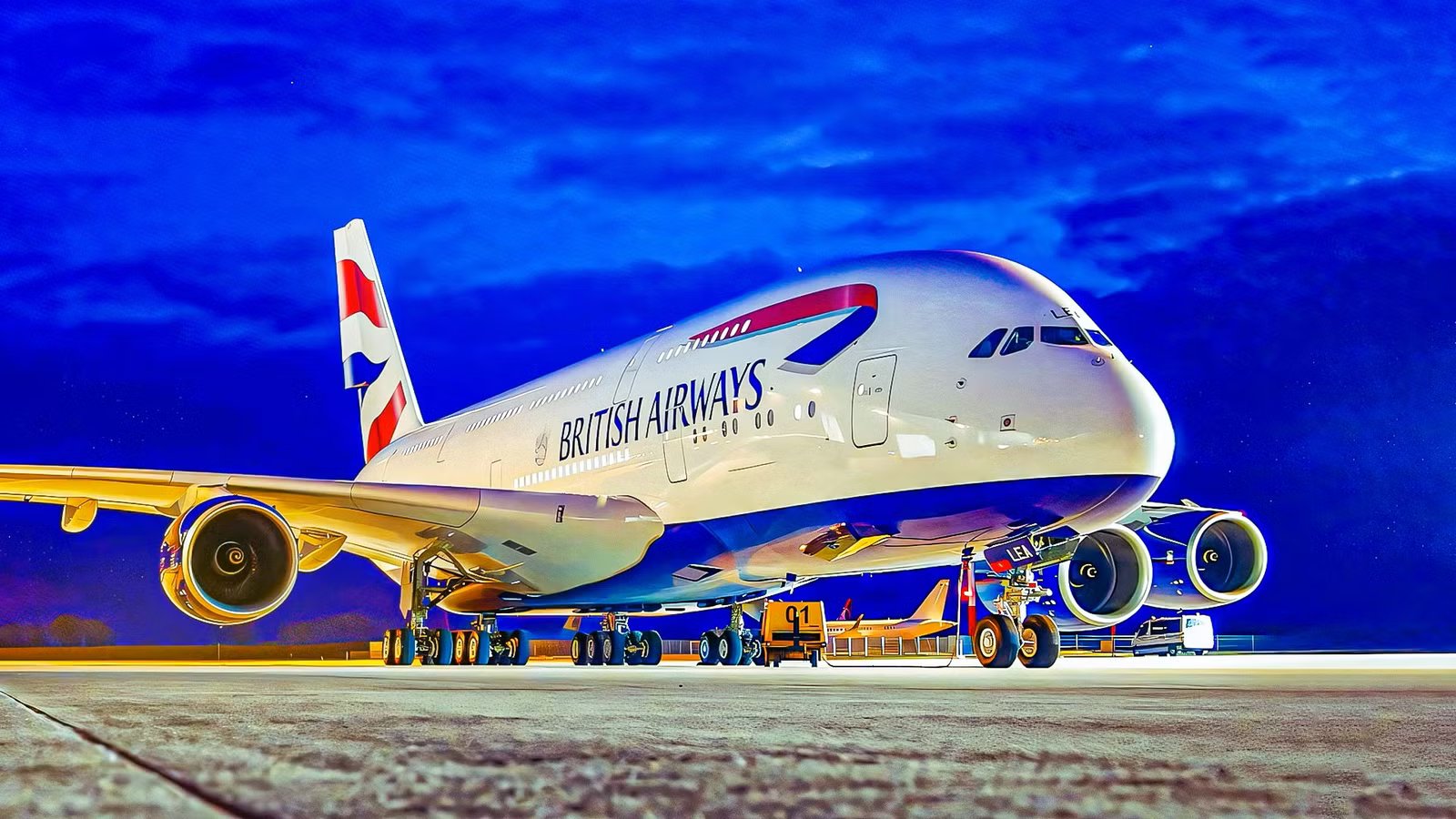
Without innovative, durable engines, the Boeing NSA and Airbus NGSA won’t hold any value for airlines. Airbus is planning to equip an Airbus A380 with one CFM RISE to perform testing by the end of the decade, and the RISE is being pushed as the primary engine option for the NGSA. However, an unducted engine is a novel, unproven technology that introduces a new layer of technical challenges, and it’s unclear how much sales success the CFM RISE will have on the market, provided that the demonstrator proves its viability.
Boeing has declined to place the unducted CFM RISE on the NSA, and CFM is reportedly looking at a ducted version of the RISE. Presumably, this would be the front-runner for the NSA, given that the 737 has been exclusively powered by CFM engines since the 1980s. Meanwhile, Airbus is exploring ducted engine options for the NGSA, and it’s more than possible that there could be two engine models available. Pratt & Whitney will undoubtedly aim to get on one of these programs, but the other major player to watch in this space is Rolls-Royce.
Boeing 737 Generations | Engines | Airbus A320 Generations | Engines |
|---|---|---|---|
737 Original | Pratt & Whitney JT8D | A320 | CFM56-5 IAE V2500 |
737 Classic | CFM56-3 | A320neo | CFM LEAP-1A Pratt & Whitney PW1100G |
737NG | CFM56-7 | ||
737 MAX | CFM LEAP-1B |
Rolls-Royce has not offered an engine in this market ever since it left the IAE joint venture (which produced the V2500 engine), instead focusing on widebody powerplants. However, the company’s new UltraFan program is designed to be scalable, and having successfully run the UF-80 demonstrator in 2023, the manufacturer is now aiming to begin testing a smaller UF-30 demonstrator in 2028. Once the data is in from the testing, Rolls-Royce will undoubtedly be pushing a production version of the UF-30 for either the NSA or NGSA.
The Challenge With Replacing The A320 And 737

The Boeing NSA and Airbus NGSA should prove to be excellent airliners on their own. However, part of the appeal of the A320 and 737 is that they are proven, established planes, which makes replacing them extremely challenging for a new airliner. For one, Boeing is currently producing 47 737s per month, whereas Airbus is building over 50 A320s per month and is targeting 75 per month by 2027. These aircraft are produced in high volumes; they can be priced competitively because the production processes are amortized, and this will be hard for a new plane to replicate.
In addition, because of how long the A320 and 737 have been around, they’ve achieved an unbeatable level of durability and reliability. This is especially critical because these aircraft typically operate multiple flights per day, stressing the airframe more than a long-range airliner. These aircraft are used hard by their operators, while both companies operate global support networks. The NSA and NGSA will need to match these qualities, and this will be challenging for brand-new planes with new engines.
Airbus and Boeing are, of course, both massive customers that have produced successful airliners for decades, but tackling these challenges is still difficult. The Airbus A220 is a classic example, as while the plane itself is excellent, it’s been suffering from durability issues stemming from its engines. In addition, the aircraft’s production rate is a fraction of the A320’s or 737’s. Presumably, Boeing and Airbus will be taking lessons from prior programs to ensure that their planes are dependable and available, given how important they will be to their product portfolios in the future.