dailynewsnblog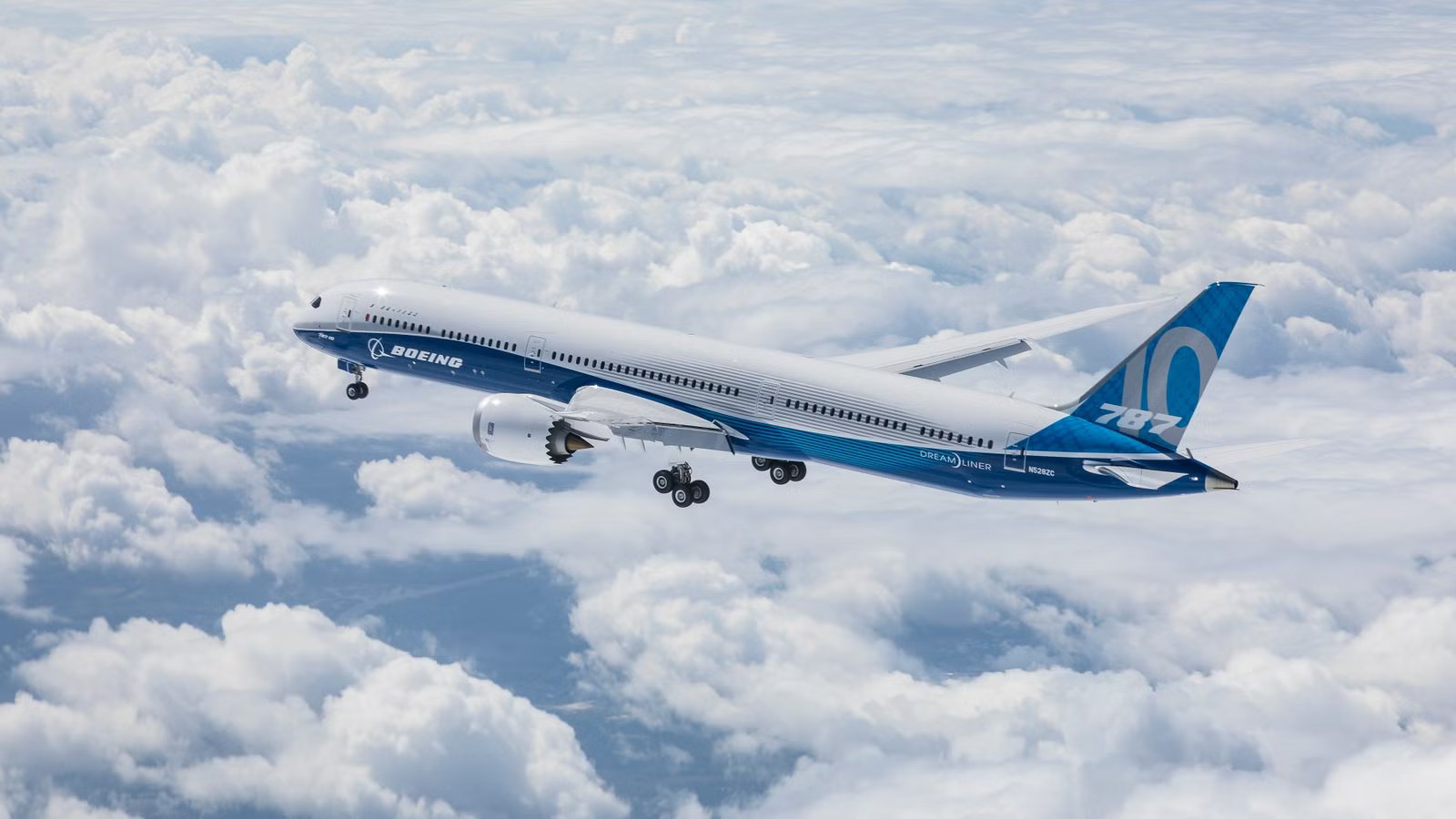
An Aircraft Commerce study comparing 14 widebody aircraft-engine combinations across five routes found that the GEnx-powered Boeing 787-10 produces the lowest fuel burn per available seat mile of any widebody configuration currently in service. The finding ranked the 787-10/GEnx ahead of the same aircraft with Trent 1000 engines, ahead of both A350 variants, and ahead of every older widebody type including the 777-200ER, 777-300ER, and 747-400.
The result matters because airlines do not choose airframes in isolation. They choose engine-airframe combinations, and the same aircraft with different engines produces different operating economics across the life of the fleet. The GEnx now powers more than two-thirds of all 787s in service, and recent orders from Philippine Airlines and  Delta Air Lines confirm that the market continues to consolidate around the 787-10/GEnx pairing. Here is what the Aircraft Commerce data showed, what makes the GEnx more efficient than its competitor on the same airframe, and why the 787-10 variant specifically leads the ranking.
The Study That Ranked 14 Widebody Engine-Airframe Combinations

Aircraft Commerce, a London-based aviation industry journal, published a comparative analysis in its December 2018/January 2019 issue that ranked 14 widebody aircraft-engine combinations on block fuel burn per available seat mile across five routes of varying distances. The study used Lufthansa Systems fuel data and compared the Boeing 787-8, 787-9, and 787-10 in both GEnx and Trent 1000 configurations against the Airbus A350-900, A350-1000, A330-200, A330-300, Boeing 777-200ER, 777-300ER, and 747-400. The GEnx-powered 787-10 ranked first.
The result was not close on a per-seat basis. The 787-10 with GEnx engines produced the lowest combined fuel burn and en-route ATC charges per ASM across the five routes tested. The study noted that the 787-10s “overall steal the show,” with fuel burn per seat that the other 13 combinations could not match. The 787-10 with Trent 1000 engines ranked behind the GEnx variant but still performed well. The A350-900 placed competitively but behind both 787-10 configurations. The older types, including the 777-200ER, A330-200, A330-300, and 747-400, fell significantly further back.
The ranking matters because airlines selecting widebody aircraft are not choosing between airframes alone. They are choosing an engine-airframe combination, and the same airframe with different engines produces different operating economics. A 787-10 with GEnx engines and a 787-10 with Trent 1000 engines are the same aircraft from a passenger and maintenance infrastructure standpoint, but they produce different fuel costs per ASM over the life of the aircraft. The Aircraft Commerce study quantified that difference across real route profiles, giving airlines a data point that goes beyond manufacturer marketing claims.
What Makes The GEnx-1B Engine More Efficient

The GEnx-1B is a two-spool high-bypass turbofan that GE Aerospace developed specifically for the 787 program. Its design is based on the GE90, which powers the Boeing 777, but with a lighter construction and improved thermodynamic cycle. The engine uses 18 composite fan blades with a diameter of 111.1 inches (282 centimeters), the first commercial application of carbon fiber composite fan blades at this scale. The composite blades weigh approximately one-third less than equivalent titanium blades, which reduces the mass of the rotating assembly and allows the fan case to be built from composite material as well, since the containment requirements are lower for lighter blades.
Behind the fan, a 10-stage high-pressure compressor operates at a 23:1 overall pressure ratio, compressing incoming air to a higher density before combustion than the previous-generation CF6 achieved. Higher compression ratios improve thermal efficiency, which means more useful thrust is extracted from each unit of fuel burned. The combustor uses GE’s Twin Annular Pre-Swirl design, which mixes fuel and air more thoroughly and at lower peak temperatures than conventional combustors. The result is 55% lower NOx emissions than the CF6 and a combustion process that extracts energy more efficiently from the fuel.
The GEnx-1B produces between 69,800 and 76,100 pounds (310-339 kN) of thrust depending on the subvariant, with a bypass ratio of 9.6:1. GE Aerospace publishes a specific fuel consumption advantage of approximately 1.4% over the Trent 1000 on a typical 3,000 nautical mile (5,556 km) mission. That margin sounds small in percentage terms but compounds across thousands of flights per year. On an aircraft operating 1,200 cycles annually, a 1.4% fuel burn advantage translates to meaningful savings in annual fuel expenditure. The GEnx now powers more than two-thirds of the in-service 787 fleet, with a 99.98% dispatch reliability rate.
Why The 787-10 Variant Specifically Leads The Ranking

The 787-10 is the longest variant in the Dreamliner family at 224 feet (68.3 m), approximately 18 feet (5.5 m) longer than the 787-9 and 38 feet (11.6 m) longer than the 787-8. All three variants share the same wing, the same engine options, and the same basic systems architecture. The 787-10 does not fly further than its siblings. Its range of approximately 6,330 nautical miles (11,730 km) is shorter than the 787-9’s 7,530 nautical miles (13,950 km) and the 787-8’s 7,355 nautical miles (13,620 km). What it does is carry more passengers on a comparable fuel burn.
A 787-10 in a typical two-class configuration seats approximately 330 passengers. A 787-9 in a comparable layout seats approximately 280. A 787-8 seats approximately 240. The 787-10 burns more total fuel per flight than the 787-9 because it is heavier at maximum takeoff weight, but the increase in fuel burn is proportionally smaller than the increase in seat count. The additional 50 seats on the 787-10 compared to the 787-9 add weight for passengers, baggage, and the longer fuselage structure, but they do not require a larger wing or more powerful engines. The result is that the fuel cost per available seat mile decreases as the fuselage gets longer, because the fixed costs of moving the wing, engines, and systems through the air are spread across more revenue-generating seats.
This is a well-understood principle in aircraft design. Stretching an existing airframe is one of the most cost-effective ways to reduce per-seat operating costs without developing a new aircraft. The 787-10 exploits this to the maximum extent the 787’s wing and landing gear can support. Its shorter range limits it to routes under approximately 6,300 nautical miles (11,667 km), which excludes some transpacific services but covers the transatlantic, intra-Asian, and Middle Eastern routes where the aircraft is most commonly deployed. On those routes, the 787-10 with GEnx engines produces a lower cost per ASM than any other widebody combination the Aircraft Commerce study measured.
How The No-Bleed Architecture Adds To The GEnx Advantage

The 787 is the only commercial widebody that does not extract bleed air from its engines. On every other widebody in service, including the A350, A330neo, and 777, high-pressure air is tapped from the engine compressor stages and routed through ducting to power the cabin pressurization system, the wing anti-ice system, and the hydraulic system pressurization. That extracted air represents energy the engine produced but cannot use for thrust. The engine burns fuel to compress the air, and then a portion of that compressed air is diverted before it reaches the combustor, reducing the net thrust available from each unit of fuel consumed.
The 787 replaces those pneumatic systems with electrically driven alternatives. Cabin pressurization is handled by dedicated electric compressors. Wing anti-ice uses electrical heating elements. The hydraulic system uses electric motor-driven pumps. The engines produce thrust and nothing else. For the GEnx specifically, this means the full output of its 10-stage high-pressure compressor feeds the combustor and drives the turbine, with no air diverted to aircraft systems. The 1.4% specific fuel consumption advantage GE publishes for the GEnx over the Trent 1000 is measured at the engine level, but the no-bleed architecture amplifies that advantage at the aircraft level because neither engine is losing energy to bleed extraction.
The A350, which is the 787-10’s closest competitor in the Aircraft Commerce study, uses conventional engine bleed air for its pressurization and anti-ice systems. The Trent XWB engines on the A350 are individually more powerful and thermally efficient than the GEnx, but a portion of their output is diverted to pneumatic systems that the 787’s GEnx does not need to supply. The net result at the aircraft level is that the 787-10/GEnx combination retains more of its engine’s rated efficiency in actual operation than the A350 retains from its Trent XWB. The no-bleed architecture is not the only reason the 787-10 leads the ranking, but it is a contributing factor that applies to every flight regardless of route length or payload.
Which Airlines Have Chosen The 787-10/GEnx And Why

Philippine Airlines announced at the Farnborough International Airshow on July 20, 2026, that it had committed to order 15 Boeing 787-10s with options for five more, selecting GE Aerospace GEnx-1B engines to power the fleet. The order, PAL’s first Boeing purchase in nearly 20 years, will support the airline’s medium and long-haul expansion from Manila and Cebu, with deliveries scheduled between 2031 and 2034. PAL already operates GE90-powered 777-300ERs, which means the GEnx selection maintains engine family commonality across its Boeing widebody fleet and keeps the airline’s relationship with GE Aerospace intact.
Delta Air Lines has ordered the largest 787-10 fleet of any US carrier and has standardized on the GEnx across its entire 787 order. Delta’s selection reflects a broader fleet strategy of consolidating around fewer engine types to reduce maintenance complexity and spare engine inventory costs. United Airlines also operates GEnx-powered 787-10s as part of its widebody fleet, including the Elevated 787-9 with its new Polaris suites. Singapore Airlines, Etihad Airways, and Korean Air are among the other major operators that selected the GEnx for their 787-10 fleets. The pattern across these carriers is consistent: airlines that already operate GE engines on other widebody types tend to stay with GE on the 787.

![Southwest Airlines Launches These 4 New Nonstop Routes This Week [List & Map]](https://dailynewsnblog.com/wp-content/uploads/2026/08/southwest-airlines.jpg)