dailynewsnblog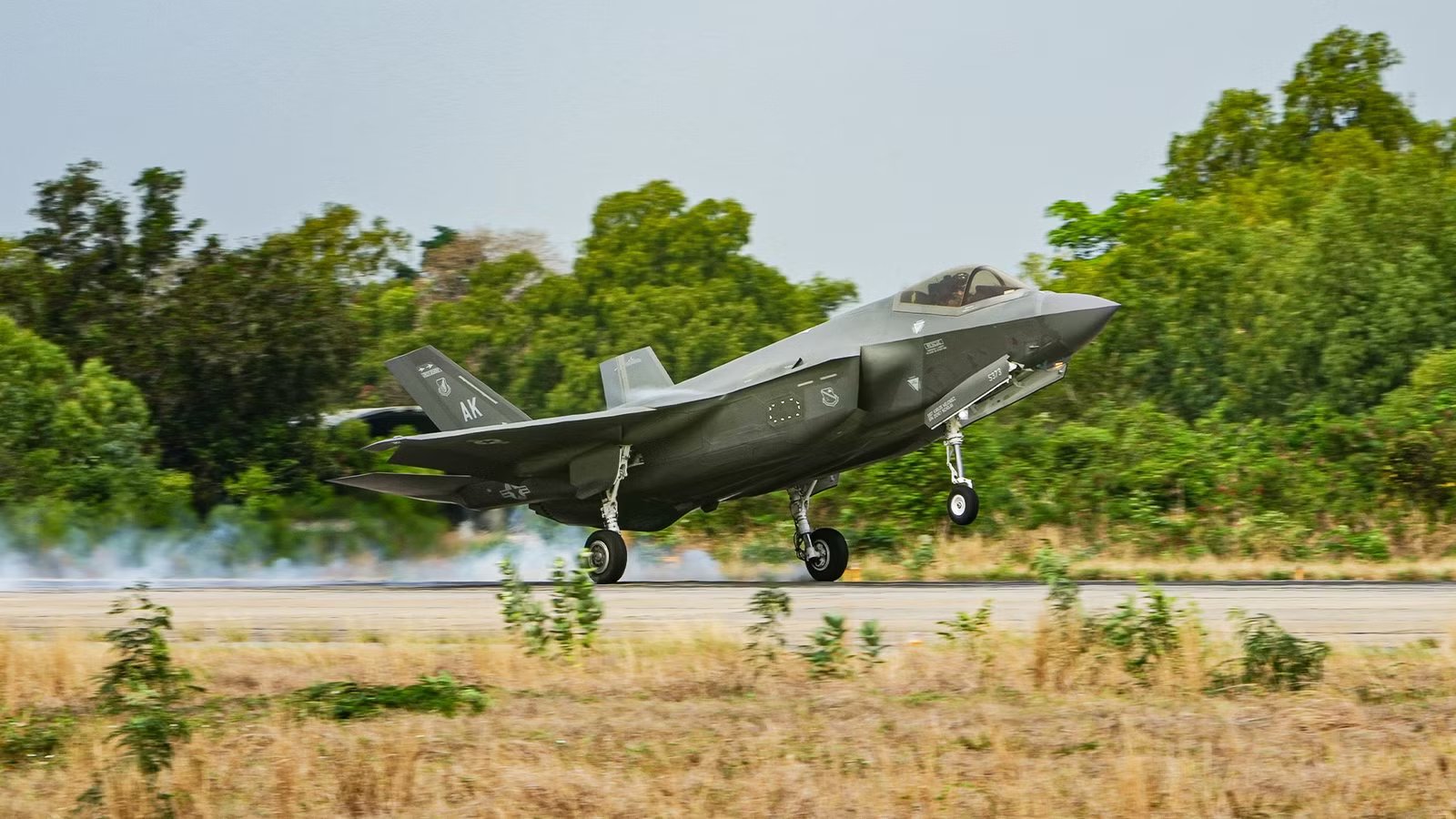
The Lockheed Martin F-35 Lightning II is one of the most important weapon systems developed in the 21st century. It represents a major paradigm shift for air power not only in the US Air Force, but the Navy and Marines as well as 19 other US Allied partner nations around the world that are part of the global fleet. In addition to being the most expensive defense industrial project in history, it is also one of the most closely guarded classified projects to ever become a multinational defense program.
Many allied nations that are part of the North Atlantic Treaty Organization have shown concern over the extent to which the ‘black box’ devices inside the jet are locked out from their own maintenance technicians. The centralized control of software and especially sensitive hardware in the US has raised concerns over a kind of ‘kill switch’ that could render any one nation’s fleet of F-35 Joint Strike Fighters useless.
Stepping back from the jargon that floats around the subject, what this dispute over intellectual property and sovereign aircraft management comes down to is mission data files. The MDF cannot be accessed even by US Squadron technicians and must be managed by highly trained and specially equipped technicians to protect the integrity of the incredibly complex avionics in the jet. Centralized reprogramming is spearheaded by specialized units under the 53rd Electronic Warfare Group and the 350th Spectrum Warfare Wing based at Eglin Air Force Base, Florida.
The Brains Of The Operation: Eglin Air Force Base

The 513th Electronic Warfare Squadron manages the US Reprogramming Laboratory. This $300 million facility is a joint service hub staffed by Air Force, Navy, and Marine Corps personnel. The USRL is dedicated to joint service operations while the 337th EWS maintains support for its foreign military sales customers such as NATO operators. The 350th Spectrum Warfare Wing oversees both of these units to ensure that the software in every F-35 is performing at its best on every sortie.
The 350 SWW was awarded the Outstanding Scientist/Engineer Team of 2017 for the F-35A Initial Operational Capability at Eglin AFB. Colonel David Abba, commander of the 53rd Wing, which is the 350 SWW’s parent unit, gave this statement highlighting the importance of their work on a global scale:
“America, our allies, and coalition partners need the F-35’s unmatched capabilities, so we can fight and win in highly contested areas. The 513th Electronic Warfare Squadron allows the F-35 to realize its potential.”
The Pentagon restricts access to the core software code from all foreign operators and individual squadrons. Units must download finalized, compiled packages rather than adjusting parameters locally. Additionally, squadron-level maintainers cannot simply tweak malfunctions in the MDF of F-35 systems. They must manually rebuild and repackage the entire data set from scratch whenever a change is made, according to Air Combat Command.
The Joint Strike Fighter App Store

Air Combat Command likens the operating system of the F-35 to that of iPhone technology. However, unlike a consumer smartphone, the requirement to implement new applications is a much more complex and time-consuming process. The 513 EWS must reprogram the previous mission data and build it into a new package and input it as a completely new operating system every time a new version is distributed. It is like rewriting all of the code in every application on your iPhone every time there’s an update.
The architecture of the F-35 OS is referred to as a tightly coupled monolithic software design. That means that every system function is written directly into the core code of the plane without isolation or separation that would allow them to be removed, added, or modified independently. Integrating a new weapon, electronic warfare capability, or just optimizing the engine performance is impossible as a standalone update.
Every task pulls data directly from the main Integrated Core Processor and shares memory space with flight-critical flight control software. Modifying or adding that single app forces engineers to recompile, rebuild, and re-test the entire software load. Any mistake in the process of adding new functions or changing existing ones could be potentially fatal because the F-35 operates on extremely advanced fly-by-wire systems. The computers on planes are so advanced that it is impossible to fly with them offline. If they were to suddenly malfunction or fail altogether, a catastrophic disaster is very likely.
Iterative Evolution Hits A Roadblock: The Problem With TR-3

The latest update to the F-35 fleet was intended to make its software much more accessible and readily upgradable. But it has fallen far short of expectations, according to the Government Accountability Office. Due to the long list of deficiencies with the new update, the rollout of the F-35 Technology Refresh 3 and Block 4 has been pushed back from 2026 to 2031. This is a quote from the Director of Operational Test and Evaluation report:
“No combat-capable TR-3 aircraft have been delivered to the U.S. Services to date. As of the end of September 2025, 158 F-35s had been delivered in the TR-3 configuration, and a total of 812 aircraft (any configuration) have been produced and delivered to the US Services.”
TR-3 was never intended to be only a software update. It was designed to give an exponential boost in computational power and an increase in memory. This hardware boost is required for Block 4, the enormous midlife upgrade planned to enable the F-35 to resist rising peer threats. Instead, it frequently generates false-alarm failure codes and causes the helmet-mounted display system as well as the electro-optical infrared camera system to malfunction.
Even more concerning, this is not the first time the JSF program has hit this wall. In 2023, software issues were also so severe that the Pentagon stopped delivery until a solution could be implemented. The problem is that it never occurred. Over 100 brand-new, multimillion-dollar stealth jets were parked on tarmacs for a year without being allowed to fly while F-35 factories continued to produce F-35s to TR-3 spec.
Allies Around The World Cut Off From Flying By Lines Of Code

Even if TR-3 was working perfectly, it wouldn’t help international customers since many cannot even get their hands on the planes at all right now. Once they are delivered, it is very unlikely that the mission data files will be accessible to local technicians even though TR-3 is meant to be a more intuitive interface. It is very likely that, just like the TR-2 iteration, FMS operators will be completely reliant on Lockheed Martin pushing updates and retain centralized control.
Still, the plane maker has attempted to dispel speculation about ‘kill switches’ or other potential infringement on the sovereignty of partner nations in the JSF program. The National Security Journal relayed this quote from the company:
“[We are] committed to helping our customers strengthen their airpower and security with the F-35. The F-35 program recently surpassed 1 million flight hours across 20 military services flying the aircraft. We remain committed to providing the reliable and capable F-35 to enable our customers to complete their missions and come home safely.”
International operators cannot now, and very likely will not be able to in the future, build or test their own software patches to bypass the software logjam. Countries like Belgium, Denmark, and Poland had their newly manufactured jets rolled off the assembly line but immediately towed into long-term storage in Texas. After paying hundreds of millions of dollars for cutting-edge stealth fighters, they received zero flyable aircraft because the core operating software could not maintain basic flight safety standards.
The Software Global Crisis Leaving Exquisite Warbirds Hamstrung

The operational testing breakdown of TR-3 has completely shifted the financial trajectory of the program. With mission-capable rates hovering at 44% and full combat capability down to 25%, the Pentagon has been forced to halt its original delivery plans. For the aircraft currently in service, pilots and mechanics are battling severe hardware-software integration defects.
The Next-Gen Distributed Aperture System, upgraded long-range precision or hypersonic missiles, and the AN/APG-85 AESA radar were all intended to be unlocked by Block 4. The Pentagon’s plan to combat sophisticated peer enemies like China and Russia is seriously jeopardized by the protracted delay.
The Joint program office, which manages the global fleet of F-35s, has also stated that many of the software issues have already been resolved, and hardware integration has become the true obstacle to achieving operational capability with the TR-3 package.Air and Space Forces Magazine recounted this statement from F-35 Program Executive Officer Air Force Lieutenant General Michael Schmidt in April:
“We … find ourselves using software to overcome hardware design maturity challenges. The Software Independent Review Team’s initial conclusion is that we have a solid software architecture, but until the underlying hardware is fully mature, the F-35 Program will continue to struggle with software integration efficiency.”
Allies are now receiving factory-fresh, TR-3-configured stealth jets that are only suitable for basic training since their combat software is too unstable to deploy. This creates a crucial readiness gap for frontline nations like Denmark, which has decommissioned its F-16s but is unable to deploy its new F-35s for regional air defense.
The financial fallout is equally severe. Compounding software fixes and hardware bottlenecks have sent program costs soaring, violating fixed-price assumptions and forcing countries like Switzerland to downsize their total procurement from 36 down to 30 aircraft. Ultimately, international operators are trapped maintaining costly legacy aircraft lifelines well into the 2030s, leaving them tethered to a bottlenecked US supply chain.