dailynewsnblog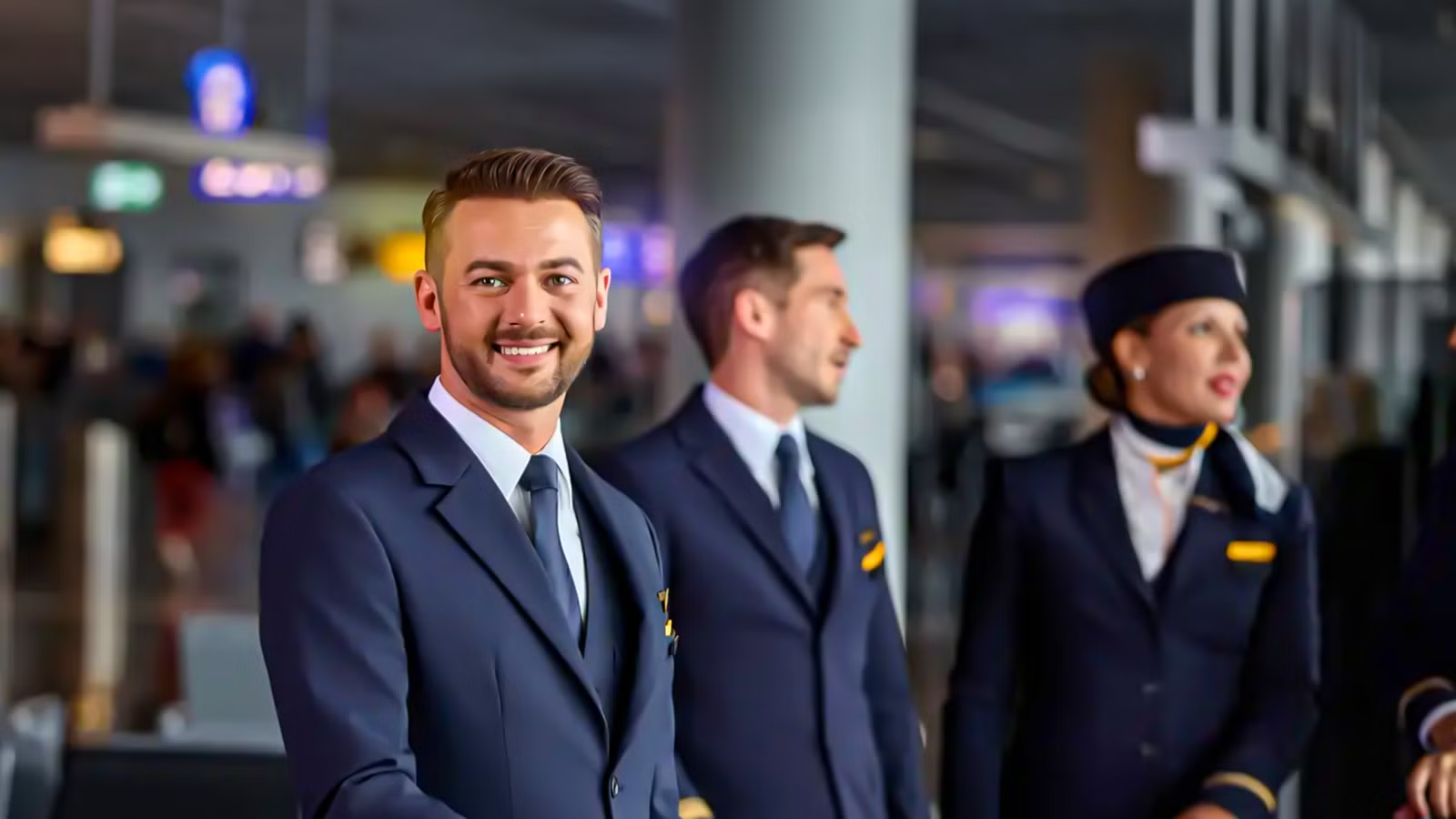
Airlines hire flight attendants or Cabin Crew first and foremost as safety professionals, even though passengers tend to see them as service staff. The role is multifaceted and requires many soft skills, customer service, education, and physical fitness, among other things. The recruitment process is arduous and is extremely strict; all the boxes have to be ticked. Airline recruiters quietly look for a very elusive set of skills at assessment days.
The Flight Attendant role is extremely challenging to get, and thousands apply for just a handful of roles. It is well known that it is easier to get into Harvard than to get a job as a flight attendant, as reported to CNBC. Major airlines have an acceptance rate of less than 1%, whereas in comparison, Harvard has an acceptance rate of 3 to 5%. Competition is extremely high, with thousands of applicants every year, so recruiters are very specific about what they look for in an employee who represents their airline.
Basic Requirements

Typically, a high school diploma is needed, as well as having the legal right to work and a valid passport. Most airlines have a minimum age of 21, due to the service of alcohol onboard, but some allow those over 18. A few years of customer service experience are expected. There should be no visible tattoos (when in uniform) and no piercings, apart from one standard ear-piercing, although some airlines now accept these, such as  United Airlines and Virgin Atlantic. Fluency in English is important as communication in aviation is in English.
Practical physical criteria matter too: this includes correctable vision to 6/9 and strong hearing ability. Candidates must be able to swim at least 82 feet (25 meters) and be able to tread water, in case of landing in water. They must also be physically fit to meet the long hours working at altitude, as well as moving heavy doors and equipment around. A professional classic look must be maintained, and grooming guidelines must be adhered to at all times.
The candidate should fit safely in the jumpseat harness and move down the aisle unimpeded. They also need to be able to reach safety equipment in the overhead lockers. Most airlines ask for a minimum reach of 6.8 feet (210–212 cm) whilst on tiptoe to the fingertips, to ensure this. United Airlines requires candidates to perform a 76-inch vertical and 43.5-inch horizontal reach while barefoot. Other airlines may allow you to keep your shoes on.  Delta Air Lines requires a reach of around 80 inches.
Simple Flying Quiz
Think you really know United Airlines?
Answer 10 questions and put your knowledge to the test
Think you really know United Airlines?
Answer 10 questions and put your knowledge to the test
Easy (15s)Medium (10s)Hard (5s)
The Importance Of Soft Skills

Airlines put a premium on the customer service experience and look for a specific set of soft skills that signal grace under pressure. A calmness under stress is crucial, as flight attendants need to be able to deal with any emergency on board. They are also looking for strong teamwork, excellent time management, and a high level of cultural awareness. Politeness, manners, and body language are also monitored. Language used should be thoughtful and honest, and a positive attitude presented.
Clear, calm, authoritative communication is a top trait because a flight attendant may need to be heard and obeyed during an evacuation, medical emergency, or turbulence, not just during a meal service. Recruiters also screen for composure, adaptability, and empathy as well as high levels of emotional intelligence. Resilience is also important; there should be a quiet confidence without arrogance. Candidates are often unknowingly monitored at the opening phases of an event to see how they mix with other candidates.
Candidates must have the polish of a “brand ambassador” with professional grooming and a willingness to follow uniform, hair, and appearance guidelines. A natural smile, a sense of friendliness, and being willing to speak to anyone are helpful. Flight attendants must be extremely compliant with airline rules throughout their careers, as their job depends on it and is safety-critical; there is no room for interpretation.
The Recruitment Process

All of this is assessed through a multi-stage process, often starting with a basic application and then a one-way recorded video interview. Many candidates don’t pass the first stage and often do not meet all the strict requirements listed. They may also have to take psychology tests and language assessments. The whole recruitment process is very lengthy, often taking three to six months from online application to the date of joining.
This is followed by a lengthy in-person group assessment day when interviewers watch closely for how candidates interact under mild stress. There is usually an introduction to the airline and the reach test, to check that the candidates can reach the safety equipment on board. This is often followed by group interviews to eliminate the first round of candidates, which is usually over half of the whole group attending.
A group task will follow to see how the candidates work together and whether they have good communication and teamwork skills. Problem-solving and reasoning will also be reviewed. More candidates will be let go at this stage; only those remaining will have a final one-to-one interview with three recruiters. There is still no guarantee of a job after the final interview, and only a handful of people make it through to the end of the day.
In the final stages of recruitment, a background check and drug screening take place for compliance, as an airside pass is necessary. An aviation physical is attended to confirm fitness and that there are no underlying medical conditions that may affect the candidate’s ability to do their job. Some airlines also require dental X-rays as well to ensure there are no issues when working at altitude. Vaccinations may also be necessary. If all this is passed without issue, the candidate may be given a conditional offer.
Other Skills And Career Progression

Language skills are a significant advantage and can qualify candidates for specific foreign-language positions, often called language-of-destination (LOD) positions. These require the ability to read, write, and speak the language fluently and are required for certain routes. Math and the ability to sell products are useful, especially when working on tax-free sales or on-board drinks and meals, if sold on board.
There can be career progression in a flight attendant’s career if they so choose. There may be an opportunity to move bases or move to a different fleet. Some flight attendants may move to business class or first class or take on extra training and duties as part of their job. This may include things like being a charity ambassador or being a sommelier, for example. They can also potentially move up to purser or senior cabin crew member roles, leading part of, or the whole team on board.
Flight attendants may also move into the training department. This may be concentrating on service, first aid, or safety training. They may also take part in the recruitment process and recruit at outstations or in-house. Some may move into performance management and monitor a group of flight attendants or become involved with the product development department.
The Training Course

Training is usually between six and eight weeks and includes things like safety and emergency procedures, equipment, and aircraft-specific modules. In addition, advanced first aid and CPR are taught, and trainees have to be able to tackle onboard fires. Training is both in the classroom and in simulators. Evacuations and scenarios are practiced time and time again. Other modules covered are security, survival, unruly passengers, crew resource management, service, dangerous goods, and much more.
Trainees are tested on every module repeatedly, and high pass rates need to be achieved. If a test is not passed to the required level, the trainee may be given a second chance to pass. If they do not pass, then they are asked to leave. Some trainees don’t make it through and lose their place on the training course. This may also be due to things like misconduct or failing a drug test. Some find it’s just not the career they expected and don’t understand what the job actually involves.
Flight attendants take two or three days of recurrent training every year to refresh their skills and make sure that their knowledge is thorough and up to date. Some of the training takes place every three years instead of yearly; this includes firefighting and ditching, but these may differ depending on the airline and local regulations.
All In All

Becoming a flight attendant or cabin crew is very challenging, working long hours at all times of day or night, and is a very physically demanding job. Sleep disruption and missing family events have become the norm. However, it is also very rewarding, in that you often make good friends for life and get to visit some amazing places if working internationally.
The recruitment process is lengthy and difficult, and it may take multiple tries to finally get a job. It can be demoralizing at first, but sometimes candidates have to understand the recruitment process and expectations. It might not be the right airline for them, but another airline is more suited to them. If not successful at the start, airlines recommend applying again after six months.
There will always be a demand for flight attendants, especially with more people flying than ever before. Turnover can be high, especially in airlines where there are age restrictions. Most flight attendants tend to stay between one and three years, then, after five years, may move to another department or take a more senior role. If flight attendants make the ten-year mark, they will likely stay in the aviation environment long-term. It becomes more a way of life than a job.