dailynewsnblog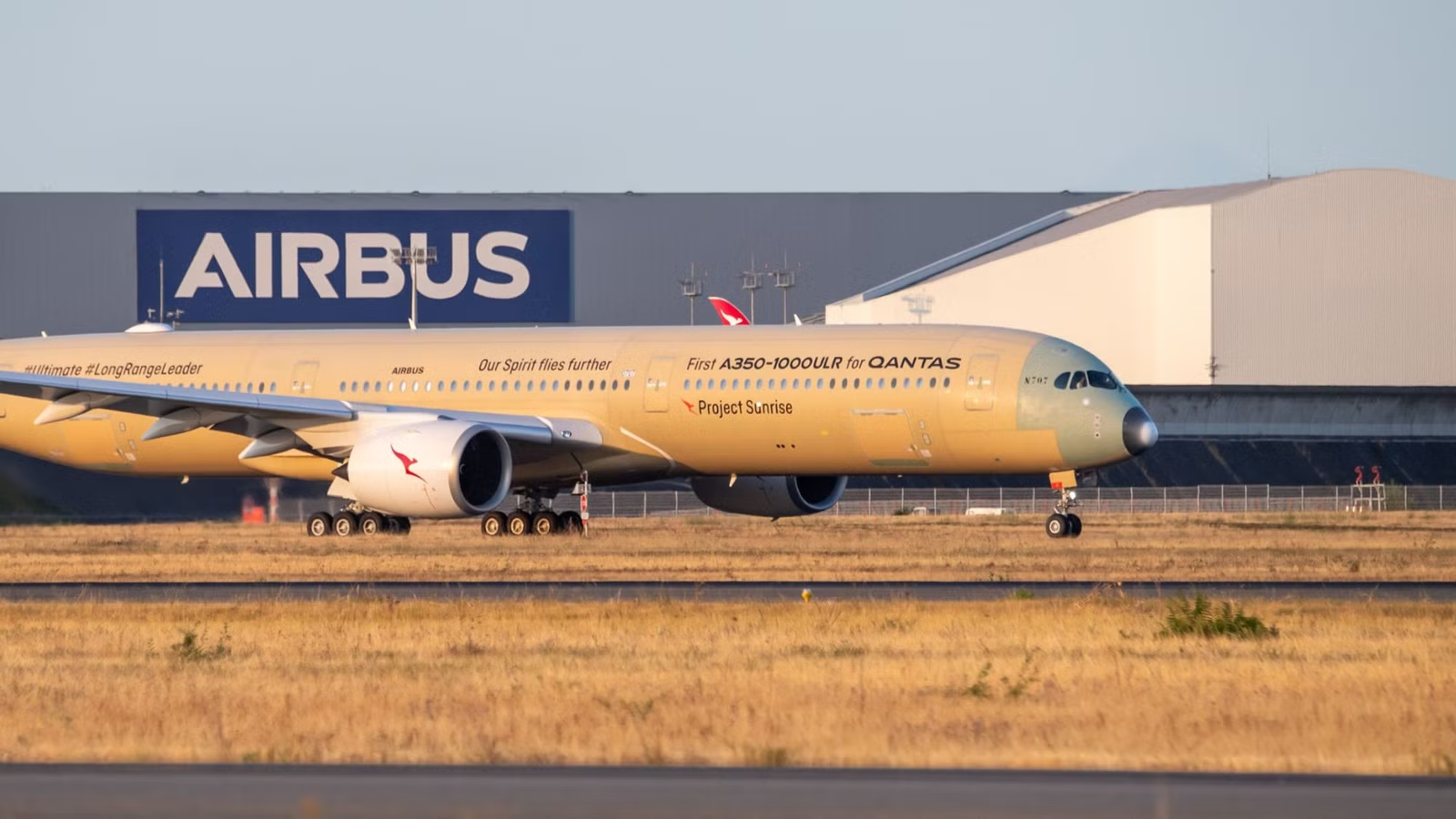
Airbus has reaffirmed its target of delivering around 870 commercial aircraft in 2026 after reporting a sharp increase in second-quarter deliveries and stronger financial results. The European manufacturer handed over 237 aircraft between April and June, almost 40% more than during the same period last year, helping it recover from a slower-than-expected start to the year. Airbus announced the figures as it released its latest quarterly and first-half earnings, while maintaining all of its full-year financial and production guidance.
The update suggests Airbus has regained momentum after supplier shortages constrained output during the opening months of this year. Although supply chain challenges continue to affect the aerospace industry, the manufacturer said improving production rates have put it in a position to achieve its annual delivery objective. The results also reinforce Airbus’ position as the world’s largest commercial aircraft manufacturer by deliveries.
Airbus Delivers 237 Aircraft And Reaffirms 2026 Guidance

Airbus delivered 237 commercial aircraft during the second quarter, bringing its first-half total to 351 aircraft. While the manufacturer still has significant ground to cover during the second half of the year, it remains confident that deliveries will accelerate sufficiently to reach its target of around 870 aircraft. The company has previously indicated that deliveries are typically weighted toward the latter months of the year as aircraft complete final assembly and customer acceptance.
The stronger operational performance translated into improved financial results. Revenue rose 28% year-on-year to €20.53 billion ($22.21 billion), while adjusted earnings before interest and taxes (EBIT Adjusted) increased 54% to €2.43 billion ($2.85 billion). Airbus also reaffirmed its full-year guidance of around €7.5 billion ($8.79 billion) in adjusted EBIT and approximately €4.5 billion ($5.27 billion) in free cash flow before customer financing, indicating confidence that production improvements will continue throughout the remainder of 2026.
Simple Flying contacted Airbus to discuss the Q2 results, but a representative was not immediately available.
Supply Chain Recovery Helps Airbus Regain Momentum

Airbus entered 2026 facing many of the same supply chain issues that affected manufacturers throughout the previous two years. Shortages of engines and other key components slowed aircraft completions, resulting in a relatively weak first quarter. However, deliveries accelerated considerably during the second quarter as suppliers gradually improved output and more completed aircraft were handed over to customers.
The manufacturer continues to pursue ambitious production increases across its aircraft families. Airbus still intends to raise A320neo family production to around 75 aircraft per month by 2027, while also increasing output of both the A220 and A350. Achieving those targets remains dependent on suppliers keeping pace with Airbus’ planned production ramp-up.
Commercial aircraft continue to account for the vast majority of Airbus’ revenue, but its Defense and Space division also delivered a strong performance during the quarter. Adjusted operating profit for the business climbed around 90% to €357 million, reflecting increased European defense spending and stronger demand for its military programs.
What Airbus Needs To Reach Its 870-Aircraft Target

The strong financial results come as Airbus continues to build on an already substantial order backlog. In recent months, the manufacturer has secured commitments across both narrowbody and widebody aircraft programs, including SMBC Aviation Capital’s order for 100 A320neo Family aircraft, comprising 65 A321neos and 35 A320neos. Other notable deals include SAS’ order for 18 A330neos, BermudAir’s first Airbus order for 10 A220-300s, and Riyadh Air’s agreement for six additional A350-1000s.
Airbus has also continued to see demand from growing airlines and leasing companies, with Flynas adding 25 aircraft consisting of five A330-900s and 20 A321neos, while Shohin Airlines disclosed an order for four A320neo Family jets. These agreements highlight the broad appeal of Airbus’ portfolio, from single-aisle aircraft used for high-frequency regional operations to widebodies supporting long-haul expansion.
With 351 aircraft delivered during the first half of the year, Airbus will need a substantially stronger second half to achieve its annual target. However, the company’s decision to leave all financial and operational guidance unchanged indicates management believes supplier performance and aircraft deliveries will continue improving over the coming months, allowing it to finish the year in line with expectations.