dailynewsnblog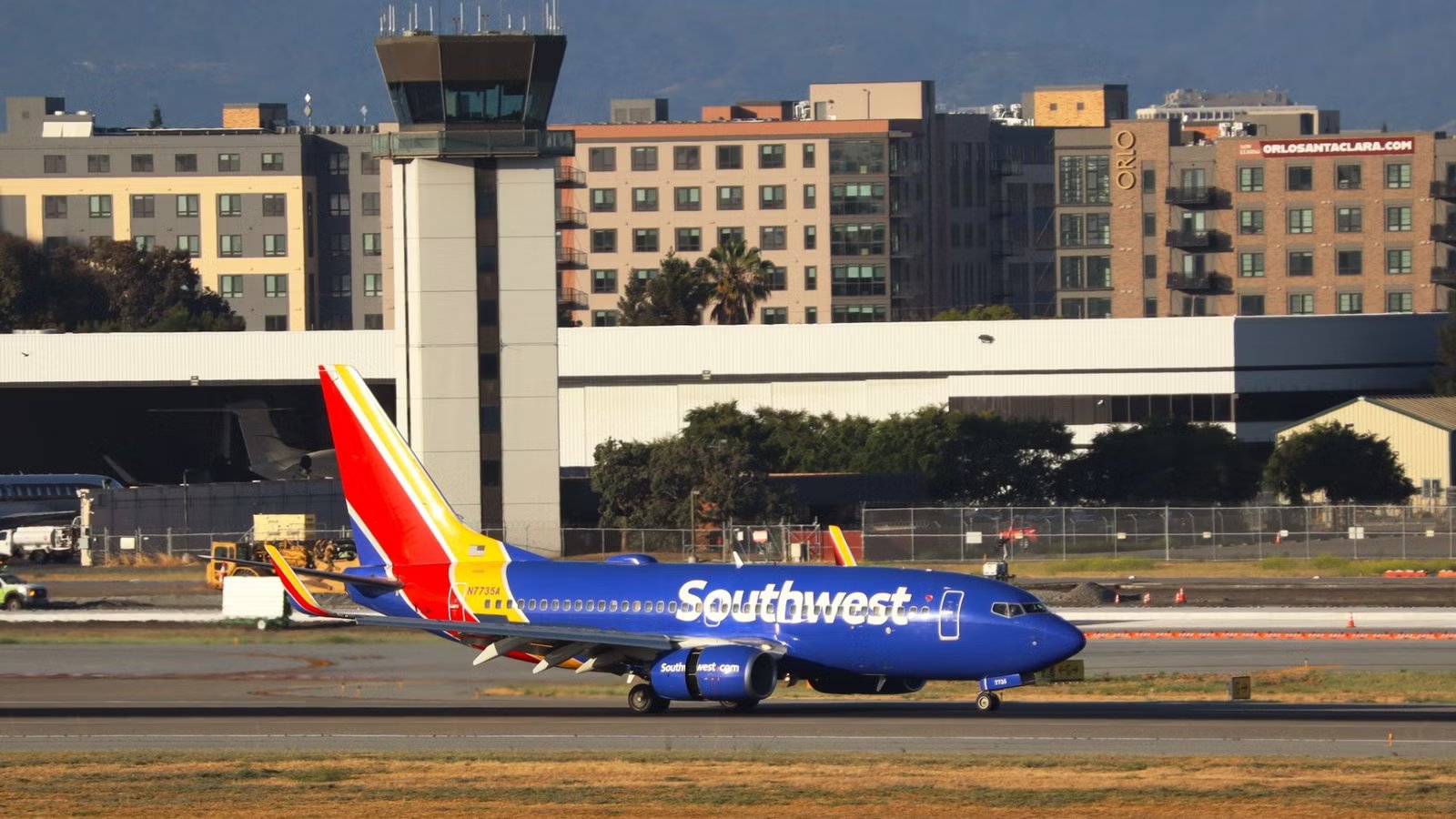
The first half of 2026 has seen  Southwest Airlines go from the most reliable air carrier in the United States to the most tardy. SWA started the year with an on-time performance rate of 79.75% in January, but that number has dropped to 64.94% in June, according to data from OAG.
A notable caveat is that while the airline’s delay rate has skyrocketed, its cancellations have remained relatively low. This silver lining is an advantage that SWA has had over legacy carriers, which saw a sharp rise in cancellations due to weather or ground stops last month.
A Slow Start To Summer For Southwest Airlines

An acute example of SWA’s mounting delay rate came on the weekend of June 19, when the airline topped the charts around the globe for three days straight. That Friday in mid-June, Southwest had more than 2,000 delays, which accounted for 48% of its flights, according to The Travel. On Saturday, SWA saw over 1,600 delays affecting 41%, with Sunday climbing to 1,800 delayed flights at a 41% rate again. In total, the airline struggled with 5,651 delays over a timeframe of three days.
That weekend, Southwest greatly overshadowed the legacy carriers of the ‘Big Three’ with double or triple the delay rate of American, United, or Delta Air Lines. On the other hand, its cancellation rate was a fraction of the number that other operators saw. AA suffered a particularly high cancellation rate, with ground stops issued by the Federal Aviation Administration compounding weather impacts on June 19 and 20.
The spiraling rate of delays has been exacerbated by recent weather difficulties, but the broader trend is attributed to a shortage of trained pilots and airport employees. Short-staffed flight decks were also blamed for American’s high cancellation rate. Dennis Tajer, communications committee chairman at the Allied Pilots Association, told The Hill:
“With furloughs, early retirements, leaves of absence and parking more than 100 airplanes, those are four epic points. All of that converged on a training funnel that got very narrow, and American management could not accommodate that.”
Catch what other flight trackers miss
Emergency squawks, holds, NOTAMs — live signals, no signup.
Open tracker
Catch what other flight trackers miss
Emergency squawks, holds, NOTAMs — live signals, no signup.
Open tracker
How Southwest Stacks Up To Industry Leaders

At the end of June, OAG’s June rankings put SWA in 17th position for OTP among all North American carriers, which makes it the most-delayed major carrier in the region. For context, that is behind AA, which ranked 12th, UA in ninth, and DAL in fourth. Average delay times for SWA customers have been hovering around 47 minutes this summer. So far in July, Southwest has climbed to 77.8% OTP, according to Flightqueue.
SWA has steadily declined in the first half of 2026 following its January OTP results. From February to April, Southwest was still in the mid-70th percentile with only a small drop. May saw a dip down to 71% OTP, with June pulling the carrier’s number to its lowest point this year. If it can keep up the July ops tempo, it would greatly improve Southwest’s ranking for the rest of the summer.
The Department of Transportation defines an on-time plane as within 15 minutes of its scheduled arrival. The DOT statistics show that the leading cause of delays for SWA is late-arriving aircraft. This is a result of the way that Southwest operates its point-to-point network, which insulates it from cancellation. The downside to this strategy is snowballing delay times as the impact on a morning flight is multiplied on evening departures.
Affordable Air Carriers Keep Americans Moving

The Southwest operational model bridges the typical strategies seen by Legacy and Ultra Low-Cost Carriers. Most ULCCs will cancel a flight more readily than one of the ‘Big Three’ since they tend to have fewer backup airplanes or aircrew to accommodate disruptions. That translates to about four or five times higher cancellations. Legacy airlines usually have a higher delay average as they can substitute airplanes or pilots more often, but the swap adds time to the schedule.
Another reason why low-cost carriers like Southwest want to avoid cancellations and continue operations with delays is to minimize refunds. Under DOT rules, airlines must automatically issue cash refunds for canceled flights. Since its primary customer demographic is leisure travelers, it is far more cost-effective for SWA to deliver passengers to their destination two hours late than to cancel the flight. For SWA, the process of refunding and rebooking thousands of flyers during the summer travel season would be an even worse ops bottleneck.


![American Airlines Launches 10 Nonstop Routes From New York-JFK To Europe [List & Map]](https://dailynewsnblog.com/wp-content/uploads/2026/09/aa.png)