dailynewsnblog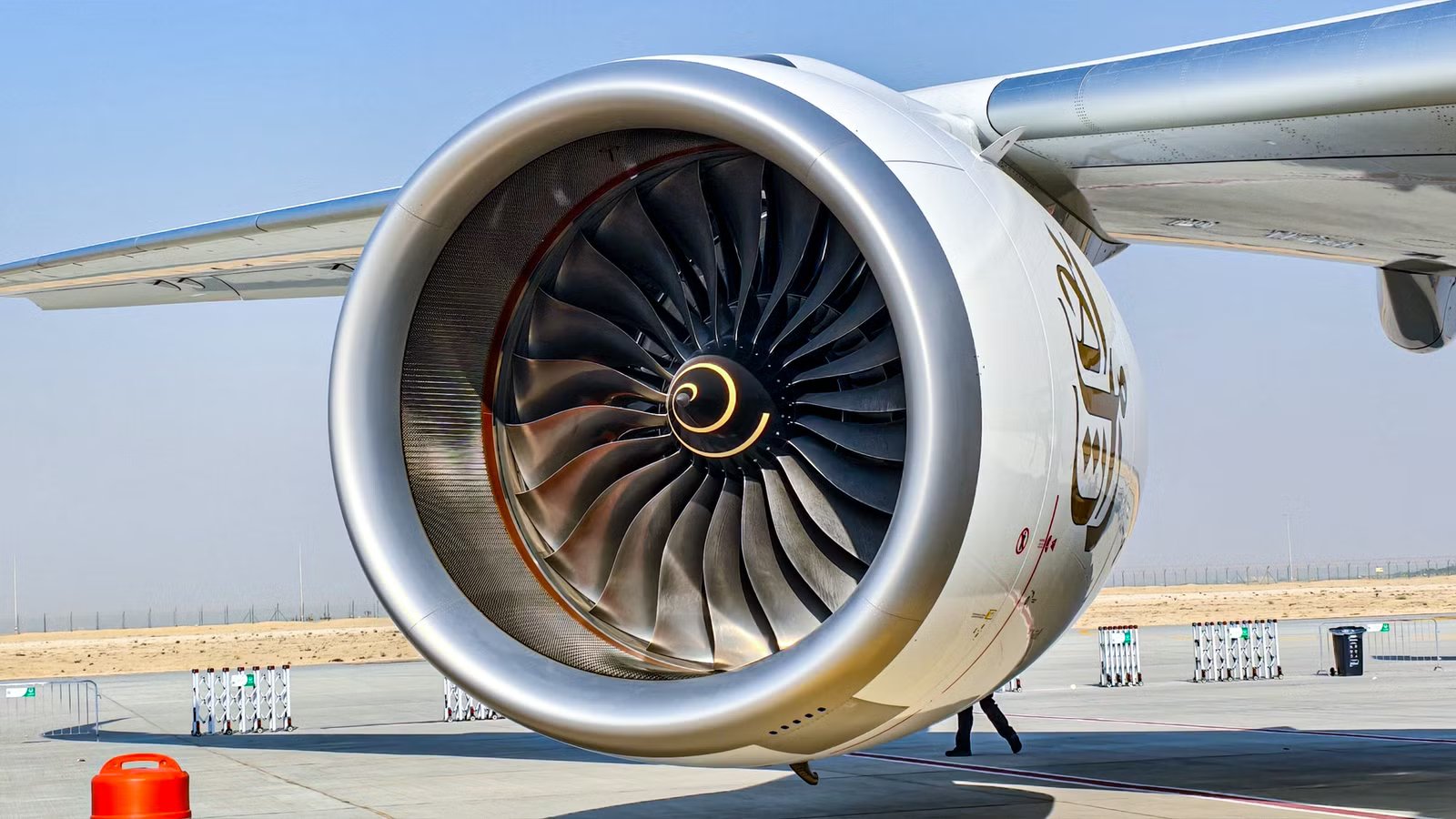
Modern widebody jet engines have reached the pinnacle of thermodynamic engineering, capable of producing immense thrust while burning cleaner alternative fuels. Manufacturers like Rolls-Royce and GE Aerospace have repeatedly shown that their flagship powerplants, including the Trent XWB and the GEnx, can operate perfectly on 100% sustainable aviation fuel during controlled demonstrations. If an airline were to attempt to pump unblended synthetic fuel into a commercial passenger flight today, the aircraft would be legally grounded.
This apparent contradiction highlights a profound shift in how the aviation industry approaches modern decarbonization goals. Engine manufacturers have successfully completed high-profile test flights to showcase hardware readiness, but regulators require decades of data before changing the global fuel rulebook. This article explores the barriers that keep these advanced widebody engines shackled to a 50% blending limit.
Testing Proves The World Is Ready

The journey toward validating unblended alternative fuels became closer to its end goal when Rolls-Royce completed an airborne emissions study using its premier widebody powerplant. In 2021, the British engine pioneer successfully conducted a three-hour flight test utilizing 100% synthetic fuel on a Trent XWB-84 engine powering an Airbus A350. This groundbreaking trial, conducted in collaboration with European research partners, focused heavily on tracking real-time exhaust mechanics while the aircraft cruised across long distances. The airborne data gathered during the flight showed that the massive engine could sustain stable operation without relying on standard fossil fuels.
GE Aerospace rapidly matched this momentum by launching its own extensive validation campaigns to prove that American widebody engine architecture was equally prepared for the future. The manufacturer has successfully tested ten different engine models on pure synthetic fuel, using both advanced ground test cells and active flight beds to monitor performance variables. A core focus of their recent research involved running a GEnx-1B engine on a Boeing 787 to evaluate how alternative molecular structures interact with heavy engine components under extreme stress. These parallel achievements by the world’s leading engine builders left no room for doubt regarding the basic hardware capabilities of modern widebody powerplants.
Ultimately, these milestone demonstrations served their purpose by proving to global regulatory bodies that the mechanical architecture of modern turbofans is already compatible with alternative liquids. The engines did not experience flameouts, thrust asymmetry, or structural overheating during these rigorous multi-hour trials. However, a successful demonstration flight under pristine conditions is entirely different from securing everyday commercial certification. The massive titanium fan blades and advanced compressors handle the fuel beautifully, but the industry must now look beyond the engine core to understand why commercial implementation remains stalled.
Actually Better Than Standard Fuel?

From a pure combustion perspective, advanced widebody engines process synthetic alternative fuels with remarkable ease because the core thermodynamic cycle remains completely unchanged. The internal layout of a Trent XWB or a GEnx engine relies on high pressures and extreme temperatures to extract maximum energy from passing air currents. High-quality synthetic fuel molecules are engineered to almost perfectly mimic the hydrocarbon chains found in standard petroleum kerosene, allowing the combustor to burn the liquid smoothly. The engine recognizes the incoming mist as a source of heat energy, and the turbine spins without requiring any internal mechanical modifications.
Interestingly, burning pure alternative fuel actually gains minor operational performance benefits that conventional Jet A fuel lacks. Refined synthetic fuel possesses a higher overall energy density per pound than traditional petroleum, meaning a flight technically requires less fuel mass to complete the journey. The weight reduction yields immediate aerodynamic advantages, allowing long-haul widebody aircraft to operate more efficiently from takeoff to touchdown.
The lack of sulfur and heavy impurities in synthetic liquids also means the engine’s internal components experience a much cleaner environment over long operational cycles. Traditional fossil fuels leave behind microscopic carbon deposits, known as coking coal, inside the combustor liners and fuel spray nozzles over time. Synthetic alternatives eliminate most of these abrasive elements, keeping the high-pressure turbine stages cleaner and potentially extending the operational life of expensive internal parts.
Catch what other flight trackers miss
Emergency squawks, holds, NOTAMs — live signals, no signup.
Open tracker
Catch what other flight trackers miss
Emergency squawks, holds, NOTAMs — live signals, no signup.
Open tracker
The Current Challenges

The true obstacle preventing 100% certification has nothing to do with the metal components of a jet engine, moving the focus instead to the thousands of rubber seals, pipes, and O-rings that stitch the fuel system together. Conventional fossil fuels contain roughly 15% to 25% aromatic hydrocarbons, which are ring-shaped chemical structures that perform a critical mechanical function inside the aircraft. As fuel flows from the wing tanks through the engine manifold, these aromatics naturally interact with elastomeric nitrile seals, causing them to swell slightly. This swelling effect is absolutely vital for maintaining tight, leak-proof joints when an aircraft experiences sub-zero temperatures high up at normal cruising altitudes.
Most common alternative fuels are produced through pathways like hydroprocessing, so the resulting liquid is entirely paraffinic and almost completely free of these natural aromatics. Pumping this pure fuel into an older, unmodified widebody fuel system introduces an immediate operational hazard because the sudden absence of aromatics causes the rubber O-rings to shrink back to their original size. This material shrinkage can create microscopic gaps in fuel lines and engine pipes, introducing a high risk of dangerous fuel leaks. The industry has had to shift its focus from macro-level flight testing down to component-level evaluations to track how these delicate parts hold up over decades of continuous exposure.
This specific material friction explains why current engine research focuses so heavily on the subtle nuances of fluid dynamics and material boundaries rather than core combustion power. The challenge is ensuring that every single valve, seal, and fuel pipe can safely tolerate changes in viscosity and lubricity over a 30-year operational lifespan. Until these microscopic material interactions are fully understood and standardized, pure alternative fuel remains a test-bed luxury and not something that can be actively rolled out.
The 50% Limit

The risk of a fuel leak while in a cruise is exactly why global oversight bodies refuse to let individual airlines or engine manufacturers dictate their own fuel compositions. Every single drop of fuel loaded onto a commercial airliner must comply with a rigid web of international certifications, primarily governed by ASTM International. The transition from macro-level flight testing down to the microscopic chemistry of rubber components directly influences the legal frameworks that govern commercial aviation. Until a chemical fluid can prove absolute compliance with these rigid safety standards, it cannot be legally pumped into an active passenger aircraft.
Neat synthetic kerosene or unblended sustainable aviation fuel components are strictly regulated under ASTM D7566, a specification that isolates non-petroleum hydrocarbons based on their production pathways. These unblended liquids cannot legally be pumped directly into an aircraft wing tank. Instead, they must undergo an intentional blending process with conventional petroleum-based Jet A or Jet A-1, which is governed by ASTM D1655. Once the synthetic component is mixed with conventional fuel at a ratio of up to 50%, the combined fluid is retested and formally recertified under the ASTM D1655 standard. This step effectively certifies the alternative fuel as standard kerosene, allowing it to function as a legal drop-in fluid.
The strict 50% ceiling is not an arbitrary number pulled out of thin air and is the precise mathematical point at which the presence of standard fossil kerosene guarantees a safe concentration of aromatic hydrocarbons. Airlines mix alternative fuels with traditional petroleum to keep the final blend retaining a minimum aromatic content of roughly 8%. This concentration provides just enough chemical interaction to keep rubber O-rings expanded, preventing fuel manifold drops or catastrophic leaks during ultra-long-haul journeys across oceans. It may be some time before a synthetic pathway can natively deliver these aromatic rings without relying on fossil fuels, so now, the blending mandate remains an unbreakable safety net.
Rivals Joining Forces

Legendary aerospace giants like Rolls-Royce and GE Aerospace have already proven that their flagship Trent XWB and GEnx powerplants run perfectly on unblended synthetic liquids, so it would seem far easier to simply sign off on the certification independently. In commercial aviation, an engine builder cannot unilaterally rewrite the fuel rules, even if sufficient testing has been conducted to demonstrate reliability. The legal framework requires an absolute industry-wide consensus, ensuring that a fuel change approved by an engine manufacturer will not inadvertently corrode a fuel pump designed by an airframe builder or damage the underground plumbing at an international airport.
To break this regulatory deadlock, the global aviation industry has established a powerful collaborative coalition known as the International Aerospace Environmental Group Work Group 13, commonly referred to as WG 13. Formed to assess the structural impacts of 100% sustainable aviation fuel on full airplane systems, this group brings fierce historical rivals to the same table. Led by  Boeing with Airbus serving as the deputy lead, the working group unites engineering minds from GE Aerospace, Rolls-Royce, RTX’s Pratt & Whitney, Safran, and Dassault Aviation. Instead of competing, these manufacturers pool their proprietary testing data to build a unified technical foundation that can be presented to ASTM International, accelerating the path toward safety standardization.
Evaluation Sector | Primary Engineering Objective | Key Technical Risk Addressed |
Airframe Fuel Systems | Validating rubber seals and composite fuel tank liners | Material shrinkage and dangerous fluid leaks |
Powerplant Integrity | Monitoring fuel spray nozzle patterns and high-pressure turbine cycles | Combustor coking and thermal-mechanical stress |
Infrastructure Logistics | Assessing airport pipeline distribution and hydrant storage systems | Cross-contamination and fluid lubricity variations |
A core pillar of the current WG 13 research involves the development of specialized jet reference fluids. These are highly standardized, synthetic chemical baselines engineered to simulate the absolute worst-case scenarios for material shrinking and fuel system degradation. By subjecting thousands of different rubber formulations, metallic alloys, and sensor types to these aggressive reference fluids over thousands of hours, the coalition aims to provide ASTM International with the deep data required to draft a brand-new, standalone 100% synthetic fuel specification. This cooperative effort ensures that when a 100% alternative-fuel standard is finally published, it will protect the entire aircraft from the wingtip to the engine core.
Getting Over The Biggest Hurdle

Even if IAEG WG 13 successfully delivers its data and ASTM International officially amends the global rulebook to allow unblended synthetic fuels tomorrow morning, commercial widebody operations would still slam into an immediate brick wall. The most profound barrier to the widespread adoption of unblended alternative fuel has shifted from the laboratory test bench to the global supply chain ledger. The global aviation ecosystem consumes massive amounts of fuel, and the current industrial capacity to synthesize non-petroleum hydrocarbons is ill-equipped to meet that scale.
From a purely practical perspective, sustainable aviation fuel production currently accounts for less than 1% of the total global commercial aviation fuel demand. The manufacturing pathways rely on scarce feedstocks like used cooking oils, agricultural waste, or nascent carbon-capture technologies, meaning the liquid carries an immense price premium. On average, unblended synthetic fuel costs anywhere from two to four times more than traditional Jet A kerosene.
Engineering a massive turbofan engine to withstand the heat of alternative combustion turned out to be the straightforward part of the equation to getting these alternative fuels into more and more aircraft. The far more complex challenge over the next few decades lies in building the massive global infrastructure needed to refine millions of gallons of synthetic fuel affordably. Until production volumes scale up exponentially and prices achieve parity with fossil fuels, the incredible capabilities of the Trent XWB and GEnx will remain a highly advanced technological proof of concept rather than a daily operational reality.


![American Airlines Launches 10 Nonstop Routes From New York-JFK To Europe [List & Map]](https://dailynewsnblog.com/wp-content/uploads/2026/09/aa.png)