dailynewsnblog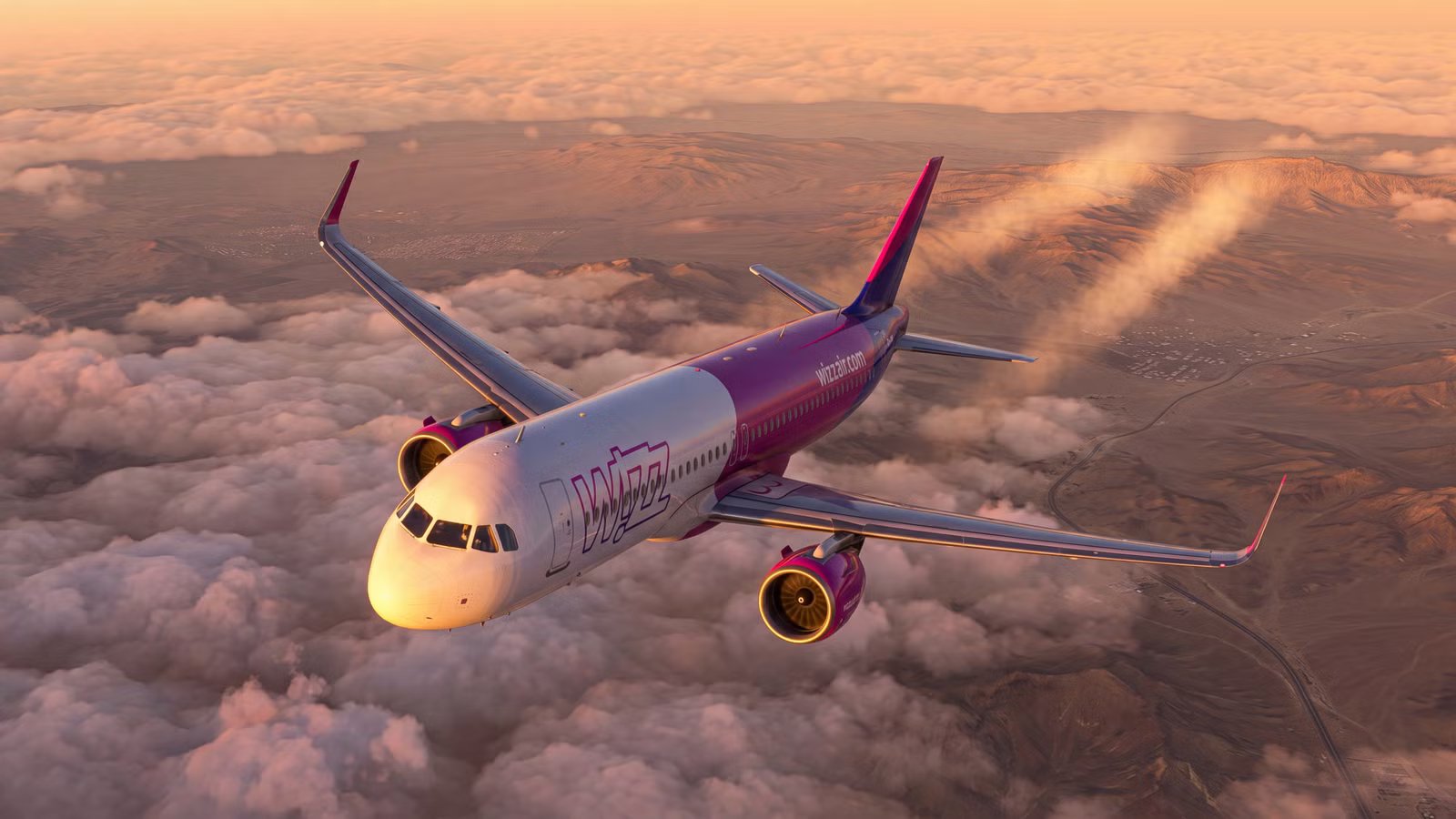
Wizz Air has quietly removed its longest scheduled flights from sale, ending what had been one of Europe’s most closely watched ultra-low-cost long-haul experiments. The carrier has removed both  London Gatwick Airport (LGW) – Jeddah Airport (JED) and London Gatwick – Medina (MED) from its booking system, and the routes no longer appear on the airline’s website. The move comes only months after the airline had planned significant expansion of its Saudi Arabian services.
The cancellations are notable because the two Saudi routes represented the Wizz Air Group’s longest scheduled flights, with block times approaching seven hours. Their disappearance also raises fresh questions about the role of the Airbus A321XLR in Wizz Air’s network, particularly after executives recently admitted that the aircraft no longer aligns with the airline’s evolving business strategy.
Wizz Air’s Longest Flights Disappear From The Network

Passengers searching for flights between London Gatwick and Saudi Arabia will no longer find Wizz Air’s nonstop services to Jeddah or Medina. Reports indicate that both routes have been withdrawn entirely, disrupting travel plans for pilgrims and other passengers who had relied on the airline’s low-cost services.
The decision is particularly surprising because Wizz Air had previously intended to grow rather than shrink the operation. The airline had planned to increase London Gatwick-Jeddah service to twice daily in 2026 while maintaining daily flights to Medina, suggesting confidence in demand only a few months ago. With both routes now gone, the Airbus A321XLR loses the only scheduled missions that truly required its additional range.
Ian Malin, Wizz Air Group Chief Commercial Officer, told Aviation Week:
“If some opportunity comes up that means we can make more money operating them in a different mission, without creating complexity and distraction, then we’ll look at it, but for now, they’re just going to be Neos.”
The Airbus A321XLR No Longer Fits Wizz Air’s Strategy

The route cancellations reinforce comments made earlier this year by Wizz Air executives regarding the future of the Airbus A321XLR. Speaking at Routes Europe, Chief Commercial Officer Ian Malin acknowledged that the aircraft no longer fits the airline’s business model following the closure of Wizz Air Abu Dhabi, which had originally been expected to launch many longer-range services.
Instead of building a network around the XLR’s extra range, Wizz Air now plans to operate the aircraft almost identically to its standard Airbus A321neo fleet. The airline has even said the aircraft will not be distinguished operationally from regular A321neos, using the additional range only when occasional opportunities arise, or operational flexibility is required.
The strategy marks a dramatic change from Wizz Air’s earlier ambitions. After shutting down its Abu Dhabi joint venture in 2025, the carrier converted 36 of its 47 Airbus A321XLR orders into standard A321neos, leaving just 11 XLRs in its fleet plan. Executives cited geopolitical uncertainty in the Middle East that disrupted many airline connections, regulatory challenges, harsh climate conditions that caused faster-than-expected degradation of its Pratt & Whitney engines, and a lack of suitable long-range opportunities within Europe as major reasons for the shift.
What’s Next For Wizz Air’s XLR Fleet?

With the Saudi Arabian routes gone, there is now little scheduled flying within Wizz Air’s network that genuinely requires the Airbus A321XLR’s extended range. Most of the airline’s current European, Caucasus and North African destinations are already comfortably within the capabilities of the standard A321neo, reducing the need for a specialized subfleet.
Wizz Air has made it clear that it does not intend to pursue scheduled transatlantic operations, while executives have also expressed caution about expanding deeper into the Middle East or parts of Africa due to operational complexity and geopolitical uncertainty. That leaves relatively few obvious markets where the XLR can consistently deliver a competitive advantage over the carrier’s existing fleet.
For Airbus, the A321XLR continues to attract strong demand from airlines seeking premium long-thin routes, including some transatlantic routes. Wizz Air’s experience appears to reflect its own changing network priorities rather than any shortcomings of the aircraft itself. Instead, the cancellation of its nearly seven-hour Saudi services illustrates how quickly airline strategy can evolve under force majeure circumstances, and how even one of the industry’s most capable new narrowbody aircraft can become a solution in search of the right mission.