dailynewsnblog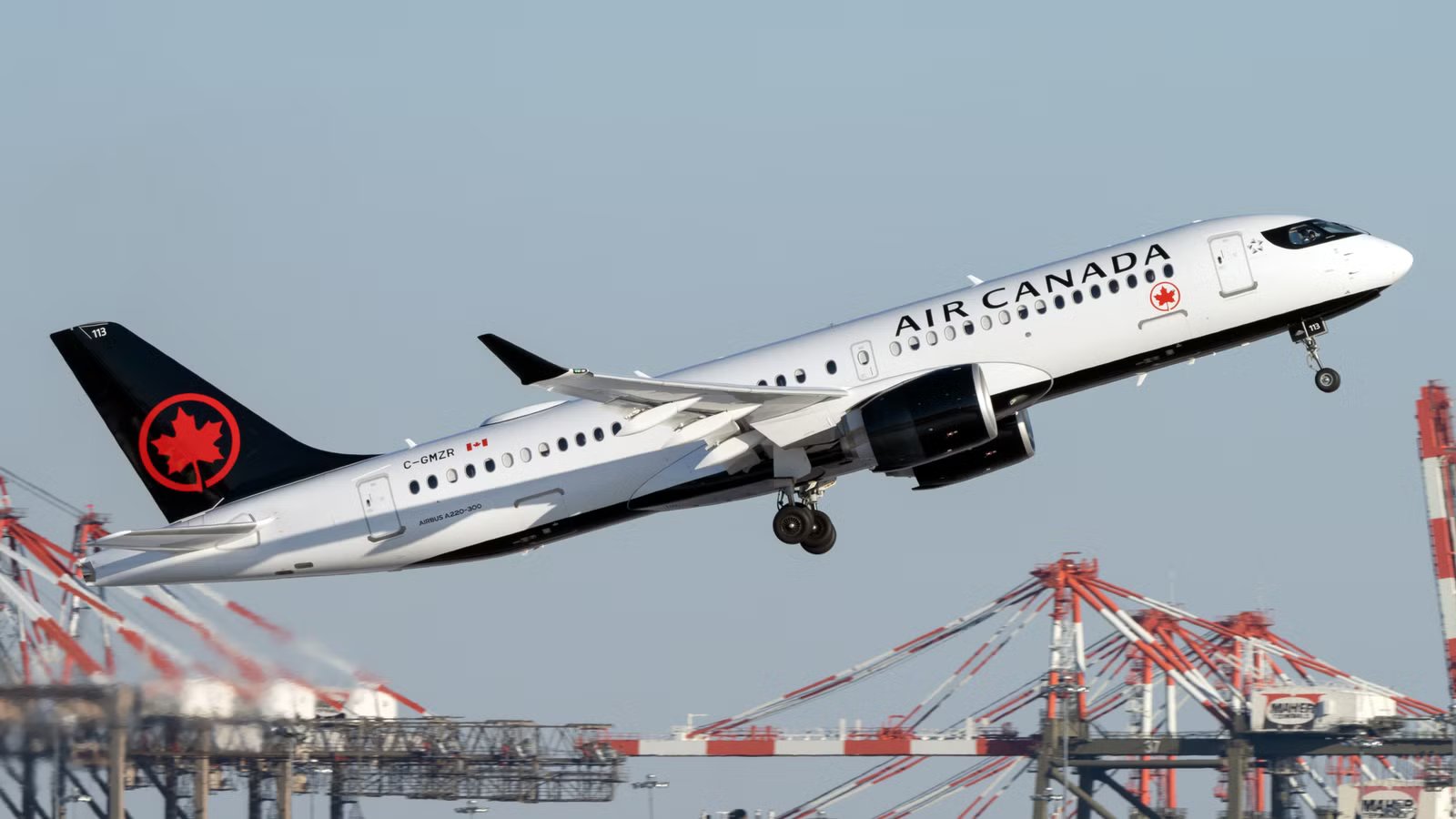
The Airbus A220 is typically associated with short and medium haul flying, but  Air Canada is increasingly deploying the aircraft on routes approaching seven hours of scheduled flight time. Schedule data from Cirium for the second half of 2026 shows the carrier assigning its A220-300 fleet to several of its longest domestic and transborder services. The expanded utilization reflects the aircraft’s growing role across Air Canada’s network, where it now serves everything from regional markets to coast-to-coast and long-distance US destinations.
The longest scheduled A220 flight is the westbound service from Montréal-Trudeau International Airport (YUL) to San Francisco International Airport (SFO), which has a maximum block time of 6 hours and 37 minutes from July through December 2026. Several additional routes exceed six hours, while others approach that threshold depending on direction and prevailing winds. Block times include taxiing and expected operational delays, meaning actual airborne time is often shorter.
Montréal Dominates The Carrier’s Longest A220 Routes

Montréal is the primary hub for Air Canada’s longest A220 flights. Five of the airline’s 10 longest scheduled routes originate from Montréal, underscoring the airport’s importance within the carrier’s narrowbody network. After the Montréal to San Francisco service, the second-longest scheduled A220 route is Montréal to Los Angeles with a block time of 6 hours and 24 minutes. Montréal to San Diego ranks fifth at 5 hours and 54 minutes, followed by Montréal to Vancouver at 5 hours and 48 minutes. Montréal to Las Vegas also appears among the top ten with a scheduled block time of 5 hours and 45 minutes, although only a single flight is scheduled at that duration during the analyzed period.
Top 10 Longest Air Canada A220 Routes | ||
|---|---|---|
Max block time (July – December 2026) | Direction of route | Notes |
6 hours, 37 minutes | Montréal to San Francisco | |
6 hours, 24 minutes | Montréal to Los Angeles | |
6 hours, 23 minutes | Halifax to Vancouver | |
5 hours, 57 minutes | Raleigh-Durham to Vancouver | New route |
5 hours, 54 minutes | Montréal to San Diego | |
5 hours, 48 minutes | Montréal to Vancouver | |
5 hours, 45 minutes | Montréal to Las Vegas | Just one flight |
5 hours, 44 minutes | Ottawa to Vancouver | |
5 hours, 34 minutes | Québec City to Vancouver | |
The concentration of long-haul A220 flights from Montréal demonstrates how Air Canada is using the aircraft to connect Eastern Canada with destinations across western North America while benefiting from the type’s fuel efficiency and passenger comfort on medium- and long-haul sectors.
Domestic Routes Account For Several Of The Aircraft’s Longest Flights

While transborder services occupy many of the top positions, domestic routes remain a major part of the A220’s longest scheduled operations. Halifax to Vancouver ranks third overall with a maximum scheduled block time of 6 hours and 23 minutes, reflecting the substantial distance between Atlantic Canada and the West Coast. Ottawa to Vancouver follows with a scheduled block time of 5 hours and 44 minutes, while Quebec City to Vancouver rounds out the top ten at 5 hours and 34 minutes. These routes highlight the versatility of the A220, which has become an increasingly common sight on flights across Canada.
Air Canada is also introducing a new Airbus A220 route linking Vancouver and Raleigh-Durham. The eastbound return service from Raleigh-Durham to Vancouver is scheduled for up to 5 hours and 57 minutes, making it the fourth-longest A220 route in the airline’s network. Another notable entry is the Mexico City-Las Vegas service, where one scheduled flight has a block time of 5 hours and 45 minutes.
Airbus A220 Continues To Expand Beyond Its Traditional Role

Designed to replace older narrowbody aircraft on shorter routes, the A220 has steadily evolved into a capable platform for longer nonstop missions. Its combination of lower operating costs, modern cabin design, and fuel-efficient Pratt & Whitney geared turbofan engines has enabled airlines to deploy the aircraft on routes that previously required larger narrowbodies. For Air Canada, the aircraft provides flexibility across a diverse network that includes dense domestic corridors, transcontinental services, and US leisure markets. Although none of the airline’s A220 flights exceed seven hours of scheduled block time during the second half of 2026, the longest services come remarkably close, illustrating how advances in aircraft technology have expanded the practical range of smaller single-aisle jets.
As Air Canada continues to grow its Airbus A220 fleet and refine its network, passengers can expect the aircraft to appear on an increasing number of longer nonstop routes. The latest schedules show that what was once considered a regional aircraft has become an integral part of the airline’s strategy for serving destinations across North America efficiently while maintaining a consistent onboard experience.