dailynewsnblog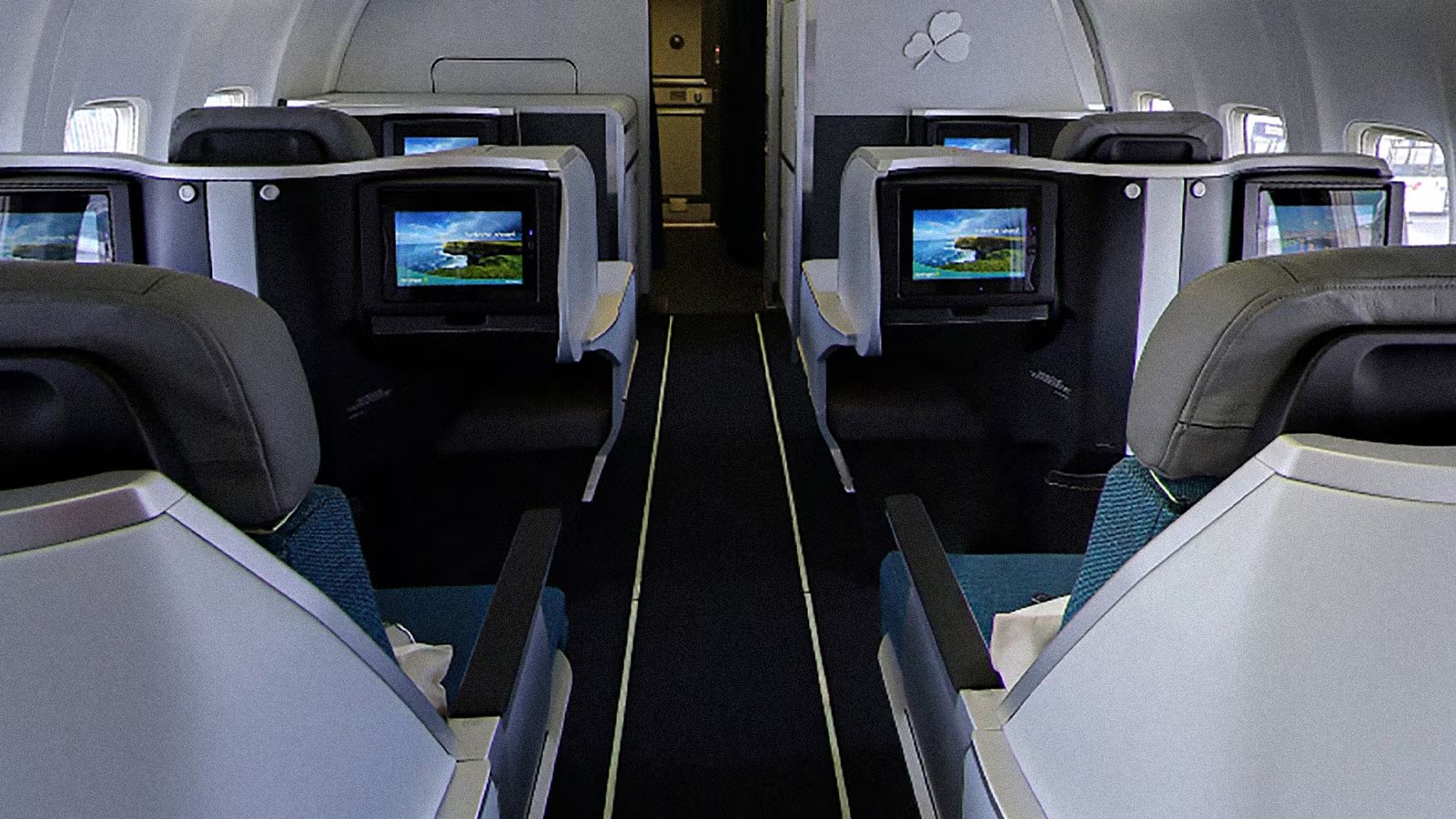
 Aer Lingus is one of the most prominent operators of long-range narrowbodies. It previously flew Boeing 757-200s across the Atlantic (one of few European airlines to do so), and it’s now built a fleet of eight Airbus A321LRs while also flying six improved A321XLRs. These 14 long-range Airbuses are enabling the carrier to launch new routes to smaller destinations, such as Hartford, Pittsburgh, Indianapolis, and more.
These jets have been tremendously impactful for the Irish flag carrier and further build its status as a leading airline for US-Europe connections. However, the challenge with this fleet is figuring out what to do with the planes in between flights.
Because of Ireland’s location, many of the flights that these aircraft operate are on the shorter side, and their small size can decrease turnaround times at the outstation. This means that they spend more time on the ground back in Dublin, but aircraft only make money when they’re flying. This is why Aer Lingus has scheduled some of its long-range Airbuses to operate short-haul flights to Europe.
A Breakdown Of Aer Lingus’s A321LR/A321XLR Fleet

Per ch-aviation, Aer Lingus currently operates eight A321LRs and six A321XLRs. Both are powered by the most powerful version of the CFM LEAP-1A and are quite similar to one another. The main benefit of the Airbus A321XLR is that it boasts a longer range, more cargo space, and a higher payload capacity. This makes it the ideal aircraft for tackling more challenging routes to smaller destinations, while the A321LR is sufficient for the remaining routes.
On the inside, Aer Lingus’s A321LRs and A321XLRs feature the same interiors, featuring 16 business class seats and 168 economy seats, for a total capacity of 184 seats. They also feature the same seats for business class (the Thompson Aero Vantage), but the A321XLR’s seats feature modernized screens and USB-C charging ports. Meanwhile, the A321LR is equipped with the Collins Aerospace Meridian for economy, while the A321XLR features the Recaro R3.
Apart from these, the other difference between the two on the inside is that the A321XLR features the new Airbus Airspace interior with larger XL Bins, improved mood lighting, and new sidewalls. The A321LRs feature the older A320 family interior. For the most part, however, the two planes are essentially identical on the inside, with the A321XLR being slightly modernized with larger overhead bins, and they are largely interchangeable apart from the A321XLR’s longer range.
The European Routes Flown By These Aircraft

Within Europe, the A321LRs and A321XLRs are primarily being deployed from Dublin to Paris Charles de Gaulle, Amsterdam, Oslo, Manchester, Venice, and Munich as of the time of writing. In addition, they’re also being flown from Shannon to Paris and London Heathrow. As Aer Lingus does not fly any standard A321neos with a short-haul configuration, any Aer Lingus flight that shows up online as being operated by the A321neo will feature the long-haul interiors.
The economy cabin is a significant upgrade, as these planes feature seatback entertainment and more legroom than the A320-200s/A320neos that Aer Lingus uses for most intra-European routes. However, it’s the business class cabin that’s the biggest upgrade, since the Thompson Vantage is a lie-flat seat. It’s popular with operators of long-haul narrowbodies and is also used by Aer Lingus on its Airbus A330 fleet. It’s a proper international product that’s available on multiple two or three-hour routes.
Aer Lingus sells the seats on these flights as ‘AerSpace’, the same branding used for its standard intra-European premium class. The service and food are the same as on flights operated by the A320-200 or A320neo, but there’s no upcharge specific to the A321LR/A321XLR flights, allowing customers to enjoy a significantly elevated product easily, so long as they pick a flight operated by these aircraft types.
Aer Lingus’s AerSpace Product

AerSpace is the standard branding used by Aer Lingus for intra-European premium tickets, regardless of the aircraft type/product actually being sold. The A320-200 and A320neo are the carrier’s primary aircraft types, and the premium product on these planes consists of an economy seat with a blocked middle seat. Only the front row is sold as AerSpace, and these aircraft lack seatback entertainment, while the overall experience is positioned between economy and business class.
Passengers with an AerSpace ticket receive dedicated security lines and lounge access. As previously mentioned, the onboard hard product is a blocked middle seat on the A320-200s and A320neos, and Aer Lingus will only sell four seats as AerSpace on these planes. In flight, AerSpace passengers receive one complimentary beverage and a complimentary snack. AerSpace tickets come with free changes, automatic standby, a carry-on bag, a checked bag, and are refundable.
Aer Lingus Narrowbody Fleet | Business Class | Economy | Total Seats |
|---|---|---|---|
Airbus A320-200 | N/A | 174 seats (Four sold as AerSpace) | 174 seats |
Airbus A320neo | N/A | 186 seats (Four sold as AerSpace) | 186 seats |
Airbus A321LR | 16 seats | 168 seats | 184 seats |
Airbus A321XLR | 16 seats | 168 seats | 184 seats |
The product is not as elevated as the business class cabins offered by many other European airlines on short-haul routes, as the catering is less comprehensive and the seats are not in a dedicated cabin. On the A321LR and A321XLRs, however, the seats are still sold as AerSpace despite the improved hard product. Aer Lingus sells all 16 seats as AerSpace, which is beneficial for passengers and for the airline as it generates significantly more revenue than the A320-200 or A320neo.
Intra-European Business Class

Most full-service European airlines offer business class on their short-haul flights, but these usually consist of economy seats with a blocked middle seat. The cabin is dynamically sized, allowing airlines to optimize cabin sizes for each flight, and airlines usually install a moveable curtain. In addition, some carriers offer more legroom in the first half of the aircraft, and the soft product is generally much more enhanced than what Aer Lingus offers with its AerSpace tickets.
As a whole, however, intra-European business class is not dramatically different from economy, whereas in the rest of the world, regional business class often consists of a larger recliner seat in a four-abreast layout with more legroom. This includes North America and Australia, while in Asia, many airlines offer recliners, and some also offer lie-flat seats for short-range flights. However, some Latin American airlines do block middle economy seats and sell the window/aisle seats as a premium product.
Within Europe, however,  Turkish Airlines does offer recliners on its narrowbodies rather than the typical ‘Eurobusiness’, and Eurowings operates a subfleet of Airbus A320neos with recliners as well. These planes feature two rows of recliner seats, along with the typical intra-European business class product located behind. Reportedly,
  Lufthansa is now looking to install similar seats on part of its narrowbody fleet, while some airlines rotate widebody aircraft on short-range flights with international lie-flat seats.
The Other European Airlines Offering Short-Range Lie-Flats On Narrowbodies

Most narrowbodies in ITA Airways’ fleet feature the standard Eurobusiness product, but the carrier also operates a fleet of eight Airbus A321LRs. ITA Airways installs 12 business class seats based on the Stelia Opera SA, a reverse-herringbone lie-flat seat designed for narrowbodies that offers direct aisle access. In addition, they also feature a true premium economy cabin with three rows of recliner seats, as well as seatback screens in all cabins and USB-C chargers.
These planes are mainly used for flights to Africa and the Middle East, but are also commonly used within Europe. This includes Paris, Athens, Amsterdam, Barcelona, Madrid, and London Heathrow as of the time of writing. ITA Airways also occasionally deploys its A321LRs on domestic routes. However, it’s been reported that these operations have not necessarily been profitable for ITA Airways, and it’s therefore possible that these aircraft could eventually be removed from intra-European flights.
European A321LR/A321XLR Operators | Business Class | Premium Economy | Economy | Total Seats |
|---|---|---|---|---|
Aer Lingus (A321LR/A321XLR) | 16 seats | N/A | 168 seats | 184 seats |
Iberia (A321XLR) | 14 seats | N/A | 168 seats | 182 seats |
Icelandair (A321LR) | 22 seats | N/A | 165 seats | 187 seats |
ITA Airways (A321LR) | 12 seats | 12 seats | 141 seats | 165 seats |
Scandinavian Airlines (A321LR) | 22 seats | 12 seats | 123 seats | 157 seats |
TAP Air Portugal (A321LR) | 16 seats | N/A | 155 seats | 171 seats |
Wizz Air (A321XLR) | N/A | N/A | 239 seats | 239 seats |
TAP Air Portugal also operates its Airbus A321LRs on some routes within Europe. Featuring 16 business class seats based on the Thompson Vantage and 171 total seats, they’re regularly deployed from Lisbon to London Heathrow, Frankfurt, Madrid, Amsterdam, Barcelona, Paris Orly, Munich, as well as between Lisbon, Porto, and Funchal. Once again, TAP Air Portugal’s standard intra-European business class consists of blocked middle seats, so this product represents a sizeable upgrade.
However, unlike Aer Lingus and ITA Airways, TAP also operates a sizeable fleet of standard A321neos with a traditional short-haul configuration, making it harder to determine which flights feature the long-haul product. Instead, you’ll need to rely on the seat map, and the A321LRs do not always consistently operate the same flights on the same days. In addition, there’s always the potential for an equipment swap.