dailynewsnblog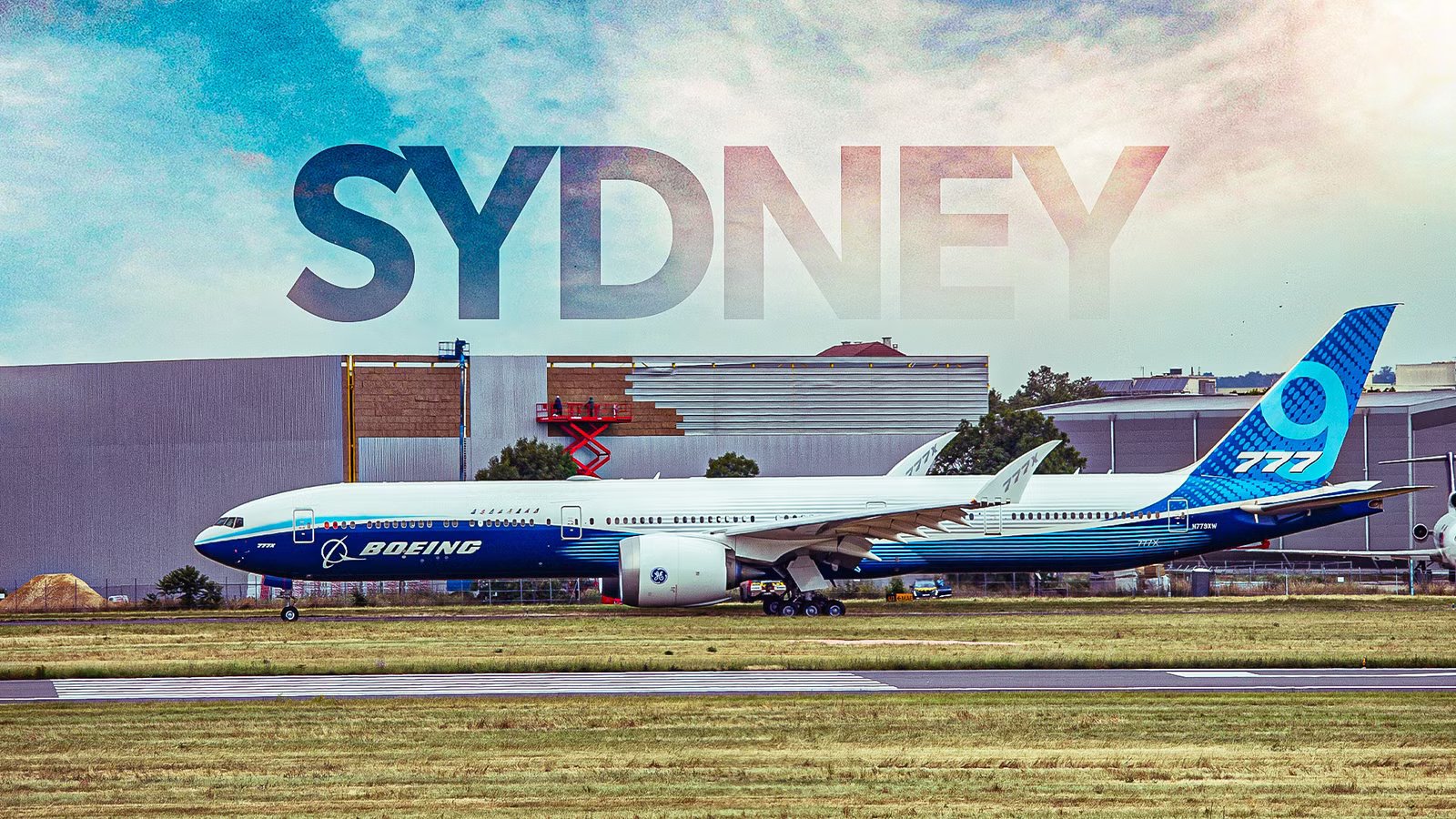
The long-anticipated Boeing 777X is almost here, and when it does finally arrive, it will begin an era of vastly different wing design to commercial aviation. To achieve unprecedented fuel efficiency, designers equipped the massive twin-engine jet with a sprawling carbon-fiber wing that exceeds standard international airport dimensions. Making the wings smaller was not an option, so  Boeing opted for a very different kind of solution.
The aircraft will feature a first-of-its-kind folding wingtip designed to reduce the wings’ size on the ground to fit into airports that would otherwise be unable to take it, like  Sydney Kingsford Smith Airport, an airport that particularly benefits. Modern airports are tightly mapped networks where every taxiway centerline and gate parking position is allocated down to an inch, and some have very little stretching room for aircraft that push the limits.
What The Folding Wingtip Is For

The necessity of the folding wingtip system comes from the aerodrome classification framework established by the International Civil Aviation Organization (ICAO). When the aircraft is configured for flight with its wingtips fully extended, it features a wingspan measuring 235 ft five in (71.75 m). This expansive footprint places the jet squarely into the Code F category, grouping it alongside massive quad-engine giants like the Airbus A380 and the Boeing 747-8.
Operating under a permanent Code F designation brings with it severe financial and operational penalties for airlines because the vast majority of international terminal gates were built for smaller aircraft. When the outer 11 feet 6 inches (3.51 meters) of each wingtip pivots vertically upward on the ground, the wingspan compresses to 212 ft 9 inches (64.85 meters). This reduction downshifts the airframe into the Code E classification, allowing it to seamlessly occupy the exact same taxiway envelopes and passenger gates used by the legacy Boeing 777-300ER and the Airbus A350-1000.
Lessons were learned from the struggles faced on the A380 project by engineering an aircraft that changes its regulatory shape after touchdown, solving the issue very pragmatically. Upgrading a single airport gate to accommodate a permanent Code F wingspan means extensive pavement widening, the relocation of adjacent jetways, and the restructuring of terminal blast fences, not something an airport will easily accept and pay for. The morphing wing design makes these upgrades irrelevant, making the aircraft far more attractive to potential customers who want the capacity and range, without the operational headache on the ground.
Just Like Any Other Widebody

Building a shifting wing structure was only half the battle; the commercial viability of the program depended entirely on rewriting international aviation safety rules. Before the aircraft could be legally integrated into daily hub operations, regulatory bodies had to evaluate how a moving wing component would impact standard taxiway separation margins.
International spacing rules have always required a wide, conservative safety buffer between a Code F wingtip and any adjacent taxiing aircraft or static ground obstacle. Rather than requesting custom, reduced separation clearances that would disrupt standard airport patterns, the manufacturer designed the wing to comply strictly with existing infrastructure rules. The breakthrough for Boeing arrived with Amendment 15 to ICAO Annex 14, Volume I, which was adopted in March 2020 and became applicable in November 2020. The update formally established the international standards for aeroplanes equipped with folding wingtips, creating a clear legal pathway for the dynamic widebody.
Integrating this into regulations means the aircraft automatically complies with standard Code E taxiway and gate requirements the moment the wingtips fold upward. Ground controllers do not need to clear wide swathes of empty concrete or implement specialized routing protocols when the jet taxis toward a terminal. The ICAO framework simply treats the aircraft as a standard widebody on the ground, allowing it to share dual taxiways with existing long-haul fleets without compromising safety margins.
Complexities On The Ground In Sydney

The real-world consequences of these rigid layout metrics become glaringly apparent at highly space-constrained gateways like Sydney Kingsford Smith Airport (SYD). Hemmed in permanently by the waters of Botany Bay and dense urban development, the Australian hub features an incredibly tight international terminal area at Terminal 1. 2025 upgrades helped alleviate the issues slightly, but even after this, the apron is still tight when compared with similar-sized airports. Within this dense asphalt maze, ground handlers face a daily struggle to safely maneuver heavy international flights without disrupting adjacent operations.
A key geometric pinch point occurs on the western side of the airfield, where the centerline of Taxiway B10 runs directly parallel to Taxiway L. The distance separating the centerlines of these two active lanes measures exactly 262 feet (79.86 meters). When a legacy Code E aircraft taxis down Taxiway B10 while another widebody holds on Taxiway L, the wingtip clearance satisfies the required safety envelope, but adding an extended Code F wing into this tight configuration immediately pushes the safety margin to its limit.
The visual profile of the folded wingtip highlights the precise engineering required to navigate these narrow spaces. Looking closely at the exposed hinge mechanism shows the heavy-duty actuators that lock the outer section firmly into place before taxiing begins. Moving just a small part of the end of each wing is essential for allowing the airframe to safely slide past traffic waiting on adjacent lanes without violating Sydney’s tight clearance buffer.
A Danger Even When Parked?

Managing the geometric transitions of the aircraft on active taxiways is only part of the operational challenge. The airframe must also contend with severe environmental forces when parked static at the gate. When the outer wingtips are folded vertically, they act as two large sails, standing straight up into the air and dramatically increasing the lateral wind loading on the structure compared to traditional flat-wing widebodies. Engineers had to design the mechanical actuator and locking pins to withstand immense structural stress from crosswinds reaching up to 82 knots (151.86 km/h).
To ensure safety during ground handling, airlines must adhere to strict environmental limits that govern how the aircraft is secured during extreme weather events. The design itself provides specific operational thresholds for ground crews to follow based on real-time wind speeds monitored at the terminal. If a severe storm or typhoon approaches the airfield, station managers cannot leave the wingtips in their standard vertical ground configuration without risking severe structural damage.
If a severe weather system brings wind speeds that approach these operational limits, flight crews and ground teams need to alter their standard parking protocols. The airline operating will need to either unfold the wings completely so they lie flat against the ground or secure the airframe using heavy bracing equipment attached directly to the gate anchors. It naturally introduces a significant logistical hurdle for station managers, who have to constantly coordinate with meteorological services to protect the complex mechanical components from lateral shear forces.
Stuck In Flight Mode

A critical scenario that has to be thought about is what occurs when the mechanical wingtip components suffer a system failure while the aircraft is moving on the ground. If the internal hydraulic lines or electronic locking pins experience a malfunction after landing, the wingtips may become locked in the extended position. When this mechanical failure occurs, the airframe stays stuck as a stranded Code F giant on an airfield whose taxilanes are strictly restricted to Code E dimensions. The aircraft cannot legally enter the narrow taxi paths leading to the terminal, which creates an immediate logistical crisis for airport ground traffic control.
The operational consequences of an asymmetric or failed wingtip extension are massive, and like any other incident, needs its own contingency plan to deal with the resulting impact. Ground controllers cannot allow the widebody to block high-frequency taxiway intersections, forcing them to treat the aircraft as an oversized emergency breakdown. The flight crew must immediately stop the aircraft and inform tower controllers, initiating a ground recovery process to clear the active taxiway network.
Ground controllers would need to isolate the aircraft, routing it along specialized heavy towing tracks or parking it on a remote cargo ramp until maintenance crews can manually override the system. Technicians then bleed the hydraulic actuators and insert heavy ground locks to push the tips into the vertical position. This recovery process can disrupt airport operations for several hours, highlighting how heavily the commercial viability of the aircraft depends on the absolute reliability of its folding mechanisms.
Small Additions Can Go A Long Way

Introducing a morphing wing structure is just one change in how next-generation commercial aircraft interface with older airport infrastructure. As global air traffic increases and premium hubs face severe geographic constraints, building larger runways is no longer a viable option for most metropolitan gateways. The ability to pack a high-capacity, long-range wing into a standard gate footprint will likely define fleet planning strategies for the next several decades.
Operating this unique platform successfully requires a continuous commitment to precise airfield choreography from both pilots and ground dispatchers. Every arrival at a space-constrained terminal needs precision, making sure the mechanical components transition seamlessly without disrupting adjacent aircraft. The specialized training programs developed for this fleet emphasize that ground space management is just as critical to flight safety as high-altitude aerodynamics.
The long-term success of this design will ultimately be measured by its daily performance at crowded international gateways like Sydney, where aprons and taxiways are constrained. If the mechanical components can maintain high dispatch reliability across thousands of challenging flight cycles, it will pave the way for other manufacturers to explore adaptive structures. For now, the aircraft remains a fascinating engineering compromise, one that shows how a bit of ingenuity can provide incredible benefits.