dailynewsnblog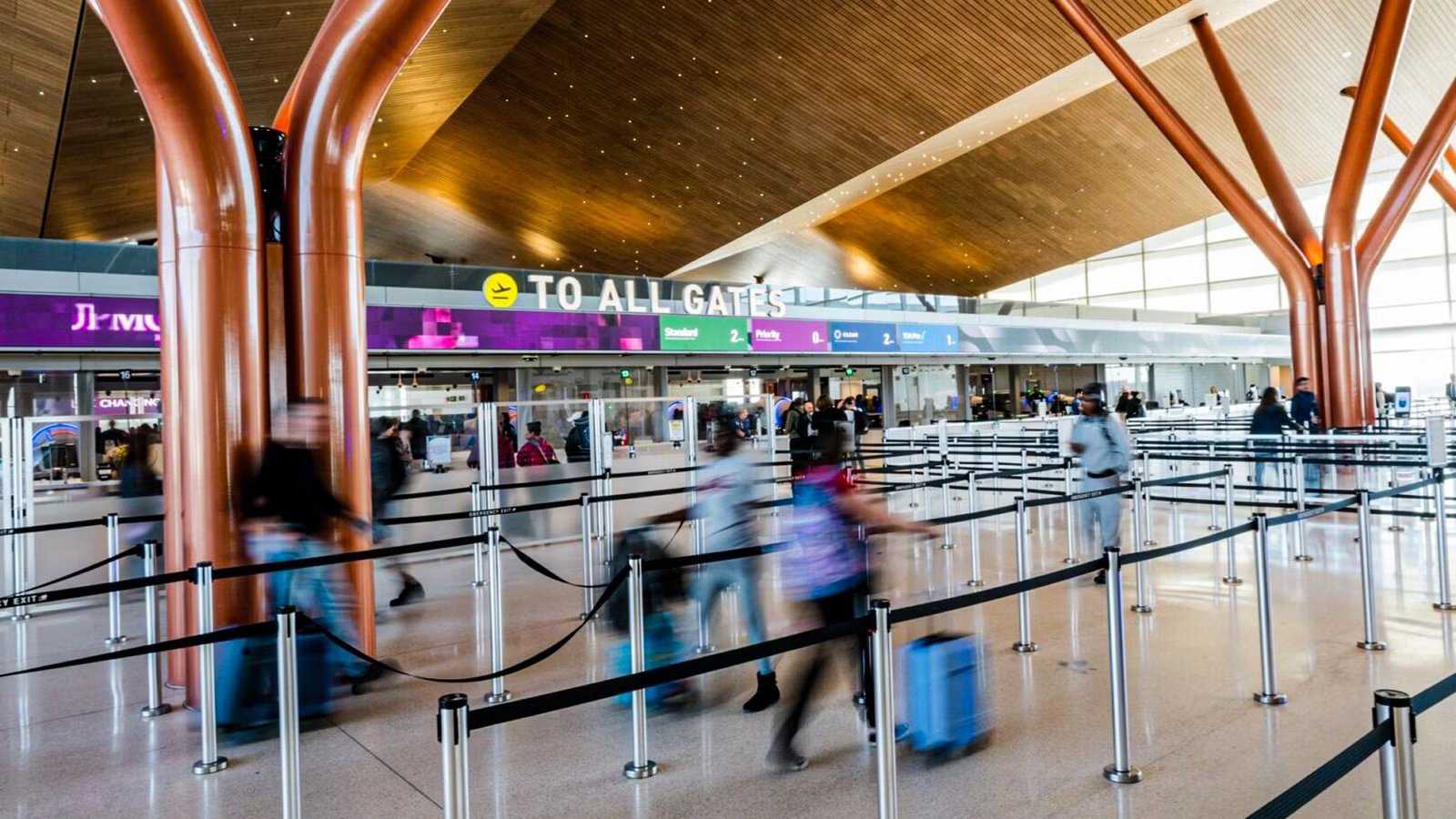
The coastal mega hubs of the United States are no longer the ones that have the clear lead heading towards the future, with plenty of smaller, secondary airports starting to experience major growth. Multi-billion-dollar airport transformations were, until recently, only really seen at massive international gateways. Today, mid-tier domestic hubs are quietly matching that financial scale to accommodate explosive passenger growth and improve aging facilities that require a much-needed refresh.
Faced with a staggering $151 billion national capital development deficit, six overlooked regional airports are breaking ground on billion-dollar terminal modernizations. This list takes a look at these lesser-known projects and evaluates them based on total construction expenditure, gate capacity expansions, and targeted completion timelines. The heartland is quickly becoming the most exciting building ground for the next generation of US airports.
6
Sacramento International Airport (SMF)
$1.3 billion Investment

Sacramento International Airport (SMF) is taking its extensive infrastructure issues head-on through its ambitious $1.3 billion SMForward modernization initiative. Driven by record-breaking regional travel demand, the five-year master plan updates infrastructure that has been pushed past its limits. The goal is to reshape the Northern California travel experience completely without drawing from local tax dollars.
A key inclusion of this overhaul is a new $140 million pedestrian walkway stretching across the terminal complex. The 87,400-square-foot (8,119-square-meter) elevated skybridge will provide a reliable connection between Terminal B and Concourse B, bringing down walking times and increasing passenger flow throughout the airport. The structural addition guarantees full accessibility even if the existing automated shuttle system goes offline for maintenance.
Project Component | General Scope | Target Completion |
Pedestrian Skybridge | 87,400 square feet (8,119 square meters) with moving walkways | Mid-2026 |
Concourse B Expansion | Six additional narrowbody gates and expanded ticketing | Early 2029 |
Terminal B Parking Garage | Six-story structure adding 5,500 spaces | Late 2026 |
Consolidated Rental Car Center | Eliminated passenger shuttle bus network requirements | Late 2027 |
As well as the walkway, building teams are breaking ground on six additional aircraft gates for Concourse B to scale airline operations. The expansion includes advanced baggage handling conveyor networks and a massive 5,500-space parking garage equipped with electric vehicle charging stations. The final added piece, once this has been completed, is a sprawling, consolidated rental car facility designed to eliminate traditional shuttle bus rides. Overall, the focus here really is on convenience and accessibility, making Sacramento a far more stress-free environment for passengers.
5
Tampa International Airport (TPA)
$1.5 billion Investment

Tampa International Airport (TPA) is getting ready to complete the crown-jewel phase of its long-term master plan by constructing a brand-new terminal facility. Dubbed Airside D, this $1.5 billion expansion directly answers the region’s massive influx of international residents and corporate investments. The project prepares the airport to handle up to 35 million annual passengers, which is expected to be achieved by 2037.
The state-of-the-art terminal spans 600,000 square feet (55,741 square meters) across a highly intuitive dual-level layout. Travelers visiting Tampa will now get to experience a sprawling central mezzanine featuring two premium airline lounges alongside local culinary options. It also integrates a dedicated customs and border protection hub to accelerate global arrivals and minimize processing delays.
A total of 16 domestic and international gates will accommodate everything from flexible domestic narrowbodies to massive transoceanic widebody airframes, putting the airport in a great position to attract expansion from existing airlines and potential newcomers. The construction team, led by Hensel Phelps, HNTB, and Gensler, broke ground late last year, and passengers can look forward to boarding flights from this advanced architectural gateway when it officially opens in 2028.
4
Pittsburgh International Airport (PIT)
$1.7 Billion Investment
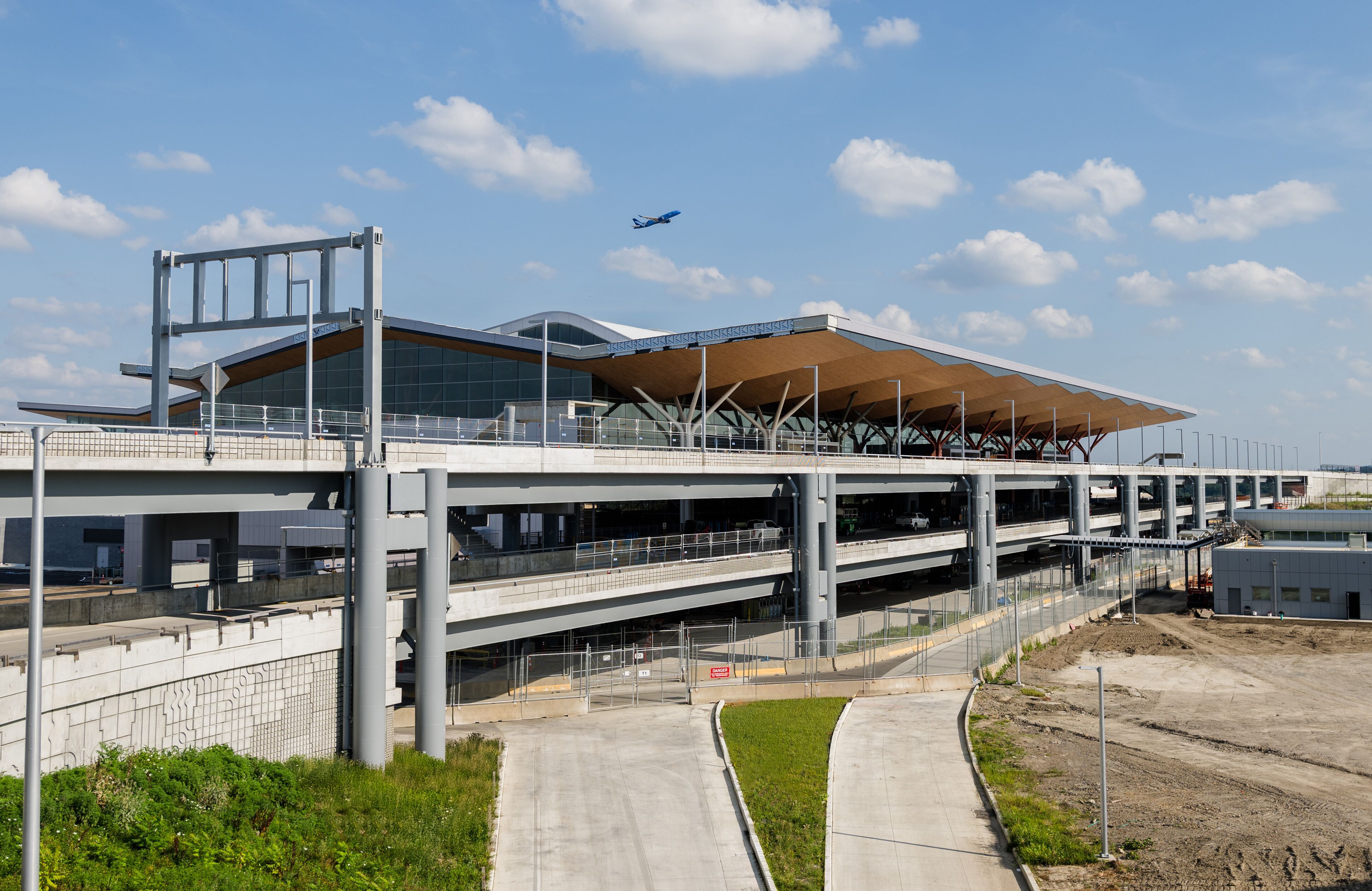
 Pittsburgh International Airport (PIT) completely bypassed traditional renovations by executing a massive $1.7 billion terminal modernization program that opened on November 18, 2025. The construction team consolidated the sprawling facility into an 811,000-square-foot (75,344-square-meter) landside terminal, which eliminates the need for an expensive, obsolete automated people mover system. Leaning on the help of Gensler, HDR, and Luis Vidal + architects, the very outdated 1990s terminal was finally upgraded to modern standards, helping Pittsburgh enter into a new phase of life.
The joint venture of PJ Dick, Hunt, and Turner built the sustainable structure, which runs entirely off an independent solar and natural gas microgrid. The interior features beautiful tree-like structural steel columns and 4,000 integrated constellation lights mimicking the local night sky. This design easily earned the complex a LEED Gold certification, which many airports across the US have been working relentlessly to achieve.
Passengers can access the airside gates via a 1,300-foot (396-meter) dual-level pedestrian bridge, an inclusion that has become a highly successful part of the airport’s new look. Early post-occupancy reviews show that the consolidated 12-lane security checkpoint has drastically slashed traveler wait times. The facility and all of the new additions successfully shift Pittsburgh from what was an airport rooted in the past to a true transfer hub and a highly efficient regional gateway.
Catch what other flight trackers miss
Emergency squawks, holds, NOTAMs — live signals, no signup.
Open tracker
Catch what other flight trackers miss
Emergency squawks, holds, NOTAMs — live signals, no signup.
Open tracker
3
John Glenn Columbus International Airport (CMH)
$2 Billion Investment
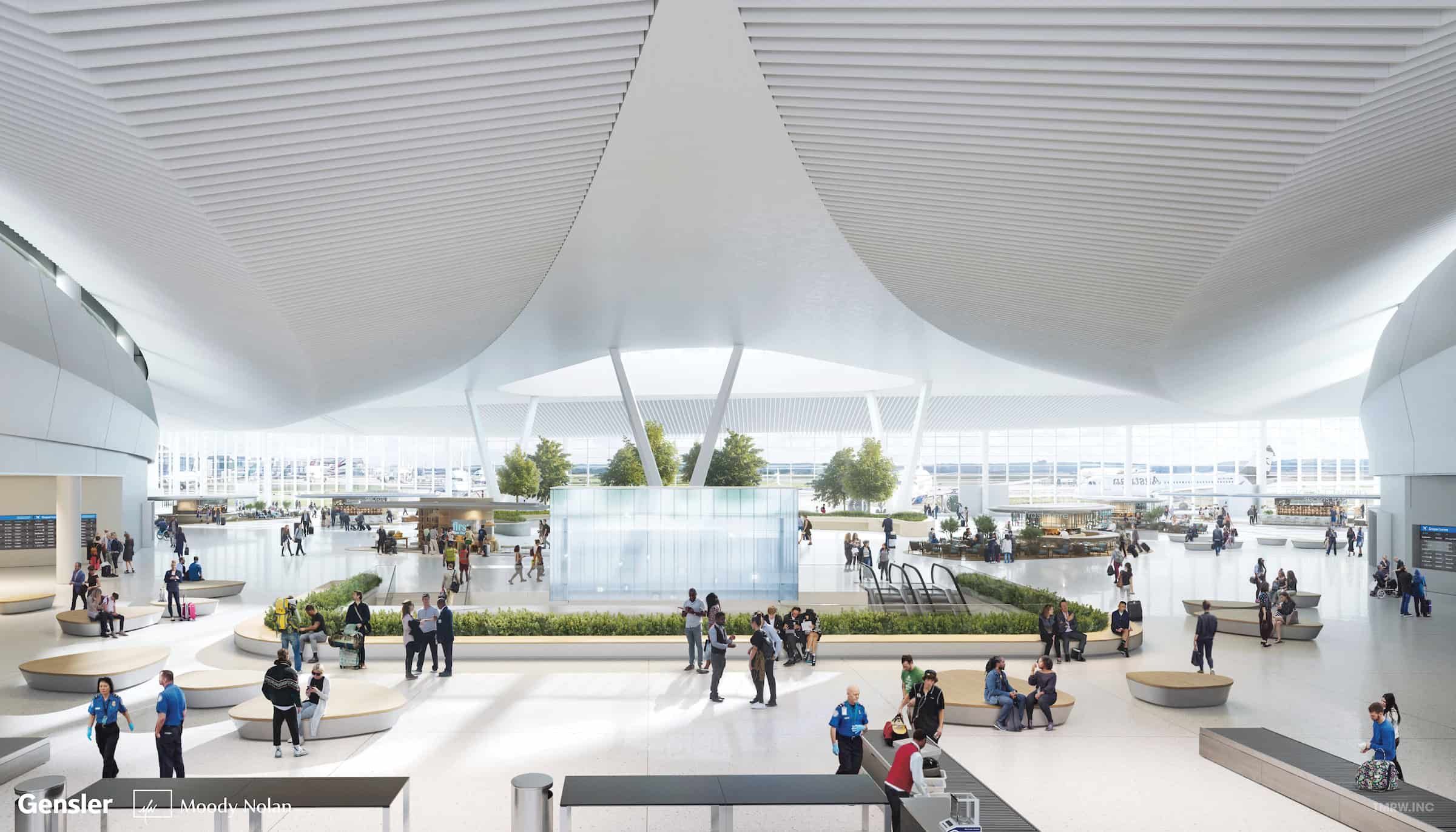
John Glenn Columbus International Airport (CMH) is officially constructing a brand new $2 billion terminal to replace its aging 1958 facility. The sprawling one million-square-foot (92,903-square-meter) complex is being built by construction manager Hensel Phelps in partnership with Elford, alongside architecture firms Gensler and Moody Nolan, who designed the striking, modern facility. It represents a major step forward in the right direction for the airport, set to be completed in 2029, the same year as its 100-year anniversary.
The layout features a massive 74-foot (22.5-meter) cantilevered exterior canopy extending over four lanes of traffic. Inside, a single consolidated security checkpoint will replace three disjointed screening areas, leading passengers directly into a central marketplace with expansive airfield views. The end goal for the project is to scale annual capacity up to 13 million passengers, a doubling of its current size.
The complex includes 36 standardized gates, which are each built for modern narrowbody aircraft, alongside a 5,000-space parking garage connected by a covered bridge. Airport leadership confirmed that this multi-billion-dollar project requires zero local tax increases and funding relies entirely on federal grants and more than $200 million in pre-saved operational reserves.
2
San Antonio International Airport (SAT)
$2.5 Billion Investment
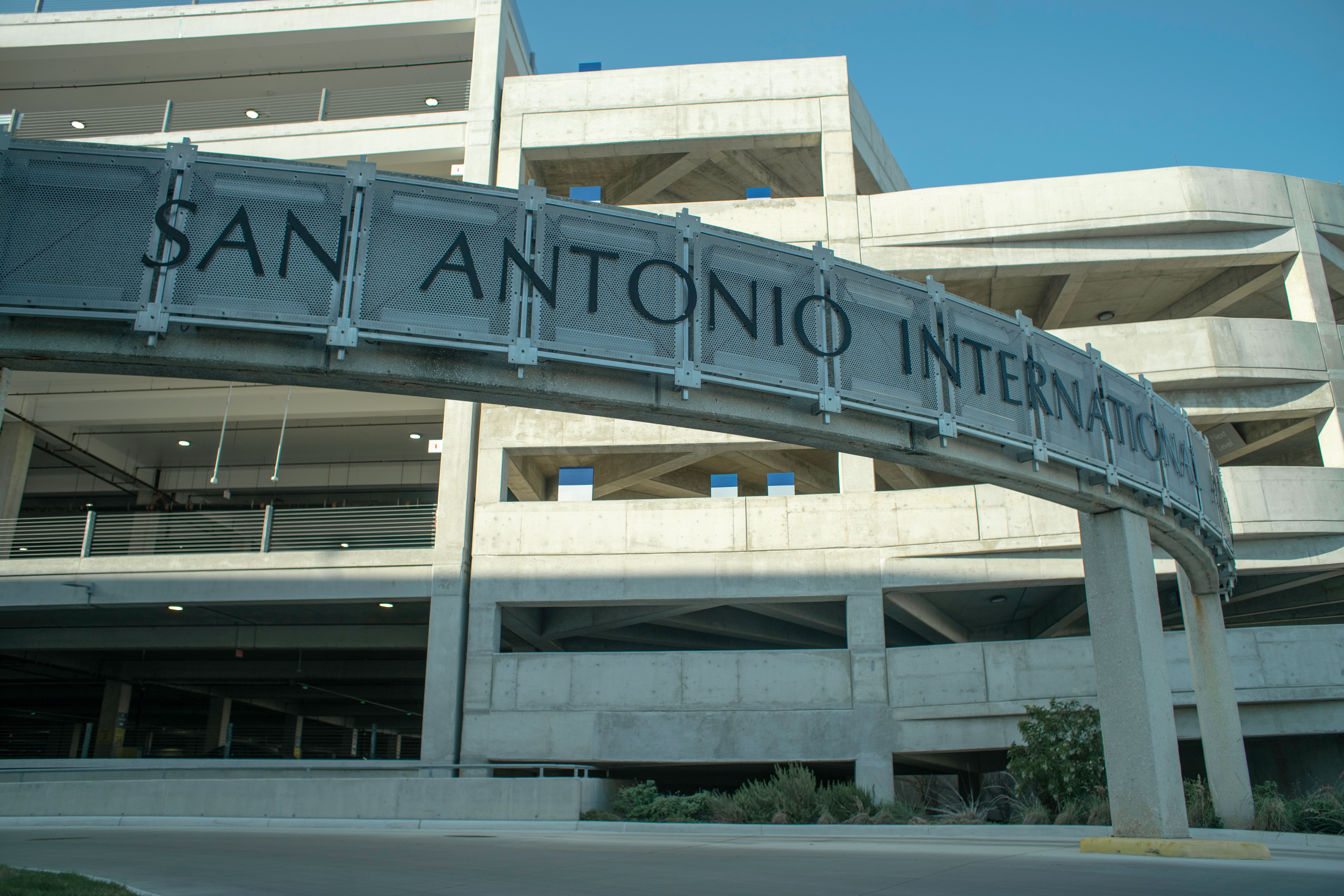
San Antonio International Airport (SAT) has made massive advancements to its aviation infrastructure with a staggering $2.5 billion expansion program on the road to a 2028 completion date. The crowning part of this massive capital campaign is a brand new Terminal C facility designed to capture lucrative international market share. The project marks the largest infrastructure investment in city history and is something for San Antonio to be proud of.
The new terminal footprint will add 17 high-capacity gates to the airport network, significantly boosting daily flight operations for major domestic and international carriers. In addition, advanced baggage handling technology and spacious check-in zones will help to minimize terminal friction. City leaders engineered this expansion to establish the metro as a premier corporate aviation asset and grow the airport’s presence in the national airline market.
Airport Project | Total Capital Budget | New Gate Capacity | Target Opening Year |
San Antonio Terminal C (SAT) | $2.5 billion | 17 gates | 2028 |
JFK Terminal 6 Baseline (JFK) | $4.2 billion | 10 gates | Late 2028 |
San Antonio is easily cementing its place in the modern aviation landscape. The investment here is truly unprecedented for an airport of its size, giving it a chance to become a hub that can compete with the largest airports in the country. This multi-billion-dollar terminal layout is the missing piece needed to allow the city to comfortably absorb millions of future travelers, completely redefining regional transit in south Texas.
1
Nashville International Airport (BNA)
$3 billion Investment

Nashville International Airport (BNA) is answering an unprecedented population boom by launching its second massive infrastructure campaign since 2017. Known as New Horizon, this sweeping $3 billion capital program builds upon previous expansions to handle soaring corporate travel, and tops this list. Executives designed the multi-phase initiative to scale total facility capacity for 40 million annual passengers, which would push the airport well into the top 20 busiest airports in the US.
Major construction milestones involve the complete demolition and total reconstruction of a new 374,000-square-foot (34,745-square-meter) Concourse A facility. This expansion pairs with an extended Concourse D footprint to maximize daily gate utilization across the terminal. To accelerate these efforts, airport officials approved up to $6 million in early completion incentives for contractors, which hopes to get the improvements well on the way to being completed by its expected completion date.
Infrastructure Focus | Total Structural Scale | Primary Milestone |
Concourse A Reconstruction | 374,000 square feet (34,745 square meters) facility | Late 2027 |
Central Baggage Handling | Three miles (4.8 kilometers) of automated conveyor belts | Mid-2027 |
Terminal Access Roadways | Multi-lane improvements to reach Level of Service C | Late 2029 |
Landside upgrades are equally aggressive, adding three miles (4.8 kilometers) of high-speed conveyor belts to dramatically accelerate baggage delivery times. Also included is the building of a six-story ground transportation hub featuring a 3,000-space parking structure. This expansive roadway network and central core enhancement project will continue rolling out in phases through 2029, which will then mark the overall completion of the project based on current plans.