dailynewsnblog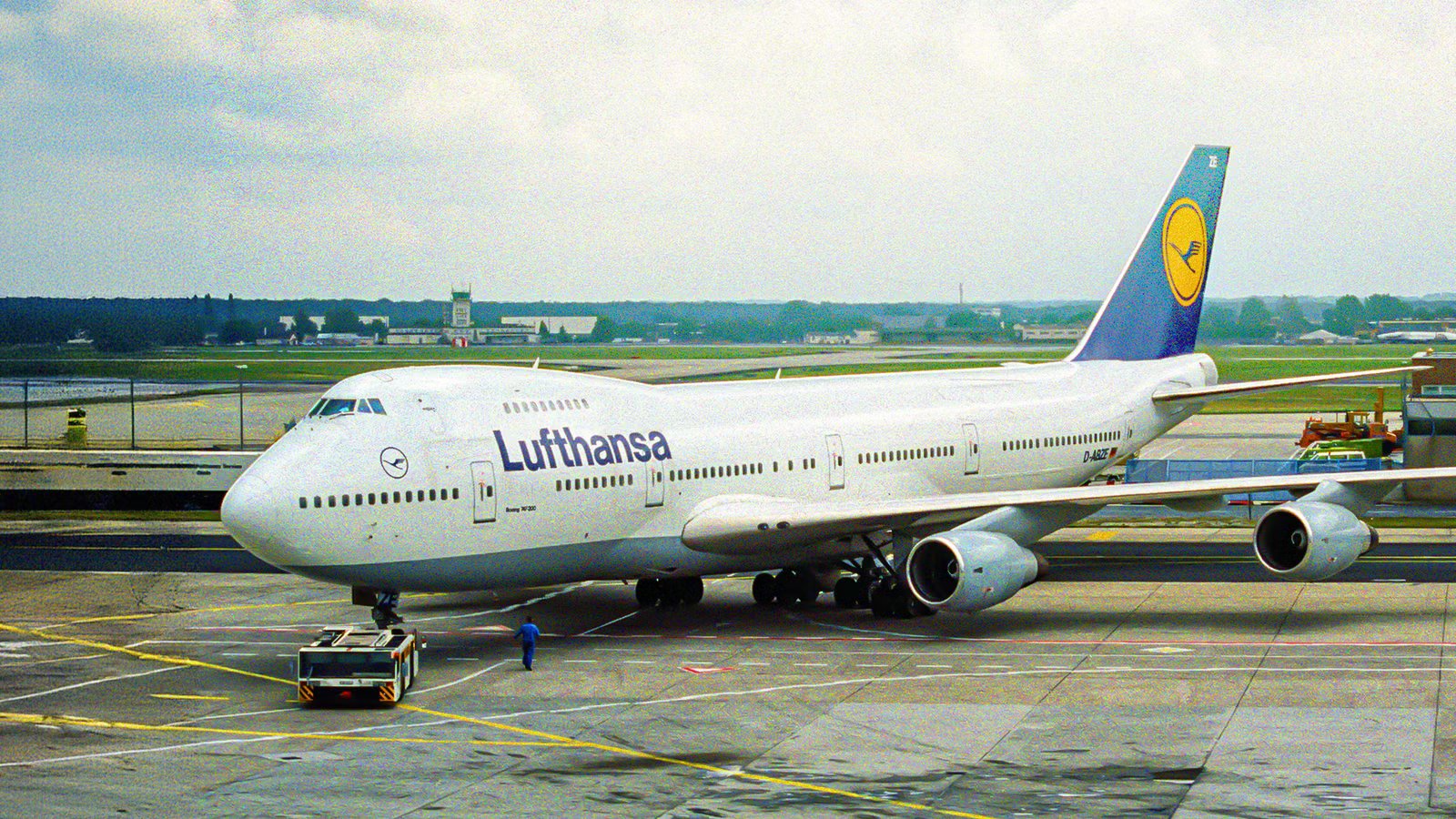
When it comes to the iconic Boeing 747 aircraft, very few airlines can claim to be avid fans and operators of the type, like the German airline  Lufthansa. Having operated almost every major variant of the 747 family, Lufthansa also remains one of the three airlines today to still operate the type on passenger services. The carrier continues to operate the popular 747-400 and the latest generation 747-8 variants.
That being said, this guide dives into a specific 747 aircraft that the carrier operated from the late 1970s to the early 2000s, and evaluates why it did not get a second lease of life in the second-hand market, along with factors that affect the aircraft’s popularity in the resale market.
Flashback To 1979, More About D-ABYP

German aircraft registration D-ABYP was held by one of Lufthansa’s Boeing 747-200 aircraft (-230 model to be precise). This was among the 30 aircraft of the type the carrier had ordered from Boeing. While the first of these airframes joined the carrier’s fleet in 1971, the airline had retired all 30 airframes by 2002. The above-mentioned D-ABYP airframe remained within the airline’s fleet until 2001.
Data from PlaneSpotters.net indicates that this specific airframe, named “Niedersachsen”, was configured by Lufthansa to accommodate a total of 389 passengers, split into eight seats in first class, 51 seats in business, and 330 seats in economy. This was one of the few configurations the airline had used across its 747-200 subfleets. The airline also operated 747-200M (Combi) variants, in which a portion of the economy passenger capacity was sacrificed for cargo space.
The airline also operated the dedicated cargo variant of the type, known as the 747-200F. In fact, Lufthansa was the launch customer of the freighter variant of the 747-200 family. Ultimately, D-ABYP was re-registered as a US aircraft after it exited Lufthansa’s fleet, but the airframe was scrapped two years later, never operating for another carrier. However, data from PlaneSpotters shows that the majority of the fleet, being the freighter or Combi variant, got a second lease of life with various cargo operators.
Cargo Operations Rely On Different Economics

Historically, the second-hand market for passenger jets has been rather limited, with a possible exception being the Boeing 737 and the Airbus A320 family, just because of the popularity of these narrowbody aircraft and the order backlog to get new aircraft. This is something which remains true even today, as airlines always prefer to operate new aircraft for passenger service.
This is partly because newer aircraft are technologically more advanced, and tend to have better economics, but also deliver better passenger experiences. The point about economics is that newer airframes are always more efficient to operate, resulting in reduced operating and maintenance costs. But when it comes to cargo aircraft, the market is different.
Because aircraft age is not as big of a concern as it is for passenger jets, cargo operators generally tend to operate cargo aircraft for much longer durations than airlines generally would with a passenger aircraft. Furthermore, in the event that a cargo operator retires its freight aircraft, it is possible to continue operating for another carrier sourced through the second-hand market.
The cargo market has been booming in recent years, and the industry has seen a growing number of aging passenger jets being converted into freighter aircraft. This is a relatively economical way to gain easy access to cargo capacity, without having to wait for extended periods or spending millions more on a brand-new airframe. This also provides operators with the advantage of picking the right aircraft for their operational needs, in terms of capacity and range, as the number of standard dedicated freight aircraft types available is rather limited.

Why Are Passenger-To-Freighter Conversions So Popular?
These kinds of transformations can bring a lot to the table.
Overlapping Production Runs Of The 747 Variants

Possibly another reason why Lufthansa’s sale of passenger 747-200s in the secondhand market was due to the fact that there were newer 747 variants and even aircraft types available in the market. This would have made other potential carriers overlook the -200s in the secondhand market. After all, as stated above, newer airframes are always preferable and more economical to operate.
Catch what other flight trackers miss
Emergency squawks, holds, NOTAMs — live signals, no signup.
Open tracker
Catch what other flight trackers miss
Emergency squawks, holds, NOTAMs — live signals, no signup.
Open tracker
According to Boeing’s data, the 747-200 was in production from 1971 to 1991, during which 393 airframes of the type were built. However, from 1969 until 1986, the original 747-100 also remained in production; meanwhile, the later-generation 747-300 and the popular 747-400 variants launched production in 1983 and 1988, respectively. The following are the production run and unit details of each 747 variant:
Variant | Production Run | Units Produced* |
|---|---|---|
Boeing 747-100 | 1969 – 1986 | 177 |
Boeing 747-200 | 1971 – 1991 | 393 |
Boeing 747-300 | 1983 – 1990 | 81 |
Boeing 747-400 | 1988 – 2008 | 694 |
Boeing 747-8 | 2011 – 2022 | 155 |
Total Number Of 747s Produced | 1,500 aircraft | |
*While the above numbers add up to 1,500 747 airframes, data from various sources indicate slight variations on units produced per aircraft variant, thus indicating a slightly different total number.
The numbers suggest that the 747-200 is the second-most popular variant in the aircraft family. However, the lack of popularity in the secondhand market may be attributed to the launch of the family’s most popular variant in the late 80s Boeing 747-400. Even if the -400 variant was to be excluded, the -200 passenger variant on the secondhand market would not be able to compete effectively against the later-generation 747-300s. This could also be a reason why Lufthansa may have chosen to order and operate the 747-400s directly, while skipping the -300s.
Catch what other flight trackers miss
Emergency squawks, holds, NOTAMs — live signals, no signup.
Open tracker
Catch what other flight trackers miss
Emergency squawks, holds, NOTAMs — live signals, no signup.
Open tracker
Lufthansa Continues To Operate The 747s

Notably, Lufthansa is one of the very few carriers still operating the passenger versions of the 747s. The carrier operates both the -400 and the later -8 variants; however, the airline has confirmed that the former will be exiting the fleet shortly. The eight 747-400 aircraft within Lufthansa’s fleet have an average airframe age of around 26 years.
As for the newer 747-8s, data indicate the carrier currently has 18 airframes in the fleet; however, a few are reported to be stored. The carrier originally had 19 examples of the type, but earlier this year, one was flown over to the US Government, with a second airframe soon to follow. That said, with the subfleet of the -8s relatively young compared to the older -400s, the airline reportedly plans to operate the former type well into the next decade.
Apart from Lufthansa, the only two airlines that continue to operate the quadjets for passenger services are  Air China, which operates both the -400 and the -8, along with Korean Air, which only operates the -8. However, the list of operators increases considerably when looking at cargo operators. Beyond these, there are also a limited number of 747s being operated by world governments and the military.
Replacing The Queen Of The Skies

It is worth noting that Boeing had been working on a suitable replacement for the 747s, well before the program ended in 2023. The nominated alternative is the manufacturer’s next-generation Boeing 777-9. Although the type should have entered commercial service in 2020, multiple delays in the testing and certification process have resulted in the aircraft still not operating commercially.
Lufthansa is set to be the launch customer for the type, with the aim of receiving the first airframe of the type next year. In fact, in the case of Lufthansa, the airline had to delay the retirement of its 747-400s due to delays with the 777-9. For better understanding, the following specification data shows a comparison of the 747 alongside the upcoming 777-9:
Aircraft | Lufthansa Specification | Boeing Specification | |
|---|---|---|---|
Boeing 747-400 | Boeing 747-8 | Boeing 777-9* | |
Capacity | 371 (3-class configuration) | 364 (4-class configuration) | 349 (3-class configuration) 426 (2-class configuration) |
Range | 6,398 nautical miles (11,850 km) | 7,019 nautical miles (13,000 km) | 7,285 nautical miles (13,500 km) |
*Actual number of seats will vary depending on the onboard product selected by the airline, their chosen configuration, and space allocated to seats and cabins.
The upcoming 777-9 will essentially allow Lufthansa to carry passenger numbers close to those of the 747s, while covering much longer operational ranges, with the added benefit of flying with two fewer engines. This, paired with the brand-new GE9X engine designed for the aircraft, along with the composite materials utilized in aircraft design, will allow the airline to operate with greater efficiency.
The European Alternative Offered By Airbus

While it was not strictly designed to be a replacement, the Airbus A350-1000 does position itself as a strong candidate. Compared to the above-stated specifications of Lufthansa’s Boeing 747s, the manufacturer specification for the A350-1000, as published by Airbus, indicates the aircraft can carry around 375 to 400 passengers in a three-class configuration.
Because Lufthansa does not use a high-density cabin configuration on its 747s, the seating capacity theoretically falls within the capacity offered by the A350-1000. However, the actual number would depend entirely on how the airline configures the aircraft when Lufthansa takes delivery later this year. In an airline press release, the carrier stated that the -1000s will have 15% more capacity than the smaller -900s currently in the Lufthansa fleet, and will be equipped with first-class cabins.
By this approximation, it is possible that the airline’s A350-1000 could accommodate around 300 passengers in a four-class configuration. While this is a lower capacity than that of the 747s, the A350 boasts an unbeatable operational range of 9,000 nautical miles (16,700 km), which is significantly higher than the range of the quadjets.
Simple Flying Quiz
Think you really know Lufthansa?
Answer 10 questions and put your knowledge to the test
Think you really know Lufthansa?
Answer 10 questions and put your knowledge to the test
Easy (15s)Medium (10s)Hard (5s)
A good mix of the upcoming 777-9 and the A350-1000 would offer Lufthansa much better operational flexibility and efficiency than what the 747s can offer. Interestingly, Korean Air, another 747 operator, appears to be following a similar strategy, with the carrier also expecting to take delivery of 777-9s and A350-1000s.