dailynewsnblog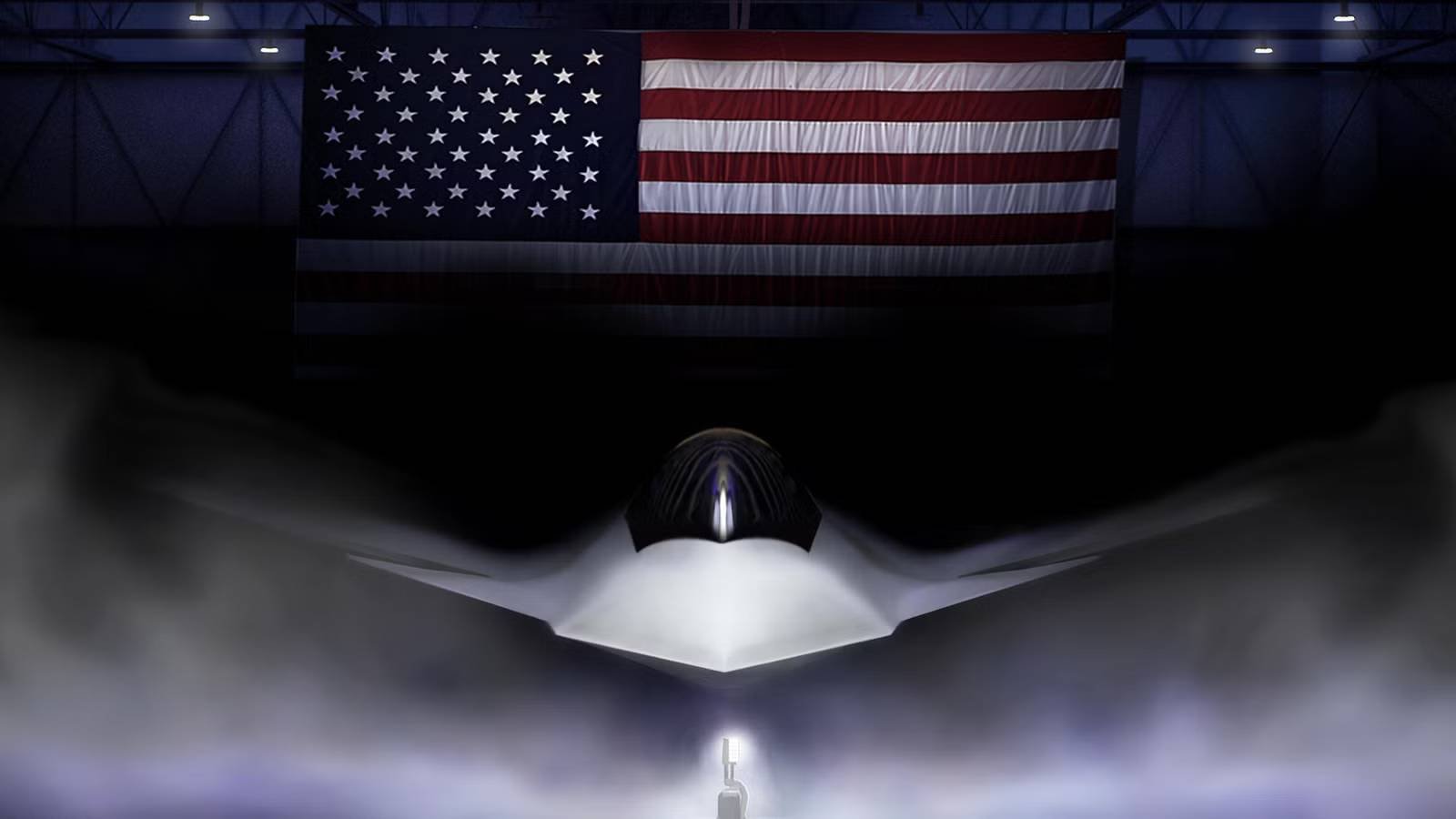
The United States and China may be the only countries that can reasonably be expected to produce a full-fledged 6th-generation fighter jet alone. This is not to say that other countries can’t produce 6th-generation fighters if they are willing to commit, but that it is at least somewhat unrealistic or infeasible in the real world. However, much depends on definitions, including what counts as a 6th-generation fighter. When assessing a country’s ability to produce a fully fledged 6th-generation fighter, a number of fundamentals are important.
These include an advanced aerospace industrial base, engine capability, electronics, sensors, access to advanced semiconductor technology, stealth manufacturing, advanced software, a large budget, and political commitment. Countries lacking in some sectors are forced to make difficult decisions. For Sweden, one challenge is the increasingly international nature of even domestically designed aircraft such as the Gripen (discussed below). Although Russia possesses one of the world’s largest defense budgets, its resources are spread across a broad range of strategic commitments (“everything a superpower is expected to do”). Committing to a true 6th-generation program would likely entail difficult choices for other defense sectors (e.g., the Navy).
Definition Of A 6th-Generation Fighter Jet

For the purposes of this article, a 6th-generation fighter jet is a next-generation fighter that can be reasonably expected to meet the standards of the United States Air Force or Navy. The term “6th-generation” is part marketing, part clickbait, and part useful. There is no universally accepted definition of a 6th-generation fighter, and there is no authoritative body applying the label to fighter jet programs.
There is nothing stopping a country like Russia from using the label for a program of its own, even though the US Air Force may assess that aircraft as a lower generation. For the purposes of this article, a 6th-generation fighter jet is understood to be a survivable, highly networked combat aircraft designed to dominate contested airspace through multispectral stealth, advanced sensors, artificial intelligence-assisted systems, long-range weapons, manned-unmanned teaming, and adaptable open architecture, while maintaining superiority against peer threats across several decades.
These aircraft need to incorporate all-aspect broadband stealth, sensor fusion and information dominance, MUM-T, AI-assisted systems, massive electrical power generation, extremely advanced thermal management, next-generation electronic warfare, and more. Features like high Mach, high altitude, and tailless designs do not automatically qualify them as 6th-generation.
The US Is Struggling With Two

The United States is currently developing two next-generation fighter jets, the Air Force’s F-47 and the Navy’s F/A-XX. Perhaps marketing or perhaps a nod to the multirole nature of next-generation fighter jets and bombers, Northrop Grumman also describes its B-21 Raider bomber as the world’s first 6th-generation combat aircraft. The Air Force awarded the contract for the F-47 to Boeing in March 2025, and it has become a priority for the Air Force.
In the Fiscal 2026 budget, some in Washington, including the White House, were in favor of putting the Navy’s F/A-XX program on ice, with minimal funding to keep the program alive but essentially deferring it until the F-47 was more mature in its development cycle. The US Department of Defense stated in a hearing, “The Navy’s FA-XX program will maintain minimal development funding to preserve the ability to leverage F-47 work while preventing oversubscription of qualified defense industrial base engineers.”
Put another way, officially, there are fears in Washington that developing two fighter jets simultaneously will stretch the US defense aerospace sector and risk delaying the F-47. There are only so many engineers to go around. The Navy, Boeing, Northrop Grumman, and others disagree, and the Navy was able to get funding in the Fiscal 2026 budget. The topic has again come up in Fiscal 2027 budgetary proposals, although the Navy has said it wants to award a contract later this year.
The World’s 6th-Generation Fighter Programs Ranked
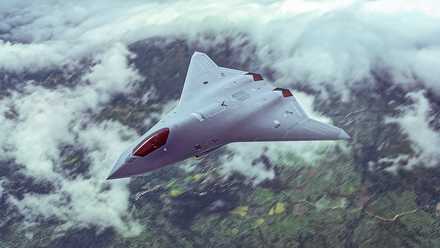
The US, China and the UK/Japan/Italy coalition are leading the race to field 6th-gen fighter jets with some programs experiencing deep problems.
Tale Of The Tempest

Besides the US and Chinese fighter jets, the most notable next-generation fighter jet program is the joint British, Italian, and Japanese fighter jet program — the Tempest/GCAP. The first demonstrator is under construction, with the first flight expected in 2027 and entry into service in 2035. These countries are all G7 economies with some of the largest aerospace sectors in the world. All three of these countries can be considered among the top ten aerospace sector economies.
Taken together, these three countries have a combined GDP of around $13 trillion (nominal); this is around 9% of the world’s total economic output. They have a combined defense budget of around $220 billion. The UK’s Rolls-Royce is one of the world’s handful of top engine manufacturers ( along with GE Aerospace, Pratt & Whittney, and Safran), while BAE Systems, Leonardo, and Mitsubishi are leading defense firms.
But GCAP is so ambitious that it is straining the abilities of these countries to finance it. This is currently particularly true at the time of writing, with British funding being negotiated and somewhat uncertain. Countries in the program have spoken positively about the participation of other countries like Germany and Australia, although Japan is wary of any slippage in the development timetable.
China & Its Exotic Tailless Fighter Jets

In late 2024, China unveiled a more mature version of the J-35 fighter jet, popularly called a 5th-generation fighter. At the end of the year, it unveiled the massive, exotic, three-engined, tailless demonstrator dubbed the Chengdu J-36, as well as the smaller Shenyang J-50. Since then, more demonstrators/prototypes have emerged showing rapid iteration.
Caution is warranted when calling these aircraft (especially the J-50) 6th-generation fighters, largely because so little is known about them. While the J-36’s tailless design is exotic, it doesn’t necessarily indicate the aircraft would truly count as a 6th-gen fighter. Tailless designs have been around since WWII, and the US Navy almost developed the A-12 Avenger II “Flying Dorito” using 1980s technology.
Commonly referenced 6th-generation programs | Country/s | Note (per BAE Systems, etc.) |
|---|---|---|
Boeing F-47 | United States | Contracted, in rapid development |
F/A-XX | United States | Contract expected later 2026 |
China J-36 | China | Three-engined tailless prototype |
Tempest/GCAP | UK/Italy/Japan | In development, first flight 2027 |
FCAS | Germany/France/Spain | Collapsed |
MiG-41/PAK DP | Russia | Possibly frozen/unclear |
Simple Flying has previously reported Professor Justin Bronks as saying (of programs like the Su-57, Kaan, J-35), “It’s comparatively easy to produce something that looks like a stealth fighter-ish thing, that will fly. It is incredibly difficult and unbelievably expensive to sustain the production of a weapons system that works as a low observable fighter…” Regardless, China has demonstrated the industrial capacity and financial resources to pursue multiple advanced combat aircraft programs simultaneously while continuing to expand its aerospace sector.
Which Country Has The Most Superior 6th-Generation Fighter Jet Program?
The United States and China appear to be leading the sixth-gen race, with Europeans and the Japanese following behind.
The Collapse Of FCAS

In June 2026, Germany announced it was terminating the fighter jet component of the troubled FCAS 6th-generation program with France (and Spain). France’s Dassault has said it will go it alone and develop a next-generation fighter jet, much like how it broke from the Future European Fighter Aircraft (FEFA) program (which led to the Eurofighter) and independently developed the Rafale.
However, serious analysts are doubtful that France will be able to develop a next-generation fighter on par with what FCAS was intended to be or be on the scale of ambition that GCAP is planned to be. Some analysts consider it more likely that a French-only next-generation fighter would be smaller, carrier-capable, and closer to 5+ generation. The UK, Italy, and Japan are struggling with funding GCAP with a combined $220 billion military budget, while France’s military budget is around $70–80 billion.
With a larger industrial base, larger economy, and larger defense budget, analysts consider Germany to be in a better position than France. Even so, Germany is considering options, including partnering with Sweden (and possibly Spain) or joining the formerly rival Tempest/GCAP program. Another option is for Germany to purchase more F-35s and leverage them by developing next-generation unmanned combat aircraft like Helsing’s CA-1 Europa.
The Story Of Russia & Sweden Falling Behind

With (important) caveats, it is unlikely Russia or Sweden can go it alone and truly develop a 6th-generation fighter. In a certain sense, Sweden can’t produce a 4th-generation fighter alone. The Saab JAS 39 Gripen is best thought of as an Anglo-American-Swedish fighter jet designed and controlled in Sweden. Depending on the counting methodology, the UK has a 30–40% workshare of the Gripen E, with the US having roughly another 33%. The higher 40% estimate is per a BBC report for Gripen E sales to Thailand.
The new Gripen E’s GE F414G engine has even less Swedish input than the older Gripen C’s GE F404/Volvo RM12 did. Russia can develop fighter jets alone, but there is skepticism about whether it realistically has the budget and industrial base needed to produce a true 6th-generation fighter jet. Since Rostec’s January 2021 announcement that the PAK DP had entered the experimental design phase, there have been no similarly clear or definitive public updates from Rostec regarding the program’s progress.
For now, it seems Russia is prioritizing its available aerospace resources toward producing its mature Su-30/34/35 series, maturing its Su-57 and developing russified commercial aircraft. While Russian media (including state media) appear to keep the MiG-41 program alive for messaging value, it is unclear to what degree it is a fully funded program that the Russian state is committing to. The combined defense spending of the UK, Italy, and Japan considerably exceeds that of Russia, giving the GCAP partners access to a larger aggregate resource base. Additionally, it appears Russia is prioritizing systems useful in its current conflict, rather than next-generation systems to win a future one.