dailynewsnblog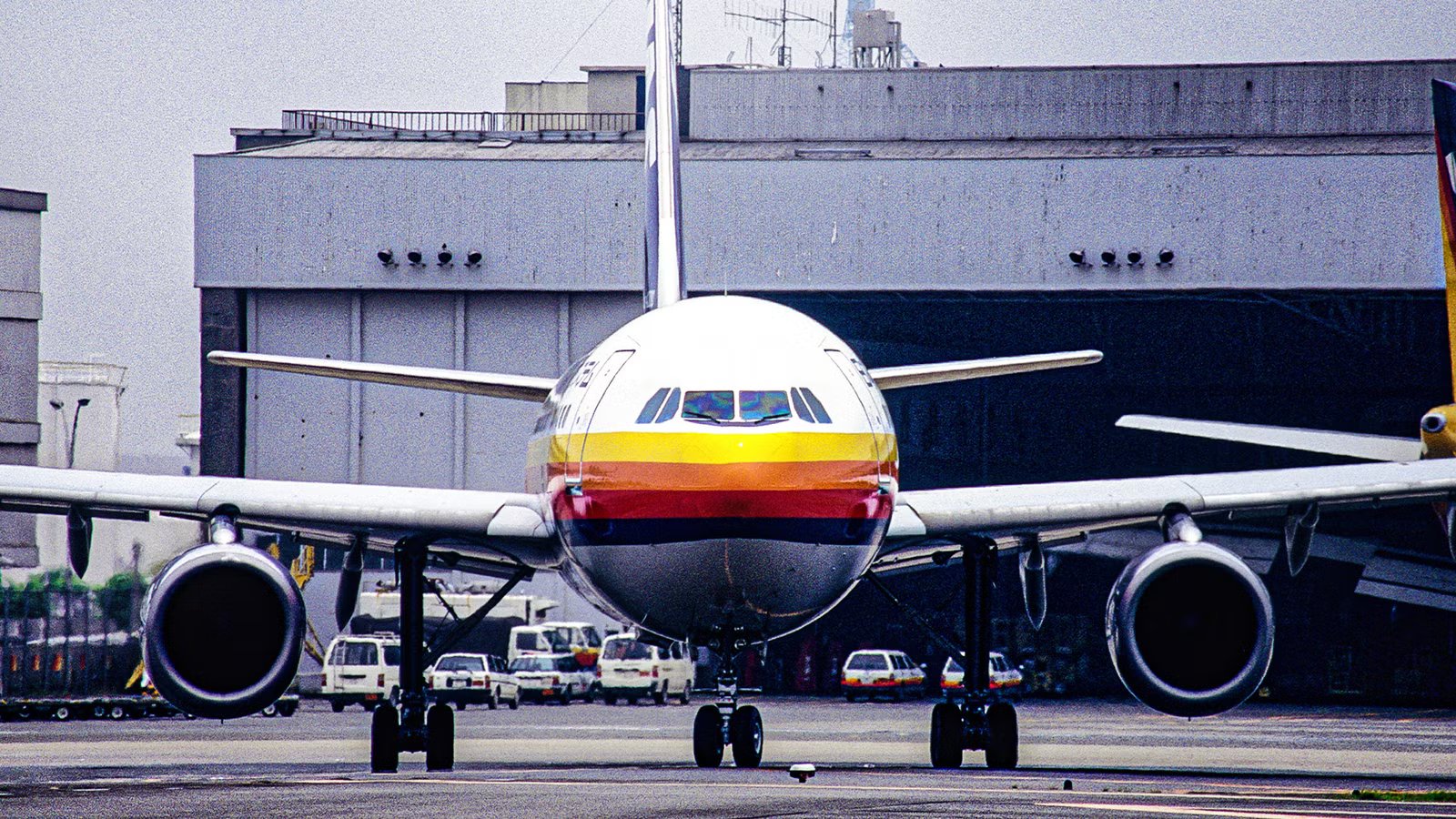
The Boeing 747 was the world’s first widebody, but it was the Airbus A300 that introduced the modern configuration for a widebody. The plane was innovative and efficient, but what was most striking about the A300 was that it only had two engines. At the time, jet engines were only just getting powerful enough to power large airliners like the A300, and restrictions on twinjets on overwater routes made them impractical on long-distance routes. However, twinjets eventually caught on.
But today, the Boeing 747 is still used and was produced until 2023, while subsequent airliners have been produced for decades. However, the passenger A300 was only built for 31 years, while the type has largely been retired from passenger service. The freighter version of the A300 is still widely used, but it’s extremely rare to find A300s operating passenger flights. It’s mainly flown by Iranian airlines today, which have no choice but to keep flying old planes due to sanctions on new planes.
The Rise Of The Airbus A300

The Boeing 747 revolutionized the airline industry by adding a second aisle on the inside, dramatically lowering per-seat costs. However, many airlines were concerned about their ability to fill the massive 747, and  American Airlines issued a request in the 1960s for a plane smaller than the 747 but with widebody economics. American ended up ordering the McDonnell Douglas DC-10 trijet, while Lockheed developed the similar L-1011 TriStar. Airbus also looked to capitalize on this demand with the A300.
The A300 was slightly smaller than the DC-10 and L-1011, but it competed in the same market space. However, despite the A300 having only two engines, Airbus was unproven. For the type’s first few years, it struggled to attract orders as airlines continued to favor the dominant American carriers. But in 1977, Airbus agreed to lease four of its A300s for six months to Eastern Air Lines at no cost, allowing the plane to prove itself. This was a genius move, as the A300 quickly proved to be 30% more efficient than the airline’s L-1011s.
Demand for the A300 grew immensely amid rising oil prices in the late 1970s, and the A300 was the first twinjet permitted to fly more than 60 minutes away from a diversion airport. Later A300s came with a two-person flight deck, and the plane became popular for short-to-medium range flights as well as transatlantic services. In total, Airbus sold 561 copies, more than either the DC-10 or L-1011, while American Airlines ended up ordering 35 examples of the A300-600R, the twinjet widebody that it had originally wanted in the 1960s.
Why The A300 Disappeared From Passenger Service

The A300 was efficient and economical when it came out, but it was always intended for short-distance trunk routes. At the time, widebodies were commonly used on flights within Europe, Asia, and North America, as narrowbody airliners were limited in range. Planes like the Boeing 727 could only fly up to 2,700 NM (5,000 km), making them impractical on missions like US transcontinental routes, while earlier long-range narrowbodies like the Boeing 707 were already outdated by the late 1970s.
But in 1983, Boeing introduced the 757, while in 1988, Airbus debuted the A320. These two planes were not only more efficient than aircraft like the 727, but also had more range. The 757 and A320 were both capable of crossing the continental United States, and they slowly started replacing widebodies on routes within their range. The DC-10 was fully retired from passenger service in 2014, while L-1011 passenger flights ended in 2008. The A300 is still used in commercial service by select airlines, but was largely gone by the 2010s.
Airbus A300 Variant | Range |
|---|---|
A300B4-200 | 2,900 NM (5,375 km) |
A300-600R | 4,050 NM (7,500 km) |
The market dried up for short-range widebodies by the 21st century, and A300s were mainly replaced by narrowbodies rather than another widebody. The A320 and A321 were particularly popular, as were the 737NG and 757. Similarly, the later Boeing 767-200 is also no longer widely used, as it was designed for short-range flights, while the 767-300ER remains in active use. This is because there isn’t a narrowbody in service that can fully replicate the 767-300ER’s capabilities.
It’s 2025, But Why Do Some Airlines Still Love The Airbus A340?
How one quadjet has stuck around in the era of twins.
The Economics Of Narrowbodies Versus Widebodies

Narrowbody airliners are far cheaper to operate than a widebody, but where widebodies win is with capability. Near the edge of their range, a narrowbody is constrained on how many passengers it can carry, but a widebody will have much higher capacity and will carry cargo as well. Within a narrowbody’s range, modern widebodies are overbuilt in comparison, but even a plane like the A300 is carrying a lot of structure. Routes like US transcontinental routes are now primarily flown by single-aisle planes.
Widebodies are still commonly used on routes within Asia, well within the range of modern narrowbodies, but this is because of the high demand for passengers and cargo. Business travelers tend to prefer having multiple flight options per day, but a widebody still works if demand exists, and a twin-aisle plane also offers more flexibility regarding onboard product. Between Singapore and Hong Kong, for example, Singapore Airlines could fly ten 737s, but it instead chooses to deploy multiple large widebodies.
But in addition to the economics of shorter routes, single-aisle planes run into issues on long-haul routes. On flights like transatlantic services, operating costs become extremely high due to the fuel burn and added crew, but planes like the A321XLR remain limited in revenue potential. A widebody is more expensive to operate, but an A350 may have 100 to 150 added seats compared to the A321XLR. When operating long-haul routes, this makes the widebody more appealing in most instances.
Catch what other flight trackers miss
Emergency squawks, holds, NOTAMs — live signals, no signup.
Open tracker
Catch what other flight trackers miss
Emergency squawks, holds, NOTAMs — live signals, no signup.
Open tracker
Why There Hasn’t Been A Replacement For The A300

What makes the A300 stand out compared to modern widebodies is its size. In most layouts, it will only seat between 225 and 250 passengers, whereas an A330 can seat close to 300 passengers in many cases. Across the board, widebodies have grown, as the A330, 777, and 787 are all larger than the A300, DC-10, or L-1011. There’s been speculation about the need for a new small widebody, similar in size to the A300 or Boeing 767, but airlines haven’t wanted it.
Airlines did operate small widebodies on long routes in the form of the Boeing 767-200ER, but they quickly began favoring the larger 767-300ER instead. The A330-800 and 787-8 are not selling, while the A330-200 became progressively obsolete as the A330-300 gained range. The fundamental issue with small widebodies is that they’re limited in revenue potential, which is also why narrowbodies are challenging to fly on costly long-haul routes. They’re cheap to fly, but simply don’t make enough money or leave money on the table.
Aircraft | Cabin Length | Typical Economy Layout | Sales |
|---|---|---|---|
Airbus A300-600 | 133 feet six inches (40.7 meters) | 2-4-2 | 313 |
Airbus A330-200 | 147 feet eight inches (45 meters) | 2-4-2 | 667 |
Airbus A330-300 | 165 feet three inches (50.36 meters) | 2-4-2 | 776 |
Airbus A330-800 | 147 feet eight inches (45 meters) | 2-4-2 | 12 |
Airbus A330-900 | 165 feet three inches (50.36 meters) | 2-4-2 | 477 |
Boeing 767-200ER | 111 feet four inches (33.9 meters) | 2-3-2 | 121 |
Boeing 767-300ER | 132 feet five inches (40.3 meters) | 2-3-2 | 583 |
Boeing 777-200ER | 144 feet (43.92 meters) | 3-4-3 | 422 |
Boeing 787-8 | 139 feet (42.3 meters) | 3-3-3 | 424 |
Boeing 787-9 | 158 feet nine inches (48.4 meters) | 3-3-3 | 1,465 |
McDonnell Douglas DC-10 | 120 feet five inches (36.7 meters) | 2-5-2 | 386 |
Lockheed L-1011 TriStar | 136 feet (41.4 meters) | 2-5-2 | 250 |
The Airbus A321XLR has sold reasonably well, but it’s also a derivative of a popular short-range narrowbody. Meanwhile,  Boeing discussed developing a new NMA (New Midsized Aircraft) in the 2010s, but struggled to build a large customer base, and then abandoned the project after the 737 MAX groundings due to financial pressures. Ultimately, the ‘Middle of Market‘ space is actually an awkward position for a new airliner, as it would be overbuilt for short flights, and wouldn’t make a lot of money on long flights with augmented crews and higher fuel costs.

Why The Airbus A300 Has Outlived The A310
The A330 outlived the A310 because it was a more versatile aircraft with a larger passenger and freighter niche.
Where The A300 Still Shines Today

Today, there are well over 100 Airbus A300s in service, and nearly all of them are freighters. FedEx Express operates 50, while UPS Airlines has 52. What’s more, neither has firm plans to fully retire these planes, with UPS Airlines having even invested in cockpit upgrades for its A300s to extend their useful service life. Cargo airlines tend to use their aircraft less than passenger airlines, which means that fuel efficiency is a smaller factor while planes accumulate cycles and hours more slowly.
The A300 has a high payload capacity relative to its weight, and it’s the smallest widebody flown by cargo airlines today. For FedEx and UPS, meanwhile, one of the A300’s most important attributes is its wingspan. At 147 feet one inch (44.84 meters), the A300 is narrower than other widebodies, which means it takes up less ramp space. FedEx and UPS have sized parking positions at their hubs around these planes, which makes replacing them a challenge. The Boeing 767-300F’s wingspan is only about nine feet (three meters) wider, but the 767-300F will soon be going out of production.
What will actually replace the A300 will likely be converted Boeing 767-300ERs, but for now, the planes work and still have plenty of life. As such, the A300 will continue to serve cargo airlines for years at major cargo operators, while smaller operators with limited cash may use the A300 even into the 2040s.