dailynewsnblog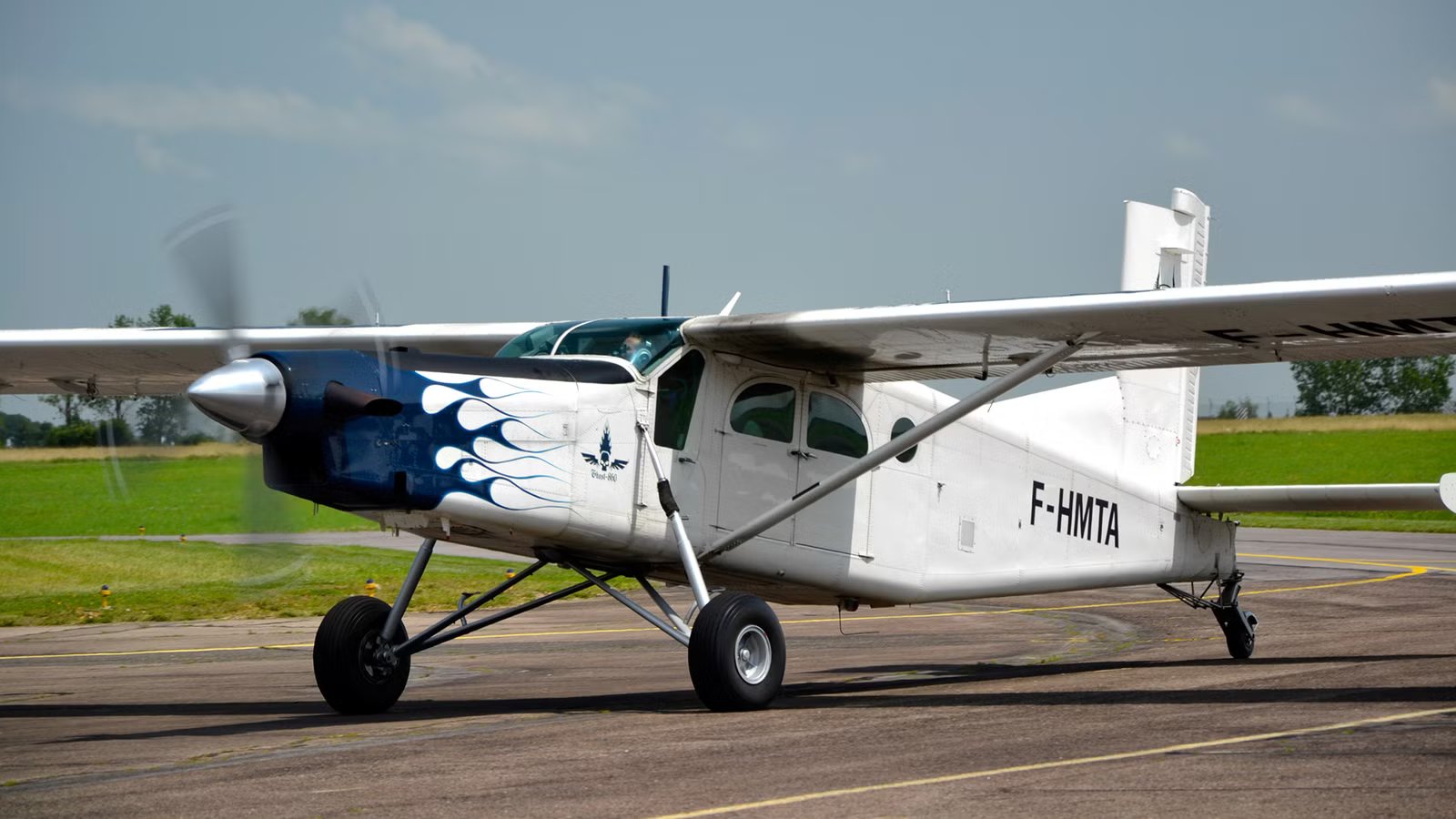
A Pilatus PC-6 operating a skydiving flight in France with 11 people onboard has crashed moments after departure from Nancy-Essey Airport (ENC). The tragic accident happened at around 11:00 AM local time, killing the pilot, five instructors and five jumpers. The cause of the plane crash has not been determined at this early stage, although eyewitnesses report the plane banking sharply just after takeoff before falling “almost vertically.”
It crashed on a bike path close to a residential and commercial area, with no reported injuries to anyone on the ground. However, authorities have said that if the crash had occurred a few yards further, there was a strong likelihood of ground casualties.
11 Dead In Skydiving Tragedy In France

The German-registered turboprop (D-FIPS) had a total of 11 people onboard, with authorities confirming there were no survivors. The aircraft was operated by a local skydiving club and was taking five first-jumpers, all of whom were reportedly nurses taking a skydiving trip as an initiation ritual. The five nurses were all doing tandem jumps, requiring the additional five instructors’ presence.
No cause of the crash has been given other than an unspecified failure aboard the aircraft. According to local authorities, the PC-6 had only just left Nancy-Essey Airport when it crashed roughly 250 meters beyond the runway threshold, with the wreckage ending up near two roads and a supermarket without striking any homes. French authorities, including the Bureau of Enquiry and Analysis for Civil Aviation Safety (BEA), have already launched a formal investigation into the crash. Yves Séguy, prefect of the Meurthe-et-Moselle region, said:
“Had it occurred just a few dozen meters away, the accident could have caused collateral casualties.”
About The Aircraft Involved

The PC-6 involved in this accident is a 35-year-old airframe (MSN 874) manufactured in 1991. Data from Aviation Safety Network states that the aircraft had been performing skydiving flights the same morning, touching down from its last flight at 10:53 AM. It then taxied to the apron before returning to the runway, attempting to take off at 10:58 AM.
Tracking data suggests the plane slightly veered to the left during takeoff, turning more sharply once it was airborne. The PC-6 is one of the most popular aircraft in the skydiving world, featuring short-takeoff-and-landing (STOL) capability to enable operations from smaller airfields.
Pilatus Porter History has more information on the history of D-FIPS. The aircraft has been under the same owner, Classic Wings GmbH, for the past 19 years, and has flown under the previous registrations HB-FKO and V5-ODH. For Sunday’s flight, the aircraft was being used by Nancy-Essey-based skydiving school Tandemotion Parachutisme. Although production of the PC-6 has ended, there remain approximately 300 airframes in service around the world today.
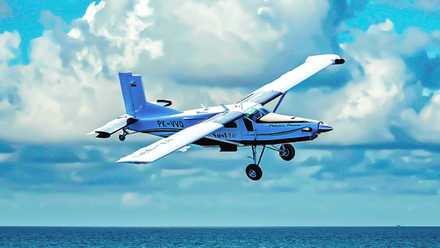
A Look At The Pilatus PC-6 Porter
The Pilatus PC-6 Porter was a very versatile aircraft, let’s have a look into how.
Second Skydiving Crash In Two Weeks

Earlier this month, a tragic skydiving crash in Missouri made headlines after 12 people died shortly after takeoff from Butler Memorial Airport (BUM) on June 14. The Pacific Aerospace 750XL turboprop also reportedly made a left turn shortly after departure, with authorities suggesting a possible loss of power during the initial climb.
The PC-6 was involved in another high-profile crash in Belgium in 2013, killing ten skydivers and one pilot after breaking apart just moments after takeoff near Namur. In the US, the National Transportation Safety Board (NTSB) has previously raised its concerns regarding oversight of skydiving operators, alleging lighter standards of inspection and training.
According to the United States Parachute Association (USPA), there were almost 3.5 million skydives in 2025 with 16 fatalities, leading to a fatality rate of 0.46 per 100,000 jumps. In terms of fatal aircraft accidents, there were zero recorded in 2025, with nine accidents leading to 26 fatalities from 2016 to 2025. The group adds that the vast majority of skydiving accidents are a result of human error, rather than equipment or aircraft failure.