dailynewsnblog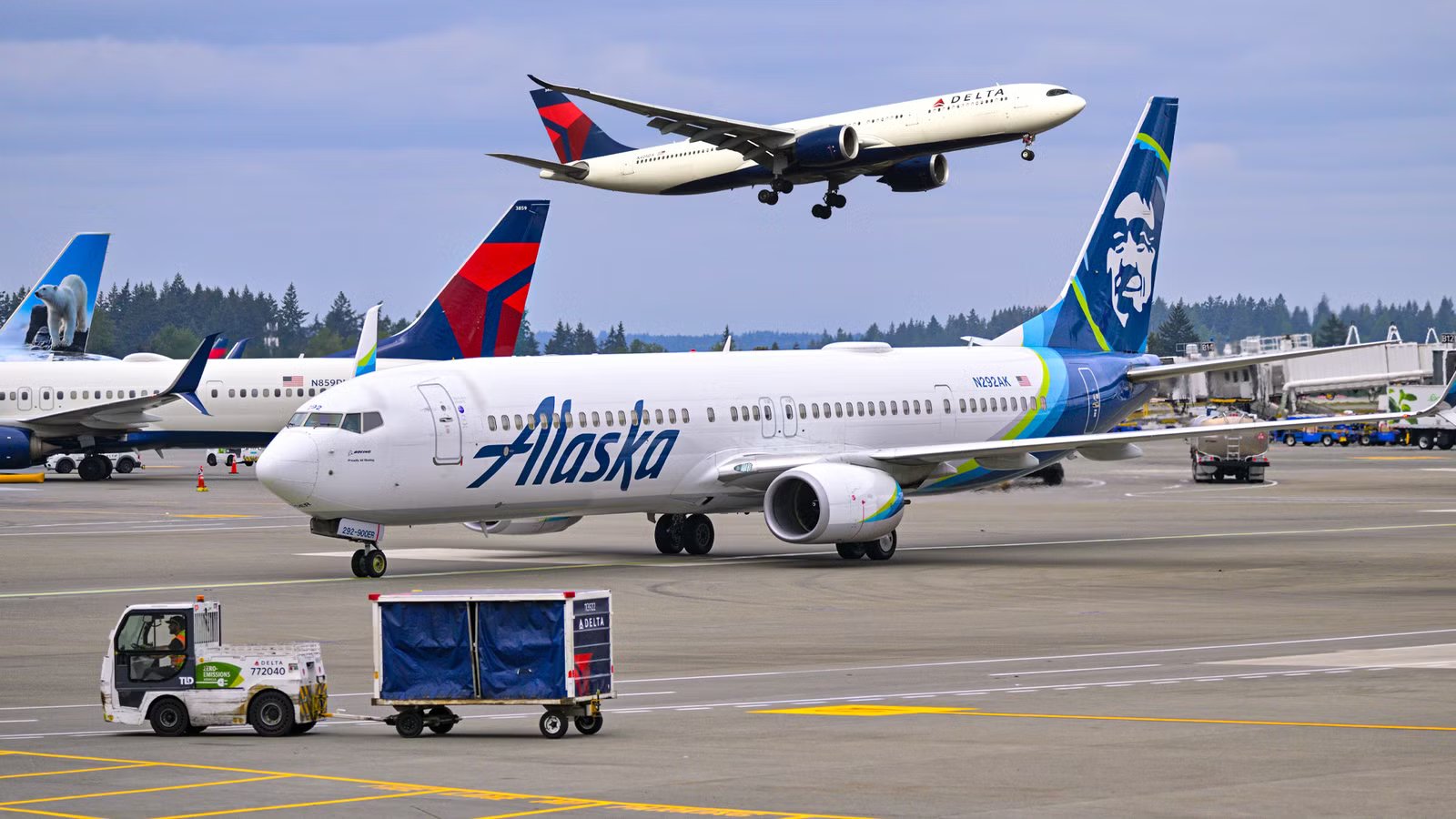
The competitive landscape in the US airline industry looked very different two decades ago. At the time,  Delta Air Lines was weaker on the US West Coast, but lacked the resources and funds to grow its operations. Seeking to expand the reach of its network, Delta signed a codesharing agreement with Alaska Airlines in 2004, permitting the two carriers to place their codes on each other’s flights and provide reciprocal frequent flyer benefits, with the agreement centered around Seattle.
Fast-forward to the 2020s, however, and these two airlines are anything but partners. Delta and Alaska still maintain a basic interline agreement, but this is typically only used by one or the other during irregular operations. The codesharing agreement was terminated in 2017, and Delta now continues to build its own operations out of Seattle as a competitor to Alaska. Meanwhile, Alaska Airlines is increasingly getting closer to American Airlines and has been a oneworld member for over five years.
The US Airline Industry In The 2000s

While today the airline industry in the United States is dominated by the ‘Big Three’ (American, Delta, United), the market was much more saturated 22 years ago. In addition to those names, the country was also home to Continental Airlines and Northwest Airlines, while US Airways would merge with America West in 2005. All of these airlines were smaller than the top carriers today, and their networks were more geographically fragmented. At the time, Delta was more heavily concentrated on the US East Coast rather than on the West Coast.
The agreement with Alaska Airlines gave Delta a much larger presence in the Pacific Northwest, an area that Delta largely abandoned pre-9/11 when it dismantled its transpacific hub in Portland. With the partnership, Alaska would feed Delta flights in other parts of the country, as well as long-haul services, while Delta would help fill Alaska’s planes. It was a genuine win-win for both airlines, and it also helped boost Delta’s market relevance in Seattle.
But in 2008, Delta merged with Northwest Airlines, creating the first of the three mega-airlines operating today. Northwest was a force to be reckoned with across the Pacific, primarily through its large intra-Asia operations out of its Tokyo-Narita hub. Upon the merger, Delta’s transpacific ambitions grew, but it found that the Tokyo hub was expensive to operate and had poor operating margins by the 2010s. Still, it aimed to keep a large presence across the Pacific, and Delta began looking for alternatives to the Tokyo hub.
The Seattle Build-Up In The 2010s

In its final years, Northwest had been the second-largest US airline across the Pacific, with United Airlines holding the top position in the market. United has long benefited from its fortress hub in San Francisco, which has massive local demand for travel to Asia and is well-located for connections. Delta lacked this type of hub, and while it does operate a hub out of Los Angeles, American and United also have equally-sized operations here. It’s an extremely competitive market where no airline holds a true advantage.
In 2012, Delta announced its intentions to begin growing its long-haul operations out of Seattle. With the Northwest merger, it had already inherited non-stops from Seattle to Beijing, Tokyo-Narita, and Osaka, with Shanghai and Tokyo-Haneda launched in 2013. Originally, it was still framed as being mutually beneficial, with Alaska Airlines providing much of the feed. But as Delta grew its network and fleet, it found that it would make more money by operating its own domestic flights out of Seattle, and began rapidly adding short-haul routes out of the airport.
In 2014, Delta officially declared Seattle as its West Coast gateway to serve the Pacific. That same year, the Atlanta-based carrier launched 18 new routes out of Seattle, including new services to Seoul and Hong Kong, as well as flights to London-Heathrow (routes to Paris and Amsterdam were already operating). Delta has continued to grow its Seattle network, standardizing on the Airbus A330-900 and A350-900 for long-haul routes in recent years, while formally closing the Narita hub in 2020.
Why Alaska Airlines Is Moving Toward Hub-Based Operations
More aircraft now means more flights to key markets from the airline’s busiest airports.
Alaska Airlines’ Moves In The 2010s

Seattle is a rapidly growing market with high business demand, making its appeal to airlines broader than just its location for connections. It was a bold and lucrative move for Delta to begin growing Seattle as a hub, and it calls itself ‘Seattle’s global carrier’. However, Alaska Airlines has been headquartered in Seattle since the 1950s, and is a massive player with long-running roots. Despite Delta’s strong efforts to build up its presence, Alaska still holds about a 50% market share, whereas Delta carries less than half as many passengers out of Seattle.
Catch what other flight trackers miss
Emergency squawks, holds, NOTAMs — live signals, no signup.
Open tracker
Catch what other flight trackers miss
Emergency squawks, holds, NOTAMs — live signals, no signup.
Open tracker
Despite  Alaska Airlines having historically lacked widebody airliners, it built up a significant network of airline partners, allowing the airline to have international range even if it doesn’t fly to Europe or Asia on its own. This keeps flyers loyal to the airline and ensures continued relevance in Seattle, especially with Delta’s international expansion. When Delta commenced flights between Seattle and London, Alaska doubled mileage earnings on British Airways flights to keep passengers away from Delta.
Delta Air Lines Long-Haul Destinations Served From Seattle | |
|---|---|
Amsterdam Schiphol Airport (AMS) | Seoul Incheon International Airport (ICN) |
Josep Tarradellas Barcelona–El Prat Airport (BCN) | Shanghai Pudong International Airport (PVG) |
London Heathrow Airport (LHR) | Taipei Taoyuan International Airport (TPE) |
Paris Charles de Gaulle Airport (CDG) | Tokyo Haneda Airport (HND) |
Rome Fiumicino Leonardo da Vinci International Airport (FCO) |
In December 2016, just months before the codeshare agreement ended, Alaska Airlines acquired Virgin America. With the deal came a significantly expanded network in California, and Alaska has spent the last decade refining this network, drawing down operations in San Francisco while building up its hub in San Diego. At the same time, the airline has been adding more flights out of Seattle and expanding Portland, positioning the latter as a connections-driven hub as Seattle becomes increasingly constrained.
Developments In The 2020s

Alaska’s partner airline network has always been a strong point of differentiation, and in February 2020, Alaska signed a codeshare agreement with American Airlines. The two had already been growing closer over the past decade, and the partnership also came with an announcement that American would start flying from Seattle to Bengaluru and London-Heathrow. Later that year, American also announced intentions to fly from Seattle to Shanghai, although this route and the Seattle-to-Bengaluru route never actually launched, while the London route ended in 2023.
Despite American cutting its Seattle long-haul network, it continues to increase ties with Alaska, which formally joined the  oneworld alliance in 2021. With this, American has an alliance member in an area of the country where its network is weak, while Alaska has much greater relevance in the rest of the US. With Alaska still holding the number one position in Seattle, it’s as competitive as ever, while Delta has been struggling to take domestic market share away from its rival.
While Delta continues to invest heavily in Seattle, opening a SkyClub as well as a DeltaOne Lounge in 2025, the hub is routinely reported as being the carrier’s weakest. Alaska Airlines is an established player with deep roots in the market, and its overall network remains larger than Delta’s, even if the carrier has historically not operated long-distance flights. But in 2023, Alaska announced plans to acquire Hawaiian Airlines, a move that represents the biggest threat to Delta’s Seattle ambitions yet.
One Year On: Was Alaska Airlines’ Merger With Hawaiian Worth It?
There have already been some notable improvements in the first year of integration.
Alaska Airlines’ Long-Haul Expansion

With the Hawaiian acquisition came a substantial long-haul operation centered around Honolulu using Airbus A330-200s, along with orders for the Boeing 787-9. Starting long-distance flights can be an expensive and difficult process for an airline that has never done it before, but Alaska now effectively operates long-distance flights. Upon the completion of the deal, Alaska launched new services from Seattle to Tokyo-Narita and Seoul, initially using Hawaiian-branded A330s and 787s.
Long-term, the plan is to concentrate all A330s in Honolulu for Hawaiian-branded flights, while all of the 787s have been repainted into the Alaska livery. All of Hawaiian’s orders for the 787 have also been transferred to Alaska, and the carrier has subsequently ordered more Dreamliners, aiming to fly 12 787-9s as well as five 787-10s. The carrier launched Rome as its first Alaska-branded 787 flight in April 2026, and it now serves London-Heathrow with the 787 as well as Iceland with the Boeing 737 MAX 8.
Alaska Airlines Long-Haul Destinations | Launch Date | Aircraft |
|---|---|---|
Tokyo Narita International Airport (NRT) | May 12, 2025 | Airbus A330-200 (Hawaiian) |
Seoul Incheon International Airport (ICN) | September 12, 2025 | Boeing 787-9 |
Rome Fiumicino Leonardo da Vinci International Airport (FCO) | April 28, 2026 | Boeing 787-9 |
London Heathrow Airport (LHR) | May 21, 2026 | Boeing 787-9 |
Keflavik International Airport (KEF) | May 28, 2026 | Boeing 737 MAX 8 |
Delta Air Lines responded to Alaska’s Rome announcement by starting its own Seattle-to-Rome services, while also adding a new route to Barcelona. Across the Pacific, Delta has also recently added flights to Taipei from Seattle and is reported to be eying Singapore in the future, although it’s unclear if a Singapore route will launch from Seattle or Los Angeles. By 2030, Alaska aims to operate at least 12 long-distance routes, further solidifying its position as Seattle’s largest airline.