dailynewsnblog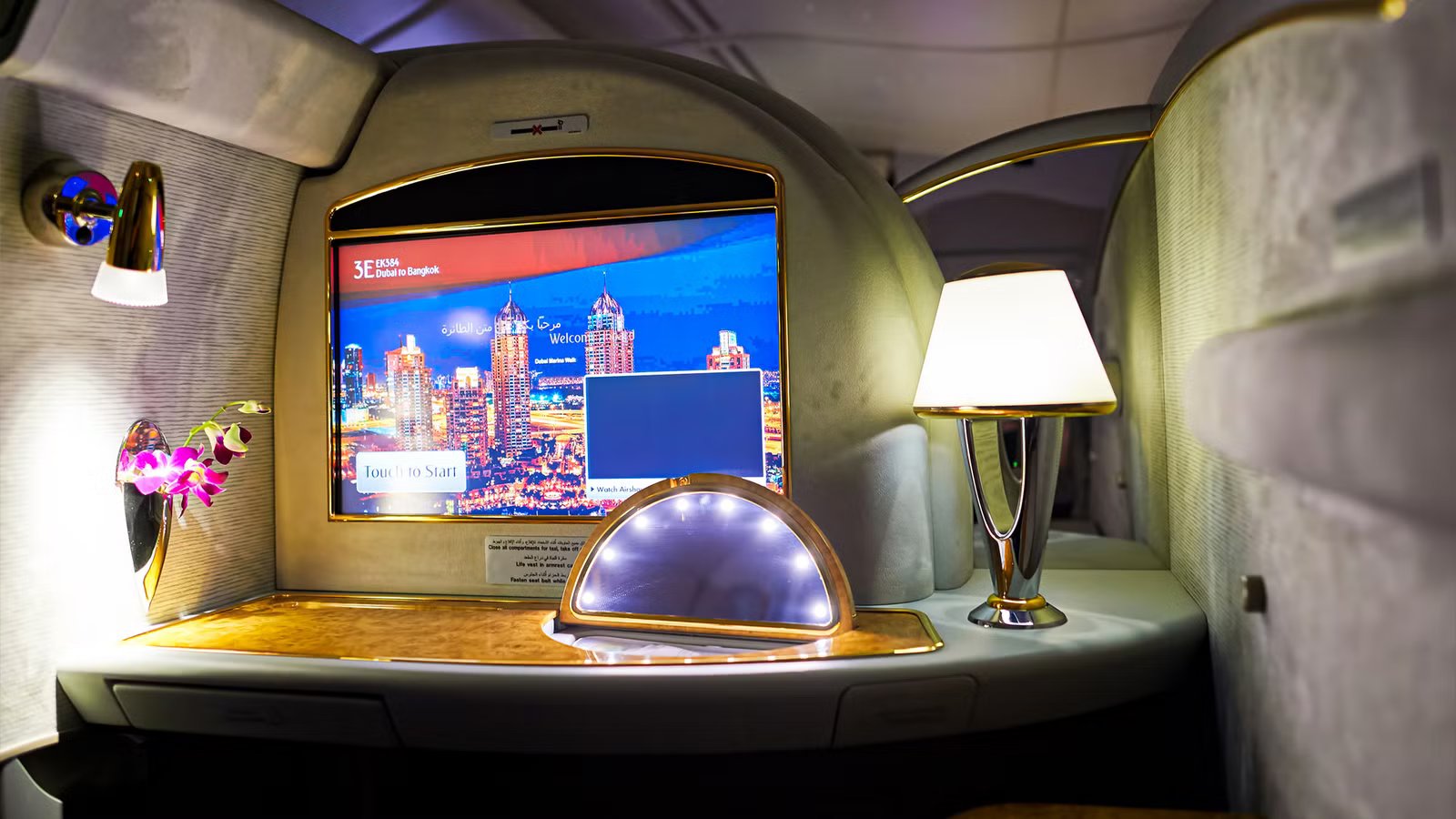
Luxury aviation is often discussed through the language of excess. Airlines promote larger suites, better food, more expensive amenities, and increasingly exclusive experiences.  Emirates has long occupied the center of that conversation because its Airbus A380 first class remains one of the most recognizable premium products in commercial aviation. Yet the most interesting aspect of the airline’s 2026 first class experience is not unlimited caviar, premium champagne, or designer amenity kits. It is the fact that even in one of the world’s most luxurious airline cabins, the most valuable onboard resource remains tightly controlled.
Every first class passenger on the Emirates A380 receives access to the carrier’s signature Shower Spa. However, each guest is allocated a 30-minute reservation that includes only five minutes of running water. The water can be paused and restarted to maximize usage, but the allocation itself remains fixed. That unusual balance between indulgence and limitation illustrates a broader reality about modern premium travel. Airlines can offer extraordinary luxury, but they must still operate within the physical constraints of an aircraft flying at 40,000 feet.
The 2026 version of Emirates A380 first class builds on that philosophy. The carrier has introduced enhanced wellness products through partnerships with Bulgari and Byredo, refined suite interiors, improved charging technology, and continued investment in premium dining and onboard comfort. Rather than completely redesigning the experience, Emirates has focused on upgrading the details that frequent first class travelers notice most.
Emirates Introduced A Dual-Brand Luxury Amenity Strategy

One of the most significant changes for 2026 is Emirates’ expanded approach to onboard amenities. Instead of relying on a single luxury partner, the airline now combines products from Bulgari and Byredo to create a more comprehensive wellness offering. The Bulgari amenity kits remain central to the experience. These kits feature products inspired by Bulgari’s Le Gemme fragrance collection, including scents such as Orom and Tygar. The partnership reflects Emirates’ long-standing strategy of associating its premium cabins with globally recognized luxury brands rather than developing proprietary products. According to Bulgari and Emirates announcements, the kits are designed specifically for first class travelers and incorporate fragrance concepts drawn from the jeweler’s high-end perfume portfolio.
Alongside the Bulgari kits, Emirates has expanded its relationship with Byredo. First class passengers now receive a dedicated skincare collection that includes facial toner, eye cream, sleep oil, and pillow mist. This addition reflects a broader trend across premium aviation, where airlines increasingly emphasize wellness rather than focusing exclusively on traditional luxury markers such as alcohol and fine dining. The inclusion of sleep-focused products is particularly notable because long-haul travelers increasingly prioritize quality of rest. Airlines have invested heavily in mattresses, bedding, lighting systems, and cabin humidity management. Emirates’ Byredo collection complements those efforts by addressing passenger comfort through skincare and relaxation products.
The dual-brand approach also differentiates Emirates from many competitors. Rather than asking a single luxury partner to cover every aspect of the onboard experience, the airline has selected specialized brands for distinct purposes. Bulgari provides prestige and fragrance expertise, while Byredo contributes a wellness-focused skincare offering designed specifically for long-haul travel.
Shower Spa Remains The Most Exclusive Feature

No discussion of Emirates A380 first class is complete without examining the onboard Shower Spa. The concept sounds simple. First class passengers can take a shower during their flight. The execution, however, reveals the engineering complexity required to make such a feature practical at cruising altitude.
Each passenger receives a 30-minute appointment in one of the aircraft’s dedicated shower suites. Within that time slot, travelers have access to changing facilities, mirrors, grooming areas, and luxury amenities. The actual running water allocation is limited to five minutes.
That limitation often surprises first-time passengers because it appears inconsistent with the broader image of unlimited luxury. In reality, the restriction reflects the physical realities of aircraft operations. Fresh water storage, waste management systems, and aircraft weight considerations all impose constraints that cannot be eliminated through premium pricing.
Catch what other flight trackers miss
Emergency squawks, holds, NOTAMs — live signals, no signup.
Open tracker
Catch what other flight trackers miss
Emergency squawks, holds, NOTAMs — live signals, no signup.
Open tracker
Emirates addresses this challenge through a metered system that allows passengers to pause and restart water flow. As a result, the five-minute allocation can be stretched across a much longer grooming routine. Travelers can wet their hair, stop the water while shampooing, and then restart it when rinsing becomes necessary. The shower suites are stocked with premium VOYA products featuring Revitalise and Tranquillity fragrance collections derived from organic seaweed formulations. Emirates has emphasized the sustainability and wellness credentials of these products, which align with the broader focus on passenger wellbeing throughout the first class experience. What makes the Shower Spa remarkable is not simply the presence of a shower. It is the fact that Emirates has successfully transformed a tightly rationed resource into one of the airline’s most memorable luxury experiences.
Here’s What Emirates Actually Spends Per Passenger On Its Airbus A380 First Class Amenities
Emirates First Class: The Economics Behind the $10,000+ Fares
Dining Continues To Define The Emirates First Class Experience

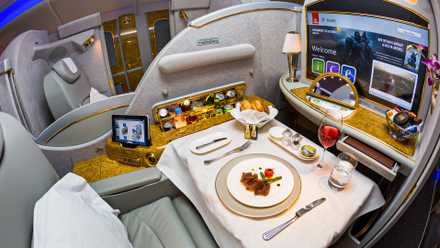
Although the Shower Spa attracts significant attention, onboard dining remains one of the strongest reasons travelers book Emirates first class. The airline continues to offer unlimited caviar service, which has become a defining element of the premium experience. Unlike many carriers that serve a single caviar course, Emirates allows passengers to request additional portions throughout the flight. The presentation includes traditional accompaniments and mother-of-pearl spoons, which are commonly used because metal utensils can affect the flavor profile of caviar.
The beverage program remains equally ambitious. Emirates continues serving Dom Pérignon champagne in first class, with passengers able to enjoy multiple servings throughout the journey. The airline has invested heavily in premium wine and champagne programs for years, recognizing that affluent travelers increasingly evaluate airline products through culinary standards comparable to luxury hotels and fine dining establishments. Importantly, Emirates structures its dining service around flexibility rather than rigid meal schedules. Passengers can generally dine on demand, allowing them to align meals with personal preferences rather than operational timetables. This approach is particularly valuable on ultra-long-haul routes where travelers may wish to adapt meal timing to sleep schedules or destination time zones.
The airline’s focus on premium food also supports its broader brand strategy. Many first class products now offer enclosed suites and lie-flat beds. Dining, therefore, becomes one of the most important opportunities for differentiation. Emirates leverages that reality through premium ingredients, elaborate presentation, and a service model designed to feel closer to a luxury restaurant than a traditional airline meal service. As competitors continue improving hard products such as seats and suites, culinary offerings increasingly influence passenger perceptions of value. Emirates appears committed to maintaining leadership in that area.
Continuous Refinement

The most visible cabin improvements for 2026 involve enhancements to the first class suites themselves. The Airbus A380 first class cabin continues to feature 14 private suites arranged in a 1-2-1 configuration on the upper deck. While the overall layout remains unchanged, Emirates has introduced refinements intended to improve both comfort and functionality. According to reports detailing the updated cabin design, suite space has increased by approximately 25% compared with earlier iterations. Additional room may not sound dramatic on paper, but small dimensional increases can significantly affect passenger comfort during long-haul flights.
The carrier has also refreshed interior aesthetics using color palettes inspired by the Arabian desert. Rather than relying on the highly ornate design language that characterized some earlier Emirates interiors, the updated suites incorporate warmer and more contemporary tones. These visual changes reflect broader trends in luxury design. Premium travelers increasingly associate sophistication with restraint rather than excess. Airlines, hotels, and luxury brands have responded by emphasizing materials, textures, and lighting rather than decorative complexity.
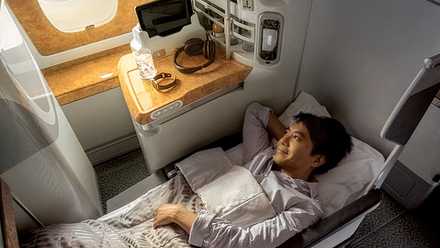
Storage areas have been refined to improve usability, while seating and sleeping surfaces continue to support fully flat-bed functionality. Privacy remains a central priority, with high suite walls helping create a secluded environment despite the shared cabin setting. The result is not a revolutionary redesign. Instead, Emirates has pursued targeted improvements that modernize the experience while preserving the characteristics that have made the A380 first class cabin successful for years.
Here’s How Much A Business Class Ticket On Emirates’ Airbus A380 Actually Costs In 2026
The carrier is a major player in the premium market.
Technology Improvements Reflect Changing Passenger Expectations

The final category of meaningful change involves technology integration. Luxury travelers increasingly expect seamless connectivity between personal devices and onboard environments. As smartphones, tablets, smartwatches, and wireless accessories become essential travel tools, charging infrastructure has evolved from a convenience into a necessity.
For 2026, Emirates has enhanced wireless charging capabilities throughout the first class cabin. This upgrade addresses one of the most common frustrations experienced by premium travelers, namely the need to manage multiple charging cables during long journeys. The enhancement may seem modest compared with showers or premium dining, yet it reflects an important shift in passenger priorities. Modern luxury increasingly emphasizes convenience and friction reduction rather than visible extravagance alone. The technology improvements also complement Emirates’ broader investment in cabin functionality. Travelers spending 14 or more hours onboard often use multiple devices for work, entertainment, communication, and productivity. Reliable charging solutions, therefore, contribute directly to overall satisfaction.
Beyond charging infrastructure, Emirates continues to support a premium digital experience through its inflight entertainment ecosystem and connectivity offerings. These systems remain essential because even the most luxurious physical environment cannot compensate for poor technological performance during long-haul travel. As a result, the airline’s technology investments should be viewed as part of the overall luxury proposition rather than as isolated upgrades. Today’s premium passengers expect both comfort and connectivity, and Emirates appears determined to deliver both simultaneously.
Still Relevant In 2026

The Emirates Airbus A380 first class experience entering 2026 is not defined by a single dramatic innovation. Instead, it reflects a series of carefully targeted refinements that strengthen an already established premium product. The airline’s new dual-brand amenity strategy combines Bulgari prestige with Byredo wellness products. Enhanced suite designs provide additional space and updated aesthetics inspired by the Arabian desert. Wireless charging improvements address practical traveler needs, while unlimited caviar and Dom Pérignon continue reinforcing Emirates’ reputation for culinary luxury.
The result is a first class product that remains among the industry’s most distinctive offerings. While competitors continue introducing new suites and premium services, Emirates has focused on refining the details that shape the passenger journey from boarding to arrival. For travelers seeking one of commercial aviation’s most comprehensive luxury experiences, the Airbus A380 first class cabin remains a benchmark against which many rivals are still measured.