dailynewsnblog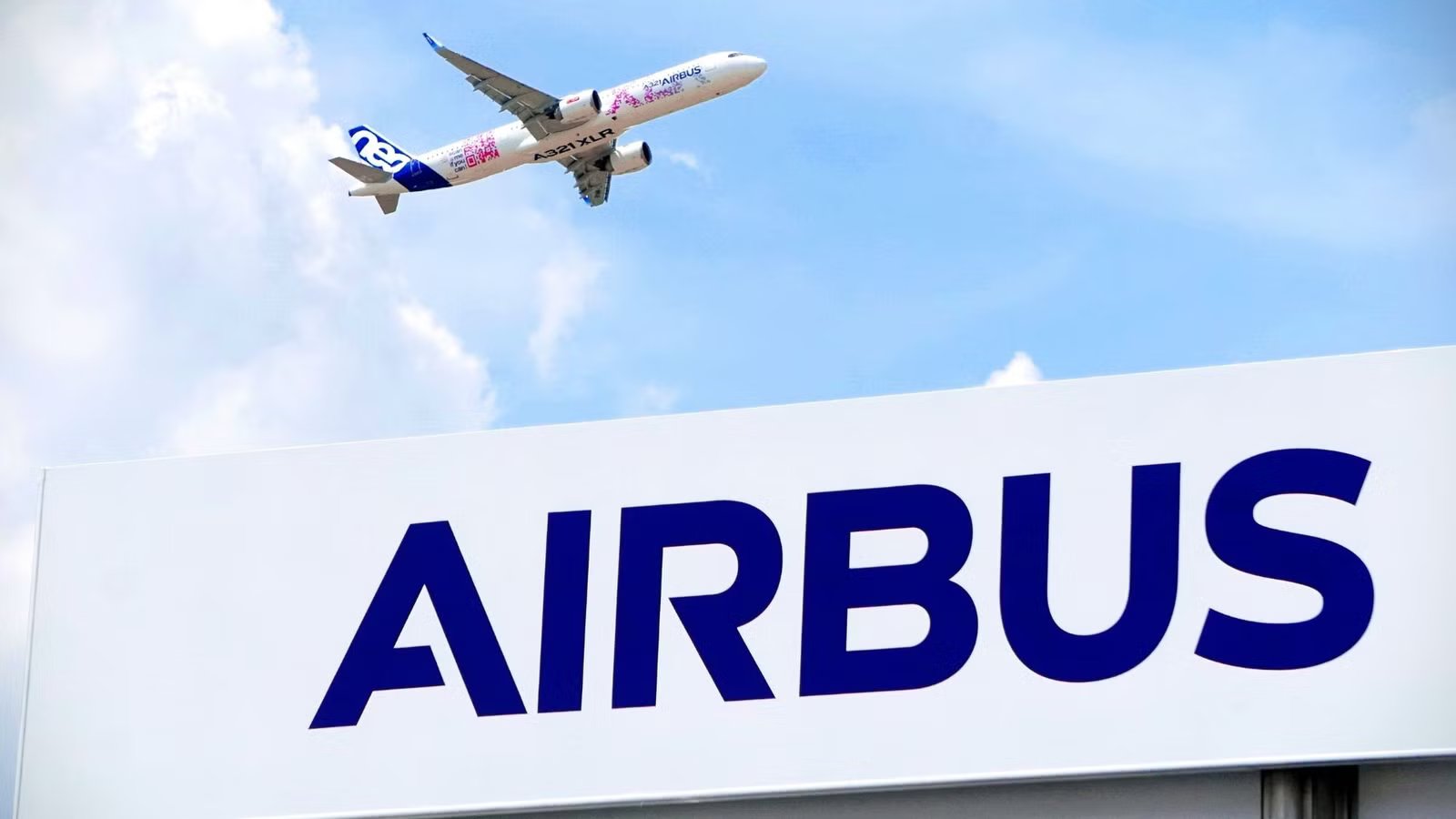
Airbus has reached another major industrial milestone with the launch of its 10th global A320 Family Final Assembly Line (FAL), adding new production capacity at its Toulouse manufacturing center in southern France. The new line sits inside the Jean-Luc Lagardère complex, a facility originally constructed for the Airbus A380 program. Rather than building an entirely new plant, Airbus chose to transform one of its most recognizable sites into a next-generation narrowbody production hub, reflecting how rapidly the commercial aircraft market has evolved.
The opening is important not simply because it adds another production line, but because it highlights a wider transition taking place across aviation. The A380 represented an era built around massive aircraft transporting large numbers of passengers between major hubs such as London Heathrow (LHR), Dubai International (DXB), Singapore Changi (SIN), and Frankfurt (FRA). Today’s airline strategies increasingly prioritize fuel efficiency, route flexibility, and point-to-point operations. Aircraft from the A320 Family, particularly larger variants such as the Airbus A321neo and long-range A321XLR, have become central to those plans. Airbus expects the expanded industrial network to support its objective of producing between 70 and 75 A320 Family aircraft each month by the end of 2027.
Transforming The Former Home Of The A380

The Jean-Luc Lagardère site carries substantial historical significance within Airbus operations. Built between 2002 and 2004 specifically for the A380 project, the complex spans approximately 124 acres (50 hectares) and was designed around the enormous dimensions of the double-deck aircraft. The central hangar itself stretches roughly 1,608 feet long (490 m), measures approximately 820 feet wide (250 meters), and rises around 151 feet high (46 meters). Airbus has previously noted that the internal area of the structure is comparable to roughly 500 tennis courts.
When Airbus ended A380 production, the future of the giant facility became uncertain. The superjumbo program represented one of the most ambitious commercial aviation projects ever attempted and required specialized infrastructure built around the world’s largest passenger aircraft. As market preferences shifted toward smaller and more versatile aircraft, Airbus faced the challenge of determining how to maximize the value of such a large industrial site.
The conversion involved considerably more than replacing one aircraft type with another. Production systems needed to be redesigned to support a much faster manufacturing tempo. Narrowbody aircraft are produced in significantly higher numbers than widebody jets, meaning assembly stations, logistics pathways, component movements, and manufacturing technologies may require substantial reconfiguration. The transformed facility now prioritizes production efficiency and operational flexibility. Airbus CEO Guillaume Faury highlighted the site’s importance, stating:
“This facility provides the necessary flexibility and capacity to meet strong market demand, especially for the A321neo, and supports our production ramp-up trajectory towards 75 A320 Family aircraft a month. Operating in coordination with our assembly sites in Hamburg, Mobile and Tianjin, this advanced line is part of our commitment to deliver aircraft of the highest quality standards to our customers globally.”
Airbus Builds A Global A320 Family Manufacturing Network

The Toulouse expansion also completes a broader strategy that Airbus has pursued for several years. The company now operates ten A320 Family assembly lines spread across four manufacturing locations worldwide: four in Hamburg, Germany; two in Toulouse, France; two in Mobile, Alabama; and two in Tianjin, China. This industrial network enables Airbus to distribute production while maintaining closer access to important customer markets.
Airbus has steadily increased production capabilities beyond Europe over the last decade. The Mobile facility has become increasingly important for aircraft deliveries in North America, while Tianjin plays a key role in serving one of the largest aviation markets in the world. Expanding assembly operations across several regions provides Airbus with greater flexibility and helps reduce dependence on any single location.
Employment growth also forms a major part of the expansion strategy. The first modernized Toulouse A320 line employed roughly 700 workers, while the addition of the second line is expected to increase the total workforce at the Lagardère A320 operation to nearly 1,500 employees. Although automation continues to expand across aerospace manufacturing, modern aircraft production remains highly dependent on specialized labor and technical expertise.
Slow Start: Why Airbus Deliveries Are Already Trailing Last Year’s Output
The European planemaker is struggling with supply chain constraints.
Why Narrowbody Aircraft Continue To Dominate

The Airbus A320 Family has become one of the most successful aircraft programs in aviation history. More than 12,000 aircraft have been delivered across the family, making it one of the best-selling commercial jet programs ever developed. Airlines continue ordering these aircraft because they provide lower operating costs, improved fuel efficiency, and the ability to serve a broad range of route structures.
Among the current variants, the A321neo has become one of Airbus’s most important products. Larger than the standard A320 and capable of carrying additional passengers, the aircraft offers airlines an attractive balance between capacity and efficiency. Extended-range models such as the A321XLR are further changing network planning by allowing carriers to introduce direct services that previously required larger widebody aircraft or intermediate stops.
Even as Airbus increases manufacturing capacity, challenges remain across the industry. Supply chain disruptions continue affecting aerospace production, with engine availability creating delays for manufacturers and airline customers. Airbus executives have previously acknowledged continuing shortages involving engine deliveries, occasionally resulting in completed airframes awaiting powerplants before entering service. Despite these pressures, demand for next-generation narrowbody aircraft remains exceptionally strong, transforming the former A380 facility into one of Airbus’s most significant industrial developments in recent years.