dailynewsnblog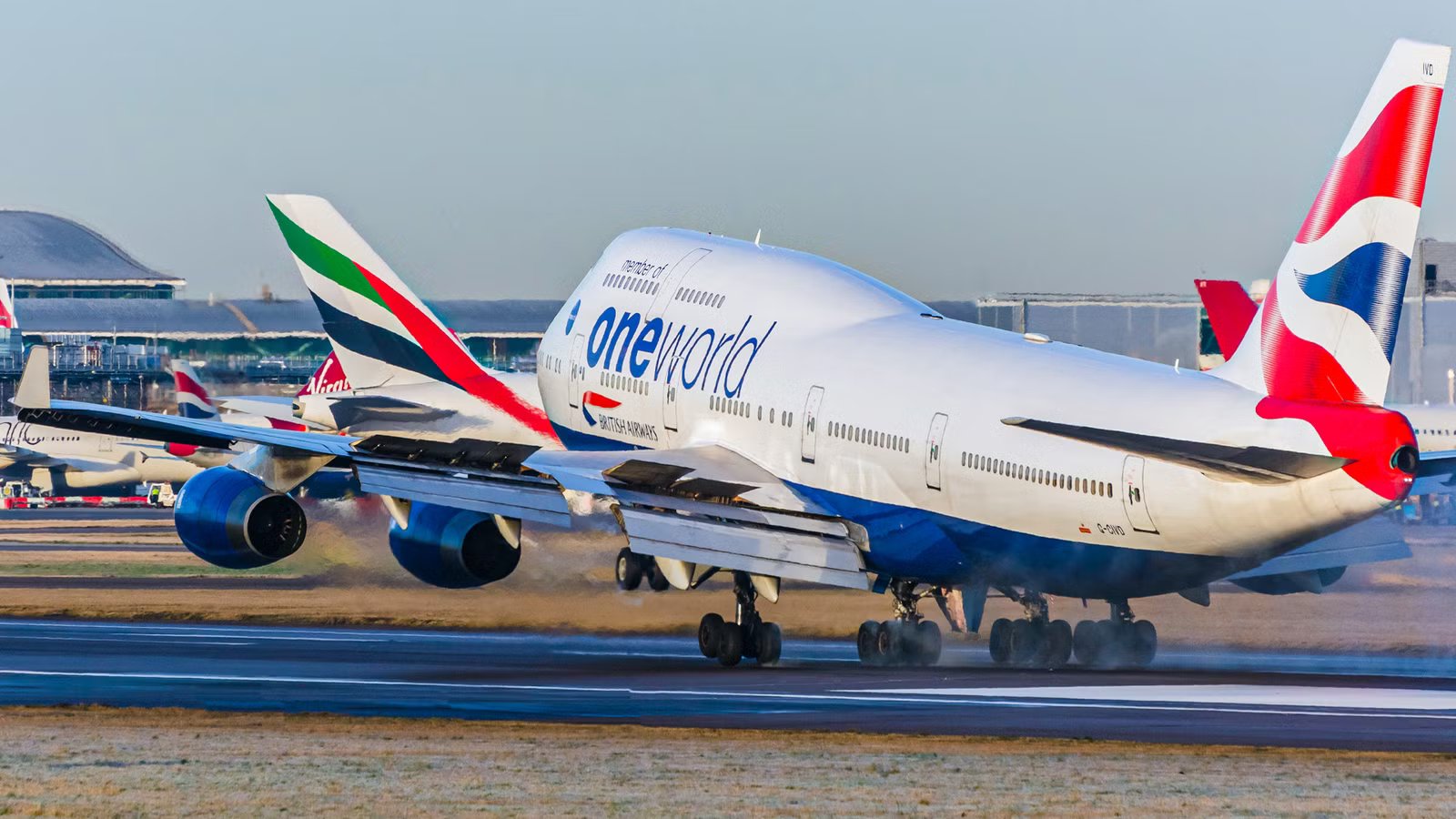
After  British Airways grounded its final 31 Boeing 747-400 aircraft in 2020, the move felt like a permanent farewell to a bygone era of aviation. Parked on the baking tarmac of desert and regional storage facilities like Victorville, California, and Teruel, Spain, the quadjets were widely dismissed as fuel dinosaurs. The airline rapidly shifted its long-haul strategy toward twin-engine alternatives like the Boeing 787 and Airbus A350, which boast an impressive 25% fuel efficiency advantage per seat over the aging four-engine Queen of the Skies. On paper, the decision was a textbook operational upgrade driven by modern environmental and financial realities.
Yet, a massive post-pandemic widebody capacity crunch has completely disrupted aircraft delivery timelines, leaving network planners starving for premium seats on slot-constrained routes. This brings up an intriguing case study in airline fleet economics: could it actually be viable for British Airways to bring back the 747?
A Lack Of Fresh Planes

Global aviation networks are facing a structural crisis rooted in unprecedented manufacturing delays, resulting in fleet strategies being turned upside down. The two dominant aerospace manufacturers  Boeing and Airbus have struggled to hit production targets, leaving international carriers short of hundreds of projected twin-engine long-haul airframes. Fleet renewal strategies that looked perfect on paper just four years ago have now stalled, meaning that fleet planners have to find a way to make do, and fast.
This inventory squeeze hits hardest at slot-constrained international hubs where expanding flight frequencies is impossible due to government caps on daily movements. Growth in these premium markets turns to massive aircraft that can pack immense passenger volume into a single departure window. When promised deliveries of modern twin-aisle jets face multi-year delays, airlines find themselves trapped below their natural market demand, leaving billions in potential revenue entirely on the table.
Consequently, the underlying economics of aircraft deployment are being completely rewritten by this artificial scarcity. Traditional models that heavily favored the day-to-day efficiency of newer jets are being challenged by the immediate necessity of putting seats in the air. At this present moment, global demand is high enough to fill every square inch of premium cabin space, meaning the cost of operating a less efficient airframe becomes a secondary concern compared to the catastrophic revenue loss of canceling a scheduled route entirely.
Not A Simple Reactivation

Bringing a quadjet back from long-term desert storage is an intricate industrial resurrection rather than a standard pre-flight inspection. The 31 aircraft retired by British Airways were split among dry, high-altitude locations like Victorville, California, and Teruel, Spain, where low humidity levels actively prevent structural rust. Despite these ideal storage conditions, the reality of leaving complex machinery idle for six years means that reversing the preservation process requires thousands of engineering hours per tail. It is not as simple as powering up the engines and taking to the skies.
Catch what other flight trackers miss
Emergency squawks, holds, NOTAMs — live signals, no signup.
Open tracker
Catch what other flight trackers miss
Emergency squawks, holds, NOTAMs — live signals, no signup.
Open tracker
To get these airframes back to normal service, they will first need an exhaustive maintenance overhaul known as a heavy D-check, which involves completely stripping down the aircraft structure to verify metallic integrity. Every rubber seal must be stripped, complex hydraulic lines must be flushed, and the landing gear assemblies must be completely overhauled. Where the 747 makes this task particularly laborious is checking the four separate Rolls-Royce RB211 engines on each aircraft, all of which require intensive boring, internal scoping, and component recertification before receiving clearance to fly.
Critically, the operational window to recoup this massive upfront investment is tight. At least based on current timelines, the global aircraft supply chain backlog is unlikely to ease any time soon and may take over ten years to clear. Despite this, any un-retired quadjet has a strictly limited lifespan to justify its return, so airlines will need to confidently calculate whether the immediate ticket sales can completely wipe out this eight-figure maintenance bill before modern twin-jets finally arrive to displace the older metal again.
Desert storage minimizes surface rust, but prolonged fluid stagnation means a complete replacement of all synthetic internal components is needed during a heavy maintenance check.
Back From The Boneyard: How Retired Boeing 747s Became One Of America’s Most Sought-After Freighters
The iconic passenger aircraft has been given a second lease of life.
Bringing Back A Classic Layout

If the 747 were to return, then its reactivation would rely entirely on the unique interior architecture of British Airways’ legacy fleet. The airline historically operated a select group of its quadjets in an ultra-premium layout colloquially known as the Super High-J configuration. A standard layout can easily accommodate over 400 travelers, whereas this specialized design strictly capped total capacity at just 275 passengers, sacrificing raw seat count to prioritize high-margin premium space.
British Airways allocated massive amounts of main and upper deck cabin floor space to Club World business class berths, deliberately optimized for high-yield corporate travel. The reason for this inclusion is that on highly competitive transatlantic financial trunks, corporate travelers routinely pay ten times the price of a standard economy ticket, completely shifting the focus from minimizing costs to maximizing passenger yield.
If corporate ticket pricing is elevated, the financial returns from an extra 30 business class suites quickly eclipse the baseline operating costs of the entire flight. Having such a dense aggregation of premium seating, therefore, allows the aircraft to generate immense revenue on a single flight leg, neutralizing the standard metrics used to judge fleet efficiency. On slot-constrained premium routes, this configuration turns the footprint of the airplane into a highly concentrated revenue engine that modern, balanced twin-jets are not well designed for.
Spare Cash For Fuel

A standard 747-400 cruising at its optimal altitude consumes approximately 3,800 gallons (14,384 liters) of jet fuel per hour. By comparison, a modern twin-engine aircraft like the Airbus A350-1000 handles a similar payload while burning roughly 2,037 gallons (7,711 liters) over the exact same timeframe. This stark discrepancy creates a baseline fuel penalty of 1,163 gallons (4,402 liters) for every single flight hour. That today would be deemed entirely unacceptable for airlines, making the possibility of a 747 return stand much further away.
When extended across a standard transatlantic network, these hourly variances translate into immense financial challenges. For an eight-hour flight leg connecting  London Heathrow (LHR) to
  New York (JFK), the older quadjet would need an additional 9,304 gallons (35,220 liters) of fuel over its modern counterparts. Assuming a volatile jet fuel cost averaging $2.50 per gallon ($0.66 per liter), the legacy airframe incurs a direct cash penalty of $23,260 per crossing, or $46,520 for a single round-trip rotation.
To absorb this baseline penalty, the cabin would need to generate enough supplementary revenue to clear the extra fuel bill before contributing a single dollar to flight crew salaries, landing fees, or catering. Under standard commercial conditions, this massive burn rate makes the aircraft financially unviable. However, when a widespread capacity shortage leaves premium ticket prices floating at record highs, the equation alters significantly, making the absolute fuel burn a manageable line item if every business class suite is booked at full fare.
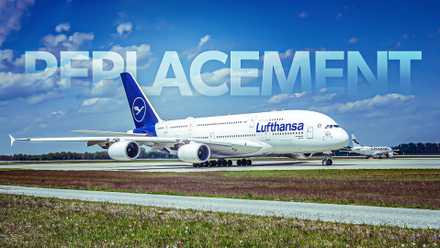
The Aircraft Set To Replace The World’s Largest Commercial Jet
A new era is dawning as the superjumbo fades away, but which aircraft will replace it?
Is There Actually An Upside?

With everything considered, the main tipping point for the fleet revival rests on the balance between capital expenditure and daily operating costs, especially as acquiring or leasing a new twin-engine widebody needs a staggering capital commitment. A factory-new long-haul aircraft carries a market lease rate floating between $1.2 million and $1.5 million every single month. This fixed capital cost must be paid regardless of whether the aircraft is flying passengers or sitting idle in a maintenance hangar, placing immense pressure on airline balance sheets.
Conversely, the stored 747-400 fleet carries a book value of absolute zero. These airframes are entirely paid off and fully depreciated, so the operator airline faces no monthly lease payments or financing charges. The structural advantage here gives network planners a massive head start, saving roughly $1.3 million per month in capital costs per tail. Then, the saved capital can be reallocated directly to cover the steep operational penalties at the fuel pump.
It goes against the grain of traditional legacy carrier fleet strategies, but using a much older aircraft provides many benefits despite the inherent drawbacks. These older airliners tend to find themselves with startup or smaller airlines in terms of cash flow, but they also end up becoming prized options for cargo operators. For British Airways, with 18 orders and 24 options for the Boeing 777X, which remains on a waitlist, capacity needs to be met in these times of uncertainty.
It Could Actually Work

Un-retiring the Queen of the Skies is not a decision driven by fleet nostalgia, but more a necessity in times of real uncertainty. The numbers reveal that under standard industry conditions, the efficiency gap of the quadjet creates an insurmountable financial hurdle. However, when manufacturer delays create an unprecedented supply bottleneck, standard industry conditions disappear. The financial math proves that a fully depreciated, zero-ownership airframe can out-earn a modern leased twin, as long as there is a prolonged widebody shortage, capped airport slots, and robust corporate ticket yields.
Bringing back the 86-seat Super High-J layout on high-density corporate routes like London to New York, an airline can easily take advantage of the immense revenue potential of premium floor space. The massive financial bump from filling dozens of business class suites easily absorbs the $23,260 fuel penalty per crossing, while the absence of a $1.3 million monthly lease fee provides a massive financial cushion.
Ultimately, this strategy works best as a short-term patch rather than a permanent fleet strategy. The high upfront reactivation costs, combined with intensive engineering requirements, mean that an airline needs a guaranteed operational window of at least two to three years to comfortably amortize the investment. The long-term future of global aviation undeniably belongs to high-efficiency twin-jets; the raw economics demonstrate that during an extreme capacity squeeze, old metal can still deliver exceptional financial returns.