dailynewsnblog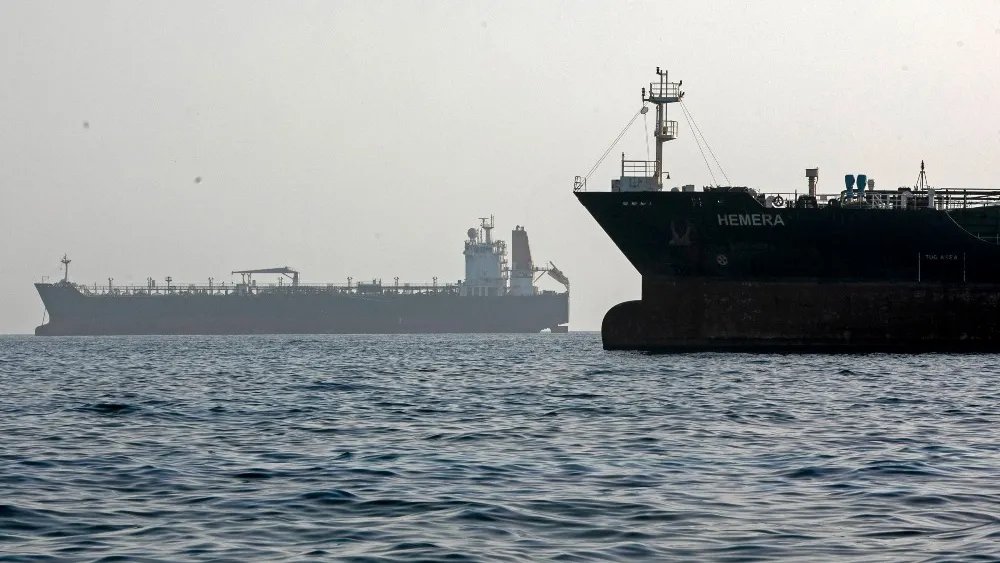
President Donald Trump claimed Monday that ships are beginning to freely transit the Strait of Hormuz after he and Vice President JD Vance virtually signed a framework agreement to put an end to the protracted conflict in Iran over the weekend.
“Ships are starting to move, many loaded up with Oil, out of the Strait of Hormuz. They are going along the Southern ‘Highway,’ which is totally safe, secure, and pristine,” he said, referring to an American-devised, non-Iran-sanctioned route that takes ships closer to the coast of Oman than the traditional path through the Strait.
The full details of the agreement, which was signed by Parliament Speaker Mohammad Bagher Ghalibaf on the Iranian side, have not been released publicly, and the U.S. and Iran have given conflicting statements about the full contents of the deal.
The agreement contains a commitment to reopen the Strait of Hormuz and to begin a 60-day round of negotiations about Iran’s nuclear future. At issue, however, is Iran’s continued insistence on collecting fees or tolls from ships transiting the critical thoroughfare for 20 percent of the world’s oil.
Trump contends that the waterway will be fully open without tolls by Friday, when a formal signing is expected to take place in Switzerland. The president also said the full text of the agreement will likely be made available to the public at that time.
In response to the agreement Israeli Prime Minister Benjamin Netanyahu said he and the American president “do not always see eye to eye,” and he indicated that Israel will not withdraw from Gaza, southern Lebanon or Syria.
Other U.S. trade partners, however, were buoyed by the development.
“I welcome the agreement reached between the US and Iran, following sustained diplomatic efforts by several partners. The priority now is its swift and full implementation by all parties,” European Commission President Ursula von der Leyen wrote on X.
“This agreement should allow for the immediate reopening of the Strait of Hormuz. Freedom of navigation must be restored toll-free,” she added. “This is essential for regional stability and the global economy.”
Speaking ahead of the G7 Summit in France on Monday, United Kingdom Prime Minister Keir Starmer said, “We have long called for de-escalation, and it is vital that all parties seize this opportunity to secure stability in the region and restore freedom of navigation in the Strait of Hormuz, which in turn will ease the economic pressures felt by people here in the United Kingdom and around the world.”
Trump arrived in Évian-les-Bains on Monday morning for the G7, where securing a lasting truce to end the Middle East conflict is expected to be a high-priority topic of discussion.
Oil prices saw immediate relief upon the news of the deal, hitting their lowest level since early March. Brent crude fell by 4.76 percent to $83.17 per barrel, while the price of West Texas Intermediate or WTI, the U.S. benchmark for crude oil, contracted by 4.87 percent to $80.75 per barrel.
Markets were elevated as a result, with the Dow rising 0.92 percent, or 469 points, on Monday, and closing at a record-setting 51,671. The S&P 500 rose 1.65 percent, or 122.8 basis points, while the Nasdaq Composite rose 3.07 percent, or 795 points, putting both about 1 percent to 1.5 percent closer from record highs.
Wall Street’s jubilation may be premature, as many analysts and experts believe that it will be some time before shipping through the Strait of Hormuz returns to normal levels.
Ship tracking service MarineTraffic wrote on X Monday that traffic through the Strait “remains uneven” though vessel activity is continuous. According to the group’s tracking data, 29 verified vessel crossings took place between June 10-14, with activity concentrated on June 11-12. Directional flows were imbalanced; 23 crossings moved from west-to-east, while six went the opposite direction.
The group said route transparency is a “key issue,” as 18 of the 29 crossings were characterized as “Dark or Unknown Route.”
Conflicting reports also exist about the ability of ships to travel safely through the Strait. For example, late Monday night, Iranian news outlet Mehr reported that three explosions were heard to the south of Qeshm Island in the Strait of Hormuz area. The report suggested that the actions were taken to “manage traffic in the strait.”