dailynewsnblog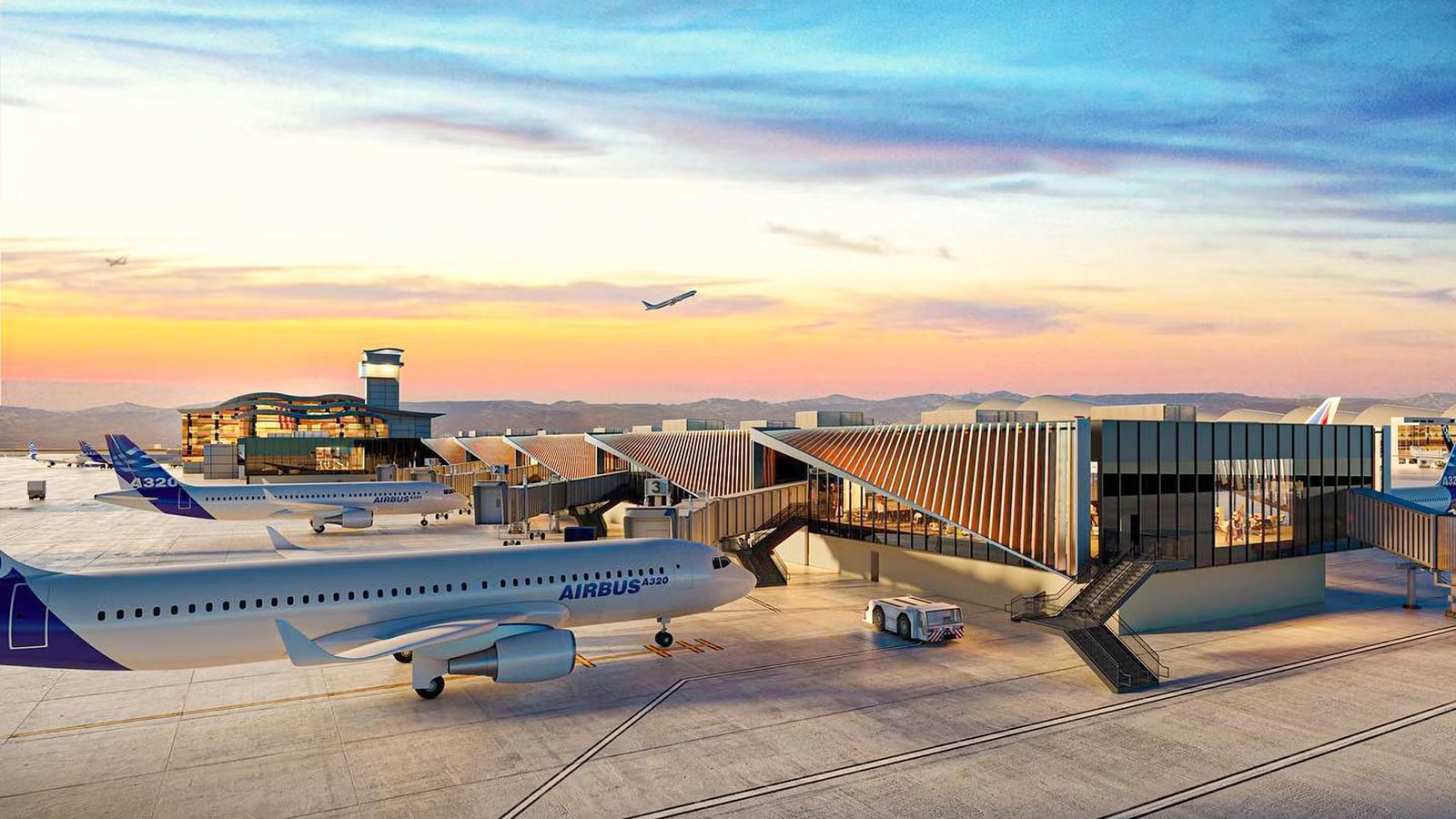
Modern airport expansion projects typically dictate a difficult choice between severe operational chaos and multi-year project delays. At international hubs, expanding terminals without paralyzing existing aircraft movements is very difficult to achieve.  Los Angeles International Airport (LAX) recently demonstrated its own alternative to this dilemma with the late 2025 opening of its $421 million Midfield Satellite Concourse South. The project officially hosted its first commercial flight on September 30, 2025, before welcoming the public on October 21, 2025. The expansion added eight narrowbody gates and 150,000 square feet (13,935 square meters) of terminal space as a direct extension of the West Gates at the Tom Bradley International Terminal.
The reason as to why there has been an aggressive race against the clock is to prepare for upcoming massive international events. As the airport prepares to expand its operational limits for the 2026 FIFA World Cup and the 2028 Olympic and Paralympic Games, traditional building timelines are simply non-viable. Part of a broader $30 billion Capital Improvement Program, the new facility utilized a groundbreaking Offsite Construction and Relocation technique. The structure was created in nine distinct modules at a remote yard located over a mile away, meaning the gridlock of active taxiways could be bypassed entirely. Let us look closer at how this logistical feat was accomplished.
Why Conventional Construction Stalled At LAX

Expanding gate infrastructure within the central terminal area of a primary global gateway as busy as Los Angeles is really an existential logistical challenge. Introducing heavy machinery, concrete mixing trucks, and massive structural steel components directly onto active ramps typically triggers catastrophic ripple effects across flight schedules. For an airport managing hundreds of thousands of annual aircraft movements, standard construction cordons present an unacceptable risk to daily operations.
Traditional construction methods necessitate shutting down vital taxiways and closing existing gates for extended periods, directly starving airlines of critical capacity and gate revenue. At an asset-constrained facility like Los Angeles International Airport, the surrounding tarmac space is so intensely utilized that finding physical room for a conventional construction staging area is practically impossible. Every square foot of concrete must remain dedicated to moving aircraft efficiently to maintain network integrity.
Consequently, project planners realized that attempting a standard stick-built terminal onsite would result in prohibitive cost overruns and unacceptable operational constraints. The necessity of keeping the adjacent international terminal fully active forced a total departure from established building dogmas. To deliver the essential narrowbody gate capacity required for upcoming athletic events without disrupting daily traffic, the airport needed an entirely detached fabrication strategy.
Engineering Infrastructure In A Parking Lot

The solution manifested as a highly sophisticated industrial experiment located far from the normal passenger journey. Rather than assembling the new facility gate by gate at the terminal core, engineers established a remote landside fabrication yard more than a mile away. This approach essentially transformed a massive, underutilized parking area into a highly controlled manufacturing assembly line.
Within this specialized offsite facility, construction crews managed to build the concourse superstructure as nine independent, fully enclosed modular blocks. Each massive piece measured approximately 140 feet by 80 feet (43 meters by 24 meters). Operating in an unrestricted landside environment allowed workers to execute their tasks with maximum efficiency, completely free from the strict security screenings and background checks that slow down airside labor forces.
Modular Section Metric | Imperial Dimension Standard | Metric Dimension Equivalence | Structural Production Volume |
Individual Module Footprint | 140 feet by 80 feet | 43 meters by 24 meters | Nine total independent segments |
Total Facility Real Estate | 150,000 square feet | 13,935 square meters | Two-story narrowbody extension |
Offsite Fabrication Distance | Over 1.00 mile away | Over 1.60 km away | Detached landside parking facility |
Building in a remote lot also eliminated the constant safety hazards associated with operating tall cranes in close proximity to moving commercial jets. The modular strategy ensured that the heavy structural assembly could progress uninterrupted 24 hours a day. While the steel frames took shape miles away, specialized site preparation teams at the terminal core focused entirely on preparing the final utilities and pouring the concrete foundations in parallel.
The Massive US Airport Expansions That Will Transform Air Travel
Several of the country’s largest airports are currently undergoing significant overhauls.
Midnight Airside Logistics

Completing the offsite assembly process led directly to the most critical and visually spectacular phase of the entire engineering timeline. Moving nine separate completed terminal sections from a remote parking lot to the active core required an unprecedented logistical operation. This relocation effort had to take place during narrow nocturnal windows when airfield traffic reached its absolute lowest density.
Technicians utilized specialized Self-Propelled Modular Transporters to lift and carry the immense structures, some of which weighed almost 1,000 tons (907 metric tons) each. These multi-wheeled, hydraulically synchronized vehicles carefully moved the building blocks over a transit distance of 1.5 to 1.75 miles (2.4 to 2.8 km). Crawling at a highly controlled speed of just 1.5 mph (2.4 km/h), the massive convoys safely navigated active taxiways to reach the final terminal destination.
To protect the underlying airport infrastructure and subterranean utility lines from the crushing weight of the modules, engineers constructed temporary reinforcement paths across the airfield. Each segment was precisely steered into position over the pre-poured foundations and carefully lowered onto permanent structural columns. Amazingly, this midnight assembly method compressed a process that typically takes months into a series of highly synchronized weekend deployments.
Completing With Exceptional Speed

The successful execution of the offsite relocation process highlights the profound time-saving advantages of modern modular architecture. Through breaking away from sequential construction schedules, the project team managed to compress the traditional master timeline rather substantially. This efficiency was absolutely critical given the immovable deadlines imposed by upcoming global sports events.
Many commercial building methods often require that vertical steel framing and interior fit-outs can only commence after the foundational concrete has completely cured onsite. While this is often common practice, it is not a mandate, and engineers on this enabled subterranean excavation and superstructure fabrication to occur at the exact same time. While utility lines were being buried at the terminal site, interior finishes and mechanical systems were already being installed inside the modules a mile away.
The parallel workflow dramatically minimized the total construction footprint on the active airfield, shaving vital months off the schedule. Also, the streamlined process reduced the risk of weather-related delays and optimized labor coordination, utilizing a local workforce that comprised more than 30% of the total construction team. The rapid delivery of these eight narrowbody gates serves as a definitive case study in industrial efficiency for the broader aviation sector.

Here’s How The World’s Busiest Airport Is Expanding Even More
Huge development projects are ensuring ATL has the infrastructure to stay at the front of the pack.
Modular Seams With High-End Design

Naturally, the modular approach has had its fair share of skepticism, especially in terms of aesthetics. Skeptics of prefabricated architecture frequently argue that modular utility comes at the direct expense of aesthetic elegance and passenger comfort. Overcoming this visual stigma requires an incredibly high level of architectural ingenuity and precise interior craftsmanship in order to make sure it doesn’t end up looking like a temporary terminal.
The design team at Woods Bagot resolved this aesthetic challenge by drawing heavy inspiration from mid-century California modernism to create a highly unified passenger environment. Once the nine independent structural units were permanently anchored to the airfield foundations, technicians meticulously sealed the construction seams with continuous interior finishes. High-end terrazzo flooring, warm timber paneling, and expansive view corridors completely obscure the building’s segmented origins from departing travelers.
Looking beyond its premium interior cosmetics, the facility integrates highly advanced environmental engineering systems to optimize energy performance. The building utilizes an innovative exterior brise soleil passive cooling system designed to significantly lower solar heat gain across the glass facade. Having this specialized solar shading framework reduces the terminal’s reliance on heavy air conditioning systems, helping the project successfully target a strict LEED Silver sustainability certification.
How LAX Is Reshaping Congested Global Gateways

The operational debut of the Midfield Satellite Concourse South directly coincides with extensive live testing of the airport’s automated people mover system. The dual infrastructure rollout marks a massive step forward in the facility’s multi-billion-dollar modernization scheme. Synchronizing these major projects ensures the gateway can fluidly process intense waves of international transit, especially as global athletic events draw near.
The resounding success of the offsite construction and relocation strategy at Los Angeles International Airport establishes an entirely new landscape for major American aviation hubs. Similar hybrid modular expansions are already gaining traction at highly congested facilities like  Hartsfield-Jackson Atlanta International Airport (ATL), showing that not only LAX sees offsite prefabrication as a scalable industry solution. It allows spatial subtraction and rapid capacity generation to occur without leaving airlines with no choice but to forfeit vital daily gate revenue.
Ultimately, this modular breakthrough shifts the baseline for future airport terminal design across the globe. A 150,000-square-foot (13,935 square meters) premium concourse can be built landside and rolled into place, meaning that the project eliminates the traditional risks of airfield construction gridlock. As space-constrained hubs face mounting traffic pressures, can this prefabricated approach adapt at the speed of modern travel demand?
Catch what other trackers miss
Emergency squawks, holds, NOTAMs — live signals, no signup.
Open tracker
Catch what other trackers miss
Emergency squawks, holds, NOTAMs — live signals, no signup.
Open tracker