dailynewsnblog
Long before modern ultra-long-range twin-engine airframes like the Airbus A321XLR dominated global networks or even existed at all, airlines had to rely on radical structural modifications to connect thin, high-yield city pairs separated by massive distances. This guide examines the history, engineering, and operational legacy of the Boeing 747SP, a shortened widebody that defied traditional jumbo economics to conquer exceptionally restrictive airfields and how one of its customers, Qantas, extracted the incredible potential of this forgotten classic.
Wellington Airport in New Zealand has long been famous among flight crews for its severe terrain, intense microclimates, and a notoriously truncated runway. During the late twentieth century, the short runway length blocked traditional four-engine jumbo jets from serving the capital city, threatening to isolate the political hub from high-capacity global corridors. To manage the critical trans-Tasman gap to Australia without sacrificing passenger volume, Qantas turned to a highly specialized engineering variant designed by Boeing. By operating a pair of uniquely shortened 747s, the Australian flag carrier successfully mastered Wellington’s operational constraints, establishing a legendary chapter in regional aviation history.
The Tasman Dilemma

Operating high-capacity international services into New Zealand’s capital city presented a severe obstacle for network planners throughout the mid-twentieth century. The runway at Wellington, tightly hemmed in by water on both ends, measured less than 6,000 feet (1,829 meters) in length. This short distance created an impenetrable operational barrier for early widebody airframes, which required much longer stretches of concrete to accelerate and lift off safely at high weights.
Traditional heavy aircraft like the Boeing 747-200B were completely locked out of the market due to their massive structural weight and standard takeoff field length requirements. Had a standard jumbo attempted to depart Wellington with a viable passenger and fuel payload, it would have faced severe safety margin violations under engine-out scenarios. Consequently, airlines were forced to serve the capital primarily with smaller, shorter-range narrowbody aircraft, which severely limited passenger capacity and drove up seat-mile costs on the competitive trans-Tasman trunk routes.
The capacity constraints became increasingly problematic as business and political travel between Sydney and Wellington surged. Qantas urgently required an aircraft that could deliver the low seat-mile economics of a widebody cabin while conforming to the strict braking and acceleration limitations of the short runway; they found that in the 747SP.
The Structural Subtraction

 Boeing initially conceived the 747SP, or special performance variant, in the early 1970s to address airlines seeking to operate long and thin intercontinental routes. To achieve the necessary flight characteristics without developing completely new powerplants, the design team chose a path of aggressive structural subtraction. Boeing yielded a highly distinct, stubby appearance that masked an incredibly optimized power-to-weight ratio behind it.
Engineers achieved a massive weight reduction of 45,000 to 50,000 pounds (20,411 to 22,679 kg) compared to the standard 747-200B by shortening the airframe. The structural redesign sliced approximately 47 feet (14.3 meters) out of the main fuselage, removing entire sections forward and aft of the wing structure. It reduced the overall length of the aircraft to 184 feet nine inches (56.31 meters), all the while maintaining the full classic wingspan of 195 feet eight inches (59.64 meters).
Airframe Parameter | Boeing 747-200B | Special Performance (747SP) | Net Structural Variance |
Overall Fuselage Length | 231 feet 10 inches (70.66 meters) | 184 feet 9 inches (56.31 meters) | Shortened by ~47 feet (14.3 meters) |
Total Wingspan Profile | 195 feet 8 inches (59.64 meters) | 195 feet 8 inches (59.64 meters) | Identical wing structure maintained |
Empty Structural Mass | Baseline fleet weight | Reduced by 45,000 to 50,000 lb (20,411 to 22,679 kg) | Saved up to 50,000 lb (22,679 kg) of dead weight |
Shedding tens of thousands of pounds of empty structural mass completely naturally altered the performance parameters of the airframe. With less dead weight to lift, the aircraft could maximize its fuel load or utilize much shorter runways than its larger siblings. This severe weight reduction was precisely the mechanical breakthrough Qantas needed to safely introduce a widebody flagship to the short runway at Wellington.
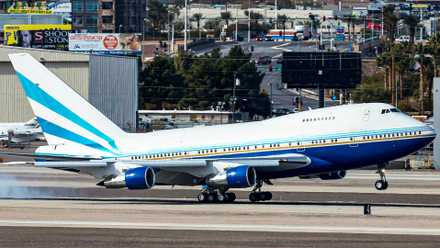
Why The Boeing 747SP’s Ultra-Long-Range Fuselage Design Will Be Nearly Impossible To Replicate In 2026
The Boeing 747SP remains one of the most unique aircraft in commercial aviation history.
Single-Slotted Flaps And Towering Tail Fins

Shortening the main fuselage by 47 feet (14.3 meters) introduced serious aerodynamic complications that required immediate engineering solutions. Removing large sections of the body significantly reduced the aerodynamic power of the tail, threatening directional stability during low-speed flight regimes. To restore proper control authority, aerodynamicists had to completely redesign the trailing edge and vertical surfaces.
Boeing compensated for the shorter fuselage by installing a towering vertical stabilizer that stood 65 feet ten inches (20.06 meters) tall, noticeably larger than the standard tail fin used on classic jumbos. Additionally, the complex, heavy triple-slotted trailing-edge flaps seen on standard variants were replaced with highly efficient, single-slotted flaps. These changes eliminated large underwing fairings, further reducing drag and structural weight while optimizing low-speed lift profiles.
Bringing in all of these edits to the original 747 design allowed the specialized widebody to achieve a record-breaking service ceiling of 45,100 feet (13,746 meters), the highest of any subsonic commercial airliner of its era. More importantly for regional operations, the updated flap design and massive tail surfaces provided pilots with exceptional low-speed handling and superior braking performance. For Qantas, it is because of these flight characteristics that the 747SP became the best option for safely executing steep approaches and rapid decelerations on short runways.
How To Achieve Short-Field Thrust

The arrival of the specialized widebody variant completely revolutionized trans-Tasman connectivity for the Australian flag carrier during the early 1980s. Qantas added a pair of these unique jumbos to its fleet, registering them as VH-EAA and VH-EAB. The new planes were deployed directly onto the demanding Sydney to Wellington corridor, instantly expanding passenger capacity.
Operating a heavy jet from a runway under 6,000 feet (1,829 meters) means meticulous weight management and highly precise flight planning on every single frequency is a real necessity, not just a nice-to-have. The short runway limited the maximum brake-release weight, so flight dispatchers had to carefully balance passenger numbers against the required fuel load for the Tasman crossing. The aircraft typically flew with a premium-heavy configuration accommodating between 276 and 331 passengers, significantly fewer than the 400-plus travelers crammed onto traditional jumbos.
Restricting the total passenger count and leveraging the immense thrust-to-weight ratio of the shortened airframe, VH-EAA and VH-EAB could execute high-power short-field departures with ease. The aircraft could accelerate rapidly, lift off before reaching the tarmac limits, and climb steeply away from the surrounding Wellington terrain. It gave Qantas the confidence that there was an answer to the limitations that had been placed on its fleet due to the size of Wellington’s runway.
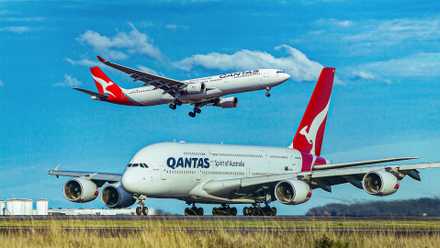
The Qantas Fleet Order In 2000 That Locked It Out Of The World’s Most Popular Widebody
The pivotal 2000 fleet decision under CEO James Strong that locked Qantas out of the world’s most popular widebody aircraft.
Bypassing The Pacific Island Fuel Stops

The 747SP excelled at short-field regional operations, but its core design purpose remained firmly rooted in pioneering extreme long-haul routes. The exact structural weight reductions that allowed the jet to safely operate out of Wellington also provided unparalleled transpacific performance for the time. For Qantas, this capability provided an opportunity to entirely restructure its prestige routes connecting Australia to the United States.
Prior to the introduction of the special performance variant, flights crossing the vast expanse of the Pacific Ocean required time-consuming refueling stops at isolated island outposts such as Fiji or Honolulu. Multi-stop itineraries added hours to the total journey and exposed airlines to significant operational volatility. Qantas, using the extended range of the shortened airframe, successfully inaugurated Australia’s first nonstop commercial services to the United States West Coast, permanently altering transpacific travel patterns.
Flying at its record-setting service ceiling of 45,100 feet (13,746 meters), the aircraft cruised far above the turbulent weather patterns and congested lower airways that slowed down standard widebodies. Flight crews could finally maximize fuel burn efficiency across the long and thin route profile in an aircraft that was specifically designed for such a route. The ability to bypass intermediate stops completely transformed the competitive landscape, establishing a premium service model that modern ultra-long-haul twin-engine aircraft continue to follow today.
Leading The Way For Another Airline

The operational history of the 45 total airframes produced by Boeing extended far beyond established Western flag carriers. As the initial long-haul operators began transitioning to newer widebody platforms in the late twentieth century, the shortened jumbo found a critical second life with ambitious emerging airlines. These developing carriers recognized that the unique capabilities of the aircraft could help them establish an immediate international presence.
A definitive example of this secondary market utility occurred in February 1996, when a young  Qatar Airways acquired an ex-Air Mauritius airframe to help bolster its early long-haul fleet expansion. Registered as A7-ABM, this specific plane originally flew for several international operators before helping the Middle Eastern carrier scale its initial intercontinental footprint. Utilizing the established range performance of the platform allowed the airline to quickly launch non-stop scheduled routes to distant capitals, laying the groundwork for its future global hub strategy that we see today.
Ultimately, the legacy of this specialized variant proves that non-standard aircraft designs can play an indispensable role during pivotal phases of aviation history. Whether helping an established operator conquer a restrictive short runway or providing a launchpad for an emerging global airline, the airframe filled a structural niche that no other widebody of its era could touch. Even today, no aircraft really exists quite like the 747SP, and it’s likely that there will never be one in the future.