dailynewsnblog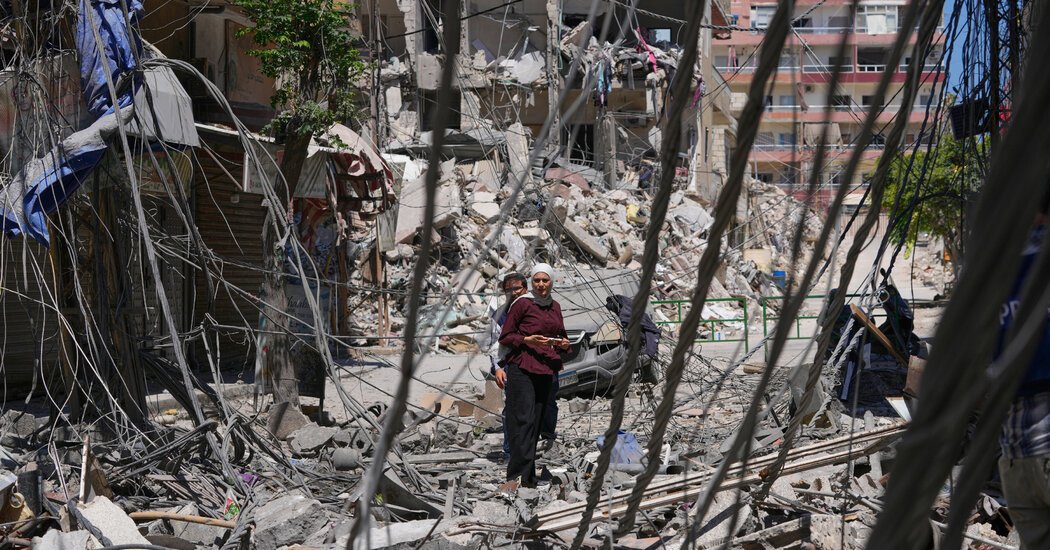
Israel continued to pound southern Lebanon with airstrikes on Friday, as the enduring conflict with Hezbollah showed few signs of letting up despite President Trump’s claim of diplomatic progress with Tehran.
Lebanon’s latest war, the second in two years, erupted in March after Hezbollah, the Iran-backed militant group, fired rockets into Israel in response to the U.S.-Israeli assault on Iran.
Despite repeated U.S.-brokered efforts to halt the fighting, the conflict has become a critical stumbling block for Mr. Trump as he tries to negotiate a broader deal with Tehran to end a Middle East war that has rattled the global economy.
For weeks, Iran has insisted that any agreement must include an end to Israel’s campaign against Hezbollah, while Israel has resisted efforts to link the two.
That disagreement has left Lebanon in limbo.
As Mr. Trump signaled diplomatic traction with Iran on Friday, Lebanon once again appeared to be out of sync with the cautious optimism taking hold elsewhere in the region. Israeli drones whirred over Beirut, the Lebanese capital, and missiles continued to rain down on southern towns amid a flurry of new Israeli evacuation warnings.
“What have we done as civilians to deserve this?” asked Ali Shmaysena, 60, who runs a small roadside coffee shop in the southern Lebanese city of Tyre, which is usually home to around 100,000 people.
After the Israeli military ordered the entire city to be evacuated this week, many streets were left deserted, turning neighborhoods into ghost towns. The destruction was stark: downed electrical wires, mangled cars and the carcasses of cats and dogs lay scattered among the rubble.
Along the beach, rows of makeshift tents had sprung up, many occupied by people carrying little more than the essentials.
The Israeli military said on Friday that in the last week it had carried out more than 300 strikes against Hezbollah in southern Lebanon, where it has also occupied broad tracts of territory. For its part, Hezbollah has kept up attacks on Israeli troops in southern Lebanon and has continued to fire rockets into northern Israel.
The violence has persisted in spite of a new U.S.-brokered cease-fire agreement announced last week between Israel and the Lebanese government. Hezbollah, which is not under the government’s control and was not a party to the negotiations, rejected the agreement because it required the group to stop firing without any immediate concessions from Israel. And since the Lebanese government cannot compel Hezbollah to abide by a truce, the latest cease-fire announcement has yet to take effect.
“We are civilians and we love our land,” said Mr. Shmaysena, who had taken to sleeping on the beach after the building behind his home was hit by an Israeli strike days earlier. “We don’t want to go anywhere.”