dailynewsnblog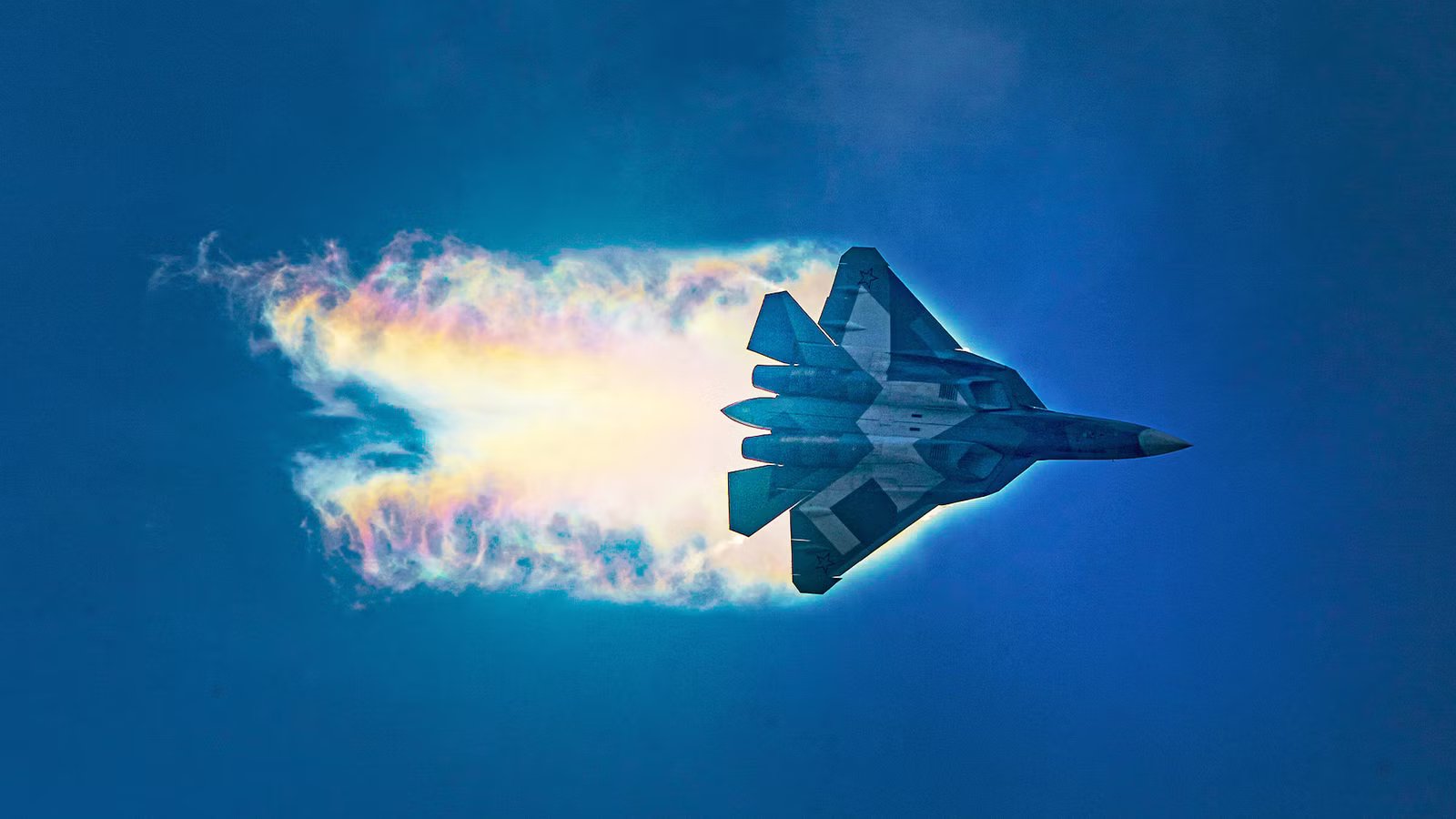
The world of fifth-generation fighter jets is a very small class of the world’s most high-tech warplanes. In this tiny pool of extremely advanced tactical aircraft, there are only three nations that produce flying examples: the United States, China, and Russia. In the past year, a new development has created a new division in the design philosophy of these elite planemakers, whether to build two-seat variants of their most advanced stealth fighters.
On May 19, the first twin-seat Sukhoi Su-57 Felon took flight in Russia, bearing the name ‘055 Blue.’ China already debuted its two-seat variant of the Chengdu J-20 Mighty Dragon in September 2025. While the US outproduces both China and Russia in terms of airframe volume, none of the next-gen fighters it makes have a backseat. The Lockheed Martin F-22 Raptor, the world’s first fifth-generation fighter, was never made with two seats before the line closed, and despite 20 countries flying the F-35 Lightning II, all are single-seat as well.
Even the upcoming sixth-generation Boeing F-47, or Next Generation Air Dominance, an all-aspect stealth fighter, is expected to be single-seat only. The question is, if the adversaries of the US and its allies see value in adding a weapons officer to their stealth jets, why do Western air forces choose to rely on automation instead?
The American Answer To Tomorrow’s Air Warfare

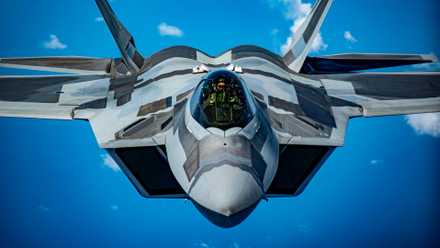
The F-22 remains the most stealthy of any fifth-generation fighter in the world, despite being older than every other competitor flying today. The heavy emphasis on stealth profile prevented even the consideration of a backseat. That principle has carried over to its successor, even though the F-35 is a more compromised design to bring down manufacturing costs and make it more easily sustainable. Instead of a second crew member, America chose computers to manage sensors, so the lone pilot could focus strictly on tactical decisions.
Systems that make it possible include the F-35’s core processor, which automatically ingests raw data from the AN/APG-81 AESA Radar, the Electro-Optical Targeting System, and the AN/ASQ-239 Electronic Warfare suite. DAS projects real-time, 360-degree infrared imagery directly onto the visor of the pilot’s $400,000 Helmet Mounted Display System.
If the pilot looks down at the cockpit floor, the computer stitches the camera feeds together, allowing them to see through the floor. This view is then overlaid with a smart interface that only displays the most pertinent flight and combat data from all the other onboard sensors. The F-35 also includes direct voice input commands that eliminate the need to use physical control inputs for time-critical actions during times like intense maneuvers in combat.
Catch what other flight trackers miss
Emergency squawks, holds, NOTAMs — live signals, no signup.
Open tracker
Catch what other flight trackers miss
Emergency squawks, holds, NOTAMs — live signals, no signup.
Open tracker
The Joint Strike Fighter will also control four to eight collaborative combat aircraft, or loyal wingman drones. This would transform the F-35 into a battlefield command node and give it the power to delegate targeted strikes to attritable uncrewed aircraft or even use them as a shield like a ‘missile sponge.’ Despite all this promise, however, the actual reality is that the system has failed to meet expectations for the past two years and is stuck in testing, with the combat Fleet operating at reduced capability.
Eastern Combat Doctrine: No Substitute For Aircrew

Russia’s United Aircraft Corporation designed the new two-seat Su-57 to fulfill both operational and combat roles where two aircrew are better than one. A primary issue driving critical failures within the F-35 fleet is data management, and because the technology has proven to be unreliable, it is now a fleetwide crisis. The Su-57D is not vulnerable to this kind of engineering failure or supply chain shortcoming because the pilot is not alone and therefore far less reliant on computers in the cockpit.
F-35 pilots have even reported a 20% error rate when tapping the screen during bumpy flights, according to the National Interest. In the two-seat Felon, the rear operator does not have to worry about flying the jet; they can use both hands to stabilize their inputs and interact cleanly with targeting pods and wingman drones.
Flight Global quoted First Deputy Prime Minister Denis Manturov giving these remarks after the first flight of the new twin-seat stealth fighter:
“Flying tests of a fifth-generation Su-57 two-seater fighter jet prototype have kicked off. Along with unique combat characteristics, this jet that was developed by our aircraft builders will also be used as a trainer aircraft and a tactical control aircraft.”
Looking forward to the rapid expansion of uncrewed combat aircraft, the Felon offers the same reliability. Russia’s S-70 Okhotnik-B heavy drone will be steered directly by the Su-57D’s rear-seat operator via dedicated command links. If automated tracking is jammed by an adversary, the WSO can instantly take manual remote control of the drone’s weapon systems, ensuring the combat mission continues without relying on automated software.
5 Fighter Jets That Will Define Air Combat In The 2030s
The next era of air power is on the horizon.
The New Delhi Connection: Off-The-Shelf Stealth Fighters

The Russian Su-57D has strong export prospects tailored directly toward India, as the Eurasian Times highlighted. Moscow is actively marketing its newly flown two-seat prototype to revitalize its strategic defense partnership with New Delhi. The Indian Air Force historically favors heavy, two-seat fighter architectures, like the Su-30MKI, for maritime patrols and deep strike missions. Negotiation allegedly began at the Wings India airshow, offering full technology transfer and local assembly rights.
India’s Hindustan Aeronautics Limited Nashik facility is already significantly optimized for Sukhoi manufacturing and supply chain sustainment thanks to the existing fleet of legacy jets. Russia has even supposedly guaranteed access to the aircraft’s mission source codes, allowing India to integrate localized avionics, according to 1.ru reporting. The decision includes the Virupaksha AESA radar and Astra air-to-air missiles to satisfy concerns over downgrades to export models.
In contrast, the Chinese J-20S will likely never be offered as an export, although the single-seat, lower-tech Shenyang J-35 stealth fighter is expected to be sold in the future. Beijing strictly treats the J-20 family as a classified sovereign asset reserved exclusively for the People’s Liberation Army Air Force. India now faces a widening capability gap against China’s expanding fifth-generation fleet. Its indigenous stealth project will not enter production for a decade, so the Su-57D serves as a ‘plug and play’ bridge aircraft that is readily available.

Steel, Speed, & Strategy: The Military Jets Dominating Today’s Battlefields
Breaking down the contest for air superiority in the 21st-century.
Toothless Fighters: The Problem With Dependence On Automation

The F-35 production line has rolled out more than 1,300 aircraft that now serve three branches of the US military and a growing list of 19 partner nations. The cascading delays and trickle-down system limitations are having just as significant an impact on readiness and capability outside the US. As the F-35 represents the next era in air power for many allied partner nations, air forces around the world have divested their legacy airframes and retired 4th-Gen fighter jets that were in service. In some cases, this has left chronic readiness issues for entire fleets.
In 2024, Lockheed Martin upgraded the fleet of F-35 fighter jets with the technology refresh 3 software package. Published in March 2026, the 2025 report from the Director of Operational Test and Evaluation does not expect full capability until 2031. This has left the US Air Force flying F-35s with truncated software capabilities that are acceptable for training operations but cannot effectively use key combat features. The Block 4 features under the TR-3 umbrella were intended to be a major improvement for the F-35 fleet, but so far, they remain disabled or severely limited.
With the current limitations, it only provides simple threat detection from targeting radar, like surface-to-air missiles or enemy fighter jets, instead of the advanced electronic attack functions that were promised. A vital area in which the JSF was designed to provide a technological upgrade from legacy airframes was electronic warfare. The issues with TR-3 have also hamstrung the AN/ASQ-239 suite. It is engineered to be a kind of digital shield by providing enemy sensor detection and jamming.
Here’s Why Air Forces Are Expanding Their Stealth Fighter Programs
The global race for the ultimate stealth jet.
Tech That Doesn’t Deliver: Fallout For The US And Its Allies

The most recent testing evaluation followed the same trend of software deficiencies that have plagued the F-35 program since its debut. The software build delivered zero new combat capabilities during 2025. The fallout from this situation includes a massive cut to 2026 orders for the F-35. The current budget drafted by the Pentagon slashes USAF F-35A procurement by 45%, according to Defense News. The USAF is also significantly increasing funding for the sixth-generation Next Generation Air Dominance program.
Only the Israeli Air Force has bypassed some of the software bottlenecks. This was primarily focused on newer munition limitations, substituting for older ordnance available on hand, like JDAMs. The advanced EW capabilities promised under TR-3 Block Four remain unavailable. Meanwhile, other allies that fly the F-35 are now reconsidering their full order quantities, such as Canada, Switzerland, and the United Kingdom, and even some potential sales have fallen through, such as the proposals to Spain and Portugal.
Countries like Denmark and Belgium have committed to donating their older F-16s to Ukraine. Because their new F-35s arrived late or in training-only condition, they have had to extend the service life of their F-16s, slowing down the transfer of those jets to the front lines. Denmark was even forced to recall six of its older TR-2 jets from Luke Air Force Base to its home soil, according to Air and Space Forces Magazine. They did this to maintain a basic level of pilot training while they wait for combat-ready TR-3 aircraft that are currently stuck in testing.