dailynewsnblog
FIFA won’t reveal how, but after every game at the 2026 World Cup this summer, it will be collecting items that will one day document the tournament. It already has the net from the 2018 World Cup final, for example, as well as the tracksuit that Pelé wore at his first World Cup in 1958.
The items live in FIFA’s various museums, ranging from Vancouver and Miami to Zurich and Hong Kong. But there is a host of stuff that FIFA doesn’t have, such as Ronaldinho’s Brazil jersey from the game where he took that free kick against England in 2002, or Germany forward Mario Götze’s game-winning boot from the 2010 final.
Sometimes soccer memorabilia exists in the most unlikely of places.
The item that started this quest was Pelé’s 1970 World Cup winners’ medal. It does not exist on display in Rio de Janeiro, as you would expect, but rather at Saracens rugby club in a district of North London, amid a fine collection that houses some of sport’s most iconic items.
It has been a long journey, but here we can tell the story of the previous 22 World Cups through 22 items of memorabilia.
1930 – World Cup final second-half ball
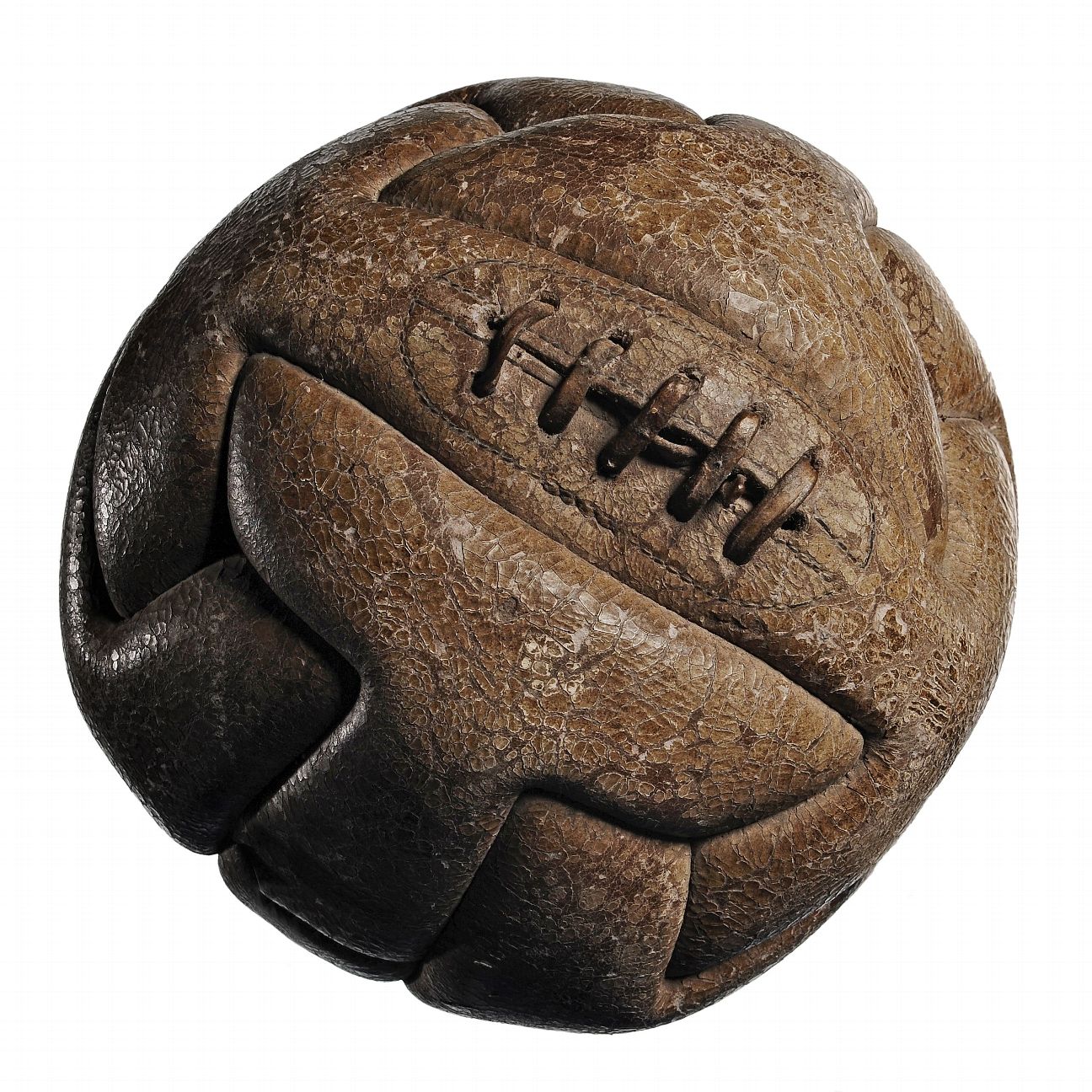
Photo credit: Allianz Collection, Saracens
Nothing shows the chaotic nature of the first World Cup quite like the ball used in the final. FIFA had agreed to allow Argentina and Uruguay to use their own balls during the 13-team tournament, but what was to happen when the pair met in the final? A solution was found: Argentina’s ball, slightly smaller and lighter, was used in the first half; Uruguay’s ball was used for the second half.
Maybe, in hindsight, the result wasn’t much of a surprise. Argentina, with their own ball, took a 2-1 lead in the first half, only for Uruguay to roar back and win 4-2 in the second half to claim the first World Cup trophy — a 14-inch tall, 8.4-pound gold-plated statue of the Greek goddess Nike named “Victory,” but later renamed in honor of FIFA president Jules Rimet in 1946.
There is a claim that the first-half Argentina ball was used throughout, although nobody — not even FIFA’s historians — know for certain.
Where is it now? It sits in a glass cabinet at Saracens rugby club in North London as part of the Allianz Collection owned by the club’s owner, Nigel Wray.
1934 – World Cup final ticket
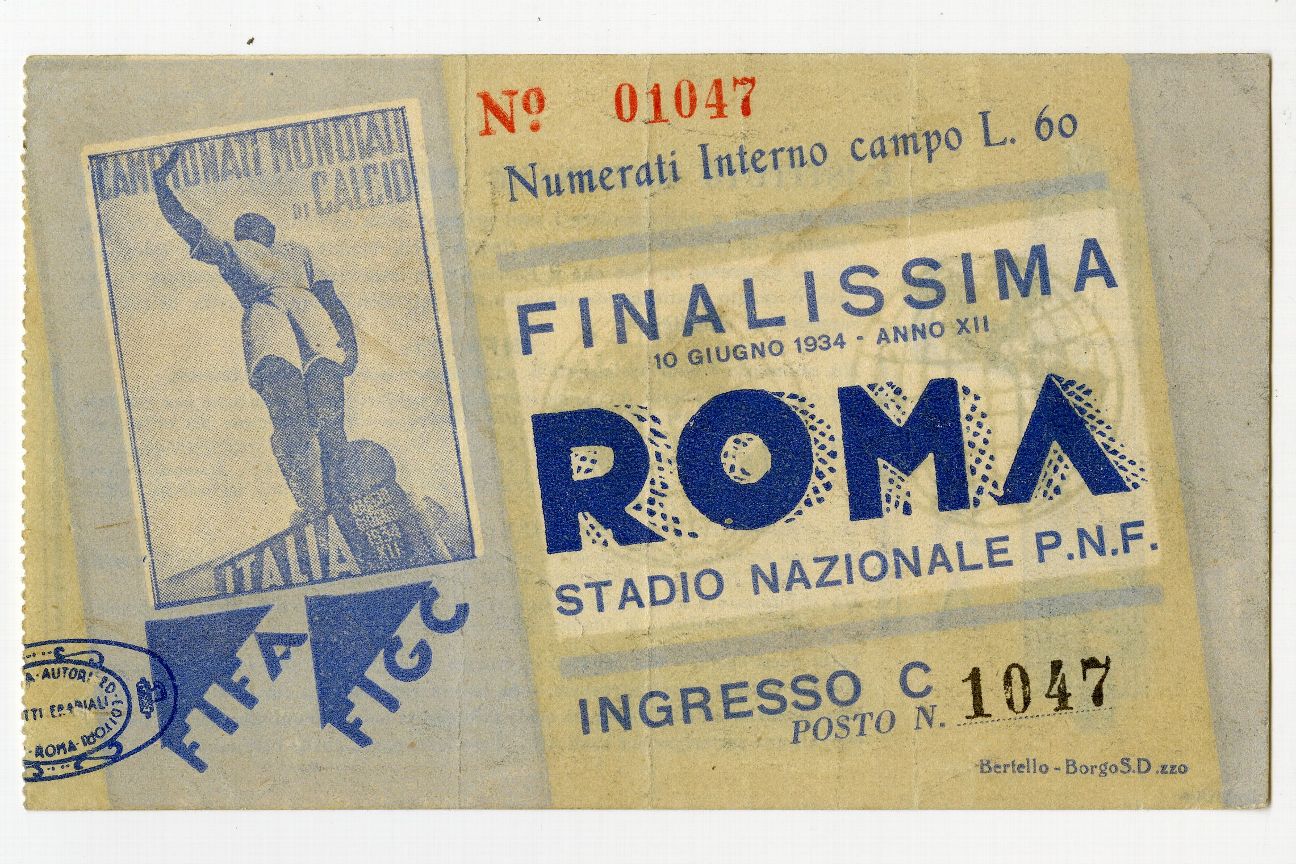
Photo credit: Matteo Melodia
Italian fan Matteo Melodia has one of the best soccer ticket collections in the world. Starting in 1987, he previously had around 60,000 tickets, before cutting his collection down to 7,000. He has tickets from almost every World Cup game ever played. And he even has tickets for World Cup games that were never played (some tickets were issued for replays that were never needed). His rarest tickets, though, are from the 1934 World Cup semifinal and final.
Italy hosted the tournament, which featured only a round-of-16 bracket, and enjoyed a dream run. They began with a 7-1 win over the United States in Rome, before squeaking past Spain and Austria. In the final, they met Czechoslovakia in front of an estimated 55,000 fans in Rome and won 2-1 after extra time. There are thought to be only three or four tickets from that final still known in existence, one of which belongs to Melodia.
“Tickets in general are extremely rare to find,” Melodia tells ESPN. “It’s an item you usually throw out at a stadium; it’s not a pin or a postcard, or something you put in a drawer for years.”
Where is it now? Melodia keeps the final ticket at home, but he is yet to find one for Czechoslovakia’s 3-1 semifinal win over Germany. “It’s the only ticket still missing in my collection,” he says.
1938 – Jules Rimet trophy base plate
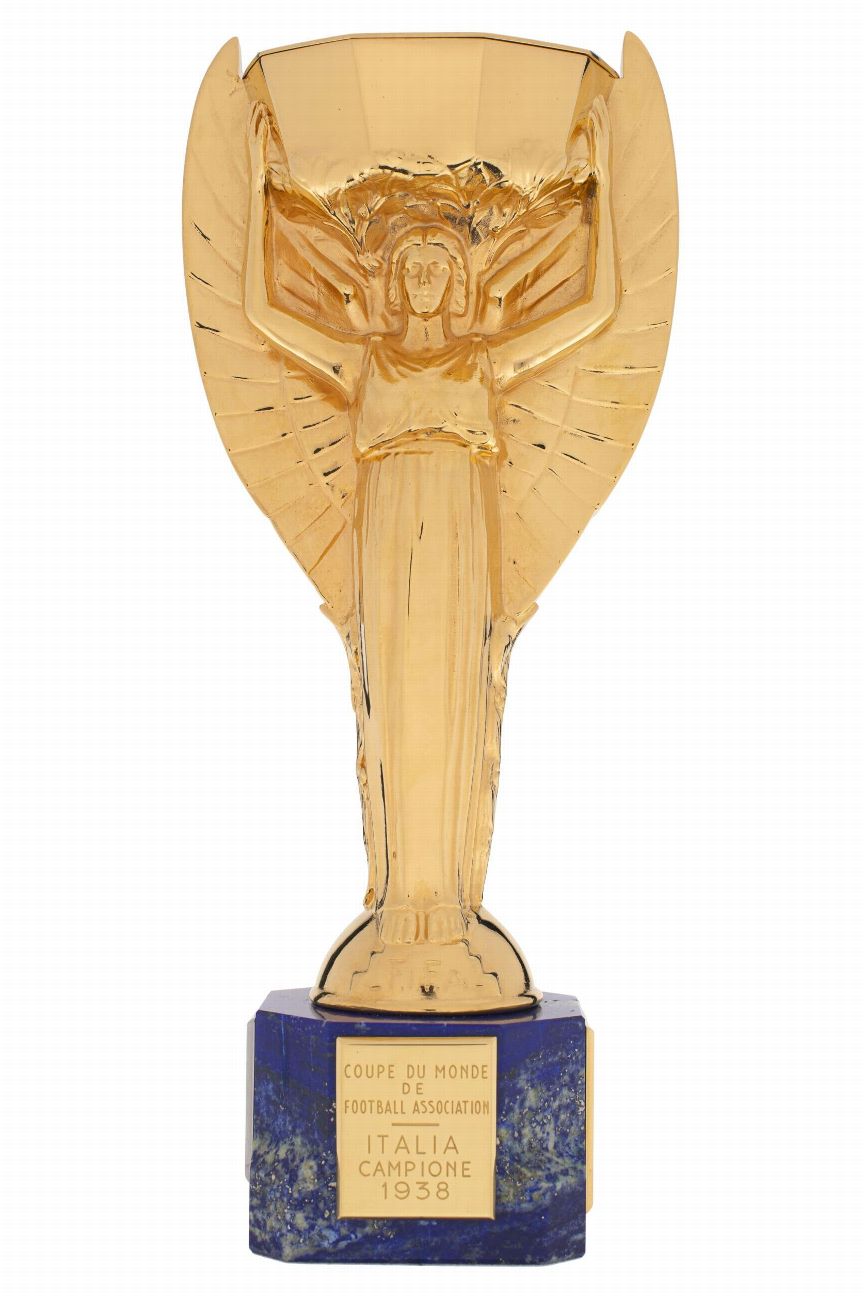
Photo credit: FIFA Museum
There have only been two back-to-back winners of the World Cup, and the first came in 1938 when Italy defended their crown in France to etch their name for the second time onto the Jules Rimet base plate. They beat Norway, France and Brazil before facing Hungary in a one-sided final that ended 4-2. However, the most enduring story of the tournament was about what happened to the trophy in the years later.
Back then, the trophy was kept by the previous winners, meaning it was held in a bank vault in Rome after the outbreak of World War II in 1939. But when Italy’s fascist dictator Benito Mussolini was overthrown in 1943, which led to Germany invading after the new government signed an armistice with the Allies, the prevailing theory is that Italian FA president Ottorino Barassi (fearing the Nazis would take the trophy) smuggled it out and hid it in his house in a shoebox under his bed. From there, he sent it to some relatives in his hometown of Foggia, where it was hidden in a wooden drum designed to hold extra-virgin olive oil.
The Jules Rimet trophy was returned to FIFA when the World Cup returned in 1950, although it would later be lost on multiple occasions: in 1966 by hosts England, when it was famously found by a black and white collie dog called Pickles, and permanently in 1983 when it was stolen from the Brazilian federation’s offices and never recovered.
However, in 2015, a FIFA staff member was digging around the basement at their Zurich head office and stumbled across the base plate, which was used until 1950 and then never again. “It’s like finding an Egyptian mummy,” museum creative director David Ausseil told The Associated Press upon the discovery. “You can’t put a price tag on it because it’s family jewels.”
Where is it now? The base plate is on display at the FIFA Museum in Zurich. It has just two names on it: Uruguay (1938 and 1950) and Italy (1934 and 1938). The top of the original trophy remains lost and was believed to have been melted down.
1950 – World Cup ‘final’ goalposts
The World Cup had a 12-year hiatus due to World War II and returned to be hosted by Brazil in 1950. Despite being just the fourth edition, the tournament had already become sacred to Brazil’s soccer-loving population. But this was the only World Cup not to have a final.
Bizarre as it seems in hindsight, the format was changed to feature four groups — the winners of which would face off in a final group that would determine the overall winner. Brazil cruised through much of the tournament, scoring 21 goals in five games, and it came down to one final game vs. Uruguay at the Maracanã in Rio de Janeiro to crown the champion.
Brazil had every reason to be confident as, a year before, they had beaten Uruguay 5-1. Now, ahead of the final, a local newspaper printed an early front page already calling Brazil champions. The match, though, did not turn out as their fans would have hoped.
In front of 199,850 supporters — still the largest official crowd ever recorded for a soccer match — Brazil took the lead just after halftime, but Uruguay equalized on 66 minutes and then took the lead with 10 minutes to go when Alcides Ghiggia’s shot rolled under goalkeeper Moacir Barbosa.
Uruguay won 2-1 and Barbosa became the scapegoat. He played only once more for the national team and was later banned from entering the home dressing room for fear of being a bad luck charm.
In 1963, 13 years after the final, and with his soccer career over, Barbosa became a stadium worker at the Maracanã. A friend of his, who ran the stadium, presented him with the wooden goalposts from the match, but Barbosa was still haunted by the defeat. He went home, sawed the goalposts into small pieces and soaked them in coal oil before placing the pieces in his barbecue pit to burn them.
Where are they now? Burnt to a crisp.
1954 – Helmut Rahn’s jersey
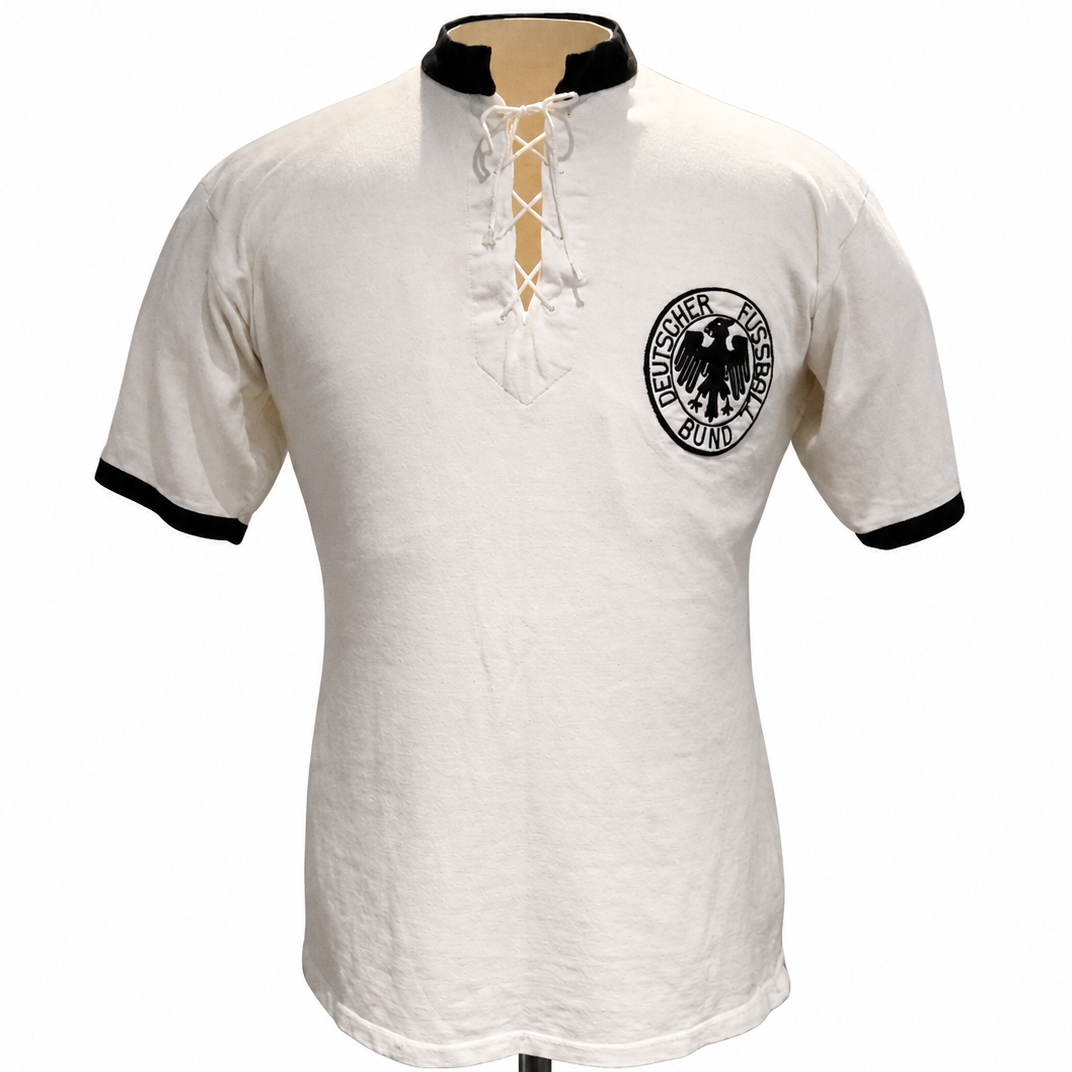
Photo credit: German Football Museum
It didn’t dawn on West Germany’s players what they had achieved until days after the 1954 final in Bern, Switzerland. Their opponents Hungary had the world’s best player, Ferenc Puskás, were unbeaten in five years and had already beaten them 8-3 in the group stage. So when Hungary took a 2-0 lead after eight minutes, you would have been forgiven for thinking it was all over.
Yet, somehow, West Germany fought back. Midfielder Max Morlock pulled a goal back in the 10th minute, and winger Helmut Rahn equalized in the 18th minute; Rahn then scored again in the 84th minute to ensure Germany claimed their first World Cup title.
“There was disbelief when we got into the dressing room. The mood was somber,” midfielder Horst Eckel, the longest surviving West Germany player, said. “We were thinking, ‘Have we really just become world champions?’ Then Herberger snapped us to our senses. ‘We’ve beaten Hungary, we’re world champions, let’s sing!’ We sung and sung, getting louder and louder. We were in a dream.”
The impact of the game on a post-war West Germany was hard to measure, although it is often cited as a turning point in the national psyche and is fondly remembered as the “The Miracle of Bern.” And the players themselves only fully grasped what an achievement it was on the short train ride home. As they passed, Germans left their homes to gather on the railway tracks and hand them presents, including: sweets, chocolate, books and even handmade sculptures.
Where is it now? Rahn’s jersey from that game hangs on display at the German Football Museum in Dortmund; just a 30-minute drive from his hometown of Essen. The city still heralds him as one its most famous sons, notably with permanent signs hanging from three consecutive overpass bridges in the city that read: “Rahn musste schiessen…”, “Rahn schiesst!” and then “Tor! Tor! Tor!” The messages — from the German radio commentary of Rahn’s winner — translated to English, read: “Rahn must shoot …,” “Rahn shoots!,” “Goal! goal! goal!”
1958 – Pelé’s radio
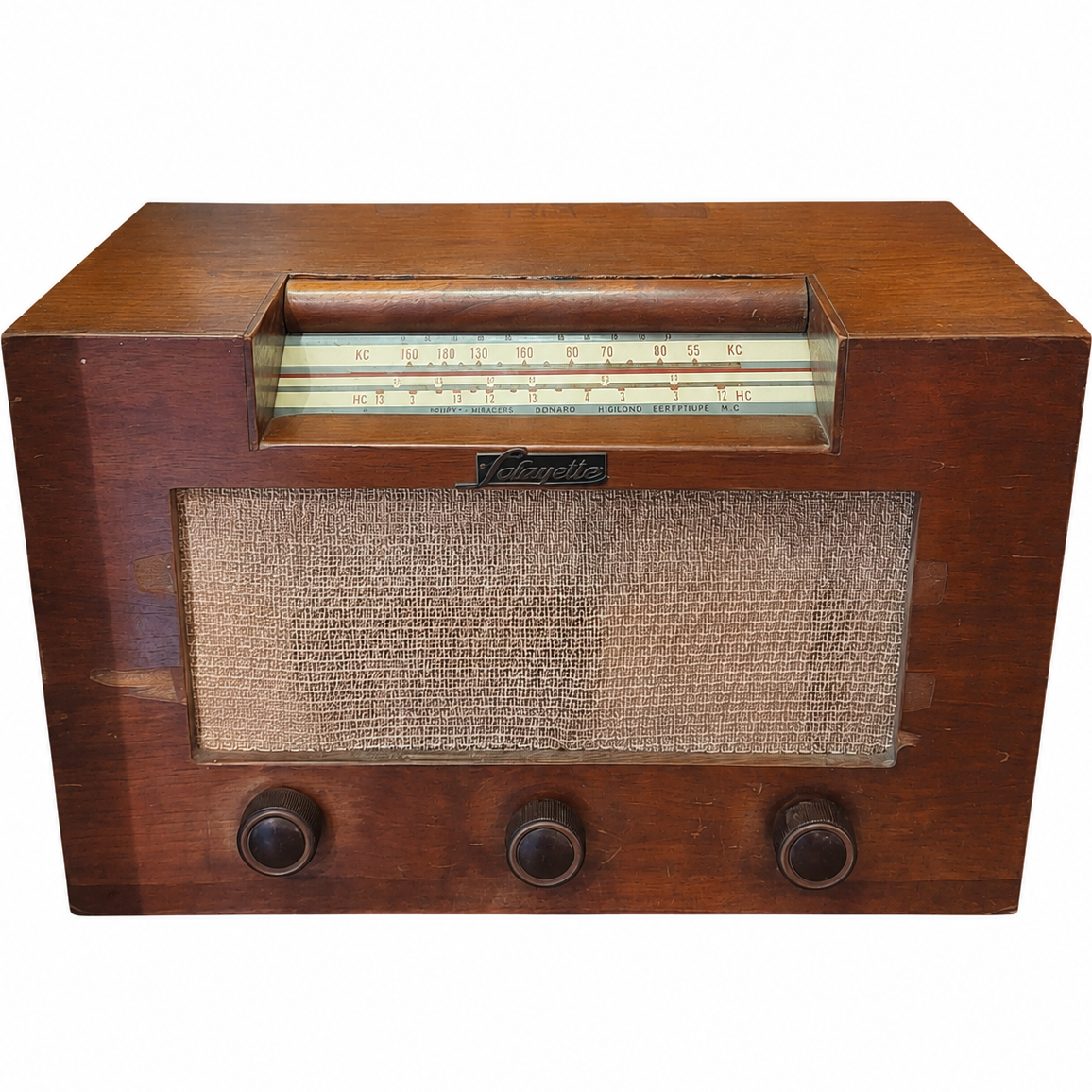
Photo credit: Museu Pelé
No player could ever sum up a single World Cup like Pelé in 1958. At just 17-years-old, he was stunned when he was called up by manager Vicente Feola and later revealed in a documentary in 2018: “My father came home in the evening and said, ‘Did you hear? It was on the radio. You’ve been picked for the Brazilian squad.’ And I said, ‘Oh dad they’re playing around, I think there must have been a mistake!'”
The Santos forward had never been on an airplane — he’d never been out of the country! — but now he was to travel to Sweden to play in a World Cup. Brazil’s delegation wasn’t quite sure what Sweden would be like. It would be cold there, they thought, so they equipped the players and staff with extra-thick tracksuits. How were they to know Sweden’s temperatures regularly went above 70 degrees Fahrenheit in the summer?
Still, Brazil were better equipped on the pitch. Pelé scored in all three of their knockout games, including a hat trick against France in the semifinals and a pair of goals in a 5-2 win over hosts Sweden in the final. He remains the youngest player to win a World Cup.
Where is it now? The radio is on display at a Pelé museum in Santos, São Paulo.
1962 – ‘MR. CRACK’ ball
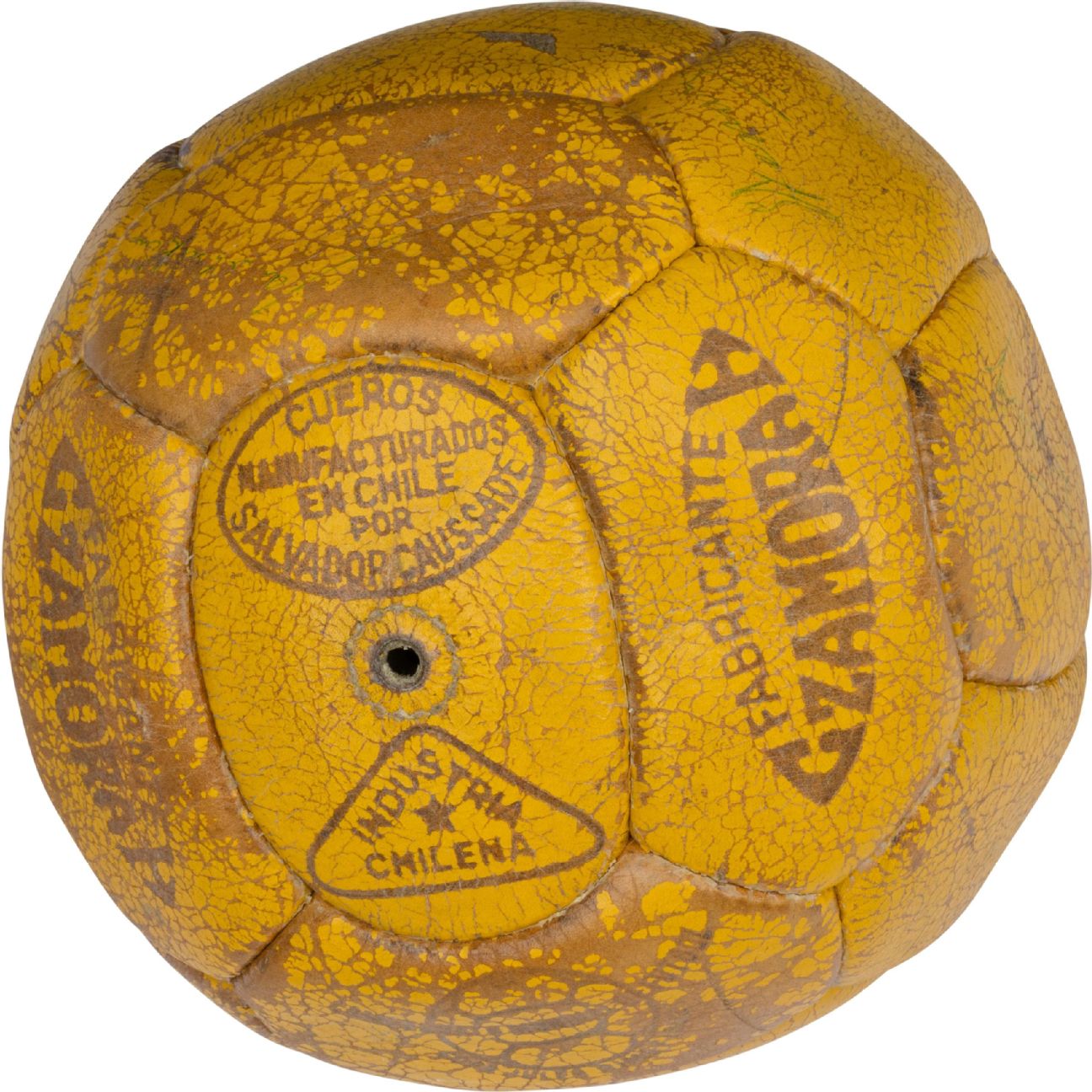
Photo credit: FIFA Museum
For the first time — but not the last — the World Cup’s official ball threatened to overshadow the tournament. The 1962 World Cup was held in Chile, and FIFA opted to use a local ball, called “MR CRACK.”
It had an innovative design and was made of 18 irregular panels which were sewed together by hand. There were, however, some huge errors. The first was its appearance. Initially, the ball was an elegant orange shade, but the coating was flawed and the ball would slowly change color as games were played. The other issue was more alarming: It became heavier when water seeped through its seams.
There is a story that is hard to verify that says the tournament’s opening game between Chile and Switzerland, referee Ken Aston ordered that a European ball be brought to the stadium to be used instead, which it was for the second half. However, it is certain the “MR CRACK” ball was not used for every game.
Where is it now? FIFA has a “MR CRACK” ball from one of Italy’s group stage matches on display at their museum in Zürich, although it cannot be certain from which game.
1966 – Geoff Hurst’s jersey from the final
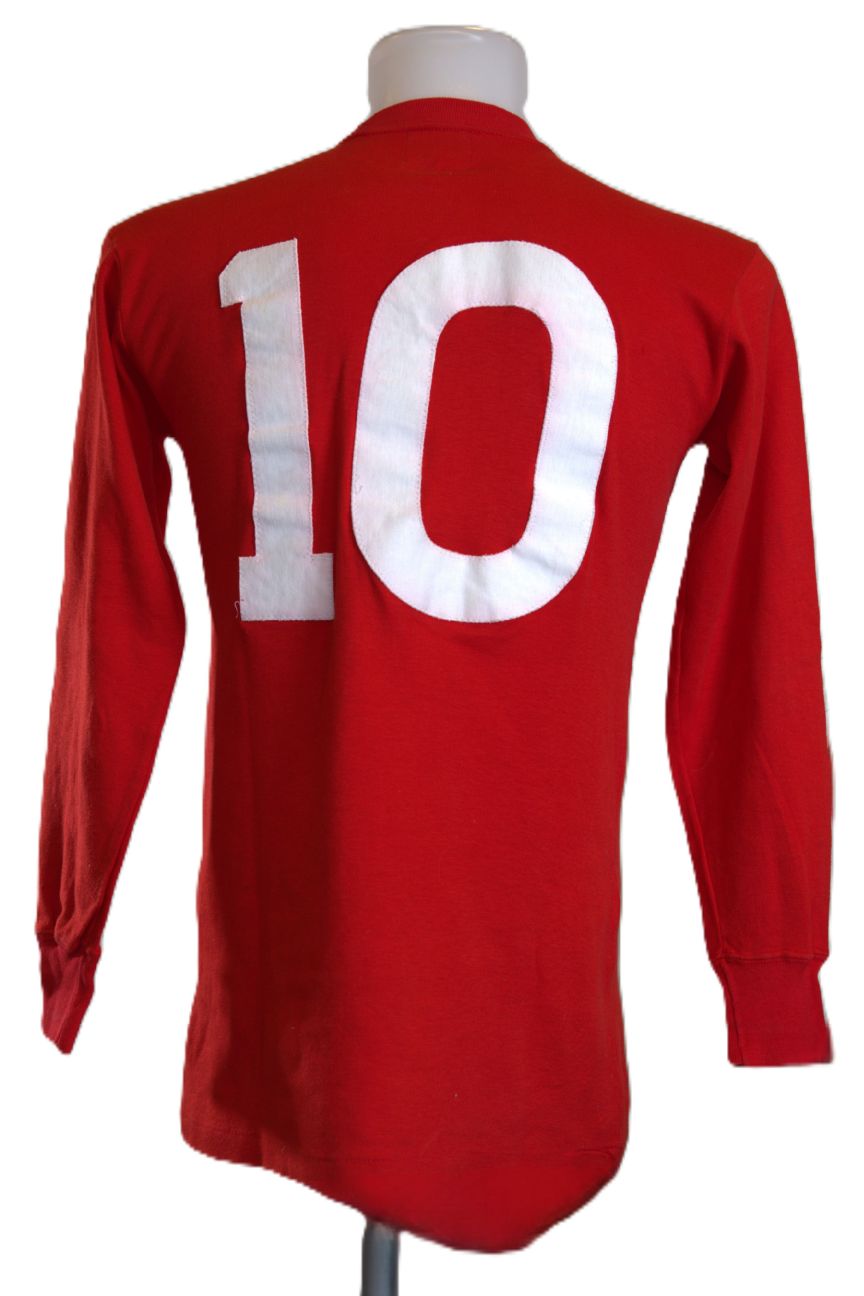
Photo credit: Allianz Collection, Saracens
There is a strange theme among the early World Cups: The hosts almost always did well. Indeed, until 1978 the hosts made the final eight times out of 11. One of those was England in 1966, when Sir Alf Ramsey’s side beat West Germany in what was arguably the tournament’s best final to that point.
West Germany took the lead after 13 minutes through winger Helmut Haller, only for England striker Geoff Hurst to nod home from a free kick six minutes later. Martin Peters thought he had scored the winner when he thumped a shot past goalkeeper Hans Tilkowski on 79 minutes, but center back Wolfgang Weber scored a late equalizer from a goalmouth scramble in the 89th minute to send the game to extra time.
It was then that Hurst stepped up and scored twice. His first came in the 101st-minute with a turn and shot that cannoned down from the crossbar and dubiously crossed the line in what is one of the most iconic World Cup moments of all time.
Then, as the clock ticked toward the 120th minute, BBC commentator Kenneth Wolstenholme voiced those now immortal words: “Some people are on the pitch, they think it’s all over!” And as he said the final word, Hurst scored again to complete his hat trick. “It is now!” Wolstenholme said.
Hurst was the only player to score a hat trick in a World Cup final until France forward Kylian Mbappé found the net three times in the 2022 final.
Where is it now? Hurst’s shirt from that 1966 final is now on display at Saracens rugby club.
1970 – Pelé’s Puma Kings
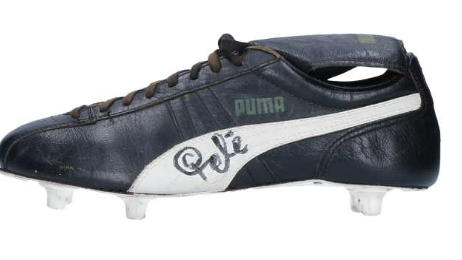
Photo credit: Puma
Mexico 1970 is, in many people’s minds, the first modern World Cup because it was broadcast globally and no longer in black and white. For the first time, the full array of colors — the green of the pitch, the golden yellow of Brazil’s shirts, the pure white spots of the ball — were on show, and it was also the first tournament to feature red cards and substitutions.
In 1970, there was a sneaker war between Adidas and Puma, which were founded by rival brothers, Adolf “Adi” Dassler and Rudolf “Rudi” Dassler. Athletes typically wore one or the other, and at this World Cup, the biggest star was Pelé.
There is a popular story — although it is much contested — that the two brothers had a “Pelé Pact” that neither would sign the Brazil No. 10 as their competing bids would cost too much to make it worthwhile. But, when Puma salesman Hans Henningsen visited the Brazil training camp and signed up players, Pelé wondered why he was being ignored. So, Henningsen signed him to a deal, only later getting Puma’s approval. There was a stipulation, too: for the final at the Estadio Azteca in Mexico City, before kickoff, Pelé would kneel down and tie his laces so the cameras would zoom in on his Puma King boots for the whole world to see.
Where are they now? Pelé later sold large swaths of his memorabilia collection — including all three of his World Cup medals and many other items. However, it is believed a pair of his Puma Kings from that World Cup have never been auctioned. There is one boot worn by Pelé (pictured) at that World Cup on display at Puma’s headquarters in Herzogenaurach, Germany. It was personally given by Pelé to a staff member at Puma.
1974 – Gazzaniga’s trophy sketch
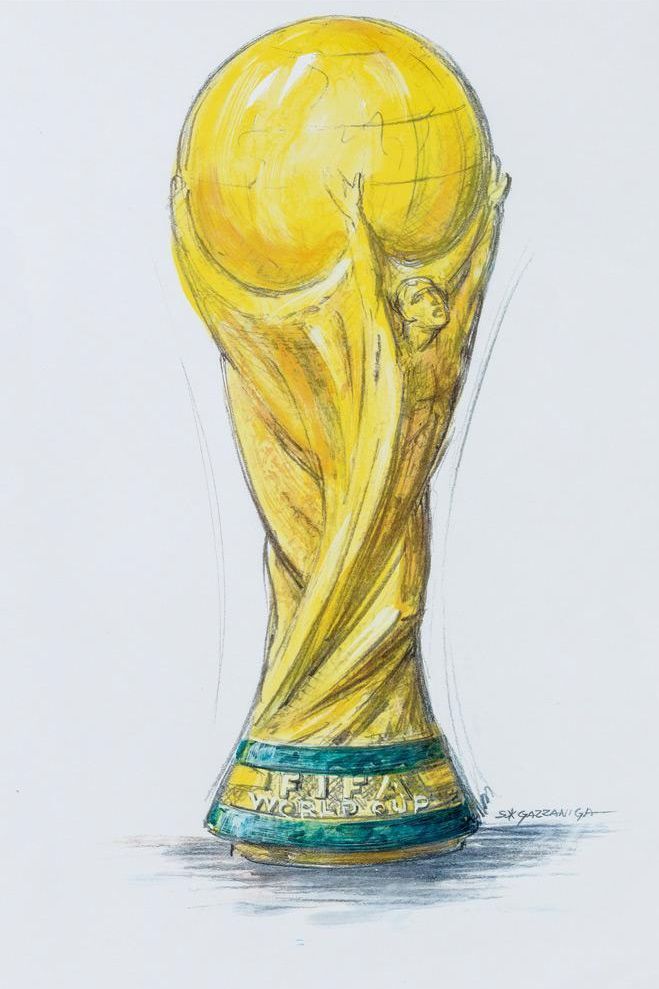
Photo credit: FIFA Museum
After Brazil won the World Cup for the third time in 1970, FIFA honored its promise to Jules Rimet to permanently give the trophy to the winning team. But it needed to order a replacement.
Rather than stick with the same design, FIFA invited submissions. The world governing body received 53 proposals, but one was different. An Italian sculptor called Silvio Gazzaniga sent in a sketch that included two golden human figures holding the globe and also sent a photo of a prototype he had made.
Gazzaniga’s design won, and the trophy that was created from it is still in use to this day. “The figures that emerge from the rough base material evoke a sense of jubilation in victory,” Gazzaniga told FIFA.com in an interview a few years before he died aged 95 in 2016. “The malachite rings in the base fitted the sculpture well because it’s green, like a football field, and it is also a precious stone.”
The Italian sculptor’s famous design might not, however, be in use forever. West Germany were the first team to lift the new trophy, in 1974, and have their name inscribed on the “base plate,” while every subsequent winner is also listed in two circles. But there is only room for four more names to be added, so a new World Cup trophy is likely to be commissioned in 2038.
Where is it now? Gazzaniga’s sketch submission is on display at FIFA’s pop-up museum at Rockefeller Center in New York City.
1978 – Mario Kempes’ Golden Ball
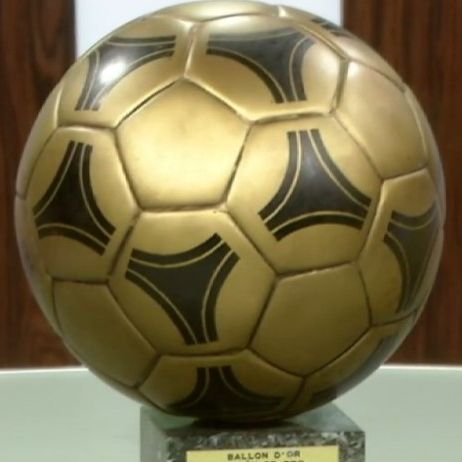
Photo credit: ESPNFrontRow
In many respects, Mario Kempes’ 1978 World Cup was a tournament of firsts. He helped deliver a first World Cup title for hosts Argentina — he scored two goals in the 3-1 extra-time victory over Netherlands in the final. And he was also the first to win the Golden Ball award, given to the best player at a World Cup.
Ask Kempes for his favorite memories of that final and he will tell you one was the ticker tape raining from the stands. But his personal award was great too, even if it might have needed a rebrand. “It was not even gold at the time,” Kempes, who now works as a pundit for ESPN Deportes, tells ESPN. “It was like a yellow.”
Sadly, his World Cup winners’ medal is long gone. “I moved house so many times,” Kempes, who lived in at least 10 countries throughout his career (including stops in Indonesia, Chile, Bolivia and Albania), adds. He is hoping FIFA is able to replace it this summer; this time, he promises not to lose it.
Where is it now? Kempes’ Golden Ball is on display at a soccer museum in Madrid, alongside his shirt and boots from that final.
1982 – Enzo Bearzot’s pipe
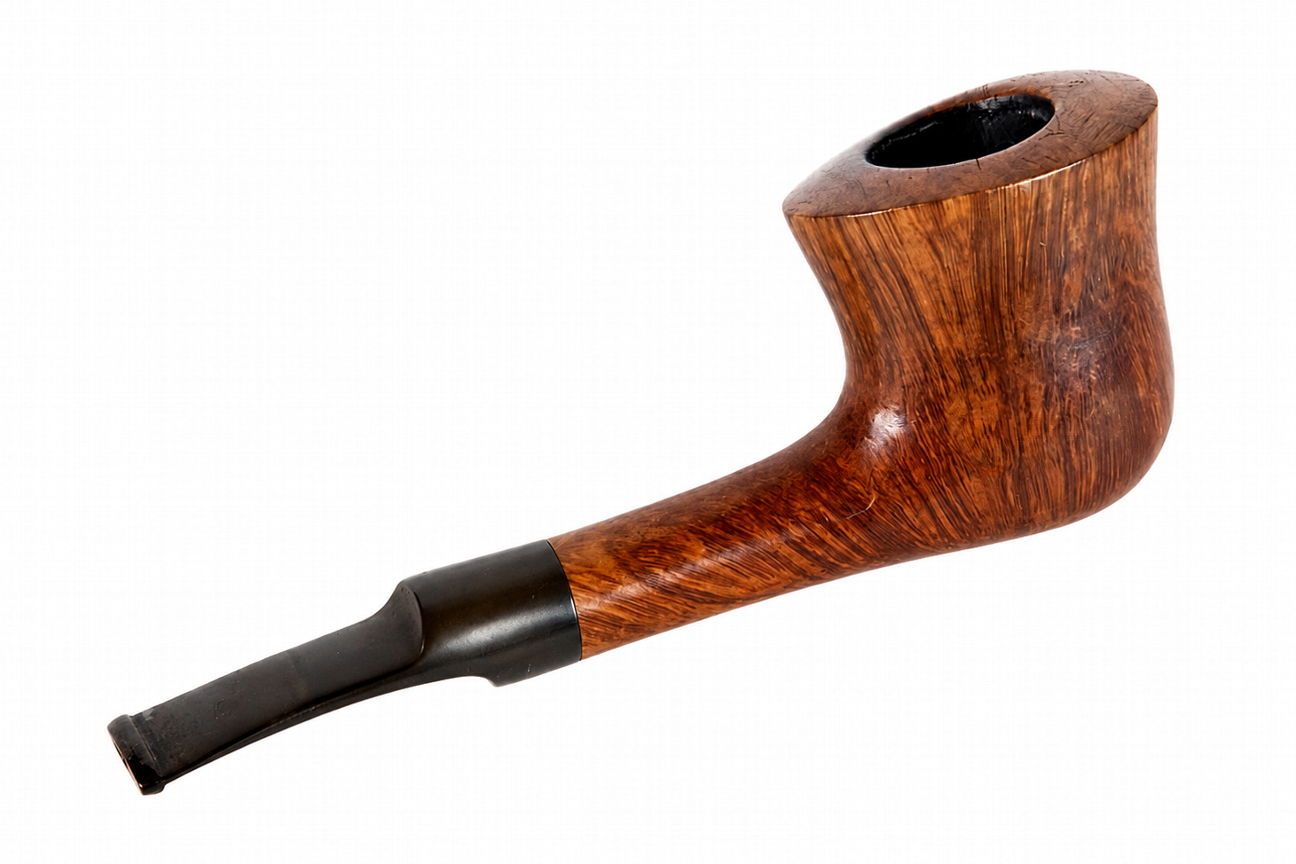
Photo credit: Calcio Museum
Few fancied Italy to win the 1982 World Cup, not least the country’s media. But in manager Enzo Bearzot — who was nicknamed “Vecchio” (old man) — Italy had, according to the New York Times, an “enigmatic, pipe-smoking insomniac whom Italians love to second-guess.”
Bearzot liked his players to express themselves, but after the first group stage — this was the third and last World Cup to feature two group stages followed by a semifinal and final — confidence in the manager and his side was at an all-time low. Italy had qualified for the second group stage by finishing second and only scraped through on the basis that they had scored one more goal than third-placed Cameroon.
The Italian press condemned the team and their chances; Bearzot’s response was to introduce a media blackout, and he refused to speak to a single Italian journalist for the rest of the tournament.
Well, Italy’s media would be proved wrong. Bearzot sat on the touchline, calmly smoking his pipe, as Italy beat Brazil and defending champions Argentina in the second group stage. Then they followed that up with a semifinal win over Poland and a 3-1 victory over West Germany in the final as striker Paolo Rossi burst into life with six goals in three games.
Where is it now? Bearzot has a permanent exhibition in his honor at the Italian Football Museum in Florence, which includes his pipe.
1986 – ‘Hand of God’ ball
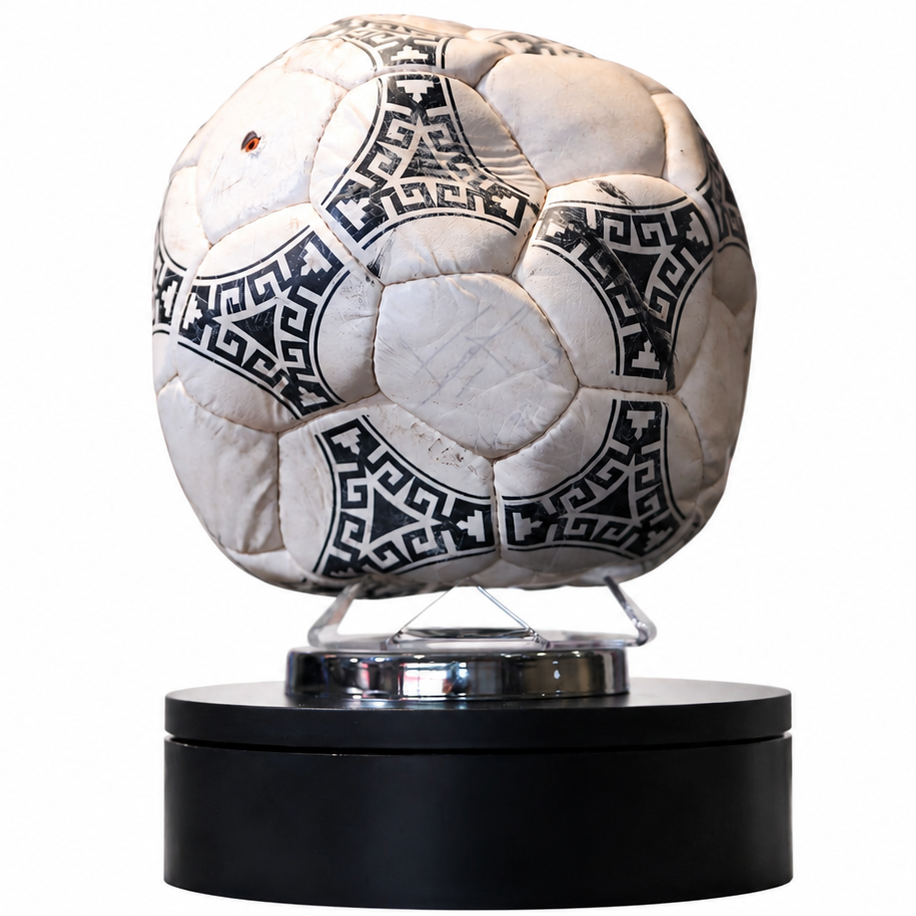
Photo credit: Getty Images
Diego Maradona laid bare his genius and personality in equal measure as he scored two of the most talked-about goals in history within five minutes of each other as Argentina beat England 2-1 in the 1986 World Cup quarterfinals. There might not be a single game in history that is so defined by one player.
The 5-foot-5 Maradona jumped to pip England goalkeeper Peter Shilton to a high ball and head home the opener in the 51st minute. But did he use his hand to gain the extra yard he needed? He admitted as much after the game when he said: “Un poco con la cabeza de Maradona y otro poco con la mano de Dios.” (A little with the head of Maradona and a little with the hand of God.)
There was no such controversy over Maradona’s second goal, four minutes later. He weaved through most of the England team after running from his own half before going around Shilton, too, and slotting into an empty net while taking a heavy tackle on the ankle. The effort was later voted “Goal of the Century,” and Argentina went on to win the World Cup by beating West Germany 3-2.
It was only years later that it emerged Tunisian referee Ali Bin Nasser had walked off with the Adidas match ball from the famous quarterfinal at the end of the game.
Where is it now? In May 2022, Maradona’s shirt from the England game sold at auction for a record $9.28 million (at the time the highest price paid at auction for a piece of sports memorabilia), and Bin Nasser was inspired to cash in. However, the $2.4 million bid the ball received fell below the reserve price, meaning Bin Nasser kept it.
1990 – Andreas Brehme’s penalty spot
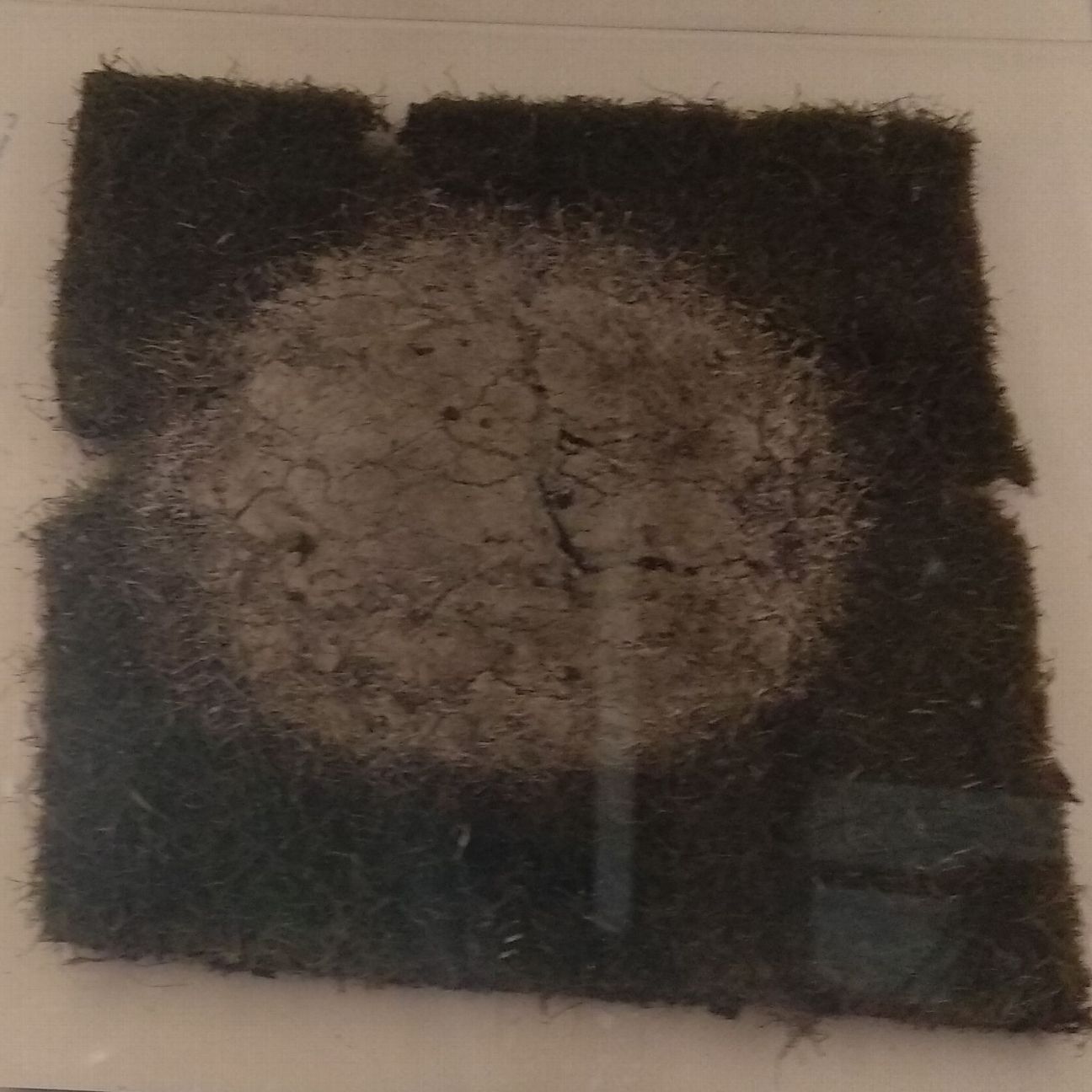
Photo credit: German Football Museum
Andreas Brehme’s 85th-minute penalty in the 1990 final was all it took for West Germany to beat Argentina 1-0. But the folks at the German Football Museum in the industrial city of Dortmund aren’t quite sure how the exact spot where it was taken ended up with them.
At some point after the final whistle, someone dug up the white penalty spot from one end of the Stadio Olimpico in Rome, encased it in acrylic, then had it signed by Germany legend Franz Beckenbauer, who was the team’s coach that day.
A penalty spot might be the best way to sum up that World Cup in Italy; the tournament was one of the lowest scoring, as both semifinals went to penalties, and the final was also decided from 12 yards. But, interestingly, Brehme fired home the winning kick with his right foot, having used his left foot when scoring a penalty at the 1986 World Cup.
“I honestly don’t know [which is my strongest foot],” he told FourFourTwo magazine in 2022. “In 1986, I was asked why I’d taken a penalty with my left foot, as the guy knew I often used my right. I hadn’t even noticed. It made no difference.”
Where is it now? The penalty spot was previously bought and owned by famous German record producer Frank Farian, who founded the hit disco group “Boney M,” and it has been at the German Football Museum since it opened in 2015.
1994 World Cup – Ayrton Senna’s banner
After Pelé, Brazil’s great sporting hope was Formula 1 superstar Ayrton Senna. He was hailed as the best racing driver of all time — he won the F1 drivers’ championship three times between 1988 and 1991 — and was beloved by people across the country.
Brazil’s soccer team loved him, too. The Brazilians were honored to have him in the dressing room when they played Paris Saint-Germain in a friendly a few months before the 1994 World Cup in the USA.
“It is an experience I will always treasure,” Brazil goalkeeper Cláudio Taffarel told FIFA last year. “I couldn’t tell you a single thing about the game against Paris Saint-Germain; the only thing I remember is meeting Ayrton Senna! … He was so charismatic yet so humble. He walked into our hotel, no posing like celebrities do, no security around him, no fuss. You would have thought he was just a regular guy. Funnily enough, he was convinced that one of us — he wasn’t sure if it would be him or us — would become four-time world champions.”
Senna left the dressing room and performed a ceremonial kickoff at the match. But, 11 days later, he suffered a high-speed crash on the seventh lap at the 1994 San Marino Grand Prix and died.
Brazil made it to the final and beat Italy 3-2 on penalties to win their fourth title. On the Rose Bowl pitch afterward, the squad unfurled a banner that read: “Senna … we accelerate together. The fourth title is ours!”
Where is it now? For almost 30 years, the banner was kept in a drawer by former Brazil FA president Américo Faria until it was gifted to the Senna family by the players in 2024. It now hangs at the Senna Institute in Rio de Janeiro. “For our family, it was a gesture of affection, respect and collective emotion that has never been forgotten,” Senna’s niece, Bianca, tells ESPN.
1998 – Frank Leboeuf’s replica trophy
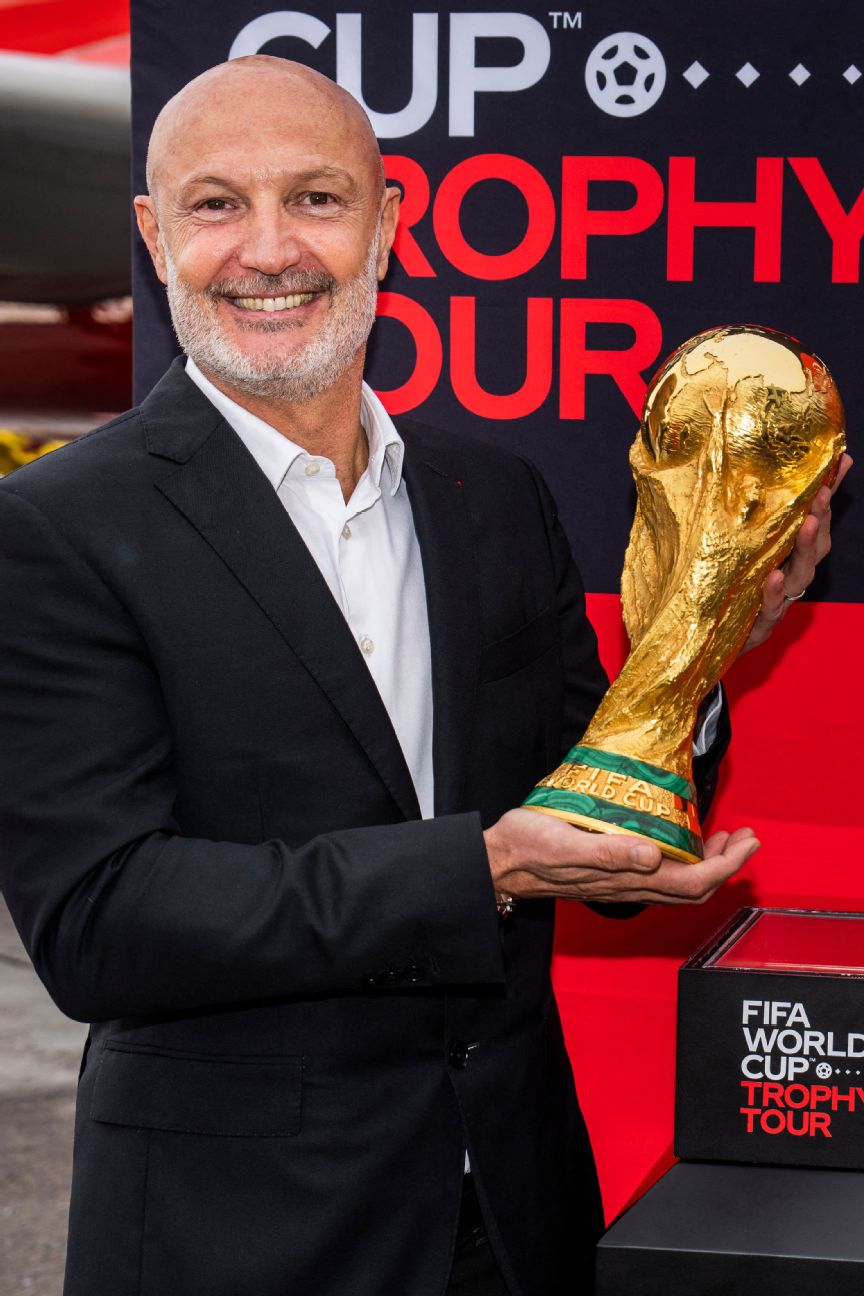
Photo credit: Frank Leboeuf
France’s first World Cup success, when they defeated Brazil 3-0 in the final on home soil, was the start of a golden period of four trophies in five years. But former Les Bleus center back Frank Leboeuf doesn’t dwell too much on the trinkets of his career: His boots, shirt and medal from that final, along with a host of things from his club career, are on display at Chelsea’s museum at Stamford Bridge. Which is better than where they were before.
“My medal was in the back of the drawer with my underwear and my socks,” he tells ESPN. “It wasn’t in a special bag or anything, it looked like something irrelevant to make sure that somebody comes to my house and [doesn’t try] to steal it or anything.”
There was a time, about six years ago, when Leboeuf reached for a pair of socks and accidentally felt his winner’s medal, having completely forgotten he had kept it there. But he believes his lasting memories of the tournament are more important. “Everything is in your head,” he says. “And that’s pretty much it.”
Still, his favorite item is the small replica World Cup trophy that the French Football Federation commissioned and gave to each player. Incredibly, the 1998 squad still keeps in close touch and meets up at least once a year; the team has a group chat together, in which Leboeuf is in charge of signaling each of their birthdays, including for 84-year-old manager Aimé Jacquet.
Where is it now? Leboeuf still has the replica World Cup trophy at home.
“A long time ago, just pretending, I pointed to the trophy and said to my wife [actress Chrislaure Nollet], ‘Hey darling, have you seen that? World Cup champion,'” he told ESPN.
“She said, ‘Yeah, shut up and give me a coffee.'”
2002 – Ronaldinho’s quarterfinal jersey
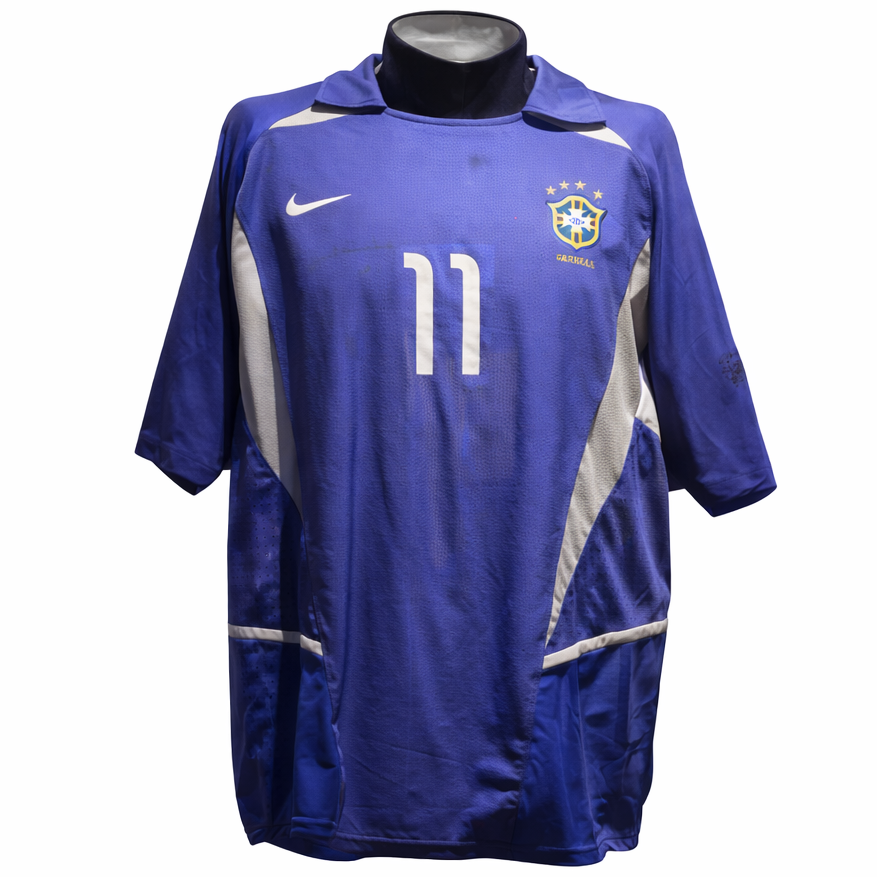
Photo credit: Museu do Futebol
Brazil have had some incredible World Cup moments such as Carlos Alberto’s famous goal in the 1970 final, Pelé’s volley in 1958 and his dummy on the goalkeeper vs. Uruguay in 1970. Ronaldinho’s glorious looping free kick to give them a 2-1 win against England in the 2002 quarterfinal is up there among them.
From over 35 yards out and way on the right side of the pitch, Ronaldinho could only cross the ball into England’s packed 18-yard box. That’s what it seemed at first, although his effort looped further and further toward the goal, eventually floating over goalkeeper David Seaman and into the top corner.
England players called it a fluke; Ronaldinho claims it was on purpose. “When we play England, I get asked if I meant that goal in 2002,” he said ahead of the 2014 World Cup. “I knew Seaman came off his line quite a lot, and I knew if I put the ball where I did that it could cause him problems. So I meant it. It was not luck.”
Whatever the debate, it wasn’t luck that Brazil — who had an incredible squad that included Cafu, Roberto Carlos, Rivaldo and Ronaldo Nazário — went on to win the trophy with a 2-0 win over Germany at the International Stadium Yokohama in Japan.
Where is it now? Ronaldinho’s match jersey from the England quarterfinal is on temporary display at the “Museo Do Futebol” in Rio de Janeiro.
2006 – Zidane, Materazzi statue
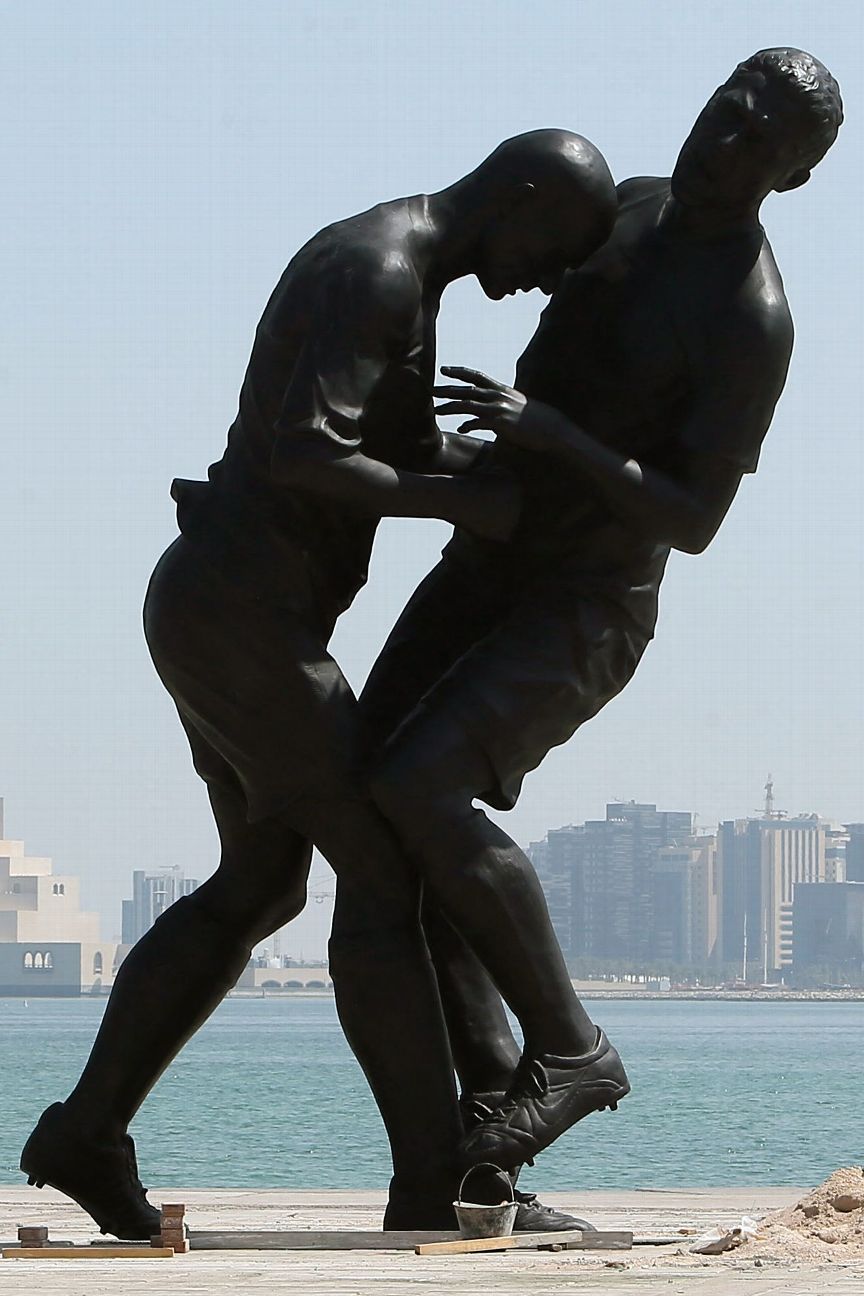
Photo credit: Getty Images
France midfielder Zinedine Zidane was one of the best players of his generation, winning major trophies including the 1998 World Cup, as well as the 1998 Ballon d’Or, Euro 2000, Champions League and multiple domestic cups during a glittering club career at Juventus and Real Madrid. But his last act as a player saw him sent off during the 2006 World Cup final in Germany that was immortalized in statue form years later.
Zidane’s career nearly ended much sooner than anyone would have thought. France drew their opening games against Switzerland and South Korea, only advancing to the knockout stage thanks to a 2-0 win against Togo. From there, they kicked it up a gear, and wins over Spain, Brazil and Portugal landed them a place in the final against Italy.
Things started well, as Zidane opened the scoring in the seventh minute from the penalty spot when he cheekily chipped goalkeeper Gianluigi Buffon with a “Panenka” that bounced off the underside of the bar and over the line, before Italy defender Marco Materazzi equalized with a header shortly after.
The game finished 1-1 and went to extra time, but with less than 10 minutes remaining in extra time, Zidane and Materazzi clashed near the center circle and the Frenchman head-butted Materazzi square in the chest (it later transpired that Materazzi had made repeated sexist comments about Zidane’s sister.)
Zidane was swiftly sent off (Materazzi was not), and the final image of his career was of him walking past the iconic trophy and down the tunnel. Italy would go on to win 5-3 on penalties, with Materazzi scoring the second spot kick.
Where is it now? Zidane has since apologized, as did Materazzi. But, like any great World Cup moment, it has taken on a life of its own. In 2013, a statue of the head-butt was unveiled on the Corniche in Doha, Qatar. It remained in place for a matter of weeks before being taken down after it sparked a backlash, notably from religious conservatives. However, it was re-installed ahead of the 2022 Qatar World Cup. It was moved inside to a permanent home at the 3-2-1 Qatar Olympic and Sports Museum in Doha, where it stands as part of an exhibit focused on athlete mental health and managing the immense stress of high-level tournament sports.
2010 – A vuvuzela
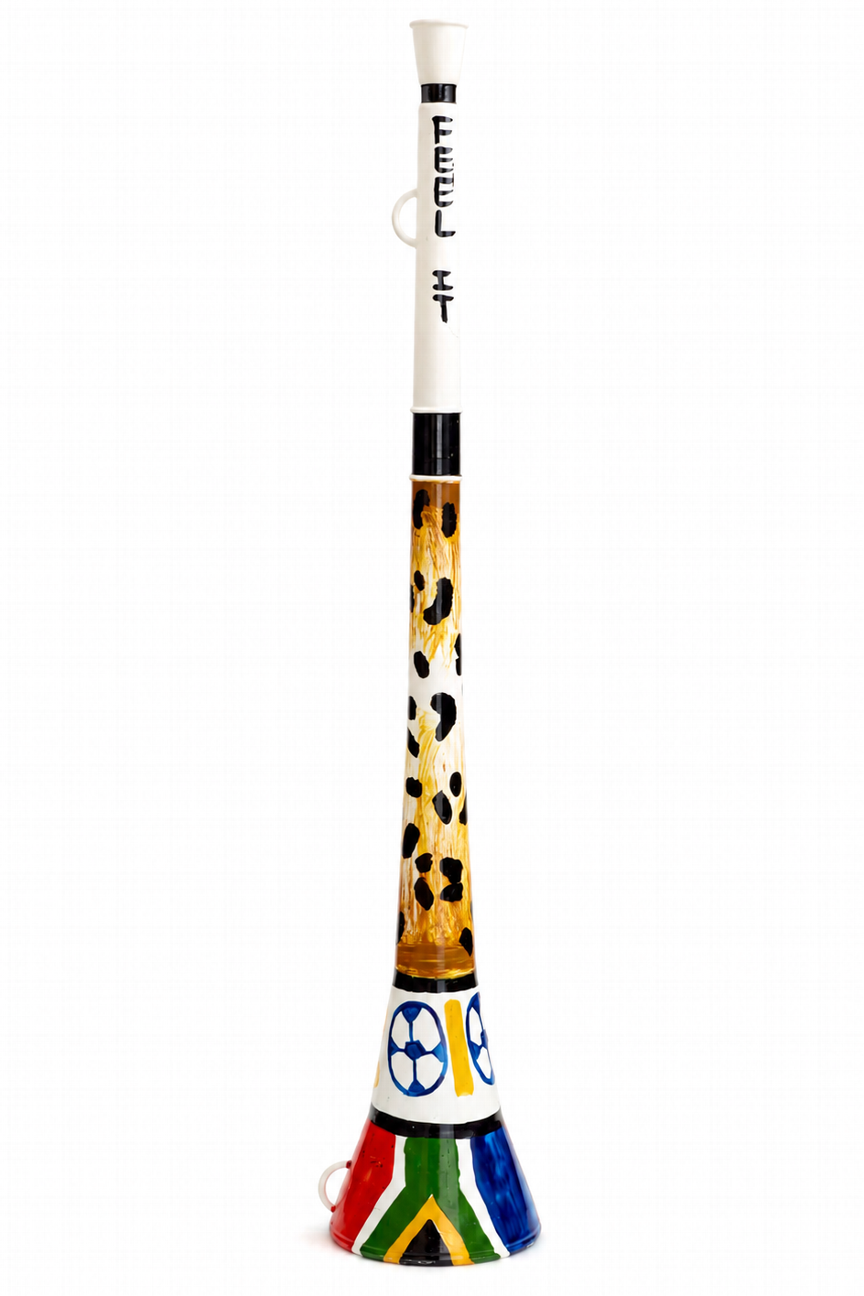
Photo credit: Science History Institute
No item has so defined a tournament in soccer’s collective memory as the vuvuzela at South Africa 2010. The 15-inch horn, which plays one B-flat note, was everywhere. And when blown in unison by a crowd, they are incredibly loud as they can produce levels up to 120-decibels (equivalent to a jet engine taking off).
In 2009, a year before the tournament, South Africa hosted the Confederations Cup, where South Africa fans — who have blown vuvuzelas at games for years — sparked complaints, particularly from Europeans, due to the noise. It even drew the ire of TV viewers, who struggled to hear the commentators over the drone.
However, FIFA refused to ban them for the World Cup. Then-president Sepp Blatter said ahead of the final between Spain and the Netherlands: “We’ve survived the vuvuzelas, everybody has survived the vuvuzelas. I don’t think we can just take them away. This is not only the African way, because all the visitors coming here have started to buy the vuvuzelas and in the final there will be not even 50% African people in the stadium, but everybody will have a vuvuzela.”
Some TV broadcasters found a solution that involved viewers having the option to change the sound frequencies of their devices. But the players didn’t have quite the same option. “I find these vuvuzelas annoying,” Spain’s Xabi Alonso said at the Confederations Cup. “They don’t contribute to the atmosphere in the stadium. They should put a ban on them.”
It didn’t hinder Spain much, though. The country’s golden generation made good on their expectations to win the tournament, with Andres Iniesta’s goal proving the difference in a 1-0 win over the Netherlands in the final.
Where are they now? Vuvuzelas are now firmly banned from soccer stadiums, falling into the same category as whistles, air horns and loudspeakers. The vuvuzela pictured above is from the Science History Institute in Philadelphia, Pennsylvania.
2014 – Mario Götze’s winning left boot
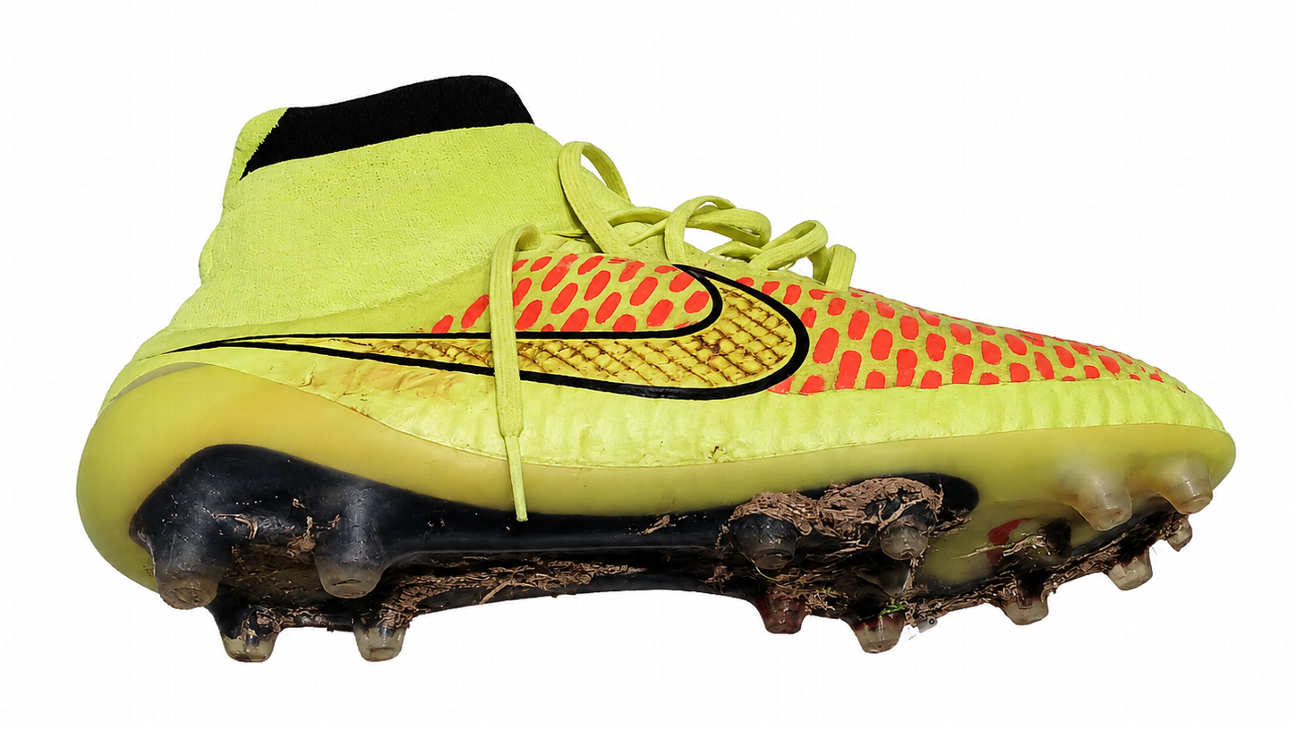
Photo credit: German Football Museum
“Show the world you’re better than [Lionel] Messi,” Germany manager Joachim Löw told 22-year-old forward Mario Götze as he prepared to bring him on in the 88th minute with the score tied at 0-0 in the 2014 final against Argentina. Not long after, in extra time, Götze struck the game’s only goal with his left boot, forever making him a legend of German soccer.
Götze, though, never felt the need to hang on to the boots he wore that day. Within six months, he had sold the left one for $2.45 million in a televised auction in aid of A Heart for Children, a German children’s charity.
“I have never washed the shoe,” Götze said at the time. “It is still in the same condition as it was in Rio [de Janeiro], when I left the stadium with it. There is still grass on it. I have never put the boot on after the final. I kept it safe at my house.”
Götze found himself cast away from the national team within two years, but his boot sale is, by quite some way, a record at auction for a single boot. Although, the official Guinness Book of World Records lists the most expensive match-worn pair of boots at a much lower $173,000, worn by … Messi, during a LaLiga game for Barcelona in 2021.
Where is it now? Götze’s goal-scoring left boot from that final went on display for a short time at the German Football Museum but is back with the individual who purchased it. His right boot (pictured) remains at the museum.
2018 – The VAR terminal from France vs. Australia
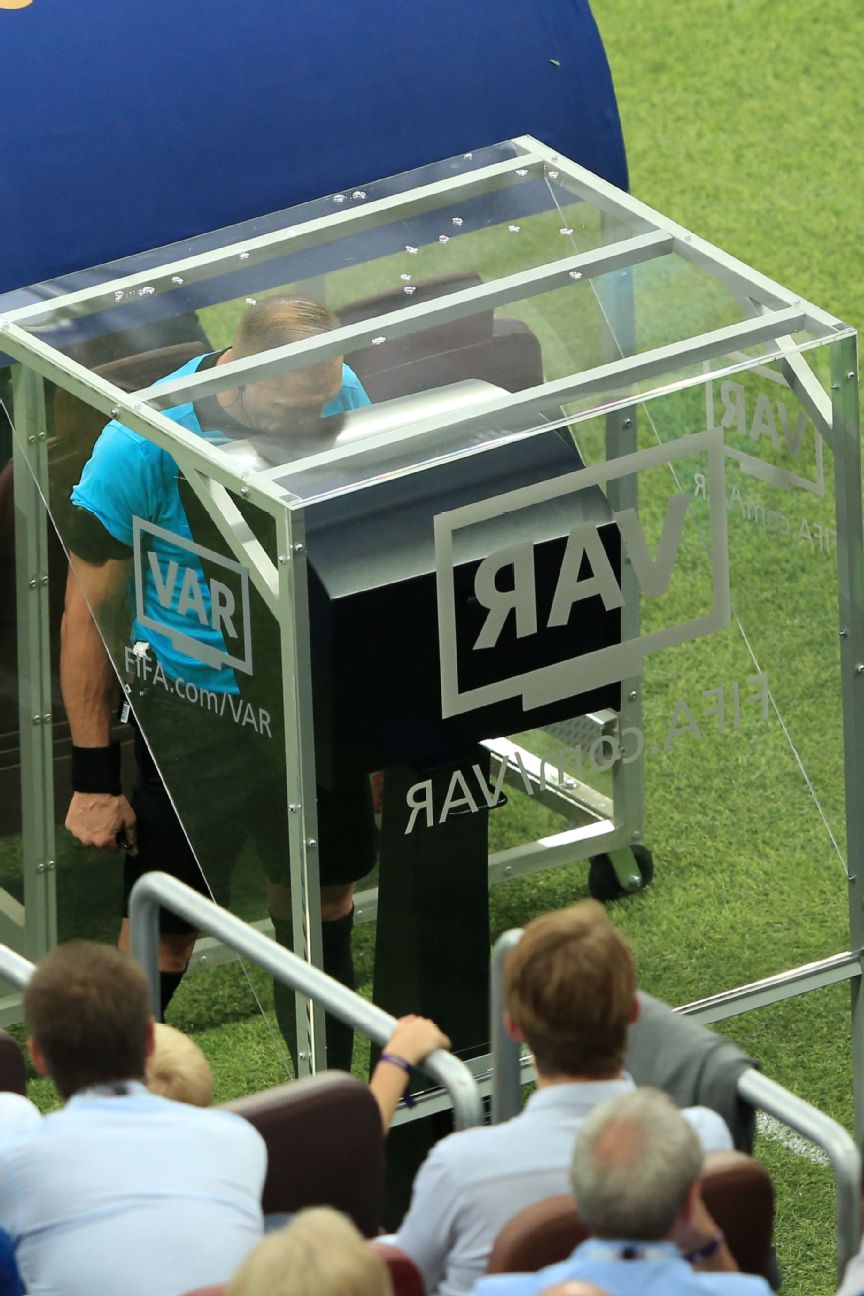
Photo credit: Getty Images
VAR was introduced for the first time at the 2018 World Cup in Russia, so there would never be another controversial call again, right? Forget the mistakes of Maradona’s “Hand of God” in 1986, Frank Lampard’s “Ghost goal” in the 2010 round of 16, or Germany midfielder Torsten Frings’ handball that helped stop the USMNT from making the 2002 semifinals … technology was the future.
VAR made its first intervention just two days into the 2018 tournament when France attacker Antoine Griezmann was brought down by Australia’s Joshua Risdon in the box. The referee waved away protests for a foul, but the VAR indicated an on-field review and sent him to the pitchside monitor, where he changed his decision and awarded a penalty.
Uncharacteristically, VAR was then quiet for the rest of the tournament and was not even a talking point until the final, when France met Croatia.
The score was tied at 1-1 when France played in a corner from the right just before halftime. Blaise Matuidi attempted to flick the ball on, and Ivan Perisic seemingly knocked it out for another corner with his hand. The French players appealed for a penalty, but referee Nestor Pitana waved the protests away before VAR intervened and sent him to the pitchside monitor, where he gave a penalty. Griezmann scored to restore France’s lead, and Croatia never fully recovered as they went on to lose 4-2.
Where is it now? FIFA’s collectors did not preserve the VAR terminals from the 2018 World Cup. But there is a replica of the terminal used for the first VAR decision at a World Cup at its museum in Zurich as part of an interactive exhibition tracking technology’s role on the pitch. Museum visitors can sit inside a simulated Video Operation Room (VOR) station to try their own hand at breaking down controversial match decisions.
2022 – Lionel Messi’s bisht
Photo credit: Getty Images
Qatar 2022 will be remembered most for two things: Argentina legend Messi winning the only major trophy to elude him during his career, and its hosts.
The tournament is a leading contender for being the most controversial edition in the competition’s history. Not for what happened on the field, but for everything off it: From migrant worker rights to Qatar’s strict anti-LGBTQ+ and women’s rights laws, and it being scheduled in winter for the first time.
It came as little surprise, then, that the final image of the tournament garnered a similarly mixed reaction as the Emir of Qatar, Sheikh Tamim bin Hamad Al Thani, draped a black bisht — a ceremonial long cloak that is commonly worn by male dignitaries in the Gulf region on highly formal occasions — over Messi’s shoulders just before he lifted the trophy.
The scene came as a surprise to the vast majority of people watching the final, and it was even a surprise to the Qatar-based tailor who had been asked to make two cloaks: One for Messi, and the other for France captain Hugo Lloris.
“At first, we were not aware when we were asked to design this bisht that it was for the World Cup champion,” Muhammad Abdullah Al-Salem told Esquire Middle East in December 2022. “We were surprised that the bisht that Messi wore was from our store, and I felt proud when my knowledge was that our store was the first choice of officials to manufacture this bisht.”
Where is it now? The day after the World Cup final, Messi was offered over $1 million for the bisht by a lawyer and politician in Oman. However, a source told ESPN that Messi held on to it after the 2022 final and it remains in his possession to this day.