dailynewsnblog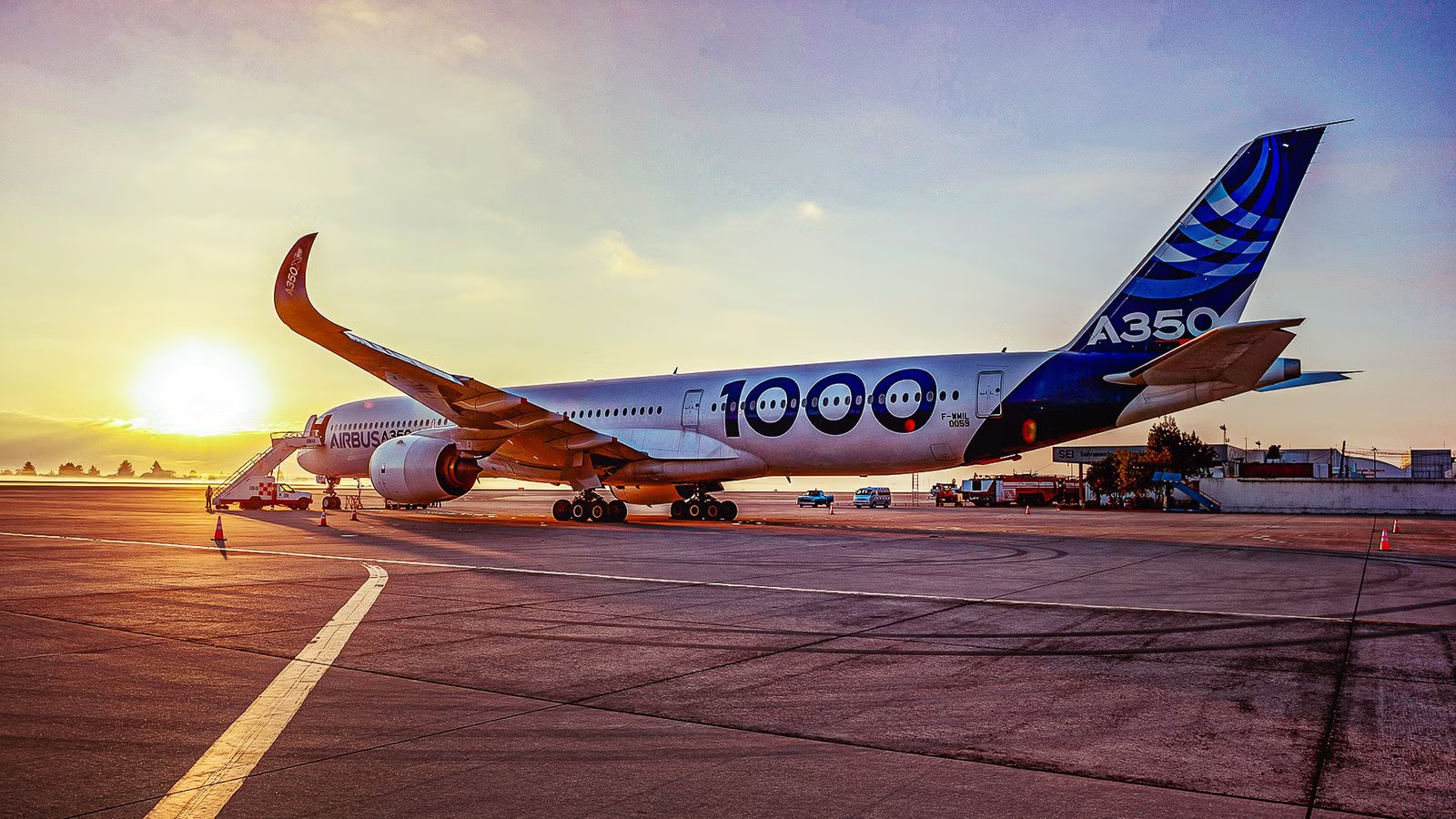
 Alaska Airlines put pen to paper on a deal for 110 aircraft from
  Boeing in January of this year. Making up the largest in its history, the order would include 105 Boeing 737-10 narrowbody and five Boeing 787 widebody aircraft in total, it said. It would also take Alaska’s total order book with Boeing for the former to 245, and leave the option for a further 35 737-10s if needed.
Familiar phrases like “sustained growth” and “strategic plan” appeared in the announcement, mirroring the usual reasoning airlines offer when buying jets. But Alaska gave another intriguing clue as to why it had gone in so heavily for the Boeing jets. “This order […] secures critical delivery slots,” it noted. Indeed, such were the terms of the 737-10 deal that Alaska had the “flexibility to adjust to a different model if necessary”. So, why would the carrier place an order? It might just change down the road anyway.
Decade-plus Wait Times For Aircraft

The answer is a simple one. Manufacturers are juggling such long production backlogs that airlines put themselves at risk by failing to get orders in early. Alaska, for instance, signed its deal with Boeing in January, but will only have received all the aircraft in question by 2035.
Combined, Boeing and Airbus currently have an order backlog of 17,000 airplanes, according to the International Air Transport Association (IATA). That is equivalent to almost 60% of the entire active global fleet today. Historically, this figure has hovered between 30% and 40%. Per IATA, this structural mismatch between airline requirements and manufacturing output is unlikely to normalize before 2031 to 2034.
All this means that airlines are forced to wait longer between ordering and receiving jets. Based on current production capacity, the 17,000-strong aircraft backlog will take almost 12 years to fulfill. But that assumes smooth running, and delivery shortfalls totaled “at least” 5,300 as of December. Given that so many have been ordered, expected, and then not delivered on schedule, airlines might not be blamed for prematurely getting requests in to manufacturers nice and early.
Aircraft Supply Chain Struggling With Growing Demand

At the core of the problem, engine and other original equipment manufacturers (OEMs) simply cannot meet demand today. This itself stems from a rebound in appetite for travel since the pandemic, which itself sowed chaos across the industry. Boeing and Airbus may sometimes get a bad rap, but they have been building airframes quicker than the power units can be supplied, according to IATA. As a result, it is now not uncommon to see newly completed jets roll off the production line to be instantly parked until an engine can be sourced.
Skilled labor shortages have been partially attributed to the sluggish output of engines. But the intricate supply chain network behind it all has also played a huge part. As IATA explained in December: “The fragility of the aerospace supply chain network can become an acute constraint amid economic uncertainty, changing tariff regimes, and tight labor markets.” In practice, that means seemingly minor disruptions cause significant delays.
Alaska Airlines’ order book as of February:
Aircraft type | Firm orders 2026 to 2035 | Options and other rights 2028 to 2035 |
Boeing 737 | 174 | 71 |
Boeing 787 | 12 | – |
Embraer 175 | 3 | – |
Total | 189 | 71 |
In reality, the finger-pointing one could do as to what and who is responsible for the broken supply chain is extensive. The fact of the matter is that airlines are being forced to wait longer and longer for new planes they currently need to meet growing demand. Among the efforts to mitigate this are life extensions for older jets by airlines.
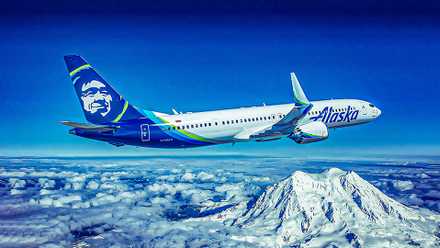
Alaska Unveils Giant Fleet Expansion: 110 New Jets On The Horizon
Alaska Airlines has placed a landmark order for more Boeing 737-10s and 787-10s.
Airlines Face $11 Billion Cost Of Supply Issues

The problem with operating an aging aircraft is that maintenance becomes increasingly costly over time. Add in higher fuel consumption, and so costs, relative to newer fleets, and the amount airlines must pay to keep aircraft in the air in line with demand is high.
Respectively, the two factors were found to have cost global airlines around $4.2 billion and $3.1 billion last year. Coupled with increased costs related to engine leasing and holding surplus spare parts, the total the aviation industry effectively wasted over the year due to supply chain disruptions exceeded $11 billion, according to research by IATA and management consultant Oliver Wyman.
Airlines approaching Airbus and Boeing years before they need deliveries makes far more sense when the money involved is considered. Avoiding costs associated with using aging aircraft is as simple as investing in newer, more efficient ones. Take  Lufthansa, for example. The German flag carrier is in the midst of a ‘turnaround’ effort, through which it effectively plans to increase profit as much as twofold over the next two years. Achieving this will heavily rely on replacing the planes in its fleet, including Boeing 747-400s and Airbus A340-300s. According to Planespotters.net, each set of these in Lufthansa’s fleet averages around 26 years old, placing them well above the industry’s average fleet age of just over 15 years.
Aircraft Delivery Slot Is An Asset

Luckily for Lufthansa, orders penned several years ago mean that variants of the Boeing 787 and Airbus A350 are now slowly making their way into its fleet to replace aging models. Respectively, seven and two of these arrived over the course of 2025, as 11 A340s made way in the meantime. “More than twice as many new long-haul aircraft” should then arrive over the current year compared to 2025, per the airline’s latest annual report.
Among the deliveries coming in now for Lufthansa are Boeing 787-9s. These were initially ordered some seven years ago in 2019. Lufthansa wrote at the time that “the decision regarding which airline will deploy the aircraft at which hub will be made at a later date.” It also noted that these would “primarily be replacing four-engine aircraft.” All this goes to say, Lufthansa knew it would need more modern jets eventually, but had yet to solidify specifically how and where they would be used, and what this would be instead of. The important thing was just getting in the queue early.
This practice of buying up delivery slots as if they were assets in themselves is a fundamental part of the industry. In Lufthansa’s case here, the pandemic had not struck yet, and so, unbeknownst to airlines, ordering early was soon to become ever more important. Jump forward to today, and Alaska’s January order very much appears to be about holding a position in the queue as it is the specific planes themselves. Remember its own words around “critical delivery slots” and “flexibility to adjust”. As Lufthansa did, Alaska knows it will need new planes eventually, so it has requested these in the knowledge that it has the beauty of being able to hash out the specifics later down the line.
Why Boeing Has Seen Such A Rebound In 787 Dreamliner Production
The manufacturer has seen its production numbers increase notably.
Options Allow Aircraft Orders Without Commitment

Benefits to airlines of ordering prior to fully working out their requirements do not stop there, though. A key part of buying aircraft from manufacturers is often securing what are known as options. These essentially give an airline the right to buy further models at a later date for an already-agreed price. Most importantly, however, holding options means that an airline will not have to rejoin the end of the queue if they do end up wanting the additional jets.
Holding company Lufthansa Group, per its annual report, had 219 fixed orders and held options to buy a further 182 aircraft as of the end of 2025. Some 15 and 25 of these, respectively, were for the Airbus A350-1000, due for delivery between this year and 2030. Having already exercised options for five of the models after initially placing the order with Airbus in 2023, this meant Lufthansa could effectively jump the queue for further A350s if demand called for it. On top of this, it means the carrier has been somewhat shielded against delays in the Boeing 777X program, given it has 20 777-9s on order but has been awaiting these, along with the rest of the industry, for several years.
Lufthansa Group order book as of year-end 2025:
Aircraft | Fixed orders | Delivery period | Options |
Airbus A350-1000 | 15 | 2026 to 2030 | 25 |
Airbus A350-900 | 22 | 2026 to 2031 | – |
Boeing 787-9 | 27 | 2026 to 2028 | 13 |
Boeing 777-9 | 20 | 2026 to 2029 | 24 |
Boeing 777-8F | 7 | 2028 to 2030 | – |
Airbus A220-300 | 40 | 2026 to 2031 | 20 |
Airbus A320neo | 30 | 2026 to 2029 | 40 |
Airbus A321neo | 18 | 2026 to 2028 | – |
Boeing 737-8 | 40 | 2028 to 2032 | 60 |
Total aircraft | 219 | 2026 to 2032 | 182 |
Alaska is poised to enjoy similar flexibility with its latest order, having negotiated options for 35 737-10s on top of those 105 already locked in. Given Boeing’s delivery schedule through 2035, the carrier can modify its order based on how conditions develop over the coming nine years. If it finds itself needing additional aircraft, then these give the airline a head start on securing them. If conditions do not allow for it, then little has been lost.
Aircraft Prices Are Locked In Early

Price is also a key factor behind airlines ordering aircraft years ahead of schedule. Typically, prices are fixed at the point of ordering rather than at delivery, so airlines can mitigate the effects of inflation.
Lufthansa again offers a solid example here, having buoyed its order book with a further ten A350-900s and ten Boeing 787-9s in May of this year. These, it announced at the time, had a list price of $7.7 billion. Though they likely paid far less after negotiations, as is standard practice across the industry, one could expect the aircraft themselves to have increased in value by the time of their scheduled delivery between 2032 and 2034.
At least, they should have increased in value. Any major improvements in supply or other unforeseen changes could change this, but that is a risk airlines must take on. Much like hedging against changes in fuel prices, airlines can find themselves keeping capital expenditure down by swooping for aircraft earlier, and so when prices should be lower, in theory.