dailynewsnblog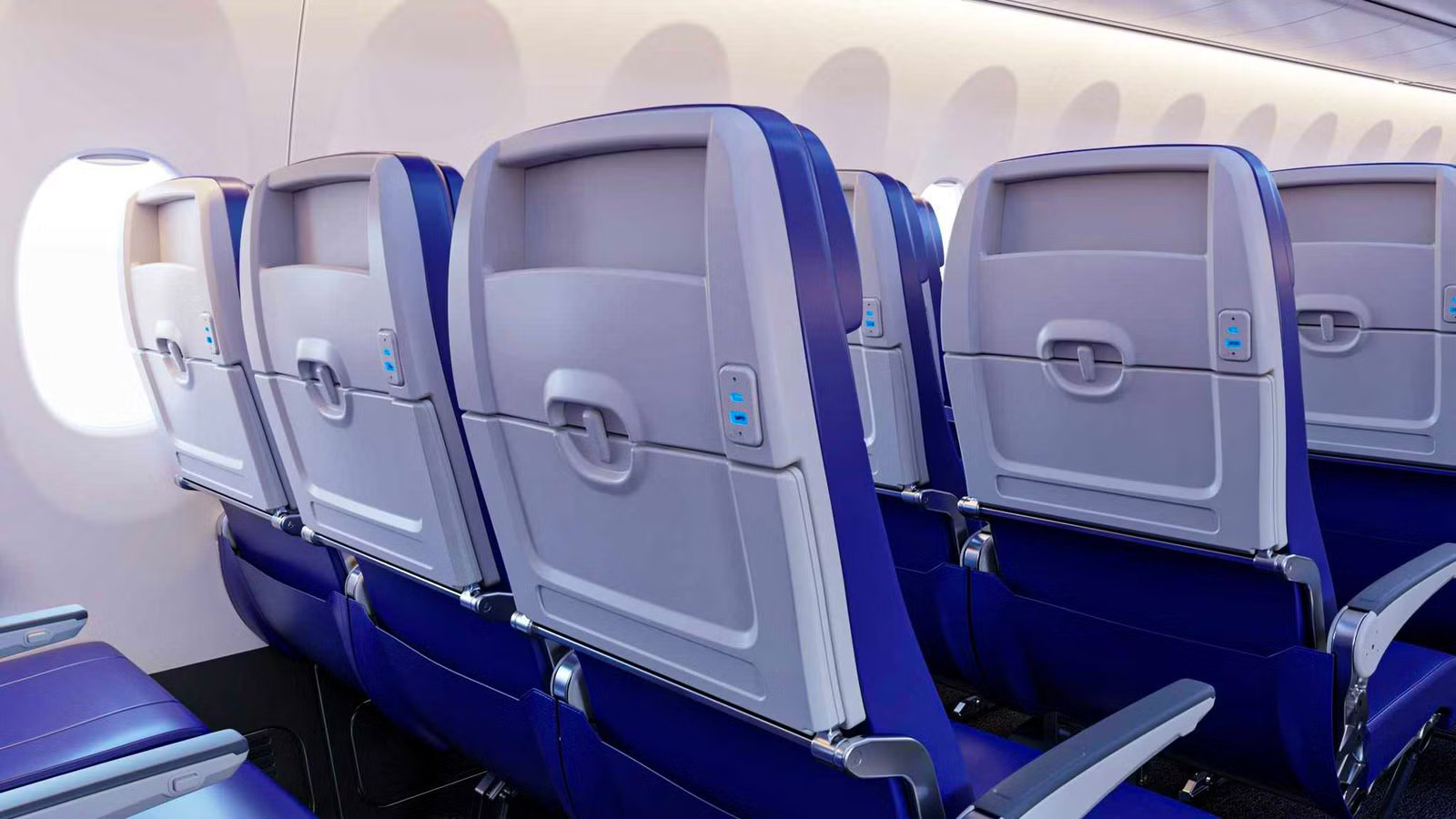
 Southwest Airlines has ended one of the most enduring traditions in modern commercial aviation history: the open seating concept. The final unassigned flight operated from Honolulu(HNL) to Los Angeles(LAX) on January 26, 2026, bringing a formal end to an unbroken 54-year operational run that defined the carrier’s corporate identity. Some loyalists reacted with open nostalgia, but the decision was ultimately dictated by three converging financial realities, leaving executive management with no viable path forward.
Despite generating a massive $27.5 billion in operating revenue during fiscal 2024, the airline saw a sharp decline in adjusted net income, revealing a structural revenue gap that left the carrier vulnerable to intense activist shareholder interventions. It is a decision with the future in mind, and the termination of open seating is a focal point of a sweeping profitability campaign that includes a quiet April 2026 luggage fee escalation and a total re-engineering of the onboard passenger real estate. It highlights how the hyper-competitive realities of contemporary aviation have forced an icon of low-cost travel to completely abandon its foundational heritage to protect its long-term financial survival.
The Collapse Of Customer Preference

Southwest’s internal customer preference metrics left no room for executive ambiguity or continued structural denial. Extensive corporate market research revealed that 80% of current passengers and 86% of prospective fliers strongly preferred pre-assigned seating arrangements over the traditional gate-side boarding scramble. When mapping out the precise reasons why lapsed travelers routinely abandoned Southwest to fly on network rivals, the anxiety and unpredictability of the open boarding process was systematically cited as the single number-one driver of customer defection.
Southwest treated its unassigned cabins as a core cultural asset, banking on the idea that an informal, first-come-first-served environment would foster brand intimacy and customer loyalty. However, the modern travel demographic has changed dramatically, increasingly viewing the open layout as an operational friction point rather than an entertaining corporate quirk. Passengers actively avoided booking the carrier for time-sensitive business trips or high-stakes family vacations because the system could not reliably guarantee that colleagues, couples, or parents with young children would be seated together.
The financial impact of this consumer shift grew increasingly severe as market share eroded across highly competitive domestic corridors. Management finally recognized that clinging to an archaic boarding philosophy was actively repelling the exact high-yield customer segments required to sustain unit revenue growth. Major legacy network operators successfully refined their basic economy tiers to capture budget travelers while simultaneously expanding their premium offerings, and Southwest found itself structurally trapped by its own brand history. Unfortunately, cultural nostalgia cannot substitute for direct alignment with contemporary consumer expectations.
Leaving Ancillary Billions On The Table

Where Southwest was missing the mark, especially when compared with other leading low-cost carriers around the world, was a massive pool of uncollected ancillary revenue that had been left completely untapped. From 2018 through 2023, major domestic competitors, including  American Airlines,
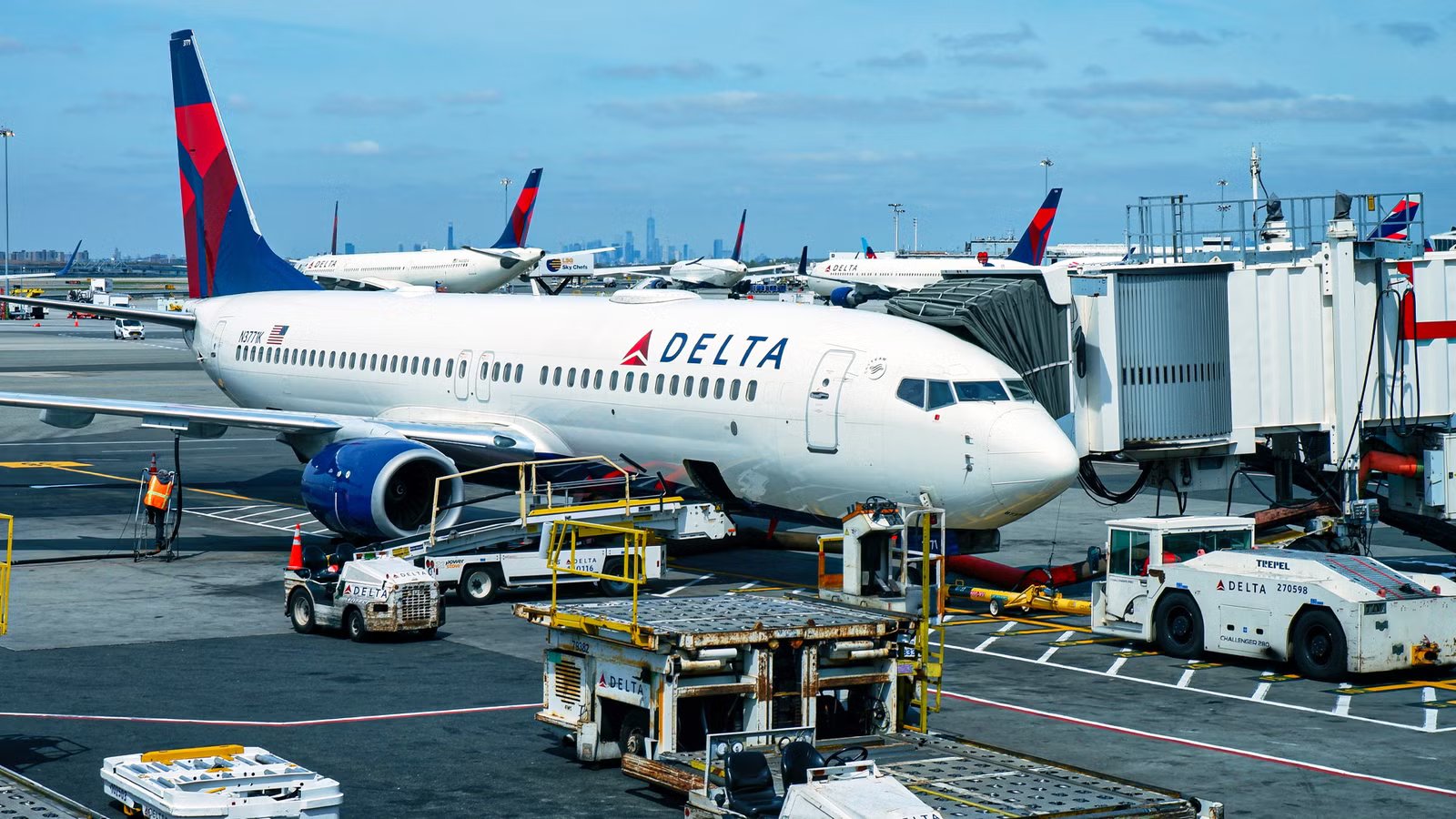
  Delta Air Lines,
  United Airlines, Frontier Airlines, and Spirit Airlines collectively generated $12.4 billion in dedicated seat-assignment fees alone. An open seating model completely lacks fixed real estate identifiers, meaning Southwest remained structurally incapable of capturing a single dollar from this exceptionally high-margin revenue stream.
This deep competitive revenue deficit became completely unsustainable when paired with broader luggage logistics, prompting an aggressive overhaul of the airline’s historic baggage framework. After watching network rivals pocket $5.5 billion in checked bag fees during the first nine months of 2023 alone, Southwest officially abandoned its famous free bag marketing campaign in mid-2025 to introduce standard luggage fees. Leaning directly into the legacy carrier financial playbook, the airline implemented a subsequent price hike on April 9, 2026, raising a first checked bag to $45 and a second to $55 to accelerate its ancillary cash capture.
The systematic capture of these unutilized funding streams has transitioned from an aggressive growth strategy to an essential requirement for stabilizing the carrier’s baseline operating margins. Through converting the aircraft cabin into a monetized grid, Southwest now establishes a steady stream of secondary revenue that remains insulated from standard fuel price shocks or ticket price wars. This departure from tradition keeps every square foot of the Boeing 737 cabin actively contributing to the corporate bottom line, pulling the airline out of a self-imposed financial disadvantage relative to its primary domestic peers.
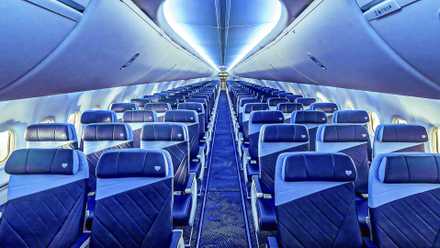
Why Southwest Airlines’ New Assigned Seating System Created Problems It Didn’t Anticipate
The airline recently changed its long-standing boarding process.
The $1.5 Billion Stratification

To convert these complex mathematical projections into immediate liquidity, Southwest completely dismantled its classic, simplified booking options to launch a highly stratified fare matrix. Corporate financial projections indicate that the introduction of assigned and premium seating configurations will generate $1.5 billion in standalone annual seat revenue, a principal driver for a projected $4.3 billion expansion in total operating profit. The commercial reorganization is explicitly designed to drive a 9.5% increase in revenue per available seat mile, positioning net earnings to more than quadruple from their 2025 baseline.
The operational engine of this new strategy relies on the systematic segmentation of passenger demand through Basic, Choice, Choice Preferred, and Choice Extra sections. Under this corporate structure, traditional seat-selection privileges are strictly controlled behind specific digital paywalls, requiring standard ticket holders to pay an upfront fee to secure rows closer to the front boarding doors. Simultaneously, the carrier is retrofitting its cabins to allocate approximately one-third of the total layout to extra-legroom seats, providing up to 34 inches (86.36 cm) of pitch to capture high-dollar premiums from affluent leisure fliers.
This meticulous pricing environment enables Southwest to monetize both ends of the consumer spectrum simultaneously without expanding the physical size of its aircraft. Price-sensitive budget travelers are funneled into the highly restrictive base tier, while corporate accounts and comfort-driven leisure fliers consistently buy their way into the lucrative forward sections. Southwest has now successfully transitioned away from its historically flat revenue landscape, creating an adaptable commercial engine that extracts maximum economic value from every flight segment across its massive short-haul network.
Eight Million Simulations

The carrier’s low-cost model has relied on rapid aircraft turnarounds to maximize utilization across its massive fleet of Boeing 737s. Open seating historically accelerated this gate process, mainly because passengers naturally self-selected available slots to avoid boarding conflicts, bypassing the typical bottlenecks associated with assigned rows.
To quantify the risk of abandoning this structural advantage, the airline executed more than eight million simulation-based boarding trials before modifying its core gate protocols. These intensive digital stress tests focused directly on short-haul schedules where minor gate delays have zero room to recover naturally during the flying day. Maintaining five to seven daily flight segments per airframe demands absolute efficiency, a metric that assigned seating could easily compromise if travelers struggle to find their pre-allocated spaces or fight for overhead bin spaces.
Boarding Type | Modeled Average Turnaround Window | Fleet Utilization Impact Rating | Passenger Backlog Risk Factor |
Traditional Open Seating | 20 – 25 Minutes (Optimal) | Maximum (enables 5-7 daily segments) | High gate-side crowding and anxiety |
Assigned Zone Boarding (2026) | 23 – 27 Minutes (Projected) | Balanced via optimized gate flows | Controlled row bottlenecks |
Legacy Back-to-Front Assigned | 28 – 32 Minutes (Unacceptable) | Negative (reduces daily flight counts) | Severe aisle congestion |
If the newly adopted assigned format extends average ground turn times by even two or three minutes, the cumulative fleet deficit would strip away the asset utilization edge that sustained the carrier for over half a century. The mathematical modeling had to prove that a refined zone boarding framework and reorganized gate areas could successfully mitigate the inherent human bottlenecks of assigned queues. By altering how passengers line up against the classic boarding pillars, Southwest aims to protect its quick-turn legacy while also implementing the premium cabin infrastructure demanded by contemporary market realities.
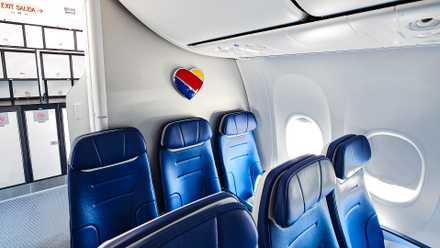
Customer Uproar Forces Southwest To Rethink Assigned Seating Policy: Here’s What’s Changing
Southwest tweaks its policy after a rough rollout.
The Activist Leverage

The aggressive intervention of Elliott Investment Management after the firm accumulated a powerful 16% stake in the airline is what ultimately has led to such drastic changes in the last few years. The massive equity position gave the activist investor the exact leverage required to accelerate structural modernizations that internal management had resisted for years on cultural grounds. Southwest was always rooted in tradition, and so naturally, something big had to happen to set off a chain of events that would inevitably lead to the current state of the airline.
Elliott viewed Southwest’s traditional leadership as being nearly a decade late in responding to competitive network shifts and modern ancillary revenue-capture opportunities. The firm used its corporate leverage to force a high-speed optimization strategy, targeting the airline’s flat revenue landscape to extract higher yields from the existing fleet footprint. Once this transformational agenda was permanently embedded into the current corporate architecture, Elliott systematically scaled back its exposure, reducing its ownership stake to 9% in early 2026 while two directors resigned from the board.
Shareholder Milestone Phase | Equity Level | Board Representation | Primary Strategic Objective Implemented |
Initial Elliott Intervention | 16% Position | Secured five active board seats | Force termination of open seating and free bags |
2026 Policy Implementation | 16% Position | Structural execution oversight | Launch rebranded tiered fare matrix and bag fees |
Post-Transformation Reduction | 9% Scaled Position | Two activist directors resign | Transition long-term governance back to mainline team |
This intense boardroom pressure demonstrated that a long-standing brand identity cannot withstand prolonged stagnation in net income in a consolidating domestic market. The oversight from Wall Street transformed what began as a cautious internal policy evaluation into an irreversible corporate race to modernize the onboard earnings yield. Legacy executives deeply valued the egalitarian nature of the open cabin, but the raw reality of activist intervention and shifting investor demands ultimately rendered the old business model obsolete.
The Final Boarding Group

The practical execution of the assigned layout has introduced immediate operational consequences for the airline’s specialized customer protocols, specifically affecting its historic customer of size policy. Under the old unassigned framework, gate agents could effortlessly allocate a complimentary adjacent seat to qualifying passengers during the open boarding process. With cabins now entirely pre-assigned and running at maximum capacity, finding contiguous empty spaces has created significant gate friction, prompting a June 2026 operational update to return to the original policy without charging passengers extra.
This logistical friction brings the focus on a broader operational truth: the pure low-cost carrier model originally invented by Southwest has been completely absorbed and rewritten by the contemporary market. Budget peers like Frontier and Spirit adopted tiered premium seating fees years ago, while legacy network giants successfully refined their basic economy filters to systematically isolate price-sensitive traffic. Southwest’s unmonetized cabin architecture could no longer survive as a viable going concern when every direct competitor was leveraging advanced algorithms to maximize yields per departure.
The carrier is demonstrating an unprecedented willingness to purge underperforming historical assets to safeguard its new financial targets. Southwest quietly eliminated 11 international routes across Mexico, Jamaica, and Costa Rica while executing a total exit from Chicago O’Hare to protect its core domestic utilization metrics. With executive management actively teasing the addition of premium airport lounges and even an exclusive front-row cabin product in the near future, the death of open seating stands as the definitive threshold where corporate survival permanently overrode pioneer legacy.
Catch what other trackers miss
Emergency squawks, holds, NOTAMs — live signals, no signup.
Open tracker
Catch what other trackers miss
Emergency squawks, holds, NOTAMs — live signals, no signup.
Open tracker