dailynewsnblog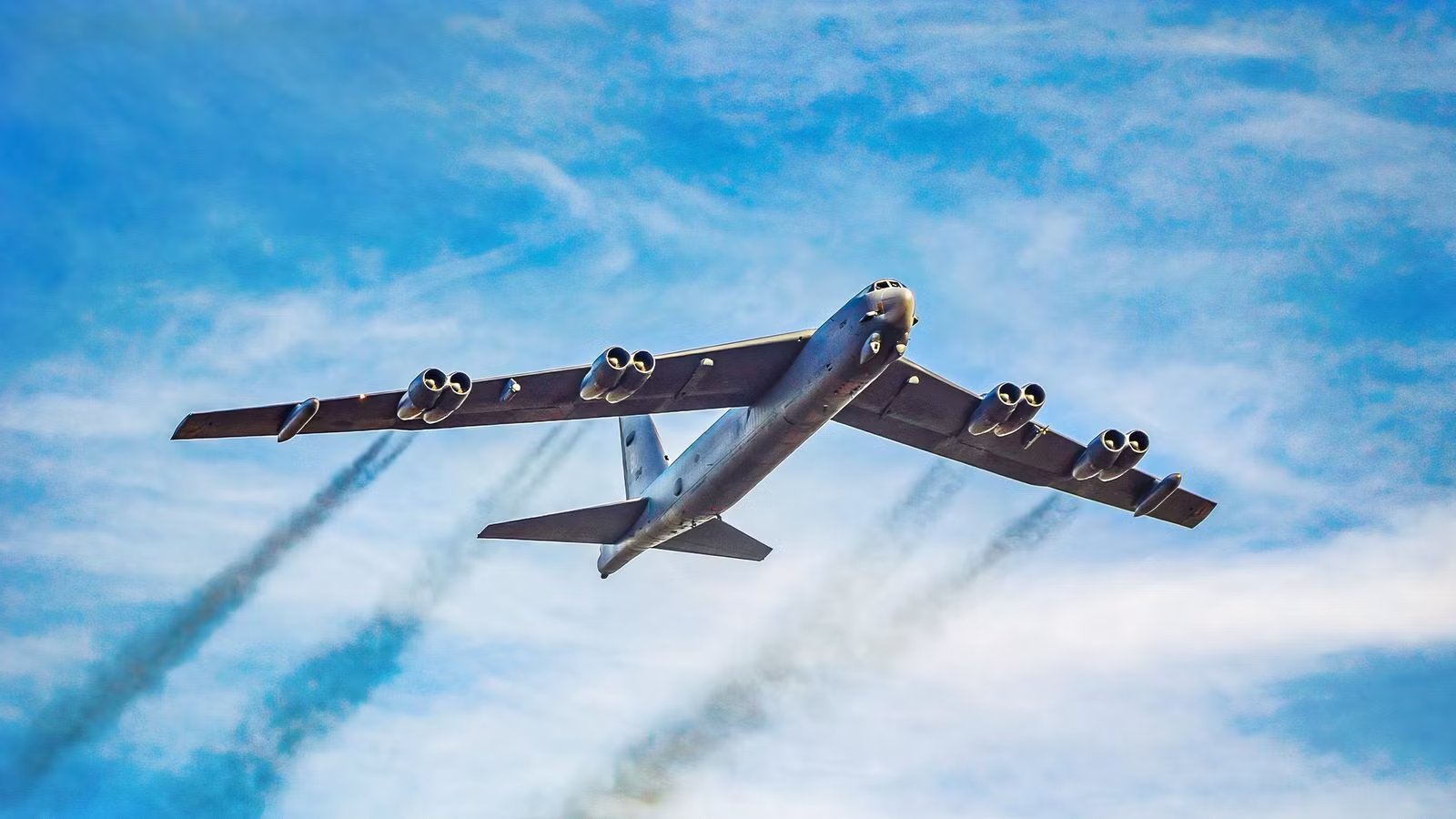
The  Boeing B-52 Stratofortress has been flying for more than seven decades, yet it remains one of the most important long-range bombers in the United States Air Force inventory. That longevity raises an obvious question: just how much fuel does a Cold War-era strategic bomber consume in modern operations, and what does that reveal about the economics of global airpower? Despite its reputation as a massive fuel burner, the B-52H still occupies a surprisingly efficient position within the USAF bomber fleet, balancing range, payload, and operating cost in ways newer aircraft often cannot.
This article relies on operational data from Boeing, reporting from Simple Flying, technical information published by Naval Technology, and cost analysis from Air & Space Forces Magazine and WION News to break down the bomber’s real-world fuel consumption. It will examine how the commonly cited 0.22 miles-per-gallon figure is calculated, why mission profile and payload dramatically influence fuel burn, how the B-52H compares with other strategic bombers like the Northrop Grumman B-2 Spirit and Rockwell B-1 Lancer, and how the upcoming Rolls-Royce F130 engine upgrade could significantly improve efficiency over the coming decade.
The B-52H Gets Around 0.22 Miles Per Gallon

The honest answer is a number that makes even the thirstiest SUV look frugal: roughly 0.22 miles per gallon (mpg), or, flipped around, approximately 4.5 gallons for every single mile flown. That figure is calculated under cruise conditions, where the B-52H’s eight Pratt & Whitney TF33 turbofan engines burn around 2,400 US gallons (9,085 liters) per hour at a cruise speed of approximately 509 mph (819 km/h). Dividing one by the other yields the 0.21–0.22 mpg window that most technical analyses, including Simple Flying’s deep dive into USAF bomber efficiency, land on for the H-model.
It is also worth approaching the number from the other direction: range divided by fuel capacity. According to official Boeing data, the aircraft carries a maximum of 48,000 US gallons (181,687 liters) of JP-8 jet fuel and has an unrefueled combat range of 8,800 miles (14,163 km). Dividing the latter with the maximum fuel carried, we get roughly 0.18 mpg, slightly lower than the cruise-derived figure because the range-to-capacity ratio also accounts for the hungry takeoff roll, the climb to altitude, and reserve fuel margins. In practice, the cruise-derived 0.22 mpg is the more operationally representative figure, while 0.18 mpg reflects a worst-case, tanks-empty interpretation.
To understand why those numbers are what they are and why the Air Force still considers the platform economical despite them, one needs to look at the mission. The B-52H was never built to be efficient in the classical meaning of the word. It was built to carry an immense payload across an immense distance, and on those terms it remains one of the most capable aircraft ever designed. As noted in a Simple Flying survey of the world’s longest-serving military aircraft, the B-52’s durable airframe and ordnance capacity of 70,000 pounds (31,751 kg) continue to justify every drop of fuel it burns.
What Factors Influence The Number?

Several variables push and pull on the B-52’s fuel efficiency figure. The two most important are the aircraft‘s maximum takeoff weight (MTOW) and its engine configuration. The B-52H has an MTOW of 488,000 pounds (221,353 kg), requiring the eight TF33s to work hard from brake release. At peak thrust settings during takeoff, fuel burn can spike to around 3,300 US gallons (12,492 liters) per hour, or roughly 55 gallons per minute, according to data cited by Naval Technology. That initial demand drags down the overall trip average considerably.
The following factors all affect where the B-52H’s actual mpg lands on any given sortie:
- Weapons load: A fully armed aircraft flying a combat profile burns substantially more fuel than a lightly loaded ferry flight. The heavier the payload, the higher the induced drag and the greater the thrust required to maintain altitude and speed.
- Altitude and speed regime: At high subsonic cruise, the bomber’s sweet spot, fuel burn is roughly 2,400 US gallons (9,085 liters) per hour. At lower altitudes, where air is denser, drag increases and fuel burn rises sharply.
-
Engine condition and age: The TF33
engines
on current B-52Hs are out-of-production powerplants that have been maintained for decades. Older engines that have not been recently overhauled operate less efficiently, increasing fuel consumption by a measurable margin. - Mission duration: Extended loiter missions, such as the Bomber Task Force deployments that see B-52s orbiting for hours near theaters of interest, keep the engines running longer on the same fuel load, effectively worsening the miles-per-gallon figure.
- Aerial refueling: The B-52H is compatible with the KC-135 Stratotanker and the KC-46A Pegasus. With midair refueling, the range figure becomes theoretically unlimited, although at that point the mpg of the tanker aircraft becomes much more important.
According to data published by WION News drawing on Air Force operational records, B-52s flying an average of 250 hours annually consume approximately 600,000 US gallons (2.27 million liters) of jet fuel per aircraft per year. At the fleet level, with roughly 76 aircraft in the active inventory, that represents a staggering annual logistics requirement that directly shapes Air Force Global Strike Command’s planning and deployment decisions.
7 Reasons Why The US Air Force Still Operates The B-52
From nuclear deterrence to missile truck missions, the B-52 Stratofortress remains essential to US airpower even in 2026.
What Do The Numbers Tell Us?

Raw mpg is only part of the story. What the Air Force actually cares about is cost per flight hour and mission effectiveness per gallon, and on those metrics the B-52H holds up surprisingly well compared to its stablemates. According to operational cost breakdowns reported by WION News, the B-52H costs approximately $69,708 per flight hour, a figure that covers fuel, crew, maintenance, and spare parts. That is less than half the $169,313-per-hour cost of the B-2A Spirit stealth bomber, which, despite its superior fuel efficiency, is far more expensive to operate overall.
The upcoming engine replacement program is expected to shift those numbers significantly. Rolls-Royce was awarded a $2.6 billion contract in 2021 to supply 650 F130 turbofan engines, a militarized derivative of the commercial BR725, under the B-52 CERP. Candice Bineyard, Rolls-Royce’s Director of Defense Programs, put the ambition plainly, as reported by Simple Flying :
“This will result in higher fuel efficiency, reduced air refueling requirements, and significantly lower maintenance costs for the B-52 fleet.”
According to Air & Space Forces Magazine, the F130 is expected to deliver about 30 percent better fuel efficiency and dramatically fewer maintenance hours . At the B-52’s current fuel burn rates, a 30 percent improvement would reduce cruise consumption from roughly 2,400 US gallons (9,085 liters) per hour to around 1,680 US gallons (6,360 liters) per hour, pushing the cruise mpg figure from approximately 0.22 to around 0.30 mpg. Fleet-wide, the Air Force projects annual fuel savings of $50–60 million as a result. As Simple Flying has reported, however, the first B-52J with new Rolls-Royce engines is not expected to fly until 2033, meaning the current efficiency figures will remain the operational reality for at least another decade.
How Does The B-52H Compare To Other USAF Strategic Bombers?

Placed alongside the rest of the USAF’s bomber triad, the B-52H’s 0.22 mpg figure occupies a fascinating middle ground. It is worse than anything an airliner operator would tolerate, yet within the world of strategic bombers, it is actually the most efficient platform still flying. Knowing where the BUFF sits in its own peer group helps explain why the Air Force keeps it around despite figures that would make a car manufacturer blush.
As Simple Flying has noted in examining the B-2’s consumption, the B-52H’s 0.22 mpg compares favorably to the Lancer’s sub-0.20 figure, a reflection of the turbofan’s inherent efficiency advantage at high-altitude subsonic cruise, which is exactly where the BUFF spends most of its flight time. Simple Flying’s coverage of the Cold War-era USAF bases still operating today illustrates just how deeply the B-52’s logistics needs have shaped the infrastructure of bases like Barksdale Air Force Base and Minot AFB, both designed with the aircraft’s massive fuel requirements in mind from the outset.
Aircraft | Engines | Fuel Capacity | Unrefueled Range | Approx. MPG | Cost Per Flight Hour |
B-52H Stratofortress | 8× Pratt & Whitney TF33 | 48,000 US gal (181,700 L) | 8,800 mi (14,160 km) | ~0.22 mpg (0.09 km/L) | ~$69,708 |
B-2A Spirit | 4× General Electric F118 | ~24,900 US gal (94,300 L) [167,000 lb / 75,750 kg fuel load] | 6,900 mi (11,105 km) | ~0.28 mpg (0.12 km/L) | ~$169,313 |
B-1B Lancer | 4× General Electric F101 | ~39,493 US gal (149,500 L) | 7,480 mi (12,040 km) | ~$75,000+ |
The comparison reveals something counterintuitive: the B-52H, despite being the oldest design and having twice the number of engines as the B-2A, is beaten on pure fuel efficiency only by the Spirit. The B-1B Lancer, with its variable-sweep wing designed for high-speed low-level penetration, is actually the least fuel-efficient of the three.
From 19 B-2 Spirits To 145 B-21 Raiders: How Much Bigger America’s Stealth Bomber Fleet Is About To Get
A $4.5 billion production deal signal the Air Force’s commitment to building its next-generation bomber
When Does The B-52’s Thirst Become A Liability?

The 0.22 mpg figure is a steady-state cruise number, and real-world operations deviate from it constantly — sometimes sharply downward. The B-52H’s fuel efficiency takes its biggest hit during takeoff, when all eight TF33s are running at high power settings and consumption peaks at roughly 3,300 US gallons (12,492 liters) per hour. A fully loaded aircraft at a maximum takeoff weight of 488,000 pounds (221,353 kg) also suffers from the compounding effect of drag: more weight means more induced drag, which means higher thrust settings, which means more fuel burned.
In practice, a fully armed combat sortie will return a figure meaningfully lower than the cruise-optimal 0.22 mpg.
The dependence on aerial refueling for extended missions adds a second layer of fuel cost that the simple mpg figure entirely obscures. When a B-52H undertakes a Bomber Task Force mission from Barksdale AFB, Louisiana, to, say, the Indo-Pacific region, it typically requires multiple refueling contacts from KC-135 Stratotankers or KC-46 Pegasus aircraft. Each of those tankers must first burn its own fuel to reach the rendezvous point, transfer fuel to the bomber, and then fly home.
Readers should also be cautious about applying the mpg figure as a proxy for environmental impact. The B-52H burns JP-8, a kerosene-based fuel, and its eight engines produce considerable particulate emissions, as memorably visible in photographs of the aircraft at low altitude, where the exhaust plumes from all eight turbofans are clearly distinguishable. The Air Force has publicly stated that one of the CERP’s goals is a reduction in carbon dioxide emissions alongside improvements in fuel efficiency. That commitment, however, remains aspirational until the F130 engines are actually installed.
What Is The Overall Takeaway? A Thirsty Workhorse Built For A Different Calculus

The B-52H Stratofortress gets approximately 0.22 miles per gallon during cruise, consuming around 2,400 US gallons (9,085 liters) of jet fuel every hour as it moves through the sky at roughly 509 mph (819 km/h) at altitudes up to 50,000 feet (15,240 m). Viewed in isolation, that number is staggering. Translated into everyday terms, filling up a B-52 to capacity, all 48,000 US gallons (181,687 liters) of it, would cost around $192,000 at typical JP-8 prices, and the aircraft would use every drop within roughly 17 hours of cruise flight. That same amount of fuel could power a standard family car for well over a million miles. But the B-52 is not a car, and never pretended to be.
What the BUFF’s fuel economy figures ultimately illuminate is the cost of global strategic reach. The aircraft’s unrefueled 8,800-mile (14,163-km) range means a crew departing Barksdale AFB in Louisiana can strike a target almost anywhere on the planet and return home without landing on foreign soil — a strategic independence that no other platform in the world currently matches at scale. The Cold War infrastructure built around this mission has not merely survived but expanded, with Barksdale and Minot AFB both continuing to invest in the fuel storage, maintenance, and aircrew training that keep the BUFF operational. From that perspective, 0.22 mpg is the price tag of sovereign long-range airpower.
The arrival of the Rolls-Royce F130 engine will push that figure toward 0.30 mpg and extend the B-52J’s unrefueled range by up to 40 percent, according to Rolls-Royce’s program documentation. When those upgrades are complete, sometime after 2033 and extending through the late 2030s, the aircraft that first flew in 1952 will be more fuel-efficient than it has ever been in its seven-decade history. In the meantime, the BUFF keeps burning, keeps flying, and keeps making the case that in strategic aviation, the question was never miles per gallon — it was always missions per dollar.