dailynewsnblog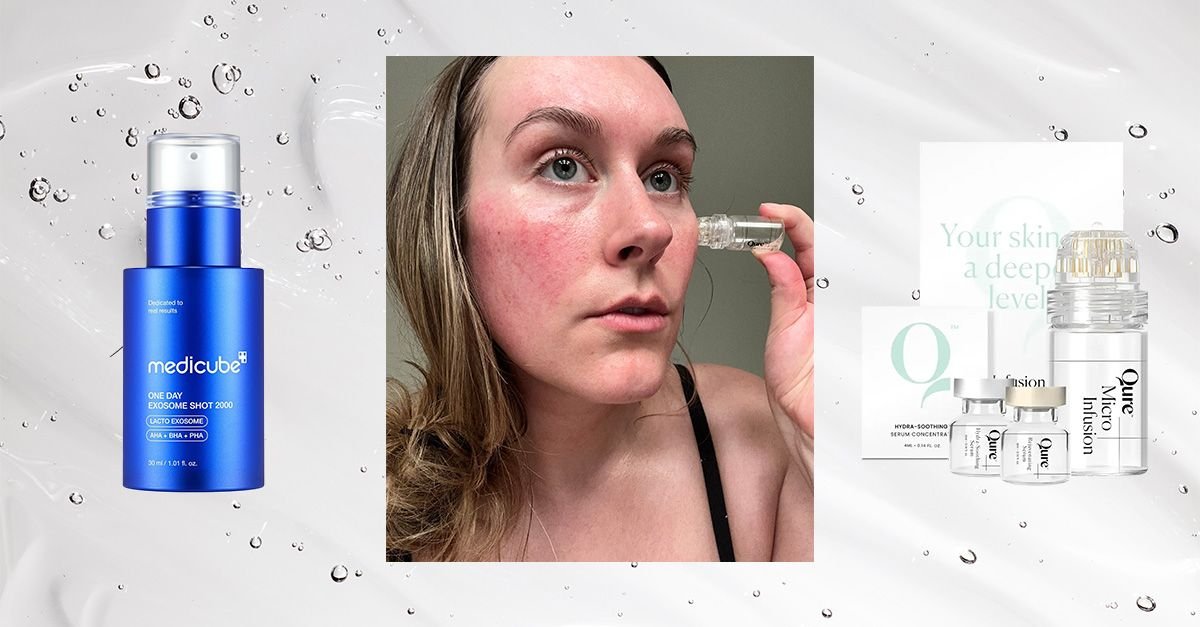
Dermatologists agree that micro-needling is incredibly effective. For the uninitiated, micro-needling treatments involve using tiny needles to superficially puncture the skin and create “micro-injuries,” which trigger the natural wound-healing response and dramatically boost collagen and elastin production. Translation? It can give you smoother, plumper, and more youthful-looking skin. It can even drastically minimize the appearance of acne scars.
Here’s the thing, though. Not all microneedling treatments are the same. Dermatologists back professional microneedling treatments, undergone in an office setting under the guidance of an expert. They often caution against at-home microneedling treatments, AKA derma-rollers, because they can do more harm than good (more on that in a minute).
However, that doesn’t mean there aren’t other options if you can’t shell out hundreds or thousands of dollars for professional micro-needling. Experts recommend two other microneedling substitutes. The first is a gold-standard collagen-boosting ingredient: retinol. The second is a safe, hygienic, and dermatologist-developed “Micro-Infusion” system. The second is spicule skincare—a K-beauty phenomenon that’s only recently caught on in the U.S. Ahead, learn about each one and find out which is right for you.

The Dangers of Derma-Rollers
Azadeh Shirazi is a board-certified dermatologist and the founder of AziMD Skincare. She says that while derma-rollers are marketed as a DIY microneedling treatment, they come with “real risk” when used incorrectly. “The main things I worry most about as a dermatologist are infection, irritation, post-inflammatory hyperpigmentation, and potential scarring, especially in patients with sensitive skin or deeper skin tones,” she says. “Many people also don’t realize that the lack of sterilization or overly aggressive use can damage the skin barrier and worsen conditions like acne or rosacea. In my opinion, microneedling is a procedure that benefits from professional oversight and proper technique.”
For context, derma-rollers have a rolling head covered in micro-needles. Derms say this design is the entire problem. “This device, although effective at inducing holes, also drags on the skin,” Luke Maxfield, DO, FAAD, and board-certified dermatologist, previously told Who What Wear. “It tears the skin surface as it moves along, which can result in unnecessary trauma, hyperpigmentation, or even scarring. Additionally, as this device does not have single-use tips, the risk of infection and onus of sterility is on the user. Also, the length of needles on the derma-rollers ranges from small to unnecessarily large, and any supporting ingredients or products used alongside derma-rollers may or may not be formulated well to go deeper into the skin through the channels that needling creates. All of this makes safety a primary concern.” Professional micro-needling, on the other hand, works via a stamping motion, which is considered far safer.
Alternative #1: Retinoids
Yes, retinoids are an effective alternative for DIY microneedling treatments. They support collagen production and resurface the skin for a plumper, smoother, and more even look. The benefits compound over time, leading to more youthful-looking skin the longer you use them.
“For most patients, I recommend focusing on proven skincare ingredients that support collagen production without physically injuring the skin,” Shirazi says. “Retinoids are my go-to because they can improve texture, fine lines, and overall skin quality over time. Peptides, growth factors, antioxidants, and gentle chemical exfoliants can also be helpful additions. Consistency with a well-formulated skincare routine is often safer and can be much more effective than at-home microneedling devices.”
Check out Who What Wear’s guide to retinoids to find the right one for you.
Shop 3 Editor-Recommended Retinoids

Paula’s Choice
Clinical Anti-Aging 1% Retinol Treatment

Shani Darden
Retinol Reform With 1% Encapsulated Retinol

Iope
Expert Retinol Rx 2% Reti-Jection Serum
Alternative #2: The Qure Micro-Infusion System
Remember how derma-rollers can pull or tug on the skin as they go, causing micro-tears, irritation, inflammation, and more? Qure’s Micro-Infusion System is the fix. It’s one of my favorite at-home skin treatments, and I’ve seen a real difference in the smoothness and plumpness of my skin after only a single use (but the results are even better when I use it consistently). I love it so much, I refuse to touch another derma-roller again.
It’s not just me, either. Many experts recommend it as a safe and hygienic alternative to other DIY micro-needling treatments because it works by gently stamping needles into the skin—rather than rolling needles across it—for less potential skin tearing and trauma. “Micro-stamping, or micro-infusion devices such as the Qure Micro-Infusion System, balances the efficacy of micro-needling with safety,” Maxfield says. “This system uses 24-karat gold-plated, sterile, single-use needle tips, which maximally offsets the risk of infection. The needle length is deliberately set to maintain effectiveness while still being safe for both thicker and thinner sensitive skin, like that around the eyes and mouth. To round it out, Qure also has serums that are intended to be used alongside the device.”
The micro-stamping technique causes my skin to look red for an hour or so after treatment (I have sensitive skin, so this isn’t unusual for me). After just 24 hours, though, my skin looks smooth, plump, calm, and generally enhanced.
There’s one more thing to note. When you purchase the Qure Micro-Infusion System, you can choose between three different serum combinations (one for dark spots, one for wrinkles, or a combination of both). You can also choose between a one-month, three-month, and six-month supply of serums and needle heads. Personally, I recommend the six-month supply for best results.
Shop the Qure Micro-Infusion System

Qure skincare
Micro-Infusion System
Alternative #3: Spicule Skincare
If you haven’t heard of spicule skincare, you’re not alone. These products are wildly popular in South Korea, but they’ve only recently made their way Stateside. Spicules are tiny microspears typically derived from hydrolyzed sponges or bio-engineered silica. When applied to the skin, they create micro-channels in the epidermis, which help boost collagen production and enhance ingredient absorption. No wonder it’s often referred to as “liquid microneedling.”
“Spicule skincare can be a more gentle alternative to dermarolling because it doesn’t involve a reusable device creating repeated punctures in the skin,” Shirazi says. “These products can help stimulate skin renewal and enhance ingredient penetration.”
Spicule skincare isn’t without its own risks, though. Shirazi says it can still cause irritation, redness, or stinging, which is why you should practice caution when using them. “As with any active skincare product, it’s important to introduce them gradually and make sure to pay attention to how your skin responds,” she says.
Shop the Best Spicule Skincare Products

VENN SKINCARE
Active Liquid Shot 0.1

medicube
One Day Exosome Shot 7500

VT Cosmetics
Reedle Shot 100
How We Chose
Beauty editor Kaitlyn McLintock has nearly a decade of experience testing and reviewing beauty products. She curated this list of the best at-home microneedling alternatives by consulting top skin experts, personally putting products to the test, polling her fellow Who What Wear editors, and reading real-world reviews. At the end of it all, she had a robust, deeply researched list.
Why Trust Us
At Who What Wear, we know that beauty isn’t one-size-fits-all. Over the years, our editors have tested thousands of products—including skincare, makeup, haircare, and nails—while also working closely with trusted experts, like renowned dermatologists, celebrity makeup artists, and other leading industry insiders. This ensures every guide is well-researched, inclusive, and relevant to you.
We focus on formulas that deliver, whether they’re affordable favorites or luxury investments. Our product selection is based on tangible results, ingredient know-how, and what we’d truly recommend to our closest friends and family members.
Explore More: