dailynewsnblog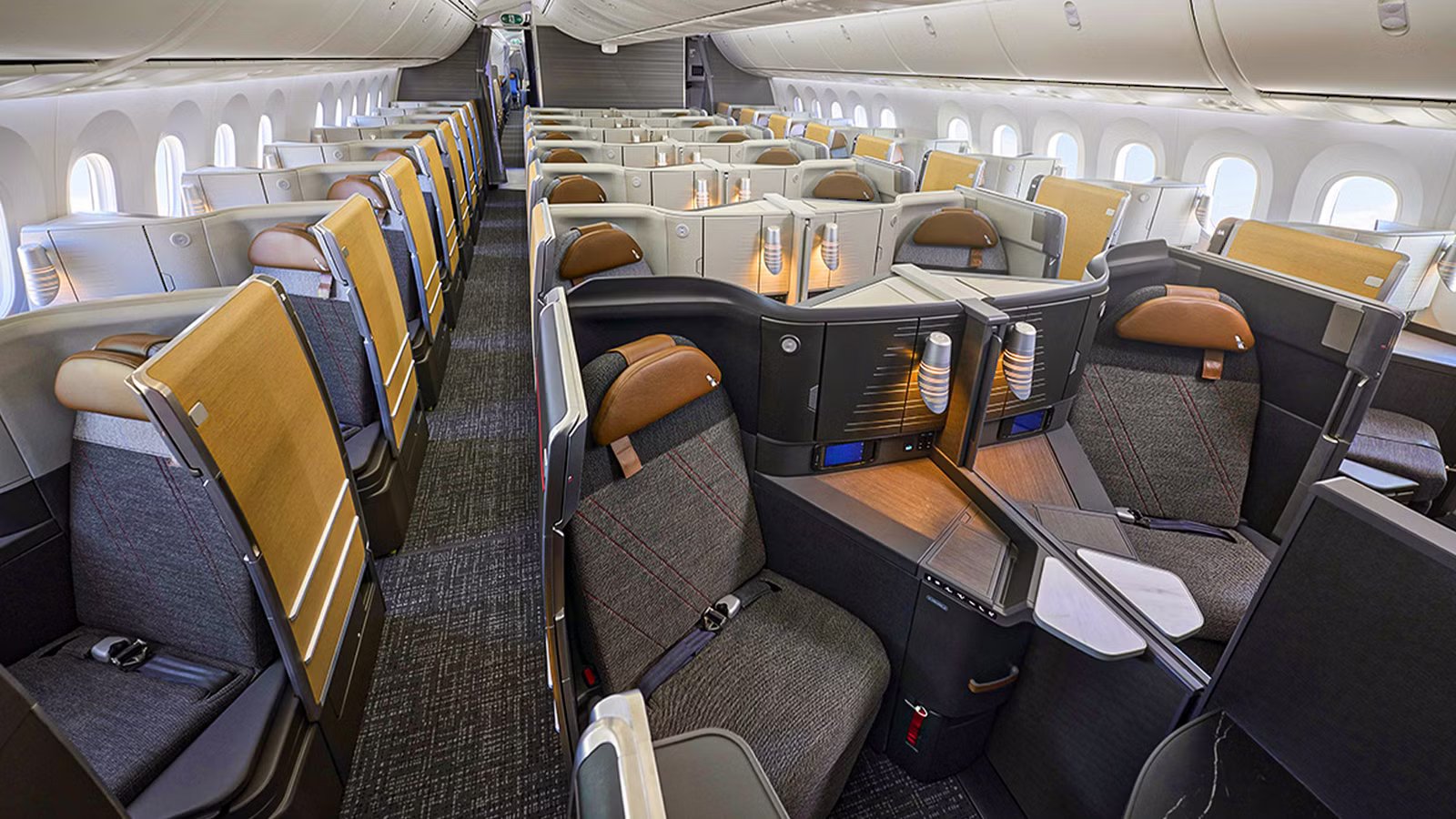
Plenty Of Variety

The transatlantic flight network stands as the primary operational theater where American Airlines deploys its newly reconfigured 787-9P fleet to capture high-value corporate travel. Operating multiple daily frequencies out of key north-east hubs like  Philadelphia International Airport (PHL),
  Chicago O’Hare (ORD), and
  New York JFK to
  London Heathrow (LHR), the carrier subjects its premium ticket inventory to immense pricing adjustments. A routine search for a single business class seat across these trunk lanes showcases a dynamic fare architecture that responds instantly to daily corporate bookings.
American Airlines heavily concentrates its premium-heavy 787-9 operations on routes to the British capital to defend its market share against top-tier legacy carriers. During off-peak shoulder seasons or when booking a saver-level fare months in advance, cash prices for a one-way Flagship Business seat can drop to a highly accessible entry point of a little over $3,000. However, if a traveler attempts to secure a seat close to the departure date or during the peak summer travel crush, those exact same business class pods rapidly skyrocket to flexible ticket thresholds exceeding $8,000.
Such extreme pricing behavior also highlights a distinct geographic-origin bias embedded in the airline’s automated yield software. Travelers initiating an international itinerary from a United States domestic hub systematically face much higher cash fare floors than passengers booking the identical route in the reverse direction. For instance, a premium ticket originating out of Philadelphia heading to Zurich Airport (ZRH) will routinely command a higher domestic premium than a ticket bought by a European passenger traveling from Switzerland to the United States. That reverse ticket will generally be much more stable in terms of pricing, as well.
More Value Per Mile

Away from the European theater toward major transpacific gateways, a completely different pricing strategy becomes the norm. When American Airlines schedules its long-haul 787-9 aircraft to operate flights spanning vast oceanic distances, the standard correlation between sector length and ticket price breaks down. Instead of commanding massive premiums that scale with flight hours, these ultra-long-haul routes are subject to severe competitive downward pressure, forcing a surprisingly rigid ceiling on cash fares.
Pricing compression is highly evident on critical business lanes connecting hubs like  Dallas/Fort Worth (DFW),
  Los Angeles (LAX), and New York JFK directly to
  Tokyo Haneda Airport (HND) or Shanghai. A one-way Flagship Business ticket across the Pacific Ocean generally stays around $3,100 but can exceed $8,500. Even though a flight from Los Angeles to Tokyo spans an incredible 5,473 miles (8,808 kilometers), its peak flexible cash fare is still significantly lower than that of a short transatlantic hop. This dynamic occurs because domestic legacy rivals like
  United Airlines and
  Delta Air Lines hold much stronger corporate networks and historical market share in East Asia, stripping American Airlines of its unilateral pricing power.
Consequently, premium flyers can take advantage of this competitive landscape to secure excellent asset value per mile flown. The compressed transpacific fares guarantee that even during high-demand summer windows, cash ticket prices rarely experience the five-digit spikes that punish travelers crossing the Atlantic. These routes are most definitely the sweet spot within the carrier’s international premium network.
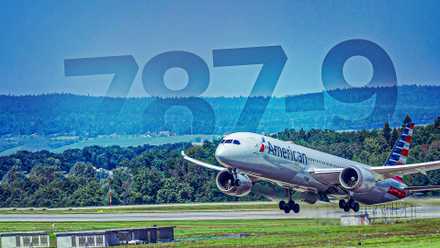
Just 244 Seats: American Airlines’ 5 Ultra-Premium Boeing 787 Routes In 2026
Where American Airlines is flying its premium heavy Boeing 787-9 aircraft.
Less Seats Is The Way Forward

The underlying baseline cost of an international widebody ticket is always linked to the layout of the aircraft cabin. With the active rollout of the specialized 787-9P premium variant as well as the removal of widebody aircraft from some routes, American Airlines is deliberately moving away from high-density passenger configurations on its flagship runs. By altering the physical ratio of premium suites to standard economy inventory, the carrier has introduced an aggressive revenue management strategy that fundamentally changes how cheaper inventory is allocated to the public.
In older long-haul fleet layouts, the standard 787-9 featured a modest footprint of 30 business class seats. The modern ultra-premium configuration expands this footprint dramatically to 51 Flagship Suites based on the Adient Ascent platform, dropping the total aircraft capacity down to just 244 seats. This modification allows the carrier to optimize individual seat economics, generating significantly higher revenue margins per flight without relying on packed economy rows.
The premium layout here means that cash pricing behaves with much more predictability on specific business trunk lanes. The presence of 51 distinct premium suites creates a larger inventory buffer, shielding the airline from immediate fare spikes when a few last-minute bookings occur. However, because the aircraft carries fewer total economy passengers, the baseline operating cost is explicitly shifted onto the premium cabins, elevating the average cash price a bit further for an advance purchase.
A True Premium For Oceania

High-frequency corporate routes across the Atlantic continue to stabilize under expanded premium capacity, but the absolute extreme edge of the American Airlines pricing matrix appears on long-haul routes crossing into Oceania. The constraints of operating ultra-long-haul segments to destinations like Brisbane or Auckland push the 787-9 to its absolute performance boundaries. On these routes, the pricing algorithm abandons competitive restraint entirely, translating massive fuel burn overhead into eye-watering cash fares.
A primary example of this pricing behavior can be seen on the ultra-long-haul leg from Dallas/Fort Worth to Brisbane, where a single one-way Flagship Business ticket routinely commands a staggering baseline price of around $8,000 during low-demand periods. When seasonal winter demand spikes, those cash tickets regularly break past the astronomical threshold of $19,000 for a one-way trip. This pricing profile stands in stark contrast to the highly compressed transpacific fares to East Asian destinations, illustrating how complete dominance over a capacity-constrained route removes any logical connection between distance and ticket cost.
Operating flights over these immense distances requires strict weight management protocols, which frequently force carriers to limit the physical volume of cargo or passenger weight to preserve fuel reserves. The airline cannot easily add extra unscheduled flights to relieve booking pressure, so the automated yield software treats every remaining seat in the 51-suite cabin as a premium commodity. Travelers planning to fly to the South Pacific must therefore prepare for a premium cost structure that represents the single most expensive ticket category in the entire domestic ecosystem.

Luxury Comfort: Inside American Airlines’ New Premium Boeing 787-9
The airline has introduced brand new business class suites and revamped the premium economy and main cabin.
What To Do WIth Miles?

With cash fares experiencing immense volatility across different global sectors, the temptation to deploy a stash of frequent flyer loyalty points to bypass severe credit card charges is incredibly high. However, because American Airlines has transitioned its loyalty program to a fully dynamic award pricing engine, the cost of a mileage ticket is now directly tied to the underlying cash value of the seat.
When cash tickets are highly inflated, dynamic web specials can see a one-way business class award seat spike from a baseline of 60,000 miles to over 250,000 miles for a single flight. This direct correlation means that the airline stabilizes its profit margins, preventing travelers from easily exploiting frequent flyer points during high-demand summer windows.
To navigate this system effectively, frequent flyers often look outside the core American Airlines ecosystem to find fixed-rate partner awards. Booking a premium seat on American’s widebody fleet using miles from alliance partner programs like British Airways Executive Club or Japan Airlines Mileage Bank can occasionally bypass dynamic surges.
The Last Line Of Defense

Beyond the pure mathematical calculations of cash fares and mileage rates, the ultimate decision to purchase a business class ticket on the 787-9 depends heavily on the quality of the hard product. American Airlines has intentionally designed its new Flagship Suite to help protect its premium yields against top-tier international operators. By integrating custom sliding privacy doors, wireless device charging stations, and direct aisle access for every passenger, the airline aims to convince corporate managers that a high cash fare aligns with the onboard experience.
Maximizing the actual return on a premium ticket investment means that selective routing choices and meticulous equipment tracking would be worthwhile. Making sure that an itinerary is specifically operated by the reconfigured Boeing 787-9P variant rather than an older, un-refurbished widebody airframe is critical to realizing the full value of a four or five-figure cash outlay.
The current trajectory of American’s premium network will remain tightly bound to its fleet modernization program as additional widebody deliveries continue through the late 2020s. As the carrier systematically standardizes this high-yield premium suite across its entire long-haul network, the floor for cash fares is highly likely to remain elevated. For American, the long-term commitment to premium space onboard gives the Boeing 787-9 an opportunity to command premium prices, solidifying its role as the economic engine of American’s international operations.